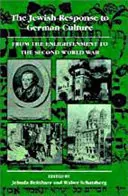
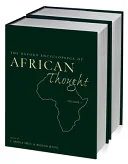
The Oxford Encyclopedia of African Thought
 76
76

The Oxford Encyclopedia of African Thought
The Oxford Encyclopedia of African Thought represents a significant undertaking to collate and present the vast landscape of African intellectual production. Its strength lies in its sheer scope, bringing together figures and concepts that might otherwise remain siloed within specific disciplines or regions. The inclusion of figures like St. Augustine, whose African origins are often overlooked in Western philosophy, alongside later Pan-Africanist thinkers, demonstrates a commendable commitment to a unified intellectual history. However, the sheer volume and breadth, while a strength, can also be a limitation; the depth of coverage for any single topic or thinker may vary, requiring readers to consult additional sources for specialized knowledge. A particularly illuminating section is the exploration of Ethiopian philosophical traditions, offering a detailed look at an often-underrepresented intellectual lineage. This encyclopedia functions as a foundational text, essential for anyone serious about understanding the diverse intellectual currents of Africa.
📝 Description
76
Published in 2010, The Oxford Encyclopedia of African Thought catalogs millennia of African intellectual history.
Abiola Irele's encyclopedia documents the diverse philosophical currents from Africa and its diaspora. Spanning from early Ethiopian thinkers to modern anti-colonial theorists, the work covers philosophical discourse, political ideologies, religious traditions, and literary expressions that define the African intellectual heritage. It aims to present a comprehensive overview of thought systems that have shaped cultures and societies across the continent and in global African communities. This reference is valuable for scholars, students, and general readers interested in the depth of African intellectual traditions. Researchers in African studies, comparative philosophy, religious studies, and postcolonial theory will find it a useful resource for detailed information and contextual understanding of thinkers and ideas. The encyclopedia emerged when the academic study of African thought gained recognition as a distinct field, addressing a need for a consolidated resource beyond fragmented scholarship. It acknowledges intellectual legacies from ancient civilizations to Pan-Africanism and Negritude, positioning African thought as a continuous and globally influential tradition.
The core concept of "African thought" is interpreted broadly within the encyclopedia. It embraces a wide spectrum of intellectual production, from indigenous knowledge systems and oral traditions to formal philosophical treatises and political manifestos. The work highlights the interconnectedness of these traditions, demonstrating how they have responded to historical forces, including colonialism and globalization. By bringing together such a vast array of material, the encyclopedia seeks to correct historical omissions and provide a more complete picture of Africa's contribution to global intellectual history. It serves as a foundational text for understanding the continent's rich and varied intellectual landscape.
While not strictly esoteric in the occult sense, this encyclopedia engages with traditions of thought often marginalized in Western academic discourse. It brings to light indigenous knowledge systems, oral traditions, and philosophical frameworks that have historically been underrepresented or misrepresented. The work’s focus on intellectual currents that challenge dominant narratives and Eurocentric perspectives aligns with an broader understanding of esoteric knowledge as that which exists outside mainstream or easily accessible channels. It serves to reveal and legitimize diverse intellectual lineages, offering a more complete account of human thought.
💡 Why Read This Book?
• Gain a comprehensive overview of intellectual history from ancient Ethiopia to modern Pan-Africanism, allowing for nuanced understanding of African philosophical evolution beyond Eurocentric frameworks. • Explore the multifaceted nature of "African thought," encompassing political discourse, religious traditions, and literary expressions as presented in sections covering figures from St. Augustine to anti-colonial movements. • Access a foundational reference for academic research, providing specific entry points into the works of key thinkers and movements that have shaped global intellectual discourse.
⭐ Reader Reviews
Honest opinions from readers who have explored this book.
❓ Frequently Asked Questions
What historical periods are covered in The Oxford Encyclopedia of African Thought?
The encyclopedia spans millennia, beginning with early Ethiopian philosophers and extending through to modern anti-colonialist movements like Pan-Africanism and Negritude, offering a broad historical sweep of intellectual development.
Which geographical regions does the encyclopedia examine?
It covers intellectual traditions both on the African continent in its entirety and throughout the African Diaspora in the Americas and Europe, providing a comprehensive global perspective.
Who is Abiola Irele and what is his contribution to African thought?
Abiola Irele is the editor of this comprehensive encyclopedia, a significant contribution to the field of African studies. His work aims to consolidate and present the rich intellectual heritage of Africa and its diaspora.
What is meant by 'African thought' in the context of this encyclopedia?
The term is interpreted broadly to include all forms of discourse, such as philosophy, political thought, religion, and literature, originating from or significantly influenced by African peoples and cultures globally.
Does the encyclopedia include contemporary African thinkers?
Yes, it covers intellectual traditions up to more recent times, including anti-colonialist movements and figures relevant to contemporary discourse on African identity and thought.
What kind of religious and philosophical traditions are discussed?
The work examines a wide array, from early philosophical systems and spiritual beliefs on the continent to the intellectual underpinnings of movements like Negritude and Pan-Africanism.
🔮 Key Themes & Symbolism
Diasporic Intellectual Connections
The encyclopedia highlights the interconnectedness of thought across the African continent and its diaspora in the Americas and Europe. It traces how philosophical ideas, political movements like Pan-Africanism, and cultural expressions such as Negritude have cross-pollinated and evolved. This theme underscores that African thought is not monolithic but a dynamic, dispersed intellectual network, actively shaping identities and resistance strategies across continents from early philosophical exchanges to modern political discourse.
Ancient African Philosophical Roots
A significant focus is placed on the deep historical origins of African intellectual traditions, particularly referencing early Ethiopian philosophers and other ancient thinkers. This counters narratives that position African intellectual history as beginning with colonial encounters. By foregrounding these early sources, the work asserts the continuity and sophistication of African philosophical inquiry, exploring its unique metaphysical and ethical frameworks that have informed subsequent generations and movements.
Philosophy of Liberation and Anti-Colonialism
The encyclopedia extensively documents the intellectual currents that fueled anti-colonial struggles and liberation movements. It examines how African thinkers developed philosophies of resistance, self-determination, and political organization in response to colonial domination. This includes analyzing the theoretical underpinnings of movements like Pan-Africanism and the cultural assertions of Negritude, showcasing how intellectual discourse served as a crucial tool for challenging oppression and envisioning post-colonial futures.
Interplay of Religion and Thought
The work explores the integral role of religious and spiritual traditions in shaping African thought systems. It demonstrates how cosmology, ethics, and social organization are often deeply intertwined with religious beliefs across various African cultures. From early spiritual philosophies to their influence on political and social movements, this theme illustrates how faith and intellectual inquiry have historically informed each other, providing frameworks for understanding existence and community.
💬 Memorable Quotes
Direct passages from the work, attributed to the author.
“The term 'African thought' has been interpreted in the broadest sense to embrace all those forms of discourse - philosophy, political thought, religion, literature, important”
— This statement from the original blurb establishes the encyclopedia's expansive definition of its subject matter. It signals an intent to move beyond narrow disciplinary boundaries and to capture the holistic nature of intellectual production within African contexts.
“From St. Augustine and early Ethiopian philosophers to the anti-colonialist movements of Pan-Africanism and Negritude”
— This phrase highlights the vast chronological and thematic scope of the encyclopedia. It juxtaposes ancient and medieval intellectual figures with modern political and cultural movements, emphasizing the long and continuous history of African intellectual engagement.
“covering the intellectual tradition both on the continent in its entirety and throughout the African Diaspora in the Americas and in Europe”
— This indicates the work's commitment to a global perspective on African thought. It acknowledges that intellectual currents did not remain confined to the continent but were carried, transformed, and developed by diasporic communities.
“embracing all those forms of discourse - philosophy, political thought, religion, literature”
— This emphasizes the interdisciplinary approach taken by the encyclopedia. It recognizes that in many African contexts, these domains of discourse are not strictly separated but often inform and influence one another holistically.
“a comprehensive view of African thought”
— This statement articulates the fundamental aim of the encyclopedia: to provide a thorough and inclusive survey of the intellectual heritage of Africa and its peoples across the globe.
🌙 Esoteric Significance
Tradition
While not explicitly aligned with a single esoteric lineage like Hermeticism or Kabbalah, this encyclopedia engages with traditions that often intersect with esoteric thought. Many African philosophical and religious systems, with their emphasis on cosmology, spiritual hierarchies, and ancestral communion, share conceptual ground with Gnostic or Neopagan worldviews. The work's broad interpretation of 'thought' can encompass elements of divination, ritual, and symbolic language that are central to many esoteric practices, framing them within their cultural and intellectual contexts.
Symbolism
The encyclopedia implicitly touches upon potent symbols central to African cosmologies, such as the concept of 'Ubuntu' (humanity towards others) which functions as an ethical and spiritual guiding principle, or the intricate symbolism found in traditional African religions and mythologies. These symbols often represent interconnectedness, spiritual forces, and the relationship between the human and divine realms, echoing themes found in various esoteric traditions concerning universal energies and the nature of reality.
Modern Relevance
Contemporary thinkers and practitioners in fields like Africana philosophy, postcolonial studies, and even certain branches of comparative spirituality draw heavily on the foundational knowledge presented in this encyclopedia. Its comprehensive overview provides context for modern explorations of African diasporic identities, spiritual practices, and philosophical re-interpretations. It informs current discussions on decolonizing knowledge systems and understanding the global reach of African intellectual heritage, making it relevant to scholars and practitioners seeking to bridge historical wisdom with contemporary concerns.
👥 Who Should Read This Book
• Academic researchers in African Studies, Philosophy, Religious Studies, and Postcolonial Theory seeking a definitive reference for intellectual history and foundational concepts. • Students of philosophy and comparative religion looking to expand their understanding beyond Western canons with specific insights into African philosophical traditions. • General readers interested in the intellectual heritage of Africa and its diaspora, providing accessible yet scholarly entries on key thinkers, movements, and ideas from antiquity to modern times.
📜 Historical Context
Published in 2010, The Oxford Encyclopedia of African Thought emerged during a period of increasing academic validation for African studies as a distinct field. For decades, scholars like Cheikh Anta Diop had been actively challenging Eurocentric historical narratives and asserting the significance of African intellectual contributions. The encyclopedia arrived as a crucial resource, consolidating scholarship that had previously been scattered across diverse journals and monographs. It addressed a growing need for a comprehensive, authoritative overview that could support both specialized research and broader educational initiatives. While not a direct engagement with a specific competing school of thought, its existence implicitly countered lingering colonial-era biases that had marginalized African intellectual history. Its publication represented a significant step in establishing the field's academic legitimacy, providing a foundational text for students and scholars seeking to understand the complex evolution of thought from ancient Ethiopia to the vibrant intellectual output of anti-colonial movements like Pan-Africanism and Negritude.
📔 Journal Prompts
The expansive definition of 'African thought' as presented in the encyclopedia.
The historical lineage from early Ethiopian philosophers to Pan-Africanism.
The role of St. Augustine as an early figure within the scope of African intellectual tradition.
The discourse surrounding anti-colonialist movements like Negritude.
The inclusion of the African Diaspora in the study of African thought.
🗂️ Glossary
Negritude
A literary and intellectual movement that emerged in the 1930s among French-speaking African and Caribbean intellectuals, aimed at affirming Black identity, culture, and pride in response to French colonial rule and assimilation policies.
Pan-Africanism
An ideology and movement that advocates for the unity and solidarity of Africans worldwide. It emerged in the 19th century and gained significant momentum in the 20th century as a force for decolonization and self-determination.
African Diaspora
The dispersed populations of African descent living outside the continent of Africa, particularly those whose ancestors were forcibly or voluntarily relocated through the slave trade, colonization, or migration.
Ethiopian Philosophy
Refers to the intellectual and philosophical traditions originating in Ethiopia, including early theological debates, theological commentaries, and philosophical writings that have developed over centuries.
Discourse
In this context, discourse refers to the formal and informal exchange of ideas, arguments, and expressions through language, encompassing written texts, oral traditions, and political or religious rhetoric.
Anti-colonialism
A political movement and ideology that opposes colonial rule and advocates for the independence of colonized territories and peoples from imperial powers.
Intellectual Tradition
A body of thought, ideas, and practices developed and passed down within a particular culture, society, or field of study over time, often characterized by specific methodologies, key figures, and recurring themes.
This book appears in 1 collection
🔮 Readers Also Liked
Browse all →








From the “Nature Spirits” Collection
View all →









More Free Esoteric History & Biography Books
View all →