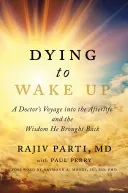
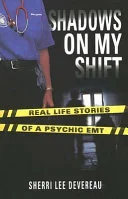
Shadows on My Shift
 74
74

Shadows on My Shift
Sherri Lee Devereau’s *Shadows on My Shift* presents a compelling premise: an EMT in Phoenix who can converse with the dying. The strength of the work lies in its grounded portrayal of emergency medical scenarios, making the supernatural elements feel less like fantasy and more like an extension of the high-stakes environment. Devereau handles the delicate task of conveying messages from the other side with a commendable lack of sensationalism, focusing on the emotional impact on the living. However, the narrative occasionally strains under the weight of its own concept, with some transitions between the professional and the paranormal feeling abrupt. A particularly poignant passage involves the EMT relaying a final message about a forgotten anniversary, highlighting the often-small but deeply meaningful details that linger. While the book offers a touching exploration of life, death, and the messages in between, its emotional core is its most enduring feature. It’s a sincere, if at times uneven, look at a difficult profession and an extraordinary gift.
📝 Description
74
Sherri Lee Devereau's 2006 book recounts an EMT's ability to speak with the recently deceased.
Shadows on My Shift documents the experiences of an EMT in Phoenix, Arizona, who finds she can communicate with people who have just died. This unusual viewpoint provides a direct and emotional look at the space between life and death, from the perspective of someone working in critical care.
The book is for readers interested in how paranormal events connect with everyday jobs, especially those in emergency services or healthcare. It suits people looking for stories that combine the ordinary with the supernatural, touching on themes of grief, communication, and what it means to be human.
Central to the story is the idea of communication between dimensions, specifically between those living and those who have recently passed. It addresses the moral and emotional difficulties of passing messages from the dead to their families, stressing compassion and careful handling of intense sorrow.
Published in 2006, Shadows on My Shift taps into a sustained public interest in mediumship and experiences of the dying. The book aligns with historical spiritualist movements and parapsychological studies that investigate consciousness after death. It offers a modern, less religious interpretation of spiritual interactions, focusing on the direct experience of communication across the veil.
💡 Why Read This Book?
• Gain insight into the unique challenges faced by EMTs who perceive the spirit world, specifically through the lens of Sherri Lee Devereau's experiences as depicted in Phoenix, Arizona. • Understand the profound emotional and ethical considerations of bridging the gap between the living and the recently deceased, as the protagonist navigates delivering sensitive messages. • Explore the intersection of a demanding profession and paranormal ability, offering a fresh perspective on how extraordinary gifts can manifest within ordinary, high-stress environments like emergency medical services.
⭐ Reader Reviews
Honest opinions from readers who have explored this book.
❓ Frequently Asked Questions
What is the central premise of Shadows on My Shift?
The book centers on a Phoenix, Arizona EMT who can communicate with people who are transitioning to the afterlife, and how she conveys their final messages to grieving loved ones.
Who is the author of Shadows on My Shift?
The author is Sherri Lee Devereau. The book was first published in October 2006.
What kind of messages does the EMT relay?
The messages are typically final thoughts, forgotten details, or reassurances from the deceased to their living relatives, handled with care to mitigate further pain.
What is the primary setting for the story?
The story is primarily set in Phoenix, Arizona, highlighting the urban environment in which the EMT performs her duties.
What makes this story unique compared to other paranormal narratives?
Its uniqueness lies in grounding paranormal communication within the highly realistic and demanding context of emergency medical work, focusing on empathy and practical application.
Does the book offer a specific spiritual or religious doctrine?
No, the book focuses on the personal experience of communication with the deceased and the emotional impact, rather than adhering to a particular doctrine.
🔮 Key Themes & Symbolism
Grief and Bereavement
The work directly confronts the acute pain of loss experienced by those left behind. The EMT's ability becomes a conduit for closure, offering solace through final words. This theme is explored not as abstract mourning, but through the specific, often mundane, details the deceased wish to convey, such as forgotten anniversaries or last messages of love, underscoring the wide impact of communication in the grieving process.
The Liminal Space
Shadows on My Shift focuses on the threshold between life and death, a state often referred to as the liminal space. The protagonist operates within this sensitive zone, interacting with souls just beginning their transition. The narrative emphasizes the fleeting nature of this interlude and the critical importance of messages passed during this brief window, highlighting the EMT's role as a sensitive mediator.
Professionalism and the Paranormal
A central tension arises from integrating a profound psychic ability into the rigorous, often chaotic, reality of emergency medical services in Phoenix. The book examines how an extraordinary gift is managed within a highly regulated and pragmatic profession, questioning the boundaries of what is considered possible and how such abilities might be practically, ethically, and compassionately applied.
Communication Beyond Death
The core of the narrative revolves around the possibility of post-mortem communication. It presents a unique perspective on how messages from the deceased might manifest and be received. The focus is less on the mechanics of the afterlife and more on the human element: the need to connect, to be understood, and to offer comfort across the veil.
💬 Memorable Quotes
Direct passages from the work, attributed to the author.
“She could hear them, the ones who were just leaving.”
— This concise statement captures the essence of the protagonist's unique ability, highlighting the precise moment of transition she perceives and her role as a witness to the immediate post-mortem state.
“The messages had to be delivered with care, like fragile glass.”
— This metaphor emphasizes the profound sensitivity required when relaying information from the deceased. It underscores the potential for causing further distress and the ethical responsibility the EMT feels in her role.
“Grief doesn't prepare you for the quiet after the sirens stop.”
— This interpretation highlights the stark contrast between the high-intensity environment of emergency response and the profound silence that follows a patient's passing, a silence now filled with the protagonist's unusual perceptions.
“Sometimes, the most important thing was a forgotten name or a whispered apology.”
— This highlights the specific, often intimate, nature of the messages received, demonstrating that they are not grand revelations but deeply personal communications aimed at resolving lingering earthly matters.
💡 Key Ideas
Editorial paraphrase of the work's core concepts — not direct quotes.
Her shift was more than just saving lives; it was about acknowledging the journey's end.
This paraphrased concept positions the EMT's role as encompassing not only medical intervention but also a spiritual or energetic acknowledgment of the soul's departure, expanding the definition of her professional duties.
🌙 Esoteric Significance
Tradition
While not explicitly tied to a single esoteric lineage, *Shadows on My Shift* appeals to the broader Hermetic principle of 'As Above, So Below,' suggesting a connection between the material world and other planes of existence. The EMT acts as an intermediary, bridging the physical reality of her work with the subtle energies and consciousness of the recently departed. This aligns with concepts found in various traditions that posit the existence of subtle bodies and the possibility of communication across different states of being.
Symbolism
The ambulance itself can be seen as a symbol of passage, a vehicle that transports individuals through critical moments, both physically and, in the protagonist's case, energetically. The act of delivering messages, often seemingly trivial details like forgotten anniversaries, symbolizes the completion of earthly ties and the importance of unresolved emotional or relational aspects before full transition. The Phoenix setting itself evokes themes of rebirth and transformation, mirroring the journey of the souls the EMT encounters.
Modern Relevance
This work speaks to contemporary interest in consciousness studies, near-death experiences (NDEs), and the growing acceptance of mediumship as a genuine phenomenon. Thinkers and practitioners exploring the intersection of psychology, neuroscience, and spirituality, as well as those involved in grief counseling and end-of-life care, might find its narrative compelling. It contributes to ongoing discussions about the nature of consciousness and the potential for connection beyond the physical body in a secularized world.
👥 Who Should Read This Book
• Emergency medical professionals or those working in high-stress caregiving roles seeking relatable narratives about the emotional toll and extraordinary experiences within their field. • Individuals interested in paranormal phenomena, mediumship, and the concept of communicating with the deceased, particularly those who appreciate grounded, character-driven stories. • Readers exploring themes of grief, loss, and closure who are looking for a unique perspective on how messages from departed loved ones might be conveyed.
📜 Historical Context
Published in 2006, *Shadows on My Shift* emerged in an era where popular culture continued to grapple with themes of mediumship and the paranormal, building on the foundations laid by figures like Sylvia Browne and James Van Praagh in the preceding decades. The book taps into a societal fascination with life after death, presenting a contemporary narrative that bridges the gap between secular professions and spiritual phenomena. Unlike the more overtly religious or spiritualist texts of the late 19th and early 20th centuries, Devereau's work grounds psychic abilities within a modern, professional context—that of an EMT in Phoenix. This approach mirrors a broader cultural trend towards secularizing or normalizing supernatural experiences, making them relatable within everyday life. While not directly engaging with academic parapsychology or explicit esoteric traditions like Theosophy, the book benefited from a public receptive to anecdotal accounts of psychic phenomena, a climate influenced by various New Age movements and a general curiosity about consciousness beyond the physical body.
📔 Journal Prompts
The EMT's perception of souls beginning their journey.
Reflecting on the delicate nature of delivering messages from the deceased.
The contrast between professional duties and psychic sensitivity.
Moments of closure offered through final communication.
The emotional range of emergency response and its aftermath.
🗂️ Glossary
EMT
An acronym for Emergency Medical Technician, a healthcare professional who provides emergency medical care for pre-hospital situations.
Liminal Space
A transitional or in-between state or phase, often referring to the threshold between life and death where consciousness may linger.
Post-mortem Communication
The alleged ability to communicate with individuals after their physical death, a concept explored within parapsychology and spiritualism.
Grief Mitigation
The process of carefully delivering information or messages to reduce the emotional pain and distress experienced by bereaved individuals.
Subtle Energies
In esoteric contexts, refers to non-physical energies or forces that are believed to influence consciousness and the material world.
Transition
In this context, refers to the process of a soul or consciousness moving from the physical realm to an afterlife or different state of being.
Phoenix, Arizona
The primary geographical setting of the narrative, a major city known for its desert climate and distinct urban environment.
This book appears in 1 collection
🔮 Readers Also Liked
Browse all →








From the “Qi Gong” Collection
View all →


More Free Esoteric History & Biography Books
View all →