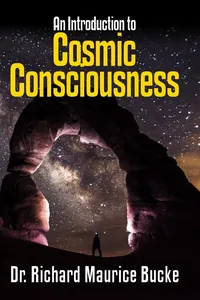
Cosmic Consciousness: A Study in the Evolution of the Human Mind (Hardcover)

 84
84

Cosmic Consciousness: A Study in the Evolution of the Human Mind (Hardcover)
Richard Maurice Bucke's 1901 examination of "cosmic consciousness" is a pivotal text for understanding the historical bridge between scientific thought and mystical experience. Bucke, a physician, attempts a systematic classification of heightened awareness, proposing it as an evolutionary development. His personal account of enlightenment in his mid-thirties lends the work a palpable sincerity, though it also anchors his theory in subjective experience. The book's strength lies in its ambitious attempt to contextualize these states within a framework of biological evolution, a novel approach for its time. However, the methodology, relying heavily on biographical anecdotes and subjective interpretation, lacks the empirical rigor demanded by modern psychology. While Bucke's categorization of historical figures exhibiting "cosmic consciousness" is fascinating, the criteria can feel somewhat elastic. Despite these limitations, the work remains a significant document for its era, charting the intellectual currents that sought to reconcile the spiritual with the scientific.
📝 Description
84
Richard Maurice Bucke published Cosmic Consciousness in 1901, detailing a new stage of human awareness.
Published in 1901, Richard Maurice Bucke's study examines the evolution of human consciousness toward a higher state he termed 'cosmic consciousness.' Bucke, a physician and friend of Walt Whitman, argued this state, marked by an intuitive grasp of the universe and one's place in it, was not a rare event but a natural progression in mental development.
He supported his thesis by examining historical figures, religious accounts, and his own experiences. Bucke sought to integrate these subjective revelations with emerging scientific ideas, particularly evolutionary theory. The book maps a trajectory from primitive awareness to this advanced level of insight, suggesting a potential future for humanity.
This work is relevant for those interested in the psychology of spiritual experiences, the history of consciousness studies, and the philosophical aspects of enlightenment. It offers a historical perspective on the subjective experience of revelation, grounded in early 20th-century thought.
Cosmic Consciousness emerged from a late Victorian and Edwardian milieu fascinated by spiritualism, theosophy, and the potential for expanded awareness. Bucke attempted to reconcile these spiritual inquiries with contemporary scientific materialism, particularly Darwinian evolution. His work placed the concept of higher consciousness within a developmental framework, suggesting a biological and psychological progression toward enlightenment. This positioned his study within a broader tradition of Western esotericism that explored altered states and mystical experiences, seeking to understand them as integral to human potential rather than mere anomalies.
💡 Why Read This Book?
• Gain an understanding of "cosmic consciousness" as presented by Bucke, a distinct stage of mental evolution he believed was dawning on humanity. • Explore the historical intersection of evolutionary theory and the study of mystical states, as Bucke contextualized these experiences in the late 19th and early 20th centuries. • Examine Bucke's own pivotal experience of "illumination" and how it shaped his life and this foundational text on higher consciousness.
⭐ Reader Reviews
Honest opinions from readers who have explored this book.
❓ Frequently Asked Questions
What is "cosmic consciousness" according to Richard Maurice Bucke?
Bucke defines "cosmic consciousness" as a higher form of awareness that represents the next evolutionary stage for the human mind. It's characterized by intuitive understanding, a sense of immortality, moral elevation, and intellectual brilliance, often experienced as a sudden influx of illumination.
When was Cosmic Consciousness first published and why is that significant?
The book was first published in 1901. This timing is significant as it falls within an era of intense interest in spiritualism and the potential for expanded human consciousness, while also engaging with the burgeoning field of evolutionary biology.
Who was Richard Maurice Bucke and what was his background?
Richard Maurice Bucke (1837-1902) was a Canadian physician, asylum superintendent, and author. He was a close friend and admirer of the poet Walt Whitman and his personal experience of a profound spiritual revelation heavily influenced the writing of this book.
What historical figures does Bucke cite as examples of cosmic consciousness?
Bucke cites numerous figures, including Jesus, Buddha, Socrates, Plato, Muhammad, and his friend Walt Whitman, as individuals who exhibited or embodied aspects of cosmic consciousness in their lives and teachings.
Is this book considered scientific or spiritual?
Bucke attempts to bridge both. He uses a scientific framework of evolution and biology to explain spiritual and mystical experiences, presenting "cosmic consciousness" as a natural, albeit advanced, stage of human development.
What is the core argument of Cosmic Consciousness?
The core argument is that human consciousness is evolving, moving from simple awareness to self-consciousness, and ultimately towards a higher state termed "cosmic consciousness," which is gradually becoming accessible to humanity.
🔮 Key Themes & Symbolism
Evolution of Consciousness
Bucke posits that human consciousness is not static but undergoes evolutionary development. He outlines distinct stages, moving from "simple consciousness" to "self-consciousness," culminating in "cosmic consciousness." This progression is presented as a biological and neurological unfolding, mirroring Darwinian principles applied to the mind. The work explores how this higher state, characterized by illumination and intuitive understanding, is becoming increasingly accessible to humanity, marking a significant leap in mental and spiritual evolution.
The Experience of Illumination
Central to Bucke's thesis is the concept of "illumination," a sudden, profound, and often overwhelming influx of insight and awareness. He describes this experience as the hallmark of cosmic consciousness, bringing with it a sense of profound understanding, immortality, and moral uplift. Bucke dedicates significant portions of the book to detailing his own personal experience of illumination, using it as a foundational example to analyze similar accounts throughout history and across cultures.
Historical Manifestations
Bucke meticulously compiles a historical record of individuals he believes have exhibited or embodied cosmic consciousness. This includes religious figures like Buddha and Jesus, philosophers such as Plato and Socrates, and literary figures like Walt Whitman. By examining the lives and purported experiences of these individuals, Bucke seeks to demonstrate the recurring nature of this advanced state of awareness and to trace its emergence throughout human history, suggesting a pattern of dawning enlightenment.
Intuition and Higher Knowledge
Beyond rational thought, cosmic consciousness grants access to a form of intuitive knowledge that transcends ordinary perception. Bucke describes this as a direct apprehension of truth and reality, a form of knowing that is immediate and absolute. This intuitive faculty is presented as a key characteristic of the enlightened mind, enabling individuals to grasp universal principles and the interconnectedness of all things, moving beyond the limitations of discursive reasoning.
💬 Memorable Quotes
Direct passages from the work, attributed to the author.
“I saw and knew that man has the same future as all other animals, namely, his extinction.”
— This statement, though seemingly bleak, is presented by Bucke as part of the expanded perspective gained from his illumination, leading to a greater understanding of life's cycles.
“The day of the death of the soul has come, and the day of the birth of the soul has come.”
— Bucke uses this phrase to describe the profound shift experienced during illumination, signifying the end of a limited personal consciousness and the birth of a universal, cosmic awareness.
“The man who has come into the first few years of the twentieth century will be able to see that the human race is preparing for the advent of cosmic consciousness.”
— This interpretation highlights Bucke's view of his contemporary era as a central moment, indicating that societal and intellectual changes were paving the way for the widespread emergence of higher consciousness.
“It is the apprehension of God himself.”
— Bucke equates the experience of cosmic consciousness with a direct apprehension of the divine, suggesting a unification of the self with the ultimate reality or God.
💡 Key Ideas
Editorial paraphrase of the work's core concepts — not direct quotes.
The form of consciousness that is coming to man is called by me cosmic consciousness.
This quote directly introduces Bucke's central concept, defining "cosmic consciousness" as the next evolutionary phase of human awareness that he believes is emerging.
🌙 Esoteric Significance
Tradition
Bucke's work aligns with the broader Hermetic and Neoplatonic traditions that posit an ascent of consciousness towards a divine or universal awareness. While not strictly Gnostic or Kabbalistic, it shares the Hermetic ideal of "as above, so below," suggesting that the inner transformation of consciousness mirrors universal principles. It departs from some traditions by grounding its evolutionary model in biological science rather than purely mystical or alchemical practices, seeking to provide a rational, albeit speculative, framework for spiritual development.
Symbolism
The primary symbolic motif is "illumination," representing a sudden influx of divine light or knowledge that dispels ignorance and bestows profound understanding. The "evolution of the human mind" itself acts as a grand symbol, suggesting humanity's collective journey towards a higher state of being, akin to a cosmic "birth." The concept of "immortality" experienced during these states symbolizes a transcendence of the limitations of the physical, mortal self, pointing towards an eternal or universal consciousness.
Modern Relevance
Bucke's ideas continue to influence contemporary discussions on consciousness, transpersonal psychology, and the scientific study of meditation and mystical experiences. Thinkers and researchers exploring non-ordinary states of consciousness, the potential for human evolution beyond current limitations, and the integration of spiritual experiences with scientific understanding often reference his work. His framework provides a historical anchor for the ongoing dialogue between subjective spiritual experience and objective scientific inquiry.
👥 Who Should Read This Book
• Individuals interested in the historical development of consciousness studies, particularly the intersection of psychology, evolution, and spirituality in the early 20th century. • Students of comparative religion and mysticism seeking to understand a historical attempt to categorize and explain profound spiritual experiences within a scientific framework. • Readers who have experienced profound states of awareness and are searching for historical or theoretical contexts that attempt to explain such phenomena, particularly Bucke's concept of "cosmic consciousness."
📜 Historical Context
Richard Maurice Bucke's *Cosmic Consciousness* arrived in 1901, a period ripe for explorations that merged science with the spiritual. The intellectual climate was shaped by Darwinian evolution, yet also by a widespread fascination with spiritualism, Theosophy, and altered states of consciousness. This era saw figures like Helena Blavatsky and Annie Besant popularizing Eastern philosophies and esoteric concepts. Bucke's work stood out by attempting to frame mystical experiences, particularly his own moment of "illumination," within a biological and evolutionary paradigm. He engaged with contemporaries who shared an interest in the human mind's potential, most notably his close friend, the poet Walt Whitman, whom Bucke considered a prime example of cosmic consciousness. While not censored, Bucke's attempt to posit a scientific basis for spiritual insight was a departure from purely materialist scientific views and from traditional religious dogma, positioning his work at a unique intersection of emerging psychological inquiry and esoteric thought.
📔 Journal Prompts
The "influx of illumination" Bucke describes: what elements would constitute such an experience for you?
Evolution of consciousness: how does the "self-consciousness" of modern humans differ from earlier forms?
Walt Whitman's "cosmic consciousness": analyze a passage from his work through Bucke's lens.
Moral elevation: what ethical shifts accompany profound states of awareness, as per Bucke's observations?
Simple consciousness vs. cosmic consciousness: map the perceived differences in perception and understanding.
🗂️ Glossary
Cosmic Consciousness
Bucke's term for the highest form of human awareness, characterized by an intuitive apprehension of the universe, a sense of immortality, moral elevation, and intellectual brilliance; considered the next stage in human mental evolution.
Simple Consciousness
The basic awareness possessed by animals and very young children, primarily focused on immediate sensory input and instinctual responses.
Self-Consciousness
The awareness of oneself as a distinct individual, capable of introspection, reason, and abstract thought; the dominant form of consciousness in modern adult humans.
Illumination
A sudden, profound, and often overwhelming experience of insight, understanding, and spiritual awareness, seen by Bucke as the hallmark of cosmic consciousness.
Intuition
A form of direct knowing or apprehension that bypasses rational deduction, providing immediate insight into truths or realities.
Moral Elevation
A significant increase in ethical understanding and benevolent disposition, often experienced as a consequence of achieving cosmic consciousness.
Subjective Immortality
A profound sense of living eternally, of transcending the limitations of mortal life and experiencing a connection to timeless existence, often reported during states of cosmic consciousness.
This book appears in 1 collection
🔮 Readers Also Liked
Browse all →






From the “Cosmic Consciousness” Collection
View all →





More Free Esoteric History & Biography Books
View all →