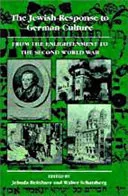
The Jewish Response to German Culture
 72
72

The Jewish Response to German Culture
Jehuda Reinharz and Walter Schatzberg's edited volume, *The Jewish Response to German Culture*, offers a granular examination of a crucial historical encounter. The collection excels in presenting the multifaceted ways Jewish individuals and communities negotiated their place within the expansive, often contradictory, currents of German modernity. One particularly illuminating aspect is the exploration of figures who actively sought to bridge cultural divides, a complex endeavor evident in essays discussing the reception of Kantian philosophy among Jewish thinkers. However, the sheer density of academic inquiry across seventeen contributors can, at times, lead to a fragmented reading experience, with some essays feeling more like isolated case studies than parts of a cohesive whole. The detailed analysis of specific intellectual debates, such as those surrounding the *Wissenschaft des Judentums* movement, remains a significant strength, providing rich material for those willing to engage deeply. Ultimately, this is an indispensable resource for understanding the intricate dialogue between two profoundly influential cultures.
📝 Description
72
Published in 1985, this collection examines Jewish engagement with modern German culture.
This 1985 collection gathers seventeen essays that investigate the complex relationship between Jewish identity and the German cultural sphere. The contributors trace how Jewish thinkers and communities interacted with, absorbed, and reacted to the prevailing intellectual and social currents in Germany, especially during its rapid modernization. The book highlights the inherent tension between upholding ancient heritage and participating in a developing national culture.
The volume is aimed at scholars and advanced students of Jewish history, German cultural history, and intellectual history. It will interest those who study the dynamics of minority cultures within larger national frameworks, the sociology of knowledge, and the historical evolution of modern Jewish thought. Readers focused on cultural assimilation, emancipation, and the shaping of modern identities will find this work particularly useful.
Emerging during a time of renewed scholarly focus on Jewish history and the Holocaust, the essays here engage with the Enlightenment's legacy, the rise of nationalism, and the intellectual climate of Germany from the late 18th to the early 20th centuries. The book positions the Jewish experience within this broader German context, moving past simple narratives of persecution or assimilation.
While "esoteric" can imply hidden knowledge, in the context of intellectual history, it refers to traditions of thought that operate outside mainstream academic discourse or engage with ideas in a specialized, often philosophical or deeply introspective manner. This collection fits by examining the internal Jewish intellectual responses to external cultural pressures, a subject requiring deep understanding of both Jewish tradition and German philosophical currents. The focus on concepts like Aufklärung's impact on Jewish thought and the construction of modern Jewish identity suggests an engagement with the deeper philosophical and historical underpinnings of a group's self-perception and interaction with modernity.
💡 Why Read This Book?
• Gain specific insights into the *Wissenschaft des Judentums* movement, understanding its scholarly aims and its complex position within both Jewish and German intellectual spheres during the 19th century. • Analyze the impact of German Enlightenment ideals on Jewish emancipation, learning how figures like Moses Mendelssohn grappled with integrating reason and tradition in a changing world. • Explore the concept of cultural negotiation, seeing concrete examples of how Jewish intellectuals sought to contribute to and be recognized within German society without fully shedding their distinct heritage.
⭐ Reader Reviews
Honest opinions from readers who have explored this book.
❓ Frequently Asked Questions
What historical period does 'The Jewish Response to German Culture' primarily cover?
The book focuses mainly on the period from the late 18th century through the early 20th century, examining the era of German Enlightenment, emancipation, and modernization as experienced by Jewish communities and thinkers.
Who were some of the key intellectual movements discussed in relation to Jewish responses to German culture?
Key movements include the German Enlightenment (*Aufklärung*), the rise of German nationalism, and the *Wissenschaft des Judentums* (Science of Judaism) movement, which sought to study Jewish tradition through academic methods.
What does the term 'emancipation' mean in the context of this book?
In this context, emancipation refers to the legal and social process by which Jews in German-speaking lands gradually gained civil rights and were integrated into broader society, often accompanied by pressures to assimilate culturally.
Are there specific Jewish figures whose contributions are analyzed in the book?
Yes, the work features analyses of various Jewish intellectuals and writers who engaged with German culture, with figures like Moses Mendelssohn often serving as early examples of engagement with Enlightenment thought.
What is the 'Science of Judaism' (Wissenschaft des Judentums)?
It was a 19th-century scholarly movement founded by Jewish intellectuals aiming to study Jewish history, literature, and religion using modern academic and critical methods, often in dialogue with German scholarship.
Does the book discuss the eventual outcomes of this cultural interaction?
While detailing the historical interactions, the essays implicitly address the complex and often tragic trajectory of German-Jewish relations leading up to the mid-20th century, examining the foundations of both integration and exclusion.
🔮 Key Themes & Symbolism
Navigating Modernity
This theme explores the profound challenges Jewish communities faced as they engaged with the forces of modernization in German society. It examines how ancient traditions and evolving identities interacted with new secular philosophies, political structures, and cultural norms. The essays detail the intellectual and social strategies employed by Jewish thinkers to participate in German public life while striving to maintain their distinct religious and cultural heritage, highlighting a continuous negotiation between integration and preservation.
The Enlightenment's Shadow
The impact of the *Aufklärung* (Enlightenment) on Jewish thought and society is a central concern. This theme investigates how Enlightenment ideals of reason, universalism, and individual rights were both embraced and critically examined by Jewish intellectuals. It scrutinizes the promises and paradoxes of emancipation that stemmed from Enlightenment principles, and how Jewish thinkers sought to reconcile these with their inherited religious and communal obligations, often leading to significant internal debates and intellectual innovation.
Cultural Synthesis and Conflict
This theme looks at the often-fraught process of cultural exchange between Jewish and German spheres. It moves beyond simple notions of assimilation or resistance to explore instances of genuine synthesis, where Jewish culture absorbed and transformed German influences, and vice-versa. The essays analyze the creation of hybrid cultural forms in literature, philosophy, and social life, while also acknowledging the underlying tensions and the persistent societal barriers that defined the German-Jewish encounter.
The Science of Judaism
The emergence of the *Wissenschaft des Judentums* is examined as a key response to the intellectual challenges of modernity. This theme considers how this movement sought to legitimize Jewish tradition and history by applying contemporary academic methodologies to its study. It highlights the ambition to present Jewish civilization to the wider German intellectual world on its own terms, fostering a critical self-understanding and a scholarly engagement with Jewish heritage that was both deeply rooted and intellectually modern.
💬 Memorable Quotes
Direct passages from the work, attributed to the author.
“The interaction between Jewish culture and German culture during modernization.”
— This captures the core dynamic: not a passive reception, but an active, many-sided engagement where Jewish identity was reshaped and asserted within the expansive context of German intellectual and social life.
“Preserving ancient heritage amidst an expansive, modernizing German culture.”
— This highlights the central tension explored throughout the essays – the difficult but vital task of maintaining continuity with tradition while simultaneously participating in and responding to the rapid changes of the modern era.
“Seventeen scholars explore the interplay.”
— This emphasizes the scholarly rigor and breadth of the collection, indicating a comprehensive and multi-perspectival approach to understanding this complex historical relationship.
“Jewish thinkers grappling with Enlightenment ideals.”
— This points to a key intellectual current within the book, illustrating how Jewish intellectuals engaged with the philosophy of reason and universalism, seeking to apply it to their own situation while navigating its inherent challenges.
“The process of modernization and its impact on minority cultures.”
— This frames the book's relevance beyond the specific German-Jewish context, suggesting broader implications for understanding how rapid societal change affects the identity and cultural practices of minority groups.
🌙 Esoteric Significance
Tradition
While not strictly an esoteric text, this work engages with traditions of thought that have profound spiritual and philosophical implications. Its focus on the intersection of ancient heritage and modern intellectual currents appeals to Hermetic and Kabbalistic concerns about the preservation and transmission of sacred knowledge across epochs. The essays implicitly explore how foundational texts and interpretive frameworks (like those within Jewish tradition) adapt and endure when confronted by external philosophical systems, a process akin to alchemical transformation of ideas.
Symbolism
The book examines symbols embedded within both Jewish tradition and German culture. The concept of 'heritage' itself functions as a powerful symbol, representing the continuity of collective memory and spiritual lineage. German cultural symbols, such as the idealized image of the Enlightenment philosopher or the nationalistic fervor of the 19th century, are analyzed for their impact on Jewish identity formation. The very act of scholarly engagement with texts and history can be seen as a symbolic effort to re-enchant a rationalized world.
Modern Relevance
Contemporary thinkers interested in post-colonial studies, critical race theory, and diaspora studies draw upon the methodologies and historical analyses presented here. The work’s detailed examination of how a minority group navigated a dominant culture remains highly relevant for understanding contemporary issues of cultural integration, identity politics, and the challenges faced by diasporic communities globally. Scholars in comparative religion and intellectual history continue to cite its insights into the adaptive strategies of religious and cultural traditions.
👥 Who Should Read This Book
• Scholars of Jewish history and German cultural studies seeking detailed analyses of the 19th and early 20th centuries. • Students of intellectual history interested in how philosophical movements like the Enlightenment impacted minority communities. • Readers exploring the dynamics of cultural assimilation, identity formation, and the preservation of heritage in the face of societal change.
📜 Historical Context
The publication of *The Jewish Response to German Culture* in 1985 occurred during a significant period of re-evaluation in German and Jewish historiography. The late 20th century saw a surge in scholarship addressing the complexities of German-Jewish history, moving beyond triumphalist narratives of assimilation or simplistic accounts of persecution. This volume engaged with intellectual currents like post-structuralism and critical theory, which encouraged nuanced examinations of cultural negotiation. It emerged in dialogue with scholars like Saul Friedländer, whose work explored the dualities of German-Jewish existence, and implicitly responded to earlier foundational texts on the subject. The book's detailed exploration of the 19th-century *Wissenschaft des Judentums* movement offered a counterpoint to prevailing German historical scholarship, which often marginalized or misunderstood Jewish contributions to German intellectual life. The reception of such works was generally positive within academic circles, affirming the need for detailed studies on minority cultural engagement.
📔 Journal Prompts
The negotiation between preserving ancient heritage and engaging with expansive German culture.
Moses Mendelssohn's role in bridging Jewish and Enlightenment thought.
The implications of the *Wissenschaft des Judentums* for modern Jewish identity.
Analyzing the concept of emancipation within the German-Jewish context.
How modernization pressures shape the interpretation of tradition.
🗂️ Glossary
Aufklärung
The German term for the European Enlightenment, emphasizing reason, individualism, and skepticism toward traditional authority. Its influence on Jewish thought was profound, sparking debates about reform and integration.
Emancipation
The process by which Jews in European countries gradually gained civil rights and legal equality, often beginning in the late 18th century. This period was marked by complex social and cultural adjustments for Jewish communities.
Wissenschaft des Judentums
Literally 'Science of Judaism,' a 19th-century academic movement aimed at studying Jewish history, literature, and religion using modern critical methods, seeking to legitimize Jewish culture within the broader European intellectual landscape.
Modernization
The broad societal process involving industrialization, urbanization, secularization, and the development of nation-states. For Jewish communities, modernization presented both opportunities for integration and challenges to traditional ways of life.
Jewish identity
The sense of belonging to a collective Jewish people, encompassing religious observance, cultural traditions, historical consciousness, and self-perception. This book explores how German culture influenced its formation and expression.
Cultural negotiation
The dynamic process through which individuals and groups interact with, adapt, and influence the dominant cultural norms and values of a society, particularly relevant for minority groups seeking to maintain their identity.
German culture
Encompassing the intellectual, artistic, social, and political traditions and expressions of German-speaking societies, particularly during the 18th, 19th, and early 20th centuries, as analyzed in the context of its interaction with Jewish life.
This book appears in 1 collection
🔮 Readers Also Liked
Browse all →







From the “Enlightenment” Collection
View all →








More Free Esoteric History & Biography Books
View all →