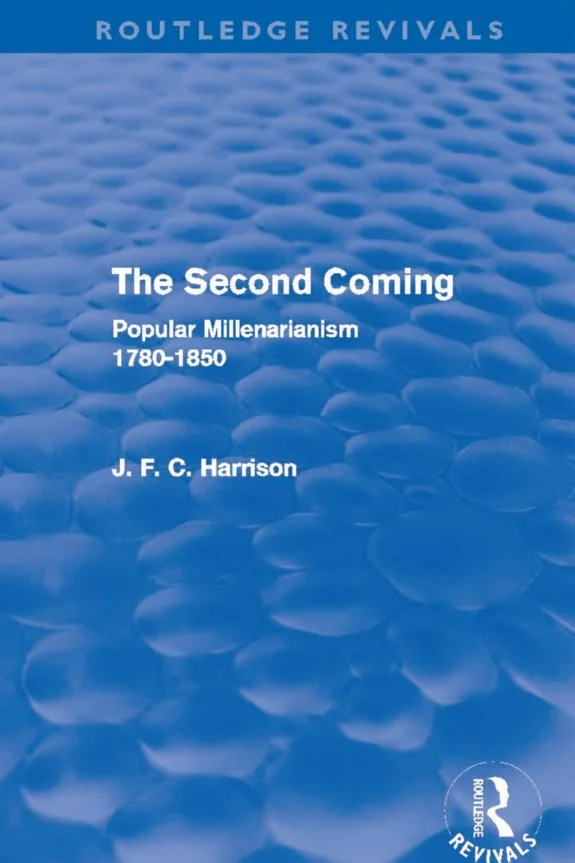
The Second Coming
 73
73

The Second Coming
J. F. C. Harrison's experiment in writing popular history, *The Second Coming*, succeeds by treating millenarianism as a lens through which to view the often-unseen currents of popular thought. The book's strength lies in its detailed examination of how apocalyptic expectations fueled social change among ordinary people in the late 18th and early 19th centuries. A particular passage discussing the influence of prophetic literature on working-class communities around the 1830s vividly illustrates this dynamic. However, the work occasionally struggles to balance its academic rigor with the accessibility implied by its subtitle; some sections could benefit from further explication for a broader audience. Despite this, Harrison compellingly argues for the significance of millenarian beliefs as a driver of historical agency. It offers a valuable perspective on the history of the dispossessed.
📝 Description
73
J. F. C. Harrison published The Second Coming in 1979, reframing popular history through millenarianism.
Published in 1979, J. F. C. Harrison's The Second Coming examines the beliefs of ordinary people in the late eighteenth and early nineteenth centuries, using millenarianism as a central lens. Harrison argues that millenarianism was more than just an expectation of apocalypse; it was a framework for understanding popular culture and a force driving social change. The book moves beyond traditional historical accounts that focus on elites, instead looking at the motivations behind collective action and belief systems.
This work appeals to readers interested in social history, the history of ideas, and popular movements. It is particularly useful for those studying religious studies, cultural history, and sociology, offering insights into the undercurrents of societal transformation. Harrison situates his study within a period of growing academic interest in the lives of everyday people, showing how their beliefs shaped historical trajectories during times of upheaval.
The Second Coming positions millenarianism not merely as a religious doctrine but as a potent ideology that shaped popular consciousness and collective action. Harrison traces how beliefs about divine intervention and future golden ages influenced individuals' interpretations of their world and motivated their actions during periods of social unrest. This approach connects the historical study of popular movements to the broader understanding of how chiliastic and apocalyptic thought has historically manifested in collective behavior and aspirations for radical change.
💡 Why Read This Book?
• Understand millenarianism as a socio-historical force: Learn how beliefs about the end times, particularly as explored in relation to the early 19th century, acted as a catalyst for popular action and social change beyond simple religious dogma. • Gain insight into overlooked historical actors: Discover how J. F. C. Harrison illuminates the ideas and motivations of ordinary men and women, providing a counter-narrative to traditional histories focused on elites. • Analyze the role of belief in societal shifts: Explore the conceptual tool of millenarianism to grasp how specific ideological frameworks shaped public consciousness and influenced collective behavior during periods of intense societal transformation.
⭐ Reader Reviews
Honest opinions from readers who have explored this book.
❓ Frequently Asked Questions
What historical period does J. F. C. Harrison's *The Second Coming* primarily focus on?
The book centers on the late eighteenth and the first half of the nineteenth centuries, examining the popular beliefs and movements prevalent during this era of significant social and political change.
What is the main conceptual tool Harrison uses to explore popular thought?
Harrison employs millenarianism as his primary conceptual tool. He uses beliefs in a coming divine intervention or a radical societal transformation to understand the mindset of ordinary people.
What is the significance of 'the people who have no history' in this book?
The phrase refers to the common populace whose lives, beliefs, and actions are often excluded from traditional historical accounts. Harrison aims to give voice to these perspectives, focusing on their role in shaping history.
When was *The Second Coming* first published?
The book was first published in 1979, though this edition is a later reprint. It represents Harrison's attempt to write a history from the perspective of the common person.
Does the book focus on specific millenarian movements?
While exploring millenarianism as a broad concept, the work delves into its manifestations as an ideology of social change and a continuing tradition within popular culture of the specified period.
What is the author's background and why is it relevant?
J. F. C. Harrison was a historian known for his work on social history and the history of ideas. His background lends authority to his analysis of popular movements and intellectual currents.
🔮 Key Themes & Symbolism
Millenarianism as Social Engine
Harrison frames millenarianism not just as eschatological fantasy but as a dynamic force for social change. The book illustrates how collective beliefs in a coming radical transformation or divine intervention provided a framework for action and identity among ordinary people in the late 18th and early 19th centuries. This perspective challenges the notion that such beliefs were merely passive waiting, instead highlighting their role in mobilizing communities and influencing historical trajectories during periods of upheaval.
The History of the Voiceless
A core objective of *The Second Coming* is to reconstruct the history of those often excluded from conventional narratives—'the people who have no history'. Harrison attempts to access the consciousness, beliefs, and ways of thinking of ordinary men and women. By focusing on their interpretations of the world, particularly through the lens of millenarian thought, the book provides a more inclusive understanding of historical agency and popular culture.
Ideology and Popular Consciousness
The work investigates how ideological constructs, such as millenarianism, take root and shape the consciousness of a populace. It explores the interplay between religious sentiment, social discontent, and the desire for a new social order. By examining these ideas, Harrison sheds light on how abstract beliefs can translate into tangible actions and movements, demonstrating the power of ideology in shaping the course of history from the ground up.
💬 Memorable Quotes
Direct passages from the work, attributed to the author.
“Millenarianism is a conceptual tool with which to explore some aspects of popular thought and culture.”
— This highlights Harrison's methodological innovation. He uses the concept of millenarianism not just to describe a specific set of beliefs, but as an analytical device to uncover the underlying worldview and cultural expressions of ordinary people.
“The Second Coming is an experiment in the writing of popular history.”
— This self-reflexive statement from the original blurb underscores Harrison's intention to break from traditional historiography. He aims for a more inclusive and people-centered approach, utilizing unconventional frameworks like millenarianism to achieve this.
“A contribution to the history of the people who have no history.”
— This signifies the book's focus on marginalized groups and common individuals whose experiences and beliefs are typically absent from historical records. It's a direct assertion of the book's commitment to social history's broader aims.
“It is also seen as an ideology of social change.”
— This interpretation moves beyond the purely religious or speculative aspects of millenarianism, positioning it as a potent belief system that actively drove movements seeking to alter the existing social and political order during the period studied.
“And as a continuing tradit[ion]...”
— This fragment suggests that millenarian thought is not confined to isolated incidents but represents a persistent undercurrent in popular culture. It implies a legacy and ongoing influence that Harrison sought to trace and understand within the historical context.
🌙 Esoteric Significance
Tradition
While not strictly an esoteric text in the vein of ceremonial magic or Kabbalah, *The Second Coming* intersects with esoteric traditions by examining their popular manifestations. Millenarianism itself, with its prophecies of a coming age and transformative events, shares conceptual ground with various apocalyptic and redemptive narratives found within Gnosticism, certain Christian mystical traditions, and esoteric interpretations of history. Harrison's work explores how these underlying currents of belief, often filtered through popular understanding, functioned within society.
Symbolism
The central 'symbol' explored is the concept of the 'Second Coming' itself, representing not just a singular religious event but a broader archetype of radical societal renewal and divine intervention. Within the context of popular thought Harrison examines, this symbol could manifest in various forms: prophecies of a new earthly paradise, the imminent overthrow of oppressive powers, or the establishment of a just kingdom. The book analyzes how these potent, often religiously charged, symbols were interpreted and utilized by ordinary people.
Modern Relevance
Contemporary interest in social movements, political eschatology, and the psychology of belief systems continues to find relevance in Harrison's approach. Thinkers and groups examining the role of ideology in contemporary political polarization, the resurgence of apocalyptic rhetoric in certain subcultures, or the historical roots of social justice movements can draw parallels. Harrison’s method of analyzing popular belief systems provides a framework for understanding how deeply held, often symbolic, ideas can drive collective action and shape societal narratives today.
👥 Who Should Read This Book
• Students of social history and the history of ideas: Gain a unique perspective on how popular belief systems, particularly millenarianism, shaped societal change in the late 18th and early 19th centuries. • Researchers of popular culture and religious movements: Understand millenarianism as a conceptual tool for analyzing the motivations and actions of ordinary individuals during periods of transformation. • Readers interested in the history of the dispossessed: Discover a historical narrative that prioritizes the perspectives and agency of those often excluded from conventional historical accounts, offering insights into their worldview.
📜 Historical Context
First published in 1979, J. F. C. Harrison's *The Second Coming* emerged during a fertile period for social history, a field that sought to recover the experiences of ordinary people often marginalized in traditional narratives. The late 18th and early 19th centuries, the book's focus, were indeed times of profound upheaval, marked by the French Revolution, the Industrial Revolution, and numerous social reform movements, many of which were infused with religious and chiliastic fervor. Harrison's work engaged with a burgeoning interest in the history of ideas and popular culture, moving beyond the political and economic histories that had previously dominated. While specific reception details for this particular book are sparse, its conceptual approach aligns with scholars like E. P. Thompson, who championed the study of the 'making of the English working class,' and George Rudé, who analyzed crowd actions. Harrison's focus on millenarianism as a driving force for change can be seen as a specific contribution to understanding the psychological and ideological underpinnings of popular participation in these turbulent times.
📔 Journal Prompts
The role of millenarian beliefs in mobilizing ordinary people.
How 'the people who have no history' conceptualized their world.
The function of apocalyptic ideas as drivers of social change.
Interpreting popular culture through ideological frameworks.
The relationship between belief and historical agency in the 18th and 19th centuries.
🗂️ Glossary
Millenarianism
A belief system characterized by the expectation of a major, transformative event, often apocalyptic, leading to a radical change in society and the establishment of a new era, frequently a 'golden age' or kingdom of God on Earth.
Popular History
A subfield of history that focuses on the experiences, beliefs, and actions of ordinary people, rather than solely on elites, rulers, or major political events.
Ideology
A system of ideas and ideals, especially one which forms the basis of economic or political theory and policy, often influencing collective behavior and social movements.
Social Change
Transformation or alteration in the social order, social institutions, social behaviors, or social relationships over time.
Conceptual Tool
An idea or framework used for analysis, interpretation, or understanding a particular phenomenon or set of data.
Chiliasm
A specific form of millenarianism, particularly derived from Christian theology, which anticipates a literal thousand-year reign of Christ on Earth following a period of intense struggle.
Agency
The capacity of individuals to act independently and make their own free choices, particularly in the context of influencing historical events or societal structures.
This book appears in 1 collection
🔮 Readers Also Liked
Browse all →









From the “Millenarianism” Collection
View all →







More Free Esoteric History & Biography Books
View all →