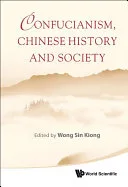
Confucianism, Chinese History And Society
 72
72

Confucianism, Chinese History And Society
Sin Kiong Wong's compilation offers a dense but rewarding exploration of Confucianism's deep roots in Chinese society and history. The inclusion of essays by luminaries like Tu Wei-Ming and Wang Gungwu lends considerable academic weight, providing analyses that move beyond superficial understanding. A particular strength lies in the detailed examination of how specific Confucian tenets, such as *Li*, were operationalized in dynastic governance, revealing the practical mechanisms of ideological influence. However, the collection’s academic rigor can also be a limitation; readers without a foundational knowledge of Chinese history or philosophy might find certain essays challenging to access without supplementary material. The work is best approached as a reference for dedicated study rather than a casual introduction. It ultimately serves as a valuable resource for understanding the sinews connecting ancient thought to persistent societal structures.
📝 Description
72
Published in 2012, Sin Kiong Wong's compilation examines Confucianism's impact on Chinese history and society.
This scholarly collection presents essays from leading academics in Chinese studies. It was first published on June 29, 2012. The book addresses the complex connections between Confucian thought, China's historical trajectory, and its social frameworks. The authors analyze how Confucian ideas have been understood and implemented across different dynasties, affecting political administration, social harmony, and personal behavior. Key concepts like *Ren* (benevolence), *Li* (ritual propriety), and *Xiao* (filial piety) are discussed, along with their development and significance within society. The collection also considers the position of the scholar official and Confucianism's influence on political ideas and social hierarchies in China.
While the term 'esoteric' might suggest hidden knowledge, this collection engages with Confucianism as a philosophical and ethical system deeply embedded in Chinese civilization for over two millennia. Its 'esoteric' quality lies in the detailed academic examination of how these core tenets, such as benevolence, ritual, and filial piety, have been interpreted and applied throughout history, shaping societal structures and political thought in ways that require specialized study. The book offers an in depth look at the mechanisms of this enduring tradition.
💡 Why Read This Book?
• Gain a nuanced understanding of *Ren* (benevolence) as a foundational ethical principle, moving beyond simplistic definitions through analyses presented by scholars like Professor Tu Wei-Ming. • Explore the practical application of *Li* (ritual propriety) in historical Chinese governance and social order, as detailed in essays referencing dynastic periods. • Grasp the enduring influence of Confucianism on Chinese societal structures and political thought, with insights drawn from the collected works of prominent scholars from institutions like Harvard University.
⭐ Reader Reviews
Honest opinions from readers who have explored this book.
❓ Frequently Asked Questions
Who are the key scholars contributing to Confucianism, Chinese History and Society?
The book features essays by renowned scholars including Professor Ho Peng Yoke from the Needham Research Institute, Professor Leo Ou-fan Lee from Harvard University, and Professor Tu Wei-Ming, also from Harvard University.
What is the historical period primarily covered by the essays?
The essays collectively examine the historical development of China, tracing the influence of Confucianism across various dynasties and epochs, from its ancient origins to its impact on later societal structures.
What core Confucian concepts are discussed in the book?
Key concepts explored include *Ren* (benevolence), *Li* (ritual propriety), and *Xiao* (filial piety), with detailed analysis of their meaning and societal implications throughout Chinese history.
Is this book suitable for beginners in Chinese philosophy?
While offering valuable insights, the book is geared towards advanced students and scholars due to its academic depth and specialized analyses of Confucianism's historical and societal impact.
What is the publication date of Confucianism, Chinese History and Society?
The original publication date for this collection of essays was June 29, 2012.
How does the book connect Confucianism to broader Chinese society?
It illustrates how Confucian principles have shaped governance, social hierarchies, ethical norms, and family structures throughout China's long history, providing a framework for understanding societal evolution.
🔮 Key Themes & Symbolism
Ethical Framework of Ren
The concept of *Ren*, often translated as benevolence or humaneness, is examined not merely as an abstract ideal but as a practical, cultivable virtue central to Confucian ethics. Essays explore how this principle was intended to guide personal conduct, interpersonal relationships, and the governance of the state, providing a foundation for social harmony and ethical leadership throughout Chinese history.
Ritual Propriety and Social Order (Li)
*Li*, encompassing rites, rituals, and social etiquette, is presented as the mechanism through which Confucian ideals are enacted. The collection analyzes how *Li* functioned to structure social interactions, define roles, and maintain order within families and the broader polity. Its evolution and adaptation across different historical periods are discussed, highlighting its role in both reinforcing and occasionally challenging existing power structures.
Filial Piety and Kinship Structures (Xiao)
The essays examine *Xiao*, or filial piety, exploring its significance as a central to Confucian social philosophy. This theme examines the duties and respect owed to parents and elders, and how this familial obligation extended to broader societal relationships, including loyalty to the ruler. The impact of *Xiao* on family dynamics, inheritance, and the perpetuation of social hierarchies is a recurring focus.
The Scholar-Official and Governance
The role of the scholar-official, steeped in Confucian learning, is a critical element. This theme investigates how these individuals served as intermediaries between the ruling elite and the populace, interpreting and implementing Confucian principles in administration. The selection, education, and influence of these officials within the imperial bureaucracy are analyzed, demonstrating the integration of philosophical thought into practical statecraft.
💬 Memorable Quotes
Direct passages from the work, attributed to the author.
“The work explores how Confucian principles like Ren and Li were not static doctrines but evolved through historical application.”
— This interpretation highlights the dynamic nature of Confucianism, emphasizing that its concepts were continuously reinterpreted and implemented across different dynasties, adapting to changing social and political landscapes.
“Essays analyze the mechanisms by which filial piety (Xiao) extended beyond the family unit to shape broader societal obligations.”
— This points to the book's focus on the societal reach of Confucian values, demonstrating how the intimate virtue of respecting elders was extrapolated to influence loyalty to superiors and the functioning of the state.
“The text examines the enduring impact of the scholar-official class on Chinese governance.”
— This interpretation underscores the book's attention to the practical role of educated elites who, drawing on Confucianism, administered the empire and influenced policy, acting as vital conduits for philosophical ideas in governance.
“The collection discusses the relationship between historical events and the interpretation of Confucian texts.”
— This suggests that the book links textual exegesis with concrete historical developments, showing how societal changes and political needs influenced the understanding and application of Confucian philosophy over time.
“Scholars investigate how Confucianism contributed to shaping China's social stratification.”
— This highlights the book's exploration of Confucianism's role in establishing and maintaining social hierarchies, examining how its emphasis on roles, duties, and merit (within its framework) affected class structures.
🌙 Esoteric Significance
Tradition
While Confucianism is primarily considered a socio-ethical philosophy, its emphasis on cosmic harmony, self-cultivation, and the alignment of human order with natural principles lends it esoteric dimensions. Within Esoteric Library's scope, it can be viewed as a parallel tradition to Hermeticism or Taoism in its pursuit of a balanced and ordered existence through specific practices and understanding of universal laws. It offers a distinct framework for achieving societal and personal integration.
Symbolism
Key symbols include the ideal ruler, embodying virtue and acting as a cosmic mediator, and the scholar, representing cultivated intellect and moral rectitude. The concept of the 'Mandate of Heaven' (*Tianming*) also functions symbolically, representing a divinely sanctioned right to rule contingent on virtuous governance, acting as a cosmic check on earthly power.
Modern Relevance
Contemporary thinkers exploring ethical governance, social cohesion, and the philosophical underpinnings of East Asian cultures frequently draw upon Confucian thought. Schools of comparative philosophy and ethics, as well as discussions on East Asian modernizations, often reference the enduring principles of *Ren*, *Li*, and *Xiao* as frameworks for understanding societal structures and interpersonal conduct.
👥 Who Should Read This Book
• Scholars of East Asian philosophy and history seeking rigorous academic analysis of Confucianism's societal impact. • Researchers in comparative ethics and political theory interested in non-Western models of governance and social order. • Students of Chinese culture and sociology looking to understand the historical roots of contemporary social structures and values.
📜 Historical Context
Published in 2012, *Confucianism, Chinese History and Society* emerged at a time when renewed global interest in East Asian philosophies was evident. The collection engages with a rich intellectual tradition that has shaped Chinese civilization for over two millennia, a period marked by the rise and fall of dynasties and the constant negotiation of Confucian ideals within governance and social life. Key contemporaries whose work on Chinese thought often intersects include scholars of Neo-Confucianism and modern Chinese intellectual history. The essays implicitly respond to ongoing debates about the relevance of Confucianism in contemporary China and its place in comparative philosophy. Unlike purely textual analyses, this volume grounds its discussions in historical epochs, examining how concepts like *Ren* and *Li* were actualized or challenged by events and power structures, such as the examination system that produced the scholar-officials discussed.
📔 Journal Prompts
The evolution of *Li* across different Chinese dynasties.
The practical application of *Ren* in historical governance.
Filial piety (*Xiao*) as a foundation for societal structure.
The role of the scholar-official in transmitting Confucian thought.
How Confucian ideals of harmony relate to historical Chinese societal stratification.
🗂️ Glossary
Ren (仁)
A core Confucian virtue, often translated as benevolence, humaneness, or goodness. It signifies empathy, compassion, and the ideal quality of interpersonal relationships.
Li (禮)
Encompasses rites, rituals, propriety, and etiquette. It refers to the norms of social conduct, ceremonial practices, and the proper way to behave in various social contexts.
Xiao (孝)
Filial piety, the virtue of respect for one's parents, elders, and ancestors. It is a fundamental concept in Confucianism, extending to loyalty and obedience within the family and beyond.
Scholar-Official
An educated elite class in imperial China, selected through civil service examinations based on Confucian classics, who served as administrators and officials in the government.
Mandate of Heaven (天命)
A traditional Chinese concept justifying the rule of the King or Emperor. It posits that Heaven grants the ruler the right to rule based on their ability to govern justly and effectively.
Dynasty
A sequence of rulers from the same family, typically in the context of a monarchy or empire. Chinese history is often divided and understood through its major dynastic periods.
Social Stratification
The hierarchical arrangement of individuals and groups in a society based on factors like wealth, status, power, and education, often influenced by prevailing philosophical and political ideologies.