Tao oracle
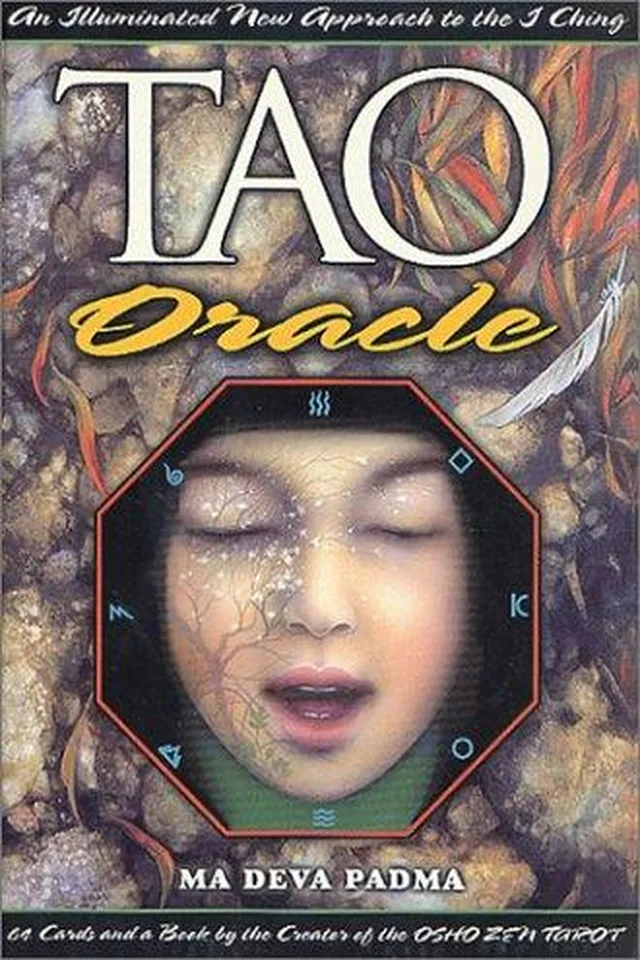
 61
61

Tao oracle



Lorelei Sage (Contemplative Literature Editor) — Deva Padma Ma.'s Tao Oracle is a sublime offering for serious students of esoteric arts. It transcends the typical divination manual, offering a deep dive into the philosophical underpinnings of the I Ching through a distinctly Taoist lens. The author masterfully unpacks the symbolic language of the hexagrams, revealing their profound relevance to personal growth and spiritual awakening. This is not a book for the casual dabbler; it demands contemplation and a willingness to engage with its subtle, yet potent, insights. Its strength lies in its ability to foster intuitive understanding and cultivate a practice of mindful inquiry. Highly recommended for practitioners and scholars seeking to deepen their connection to this ancient oracle.
📝 Description
61
Deva Padma Ma's Tao Oracle translates the I Ching's hexagrams through Taoist philosophy.
This volume connects the I Ching's hexagrams to Taoist thought, moving beyond simple divination. It aims to help readers understand universal energies and the interplay of Yin and Yang. The book uses descriptive language to guide readers toward self-awareness and inner peace.
It illuminates patterns in life and encourages a connection with the unseen. The Tao Oracle acts as a resource for those interested in esoteric ideas, fostering a link between the material and spiritual worlds. The text aims to provide comfort and a deeper understanding of the Tao.
The Tao Oracle draws from the ancient Chinese divination system, the I Ching, and integrates its principles with the philosophical and spiritual tenets of Taoism. This tradition emphasizes living in harmony with the Tao, the natural order of the universe. The book's approach to the hexagrams is framed within this Taoist understanding of cosmic balance, flow, and the interconnectedness of all things. It seeks to provide practical guidance for understanding life's changes and challenges.
💡 Why Read This Book?
The Tao Oracle invites you to unlock the profound wisdom of the I Ching, interpreted through the serene lens of Taoist philosophy. It's an essential read for seekers of inner peace, practitioners of divination, and scholars of Eastern mysticism. Discover hidden truths, cultivate intuition, and gain profound insights into the flow of life, all within its beautifully rendered pages. Experience a transformative dialogue with the cosmos.
⭐ Reader Reviews
Honest opinions from readers who have explored this book.
❓ Frequently Asked Questions
What is the I Ching and its connection to Taoism?
The I Ching, or Book of Changes, is an ancient Chinese divination text and philosophical classic. It is deeply intertwined with Taoist principles, reflecting the Taoist understanding of cosmic balance, the interplay of Yin and Yang, and the constant flux of existence through its sixty-four hexagrams.
How does this book facilitate divination?
The Tao Oracle provides clear interpretations of the I Ching hexagrams, offering guidance for specific questions. It emphasizes understanding the underlying energetic patterns and philosophical meanings rather than simply predicting outcomes, encouraging intuitive discernment.
Is prior knowledge of Taoism required to use this book?
While familiarity with Taoist concepts can enhance the experience, the book is designed to be accessible. Deva Padma Ma. guides readers through the core philosophies, making the wisdom of the Tao and the I Ching understandable even for newcomers.
What makes this interpretation of the I Ching unique?
This edition uniquely blends the traditional I Ching with a deep understanding of Taoist principles, focusing on the energetic flow and interconnectedness of all things. It offers a more holistic and contemplative approach to the oracle's wisdom.
Who is the intended audience for the Tao Oracle?
The book is ideal for spiritual seekers, practitioners of divination, students of Eastern philosophies, and anyone interested in gaining deeper self-awareness and insight into the patterns of life through ancient wisdom.
🔮 Key Themes & Symbolism
The Flow of the Tao
This theme explores the fundamental Taoist concept of the Tao as the ineffable, primordial force that underlies all existence. It explores how the I Ching's hexagrams mirror this cosmic flow, illustrating the constant dance of change, balance, and transformation inherent in the universe. Understanding the Tao's natural way, or 'Wu Wei' (non-action), becomes a central tenet for navigating life's currents with effortless grace and useful insights. The book encourages readers to align their actions with this natural order, fostering harmony and reducing resistance.
Symbolism of the Hexagrams
The I Ching's sixty-four hexagrams are rich tapestries of symbolic imagery, each representing a unique cosmic situation or energetic configuration. This theme dissects the visual and conceptual language of these hexagrams, revealing their deep connections to natural phenomena, human emotions, and spiritual archetypes. Deva Padma Ma. illuminates how the interplay of Yin (passive, feminine) and Yang (active, masculine) lines within each hexagram creates a dynamic interplay that speaks to the complexities of life. Understanding this symbolic language is key to unlocking the oracle's profound messages.
Divination as Inner Dialogue
Beyond simple prediction, the Tao Oracle positions divination as a sacred dialogue with one's inner wisdom and the universal consciousness. This theme emphasizes that the I Ching is not a deterministic fate-teller, but a mirror reflecting potential pathways and underlying energies. The book guides practitioners to approach the oracle with a contemplative mindset, seeking not answers, but deeper understanding and self-awareness. It encourages introspection, mindful questioning, and the integration of the oracle's insights into one's daily life for personal growth and spiritual evolution.
💬 Memorable Quotes
Direct passages from the work, attributed to the author.
“In stillness, find the movement of the Tao.”
— This paradoxical statement expresses the Taoist concept of Wu Wei (non-action). True action arises from deep inner stillness and alignment with the natural flow, rather than forced effort.
“Every hexagram is a doorway to understanding.”
— This emphasizes the I Ching's function as a key to unlocking deeper truths about life's situations, offering multiple perspectives and pathways to comprehending complex circumstances.
“Seek harmony within, and the outer world will reflect it.”
— This speaks to the interconnectedness of inner and outer realities, suggesting that cultivating inner balance and peace is the most effective way to influence and harmonize one's external environment.
💡 Key Ideas
Editorial paraphrase of the work's core concepts — not direct quotes.
The universe whispers its secrets to those who listen.
This quote highlights the esoteric principle that profound truths are not always obvious but reveal themselves through attentive awareness and a receptive spirit, much like tuning into subtle cosmic frequencies.
The greatest wisdom lies in accepting change.
This quote reflects a core Taoist tenet: the universe is in constant flux. True wisdom and peace come from embracing impermanence rather than resisting it.
🌙 Esoteric Significance
Tradition
This work is deeply rooted in the esoteric traditions of Taoism and the philosophical interpretations of the I Ching. It draws from the ancient Chinese understanding of cosmic principles, energetic flows (Qi), and the interconnectedness of all phenomena. The book acts as a conduit to this lineage, offering insights into practices that promote spiritual cultivation, intuitive development, and a profound connection to the underlying order of the universe.
Symbolism
The core symbolism lies within the I Ching's sixty-four hexagrams, each a potent glyph representing universal archetypes and dynamic forces. These hexagrams, formed by combinations of Yin and Yang lines, symbolize everything from creation and receptivity to conflict and harmony. The Tao Oracle elucidates these symbols, connecting them to natural phenomena, human psychology, and the subtle energies that govern existence, offering a rich lexicon for understanding life's myriad expressions.
Modern Relevance
In an era often characterized by chaos and disconnection, the Tao Oracle offers a timeless anchor of wisdom. Its principles of balance, flow, and mindful action are profoundly relevant for navigating modern challenges, fostering personal well-being, and cultivating a deeper sense of purpose. The book provides practical tools for self-inquiry and spiritual growth, empowering individuals to find inner peace and clarity amidst the complexities of contemporary life.
👥 Who Should Read This Book
The Tao Oracle is a treasure for the discerning reader. **Beginners** will find it an accessible yet profound introduction to the I Ching and Taoist thought, guided by clear explanations. **Practitioners of divination** will appreciate its depth and nuanced interpretations, enhancing their existing practices. **Scholars of Eastern mysticism** will discover a valuable resource for understanding the philosophical underpinnings and esoteric applications of this ancient oracle. **Spiritual seekers** of all backgrounds will find it a powerful companion for self-discovery, offering guidance and fostering a deeper connection to the universal flow.
📜 Historical Context
The I Ching, or Book of Changes, emerged from ancient Chinese shamanic traditions and philosophical discourse, evolving over millennia to become a core part of Chinese thought. Its earliest known layers date back to the Western Zhou dynasty (c. 1046–771 BCE), with significant philosophical commentary attributed to Confucius and his disciples during the Spring and Autumn period (771–476 BCE). Taoism, founded by Lao Tzu in the 6th century BCE, shares a deep resonance with the I Ching's emphasis on natural cycles, balance, and the concept of the Tao. The integration of I Ching divination with Taoist philosophy became a profound spiritual practice, influencing not only divination but also medicine, martial arts, and governance throughout East Asia. This book, Tao Oracle, stands within this rich lineage, offering a contemporary interpretation that bridges ancient wisdom with modern seekers.
📔 Journal Prompts
Reflect on a recent situation where you felt out of balance. Which hexagram from the Tao Oracle might represent this state, and what advice does it offer for regaining equilibrium?
Meditate on the concept of 'Wu Wei' (effortless action). How can you apply this principle to a task you are currently finding challenging?
Consider the interplay of Yin and Yang in your own life. Where do you see imbalances, and how can you foster greater harmony between these energies?
If you were to consult the Tao Oracle for guidance on your spiritual path, what question would you ask, and what are your initial thoughts on potential answers?
How does the understanding of constant change, as presented in the Tao Oracle, influence your perspective on your personal goals and aspirations?
🗂️ Glossary
Tao
The fundamental, ineffable principle and force underlying all existence in Taoist philosophy. It represents the natural order, the primordial source, and the ultimate reality that is beyond human comprehension.
I Ching
An ancient Chinese divination text and philosophical classic, also known as the Book of Changes. It uses sixty-four hexagrams, composed of six stacked lines (broken or unbroken), to interpret situations and predict potential outcomes.
Hexagram
A symbol in the I Ching composed of six stacked lines, each either solid (Yang) or broken (Yin). Each of the sixty-four hexagrams represents a specific cosmic situation, dynamic, or archetypal pattern.
Yin and Yang
Two complementary, interconnected, and interdependent forces that represent the dualistic nature of reality in Taoist philosophy. Yin is typically associated with darkness, passivity, and femininity, while Yang represents light, activity, and masculinity.
Wu Wei
A central concept in Taoism, often translated as 'non-action' or 'effortless action.' It refers to acting in accordance with the natural flow of the Tao, without forcing or striving, leading to spontaneous and effective results.
This book appears in 1 collection
🔮 Readers Also Liked
Browse all →









From the “Divination” Collection
View all →








More Free Divination & Tarot Books
View all →