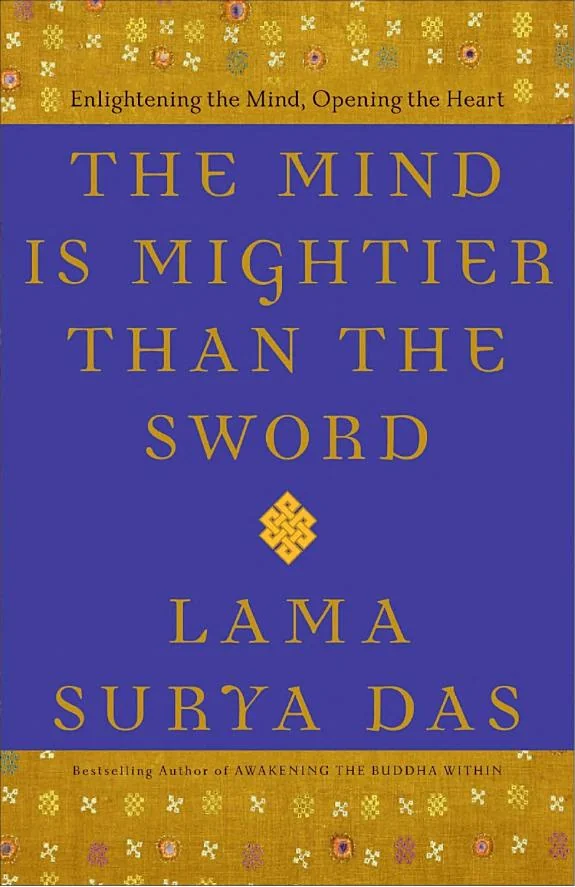
The Mind is Mightier Than the Sword
 79
79

The Mind is Mightier Than the Sword
Lama Surya Das's 2009 offering, "The Mind is Mightier Than the Sword," attempts a pragmatic distillation of Buddhist teachings for the uninitiated. Its strength lies in its accessibility; the author avoids dense jargon, presenting concepts like mindfulness and compassion in relatable terms. The chapter discussing the integration of Buddhist principles into daily routines, particularly the practical advice on managing stress through mindful breathing, offers tangible strategies. However, the book occasionally leans into a somewhat generalized spiritual tone, which might leave seasoned practitioners wanting deeper doctrinal exploration. While Lama Surya Das draws on the rich heritage of Tibetan Buddhism, the work sometimes feels more like a self-help manual than a profound spiritual text. The central argument—that mental discipline can overcome external adversity—is well-articulated but lacks the nuanced exploration found in more specialized Buddhist literature. It serves well as an introduction, but its depth is limited by its broad appeal. Ultimately, it’s a useful primer for the spiritually curious.
📝 Description
79
Lama Surya Das's 2009 book offers practical Buddhist guidance for modern life.
Published in 2009, "The Mind is Mightier Than the Sword" presents a way to apply Buddhist principles to daily living. It focuses on actionable steps rather than just theory, aiming to help readers find inner peace and act ethically. The book acts as a link for people who want to understand and use Buddhist teachings today. It speaks to the human search for meaning and a way to change oneself and interact positively with the world.
This book is for anyone interested in Buddhist ideas and how to use them. It is especially helpful for newcomers to these concepts or those looking to improve their current meditation practice. Readers interested in mindfulness, ethical living, and personal growth, even without deep Buddhist knowledge, will find it useful. It offers support for dealing with modern life's difficulties, building resilience, and finding a clear inner path. It also suits those seeking spiritual advice that promotes self-reflection and moral action.
This book aligns with the growing Western engagement with Tibetan Buddhism in the early 21st century. It follows a trend of making complex Eastern philosophies accessible to a broad audience, moving away from purely academic or rigid doctrinal presentations. Lama Surya Das, an American lama, was a significant figure in this movement, simplifying practices for secular practitioners seeking spiritual growth outside monastic settings.
💡 Why Read This Book?
• Gain practical techniques for cultivating mindfulness, as detailed in the book's guidance on developing one's spiritual center, enabling you to better manage daily stressors. • Learn to integrate Buddhist principles like compassion into your actions, inspired by Lama Surya Das's accessible explanations of the Dharma for everyday life. • Discover actionable steps for ethical conduct and personal growth, drawing from the book's focus on applying the Noble Eightfold Path in contemporary settings.
⭐ Reader Reviews
Honest opinions from readers who have explored this book.
❓ Frequently Asked Questions
What are the core Buddhist principles discussed in "The Mind is Mightier Than the Sword"?
The book emphasizes mindfulness (present-moment awareness), compassion (empathy and desire to alleviate suffering), and ethical conduct, framed within the context of the Noble Eightfold Path and the Three Jewels (Buddha, Dharma, Sangha).
Is "The Mind is Mightier Than the Sword" suitable for beginners in Buddhism?
Yes, the book is specifically designed as an accessible guide for those new to Buddhist teachings or seeking practical application without deep doctrinal study.
Who is Lama Surya Das and what is his background?
Lama Surya Das is an American-born Tibetan Buddhist lama, an author, and a meditation teacher. He is known for making Buddhist teachings accessible to Western audiences.
When was "The Mind is Mightier Than the Sword" first published?
The book was first published in 2009, reflecting a growing interest in accessible spiritual guidance during the early 21st century.
Does the book offer ways to deal with modern life's challenges?
Yes, it provides practical advice on integrating Buddhist principles into daily life to foster resilience, inner peace, and a more ethical approach to challenges.
What is the main message of "The Mind is Mightier Than the Sword"?
The central message is that mental discipline and inner cultivation, rooted in Buddhist wisdom, are more powerful tools for navigating life than external force or control.
🔮 Key Themes & Symbolism
Mindfulness and Present Awareness
The work explores mindfulness, a core Buddhist concept often linked to the Pali term *sati*. It guides readers on cultivating present-moment awareness without judgment, a practice intended to reduce mental clutter and enhance clarity. This isn't merely about passive observation but an active engagement with one's thoughts and surroundings, fostering a more grounded experience of reality. The book posits that this heightened awareness is the foundation for all other mental and ethical development, enabling a more skillful response to life's circumstances.
Compassion as Action
Central to the text is the cultivation of *karuna*, or compassion. This theme moves beyond mere sympathy to an active desire to alleviate suffering, both within oneself and in others. Lama Surya Das presents compassion not as an abstract ideal but as a practical application of Buddhist wisdom. The book suggests that by understanding the interconnectedness of all beings and the nature of suffering, individuals can foster genuine empathy that naturally leads to kinder, more ethical actions in their daily interactions.
Integrating Dharma into Daily Life
A primary focus is the practical integration of Buddhist teachings (Dharma) into the fabric of everyday existence. This theme addresses how principles like the Noble Eightfold Path can be applied outside formal meditation settings. The book offers strategies for ethical conduct, mental discipline, and cultivating wisdom in mundane activities, relationships, and work. It emphasizes that spiritual growth is not separate from ordinary life but is realized through the conscious application of these principles in all activities, thereby transforming the ordinary into the sacred.
The Power of the Mind
The title itself expresses a key theme: the profound power of the mind to shape reality and overcome external adversities. The book argues that through disciplined mental training, individuals can develop inner resilience, equanimity, and wisdom. This internal strength, cultivated through practices discussed in the book, is presented as a more potent force than brute strength or external control. It encourages a shift in focus from changing external circumstances to transforming one's internal landscape.
💬 Memorable Quotes
Direct passages from the work, attributed to the author.
“The mind is mightier than the sword.”
— This central aphorism underscores the book's thesis: inner strength, cultivated through mental discipline and wisdom, possesses greater efficacy than physical force or external power in navigating life's challenges.
“We must learn to be mindful of our minds.”
— This highlights the importance of self-awareness in Buddhist practice. It suggests that understanding the workings of one's own consciousness is the first step toward transforming negative patterns and cultivating positive mental states.
“The Dharma is not just for monks.”
— This conveys the book's accessible approach, suggesting that Buddhist principles and practices are relevant and applicable to laypeople living ordinary lives in the modern world.
“Find your spiritual center.”
— This serves as a directive for developing inner stability and grounding. It implies that cultivating a core sense of self and purpose is essential for navigating external turbulence and maintaining well-being.
💡 Key Ideas
Editorial paraphrase of the work's core concepts — not direct quotes.
Compassion begins with ourselves.
This paraphrased concept points to the idea that genuine empathy for others arises from a foundation of self-acceptance and self-care. One cannot effectively offer compassion to the world without first cultivating it within.
🌙 Esoteric Significance
Tradition
While drawing heavily from Tibetan Buddhism, a lineage within Mahayana Buddhism, the work positions itself broadly within the Esoteric tradition by focusing on internal transformation and direct experience over strict dogma. It bridges the gap between the exoteric presentation of Buddhist ethics and the more esoteric methods of mind-training aimed at profound psychological and spiritual insight, akin to practices found in Vajrayana but presented in a universally accessible manner.
Symbolism
The "sword" in the title can be interpreted esoterically as the "sword of wisdom" (*prajna*), a common motif in Buddhism used to cut through ignorance and delusion. This contrasts with the "sword" of brute force, representing the limitations of external power. The concept of a "spiritual center" evokes the image of a stable, unmoving point (like Mount Meru or the hub of a wheel) from which one can operate with clarity and balance, a recurring symbol in various mystical traditions.
Modern Relevance
Contemporary thinkers and practitioners in secular mindfulness, positive psychology, and even some Western esoteric circles find value in Lama Surya Das's approach. His emphasis on practical, non-dogmatic application of mental techniques aligns with modern therapeutic modalities and self-help movements. Schools focusing on contemplative practices and the integration of ancient wisdom into contemporary life often cite his accessible explanations of Buddhist psychology and ethics.
👥 Who Should Read This Book
• Individuals seeking an introduction to Buddhist philosophy and meditation practices without requiring deep academic study. • Professionals and students aiming to enhance focus, reduce stress, and cultivate emotional resilience through practical mind-training techniques. • Those exploring paths to personal growth and ethical living who are interested in applying spiritual principles to everyday challenges and relationships.
📜 Historical Context
Published in 2009, "The Mind is Mightier Than the Sword" emerged in an era marked by the widespread popularization of Buddhist thought in the West. This period saw a significant increase in books offering secularized or accessible versions of Eastern philosophies, aiming to provide practical tools for modern life. Lama Surya Das, an American-born Tibetan Buddhist lama, was a prominent figure in this movement, alongside contemporaries like Pema Chödrön and Thich Nhat Hanh, who also focused on making complex teachings relatable. The book's emphasis on mindfulness and practical application resonated with the burgeoning mindfulness-based stress reduction (MBSR) movement, founded by Jon Kabat-Zinn in the late 1970s. It arrived as a counterpoint to more traditional, often monastic-focused Buddhist literature, catering to a growing audience seeking personal development and inner peace outside of formal religious structures.
📔 Journal Prompts
Cultivating your spiritual center: What does this feel like in practice?
The mind's power: How have you observed your thoughts influencing your reality?
Applying compassion: Identify one small act of compassion you can practice today.
Mindfulness in action: Note a moment you were fully present and aware.
Ethical conduct: Reflect on a recent decision through the lens of the Noble Eightfold Path.
🗂️ Glossary
Mindfulness (Sati)
The practice of paying attention to the present moment, intentionally and without judgment. It involves observing thoughts, feelings, bodily sensations, and the surrounding environment.
Compassion (Karuna)
A fundamental Buddhist virtue characterized by empathy and the sincere wish for all beings, including oneself, to be free from suffering.
Dharma
In Buddhism, this term refers to the teachings of the Buddha, the cosmic law and order, and the path to enlightenment. It encompasses truth, reality, and the principles of ethical living.
Noble Eightfold Path
The foundational path in Buddhism leading to the cessation of suffering (Nirvana). It consists of eight interconnected practices: Right Understanding, Right Thought, Right Speech, Right Action, Right Livelihood, Right Effort, Right Mindfulness, and Right Concentration.
Three Jewels
The foundational elements of Buddhist refuge: the Buddha (the enlightened one), the Dharma (his teachings), and the Sangha (the community of practitioners).
Spiritual Center
A concept representing inner stability, grounding, and a core sense of self. Cultivating this center is key to maintaining equanimity amidst life's fluctuations.
Ignorance (Avidya)
In Buddhist philosophy, this refers to a fundamental misunderstanding of the true nature of reality, leading to suffering and attachment.
This book appears in 1 collection
🔮 Readers Also Liked
Browse all →









From the “Dream Yoga” Collection
View all →





More Free Sacred Texts & Gnosticism Books
View all →