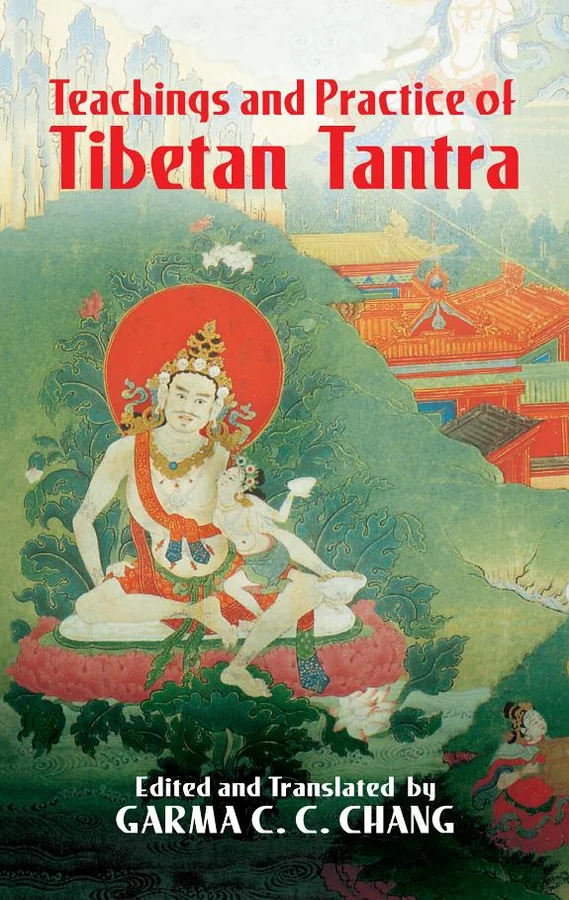
Teachings and Practice of Tibetan Tantra
 82
82

Teachings and Practice of Tibetan Tantra
Garma C. C. Chang’s *Teachings and Practice of Tibetan Tantra* offers a rare, unvarnished look at a spiritual path often obscured by myth and misunderstanding. Chang avoids the sensationalism that plagues Western discourse on tantra, instead providing a clear, instructional manual. His exposition on spiritualizing sexuality is particularly valuable, detailing the internal alchemy required to transmute base energies. While the directness of the instruction is a significant strength, the book’s dense, scholarly tone might present a barrier for newcomers. A passage detailing the specific visualizations for transforming fear into compassion, for instance, demands considerable focus. Ultimately, this is a critical text for serious practitioners seeking authentic Tibetan tantric methods.
📝 Description
82
Garma C. C. Chang's 1983 book details Tibetan Tantra's internal alchemy and yogic methods.
This volume presents the core principles and practical exercises of Tibetan Tantra, as transmitted by Garma C. C. Chang. It moves past sensationalized Western views to offer a direct guide to the internal alchemical processes central to this tradition. The text outlines methods for spiritualizing sexual energy, transforming psychological obstacles such as fear and attachment, and cultivating a liberated consciousness.
The book focuses on the practical application of yogic techniques within a tantric framework. Its aim is to expand awareness and achieve spiritual autonomy. This work is for serious students of esoteric traditions, especially those interested in the Vajrayana Buddhist path. It suits individuals seeking a systematic approach to inner transformation who are prepared for challenging practices. Readers should have a basic understanding of meditation and a genuine commitment to spiritual development.
It offers methods for changing base energies into wisdom and compassion. The book appeals to those who wish to integrate their spiritual life with their physical existence. Chang's approach offered an alternative to superficial understandings, presenting tantra as a rigorous spiritual discipline. His work contributed to a discourse that distinguished authentic tantric practice from misinterpretations.
Garma C. C. Chang's work on Tibetan Tantra emerged in the mid-20th century, a time when interest in Eastern spirituality grew in the West. Chang, a scholar and practitioner, provided a more direct lineage transmission than many popular accounts. His approach offered an alternative to superficial understandings, presenting tantra as a rigorous spiritual discipline. This book contributed to a developing discourse that distinguished authentic tantric practice from misinterpretations.
💡 Why Read This Book?
• Gain practical methods for spiritualizing sexual energy, a core but often misunderstood aspect of Vajrayana Buddhism, as detailed in Chang’s step-by-step guidance. • Learn specific techniques for transmuting fear and attachment into love and universal power, offering a direct application of tantric psychology. • Understand traditional yoga exercises and their application for expanding consciousness, as presented in the book’s practical sections, distinct from Westernized yoga.
⭐ Reader Reviews
Honest opinions from readers who have explored this book.
❓ Frequently Asked Questions
When was Garma C. C. Chang's 'Teachings and Practice of Tibetan Tantra' first published?
The book 'Teachings and Practice of Tibetan Tantra' by Garma C. C. Chang was first published in 2004.
What is the primary goal of the practices described in the book?
The primary goal is the spiritualization of sexuality and the transmutation of negative emotions like fear and attachment into love and universal power, leading to expanded consciousness.
Does this book focus on the sexual aspects of tantra for Western audiences?
No, the book provides a concise guide to the art of spiritualizing one's sexuality within the traditional Tibetan Tantra framework, focusing on internal transformation.
What kind of exercises are included in the book?
The book includes step-by-step instructions for traditional yoga exercises and practical applications for liberating and expanding consciousness.
Who is Garma C. C. Chang?
Garma C. C. Chang was a scholar and practitioner who transmitted teachings on Tibetan Tantra, aiming to provide an authentic and practical guide.
Is this book suitable for complete beginners to spirituality?
While it offers practical applications, the book is best suited for students of religion and esoteric traditions interested in a systematic approach to Tibetan Tantra.
🔮 Key Themes & Symbolism
Spiritualizing Sexuality
This theme addresses the transformation of sexual energy into a vehicle for spiritual advancement, a core tenet of Tibetan Tantra. The book explains how to sublimate primal drives, moving beyond mere physical expression to harness this potent energy for higher consciousness. Chang outlines specific methods to purify and elevate sexual experience, integrating it into the broader path of liberation, which is a departure from ascetic renunciation often associated with other spiritual paths.
Transmutation of Emotions
Central to the practice is the concept of transforming negative emotional states, such as fear and attachment, into positive qualities like love and universal power. The book provides practical exercises designed to reframe these common human experiences. By understanding the energetic roots of these emotions, practitioners can learn to dissolve their binding nature and redirect their energy constructively, fostering psychological resilience and compassion.
Consciousness Expansion
The ultimate aim of these practices is to expand and liberate consciousness from its ordinary limitations. The text details traditional yoga exercises and meditative techniques specifically designed for this purpose. Through disciplined application, the practitioner seeks to attain states of awareness that transcend mundane perception, leading to deeper insight and a more profound connection with reality.
Practical Application of Yoga
This theme focuses on the 'how-to' of Tibetan tantric practice. It goes beyond theoretical concepts to offer concrete, step-by-step instructions for performing specific yoga exercises and meditations. The emphasis is on the direct, applied nature of these techniques, showing how they can be integrated into daily life to foster spiritual growth and achieve the transformative goals of tantra.
💬 Memorable Quotes
Direct passages from the work, attributed to the author.
“The art of spiritualizing one’s sexuality.”
— This concise phrase captures the book's focus on transforming primal sexual energy into a sacred force for spiritual growth, rather than suppression or indulgence.
“Efficient methods for transmuting fear and attachment into love and universal power.”
— This highlights the practical, alchemical aspect of tantric practice, offering a systematic approach to overcoming psychological obstacles and cultivating higher emotional states.
“Step-by-step instructions demonstrate how to perform traditional yoga exercises.”
— This points to the instructional nature of the text, emphasizing its role as a practical manual for practitioners seeking to learn and apply specific yogic techniques.
“Practical applications for expanding and liberating one’s consciousness.”
— This emphasizes the direct benefit of the teachings: achieving greater awareness and freedom from mental limitations through the methods presented.
“A wealth of information for students of religion and anyone interested in this fascinating subject.”
— This suggests the book's comprehensive scope, appealing to both academic students of religion and individuals drawn to the esoteric dimensions of Tibetan Buddhism.
🌙 Esoteric Significance
Tradition
This work is firmly rooted in the Vajrayana tradition of Tibetan Buddhism, specifically focusing on the tantric path. It aligns with the lineage's emphasis on utilizing all aspects of human experience, including sexuality, as a means for rapid spiritual realization. Chang’s presentation adheres to the principle that the subtlest energies of the body can be transformed into wisdom and bliss, a hallmark of tantric methods aimed at achieving Buddhahood in a single lifetime.
Symbolism
While the book focuses on practice, its underlying symbolism draws from core Vajrayana concepts. The transformation of 'fear and attachment' can be seen symbolically as dissolving the illusion of a separate self, the root of suffering. 'Universal power' symbolizes the awakening of inherent enlightened capacities. The spiritualization of sexuality itself symbolizes the integration of the primal life force with spiritual aspiration, representing the union of wisdom and method.
Modern Relevance
Contemporary Western practitioners of Buddhism, particularly those within Vajrayana lineages, continue to draw on detailed instructional texts like Chang's. It informs modern approaches to mindfulness, energy work, and the integration of psychological and spiritual development. Thinkers and teachers exploring the intersection of subtle body anatomy, consciousness studies, and contemplative practice often reference or are influenced by the precise methods found in such foundational tantric literature.
👥 Who Should Read This Book
• Students of Tibetan Buddhism seeking a direct, practical guide to Vajrayana tantric practices beyond theoretical explanations. • Practitioners of esoteric traditions interested in understanding the spiritualization of sexuality and the transmutation of emotions from an authentic Eastern perspective. • Researchers in comparative religion or consciousness studies looking for detailed accounts of yogic exercises and their application within a specific spiritual lineage.
📜 Historical Context
Garma C. C. Chang's *Teachings and Practice of Tibetan Tantra*, first published in 2004, arrived during a period of increasing Western engagement with Eastern spiritual traditions. While figures like Helena Blavatsky had introduced esoteric concepts earlier in the 20th century, Chang's work offered a more direct transmission of Tibetan Vajrayana, distinct from the prevalent Zen or Theosophical interpretations. This era saw a growing demand for authentic teachings, often in reaction to popularized or sensationalized versions of tantra. Chang's scholarly yet practical approach provided a valuable resource for serious students, contributing to a more nuanced understanding of the tradition. His work engaged with the intellectual currents seeking to reconcile spiritual practice with psychological and energetic understanding, offering a counterpoint to purely philosophical or devotional approaches.
📔 Journal Prompts
The spiritualization of sexuality described by Chang: initial reactions and potential challenges.
Transforming fear into universal power: mapping personal instances of fear and potential transmutation techniques.
Practical application of yoga: identifying one exercise from the book to explore in personal practice.
The concept of liberating consciousness: current limitations and desired expansions.
Garma C. C. Chang's approach to tantra: how it contrasts with other spiritual paths you know.
🗂️ Glossary
Tibetan Tantra
A branch of Vajrayana Buddhism originating in Tibet, emphasizing rapid spiritual transformation through advanced yogic practices, meditation, and the utilization of subtle energies.
Spiritualizing Sexuality
The tantric practice of transforming primal sexual energy into a higher spiritual force, used for awakening consciousness and cultivating wisdom and compassion.
Transmutation
The alchemical process of converting base or negative energies (like fear and attachment) into refined, positive qualities (like love and power).
Universal Power
An awakened state of enlightened energy and capability, arising from the transmutation of ordinary emotional and psychological limitations.
Liberating Consciousness
The state of freedom from ordinary mental conditioning, limitations, and suffering, achieved through dedicated spiritual practice and insight.
Traditional Yoga Exercises
Specific physical postures, breathwork, and meditative techniques passed down within esoteric traditions, used for spiritual and energetic development.
Vajrayana
The 'Diamond Vehicle' or 'Thunderbolt Vehicle,' the esoteric branch of Mahayana Buddhism prevalent in Tibet, known for its rapid path to enlightenment.
This book appears in 1 collection
🔮 Readers Also Liked
Browse all →









From the “Dream Yoga” Collection
View all →







More Free Sacred Texts & Gnosticism Books
View all →