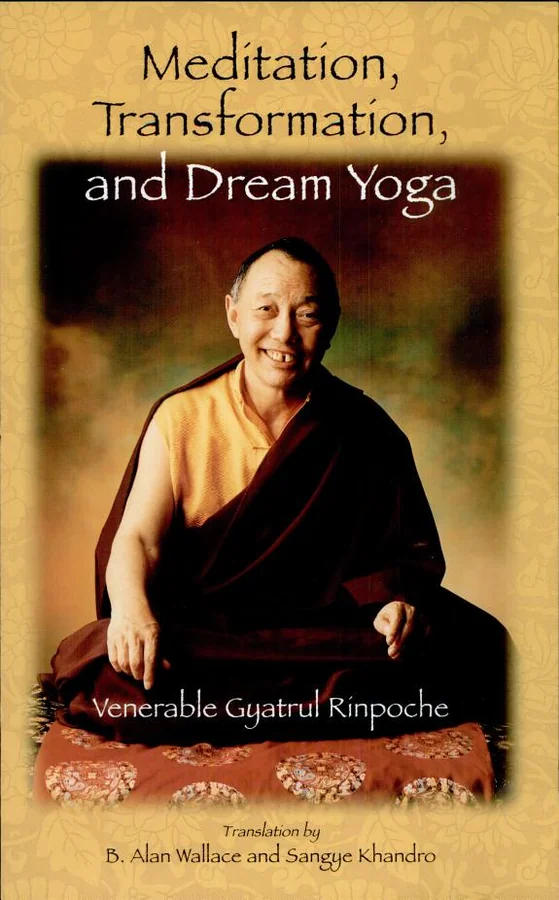
Meditation, Transformation, and Dream Yoga
 80
80

Meditation, Transformation, and Dream Yoga
Gyatrul Rinpoche’s "Meditation, Transformation, and Dream Yoga" offers a pragmatic distillation of Nyingma principles for the contemporary householder practitioner. The book’s primary strength lies in its directness; Rinpoche avoids overly academic or ritualistic discourse, focusing instead on actionable guidance for integrating practice into a demanding life. His commentary on quiescence meditation, for instance, provides clear instructions for settling the mind, a vital step often obscured by complex theoretical frameworks. However, the work’s brevity, while contributing to its accessibility, occasionally leaves the reader wishing for more in-depth exploration of certain advanced topics, particularly the nuances of Dream Yoga itself. A passage discussing how even mundane chores can become a form of "practice" powerfully illustrates the book's core ethos. Ultimately, Rinpoche delivers a valuable, no-nonsense guide for anyone seeking to reconcile spiritual aspiration with the realities of modern existence.
📝 Description
80
Published in 2002, Gyatrul Rinpoche's book connects Nyingma teachings to modern life.
Gyatrul Rinpoche's "Meditation, Transformation, and Dream Yoga," released in 2002, offers a practical application of Nyingma Buddhist texts for contemporary practitioners. The book details Rinpoche's commentary on core Nyingma teachings, structuring guidance to help individuals balance spiritual discipline with daily responsibilities. It emphasizes cultivating a robust meditation practice from the Dzogchen viewpoint, specifically through the method of quiescence meditation. The teachings extend to integrating spiritual awareness into everyday moments, transforming ordinary experiences into opportunities for growth.
The work is designed for spiritual seekers who struggle to find time for formal practice due to worldly duties. It provides advice for maintaining a consistent meditation routine without needing a monastic setting. Those interested in the Nyingma tradition and its relevance to busy schedules will find actionable guidance. The book is also beneficial for practitioners aiming to deepen their understanding of quiescence meditation and learn how daily life can actively support their spiritual path.
This work emerges from the Nyingma school of Tibetan Buddhism, a lineage that traces its origins to the first dissemination of Buddhist teachings in Tibet. Gyatrul Rinpoche, a recognized master, presents teachings rooted in this ancient tradition. The book addresses the specific challenges faced by practitioners in the late 20th and early 21st centuries, a time marked by rapid societal changes and distractions that often impede introspective practices. Rinpoche's approach aims to make these profound teachings accessible and applicable to individuals living in the modern world.
💡 Why Read This Book?
• You will learn specific techniques for "quiescence meditation" from the Dzogchen perspective, as presented by Gyatrul Rinpoche, to cultivate mental stillness amidst daily chaos. • You will discover methods for integrating spiritual practice into your work and rest periods, as discussed in the book's focus on balancing "quality practice time, work time, and rest time." • You will gain insight into transforming everyday experiences into opportunities for spiritual growth, a key tenet of the Nyingma tradition explored by Rinpoche.
⭐ Reader Reviews
Honest opinions from readers who have explored this book.
❓ Frequently Asked Questions
What is the Dzogchen perspective on meditation presented in the book?
The book presents the Dzogchen perspective on "quiescence meditation" (shamatha) as a method to stabilize the mind and recognize its natural, undisturbed state. This approach emphasizes direct experience over complex intellectualization, guiding practitioners to find peace within their own awareness.
How does the book address the challenge of balancing practice with work and rest?
Gyatrul Rinpoche specifically addresses the modern aspirant's need to balance "quality practice time, work time, and rest time." The book offers guidelines and methods to integrate spiritual development into the fabric of daily life, rather than seeing it as separate from one's responsibilities.
What is "Dream Yoga" as discussed by Gyatrul Rinpoche?
While the book introduces the concept, "Dream Yoga" refers to specific Tibetan Buddhist practices that utilize the state of sleep and dreaming for spiritual realization. It involves maintaining awareness during dreams and transforming them into a path for insight and liberation.
Who is Gyatrul Rinpoche?
Gyatrul Rinpoche is a respected Lama within the Nyingma school of Tibetan Buddhism. He is known for his ability to convey profound teachings in an accessible manner, particularly to Western students, emphasizing practical application in daily life.
When was 'Meditation, Transformation, and Dream Yoga' first published?
The book "Meditation, Transformation, and Dream Yoga" by Gyatrul Rinpoche was first published on September 6, 2002. This timing places it within a period of growing interest in Tibetan Buddhist practices in the Western world.
What does the book mean by 'bringing the experiences of daily life into the spiritual path'?
This means viewing everyday activities—such as working, eating, or interacting with others—as opportunities for spiritual practice. Instead of compartmentalizing spiritual life, the book guides readers to cultivate mindfulness and awareness in all actions, transforming the mundane into the sacred.
🔮 Key Themes & Symbolism
Quiescence Meditation Practice
The book details "quiescence meditation" (shamatha) from the Dzogchen perspective, focusing on calming the mind. It provides practical instructions for achieving mental stability and clarity, emphasizing the importance of recognizing the mind's natural state. This theme addresses the foundational aspect of meditation, guiding practitioners to develop a focused and tranquil mind as a prerequisite for deeper spiritual inquiry and realization within the Nyingma tradition.
Integration of Daily Life
A central theme is the seamless integration of spiritual practice with the demands of everyday living. Gyatrul Rinpoche stresses that one need not abandon worldly responsibilities to pursue enlightenment. The book explores how work, rest, and daily activities can be transformed into opportunities for spiritual growth, challenging the conventional separation between the sacred and the secular, and making the spiritual path accessible to all.
The Nature of Mind
Central to the teachings is an exploration of the mind's fundamental nature, particularly from the Dzogchen viewpoint. The text encourages practitioners to observe the mind directly, understanding its inherent stillness and clarity beyond conceptual elaborations. This theme aims to foster direct experiential insight, moving beyond mere intellectual understanding towards a lived realization of the mind's ultimate ground.
Dream Yoga Practices
The volume touches upon "Dream Yoga," a sophisticated practice within Tibetan Buddhism focused on utilizing the dream state for spiritual development. While not extensively detailed, its inclusion signifies the Nyingma tradition's comprehensive approach to consciousness, extending spiritual inquiry into all states of awareness, including sleep and dreams, for profound transformation.
💬 Memorable Quotes
Direct passages from the work, attributed to the author.
“The modern-day spiritual aspirant who must combine and balance quality practice time, work time, and rest time.”
— This phrase captures the book's core audience and purpose: individuals grappling with the challenges of maintaining a spiritual life amidst contemporary societal pressures. It highlights the practical, non-monastic focus of Gyatrul Rinpoche's teachings.
“Guidelines for formal sitting are presented here from the Dzogchen perspective in the teachings on quiescence meditation.”
— This points to the book's foundational teachings on meditation. It specifies the tradition (Dzogchen) and the technique (quiescence meditation or shamatha), indicating a focus on cultivating a stable, calm mind as a basis for spiritual progress.
“Practices for bringing the experiences of daily life into the spiritual path.”
— This highlights the book's emphasis on integrating spirituality into everyday existence. It suggests that ordinary activities, not just formal meditation sessions, can serve as powerful tools for personal and spiritual development.
“The three traditional Nyingma texts and Venerable Gyatrul Rinpoche's commentary.”
— This indicates the source material and structure of the book. It clarifies that the content is based on established Nyingma teachings, enhanced by Rinpoche's authoritative explanations, lending it significant traditional weight.
“Balance quality practice time, work time, and rest time.”
— This concise directive underscores the practical intent of the book. It acknowledges the complex demands on an individual's time and offers a framework for harmonizing spiritual pursuits with worldly responsibilities.
🌙 Esoteric Significance
Tradition
This work is firmly rooted in the Nyingma tradition, one of the oldest schools of Tibetan Buddhism. It specifically draws from the Dzogchen ("Great Perfection") teachings, which represent the pinnacle of the Nyingma path, emphasizing direct recognition of the mind's innate nature. The book fits within this lineage by offering practical methods derived from these profound teachings, making them accessible to practitioners outside of a traditional monastic setting.
Symbolism
While the text focuses more on direct experience than overt symbolism, the concept of "quiescence" itself can be seen as symbolic of the mind's primordial, undisturbed state—a pure, unmoving expanse before the arising of thoughts. The integration of "daily life" symbolizes the dissolution of the perceived duality between the mundane and the spiritual, suggesting that the entirety of existence can become a vehicle for awakening, mirroring the non-dualistic philosophy central to Dzogchen.
Modern Relevance
Contemporary mindfulness and meditation movements, particularly those seeking depth beyond secular applications, often draw implicitly or explicitly from Tibetan Buddhist traditions. Thinkers and practitioners exploring the intersection of consciousness studies, psychology, and contemplative practice find resonance in the Nyingma approach to mind training presented by Rinpoche. The emphasis on integrating practice into a busy life aligns with modern needs for accessible spiritual tools, influencing contemporary Buddhist teachers and secular mindfulness instructors alike.
👥 Who Should Read This Book
• Busy professionals and students seeking to incorporate meaningful spiritual practice into a demanding schedule, as the book offers methods for balancing "quality practice time, work time, and rest time." • Practitioners of Tibetan Buddhism, especially those within the Nyingma tradition or interested in Dzogchen, who want clear guidance on "quiescence meditation" from a contemporary master. • Individuals new to meditation who are looking for practical, foundational techniques presented without overwhelming jargon, focusing on stabilizing the mind and applying awareness to daily life.
📜 Historical Context
Published in 2002, "Meditation, Transformation, and Dream Yoga" arrived at a time when Western interest in Tibetan Buddhism, particularly the Nyingma school, was substantial and growing. Gyatrul Rinpoche, a recognized master, offered teachings that addressed the practical challenges faced by lay practitioners in the late 20th and early 21st centuries. The era saw a significant influx of Tibetan lamas teaching in the West, often adapting their methods for audiences unaccustomed to monastic life. Rinpoche’s work specifically countered the perception that deep spiritual practice required complete withdrawal from society. While schools like the Gelug and Kagyu traditions also gained prominence, the Nyingma emphasis on Dzogchen and its integration into daily life, as presented here, offered a distinct pathway. The book’s reception was generally positive among those seeking accessible yet authentic Tibetan Buddhist teachings, fitting into a broader intellectual current of integrating Eastern contemplative practices into Western lifestyles.
📔 Journal Prompts
The concept of "quiescence meditation" and its role in stabilizing the mind.
Transforming mundane activities into opportunities for spiritual growth.
Balancing "quality practice time, work time, and rest time" in your current life.
The Dzogchen perspective on the mind's natural state.
Integrating the insights from "Dream Yoga" into waking consciousness.
🗂️ Glossary
Nyingma
One of the oldest schools of Tibetan Buddhism, known for its emphasis on Dzogchen teachings and its unique lineage transmission methods.
Dzogchen
Literally 'Great Perfection,' the highest and most profound teachings within the Nyingma tradition, focusing on the direct recognition of the mind's primordial, luminous, and empty nature.
Quiescence Meditation (Shamatha)
A foundational meditation practice aimed at developing mental tranquility, stability, and concentration by calming the mind and focusing attention.
Spiritual Aspirant
An individual who is actively seeking spiritual growth, understanding, or liberation, regardless of their specific tradition or level of practice.
Dream Yoga
A set of advanced Tibetan Buddhist practices designed to utilize the dream state as a means for spiritual insight, transformation, and realizing the nature of mind.
Formal Sitting
Refers to dedicated periods of meditation practice undertaken in a structured posture, typically seated, with the intention of cultivating specific mental states or insights.
Commentary
An explanation or interpretation of a text, offering clarification, context, and elaborations on the original teachings, often provided by a realized master.
This book appears in 1 collection
🔮 Readers Also Liked
Browse all →







From the “Dream Yoga” Collection
View all →





More Free Sacred Texts & Gnosticism Books
View all →