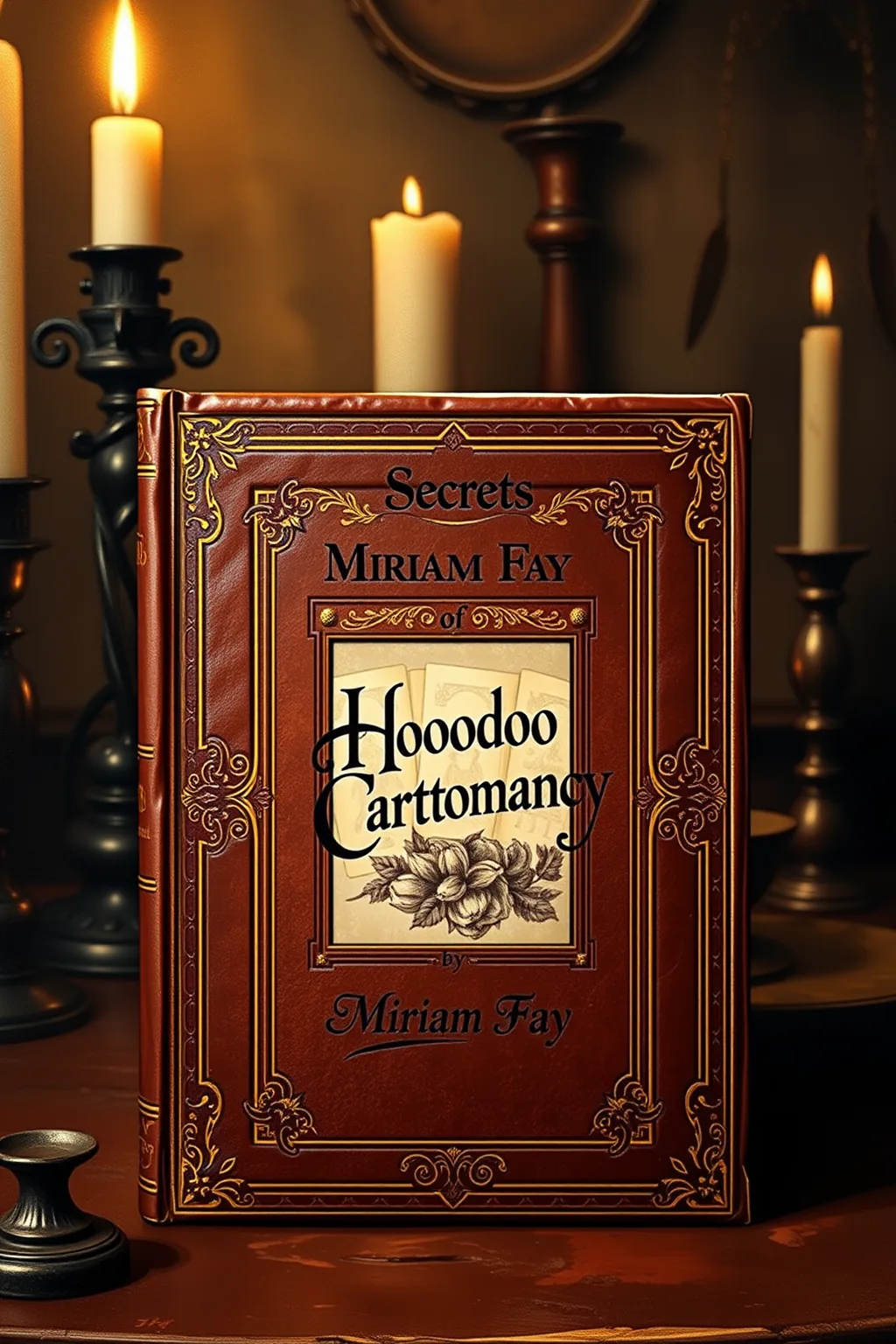
Secrets of Hoodoo Cartomancy
 79
79

Secrets of Hoodoo Cartomancy
Miriam Fay's "Secrets of Hoodoo Cartomancy" offers a refreshing perspective on card divination, grounding esoteric principles in the rich soil of African American folk traditions. Fay avoids the esoteric jargon that often plagues such texts, instead presenting a clear, accessible method for working with playing cards. Her interpretation of the suit of Spades, particularly their connection to struggle and transformation, provides a potent example of the book's unique strength. However, the book could benefit from further exploration of the historical lineage of playing card divination as it intersects with specific African spiritual systems, moving beyond general references to folk magic. The section on interpreting court cards, while useful, feels somewhat brief. Nevertheless, Fay’s work is a valuable contribution for anyone seeking a practical, culturally-rooted divination system.
📝 Description
79
Miriam Fay's Secrets of Hoodoo Cartomancy grounds divination in African American folk magic using a standard 52-card deck.
This book presents a practical method for divination that uses a standard 52-card deck within the framework of African American folk magic. It moves past simple card meanings to show how they apply to real-world situations, spiritual counsel, and personal development. The work focuses on how the suits and numbers interact energetically, creating a system for intuitive interpretation.
The guide is for anyone wanting to deepen their divinatory practices through a specific cultural lens. It suits beginners interested in different cartomancy systems and experienced readers who wish to go beyond Tarot. Those drawn to Hoodoo traditions, folk magic, and the spiritual meaning of common items will find it especially valuable. The emphasis is on practical use and building an intuitive bond with the cards.
Hoodoo cartomancy has a long history predating formal Tarot systems, often using standard playing cards. Its place in Hoodoo shows a blend of European folk magic, African spiritual practices, and American folk Catholicism. This tradition was prominent in the American South, serving as a way for communities to find guidance and spiritual strength.
💡 Why Read This Book?
• Gain a practical method for using standard playing cards in divination, a technique rooted in the specific cultural milieu of Hoodoo, offering a distinct alternative to Tarot. • Learn the specific interpretations of suits and numbers as presented by Miriam Fay, moving beyond generic meanings to understand their application in love and money readings, as detailed in the book's practical examples. • Understand the concept of 'reading the deck' as a holistic spiritual entity, a core tenet of this practice that fosters a deeper, more intuitive connection with the cards.
⭐ Reader Reviews
Honest opinions from readers who have explored this book.
❓ Frequently Asked Questions
What makes Hoodoo cartomancy different from Tarot reading?
Hoodoo cartomancy utilizes a standard 52-card deck, focusing on the elemental and numerical meanings of playing cards within an African American folk magic context, whereas Tarot employs a specialized deck with Major and Minor Arcana and distinct symbolism.
Can beginners use Secrets of Hoodoo Cartomancy?
Yes, the book is designed for both novices and experienced practitioners, offering clear explanations of card meanings, suit associations, and combination interpretations suitable for those new to cartomancy.
What kind of spiritual work can be done with Hoodoo cartomancy?
The book outlines applications for divination, guidance, and spiritual work, including readings for love, finances, and personal development, all framed within the principles of Hoodoo traditions.
Does this book require prior knowledge of Hoodoo?
While prior knowledge is not strictly necessary, the book situates cartomancy within Hoodoo practices, offering context for those interested in learning more about this specific spiritual tradition.
When was Secrets of Hoodoo Cartomancy first published?
The first edition of Secrets of Hoodoo Cartomancy by Miriam Fay was published on March 29, 2025.
What are the main components of a Hoodoo cartomancy reading?
A reading involves understanding the meanings of individual cards, their numerical values, the elemental associations of the suits (Hearts, Diamonds, Clubs, Spades), and how these elements combine to form a narrative or message.
🔮 Key Themes & Symbolism
Playing Cards as Oracles
The work posits a standard deck of playing cards not merely as a game, but as a potent oracle capable of revealing hidden truths and guiding spiritual paths. It details how each card, from the Ace to the King, carries specific energies and messages, influenced by its suit and numerical value. This perspective transforms a common object into a sacred tool for introspection and foresight, aligning with the practical, accessible nature of many Hoodoo practices.
Suit and Number Divination
Central to the book's methodology is the systematic interpretation of the four suits (Hearts, Diamonds, Clubs, Spades) and the numerical sequence. Hearts represent emotional and relational matters, Diamonds focus on material and financial aspects, Clubs signify action and communication, and Spades address challenges and transformations. The book elaborates on how numbers amplify these meanings, providing a granular approach to reading the cards for specific life areas.
Hoodoo Folk Magic Integration
Secrets of Hoodoo Cartomancy firmly places card reading within the rich context of African American folk magic. It emphasizes the practical, life-affirming applications of divination, focusing on empowerment and problem-solving. This approach distinguishes it from more academic or purely theoretical systems, highlighting how everyday tools are imbued with spiritual power to assist individuals in their daily lives and spiritual journeys.
Intuitive Card Interpretation
Beyond rote memorization, the book encourages the development of intuitive understanding. It teaches readers to perceive the interplay between cards, the 'story' they tell collectively, and how to connect this to their own inner knowing. This emphasis on personal connection and subjective experience is crucial for effective divination, fostering a deeper relationship with the cards and their messages.
💬 Memorable Quotes
Direct passages from the work, attributed to the author.
“A standard deck is a universe waiting to be read.”
— This statement captures the book's core premise: that ordinary playing cards are not mundane objects but possess profound divinatory potential, serving as a microcosm of life's complexities and possibilities.
“The Spades speak of the necessary trials that forge character.”
— This highlights a specific, nuanced interpretation of the Spades suit within Hoodoo cartomancy, moving beyond simple negativity to acknowledge their role in personal growth and resilience.
“Each number shapes the suit's message.”
— This points to the intricate system of interpretation where numerical values are not independent but actively modify and refine the meanings associated with each suit, creating a layered divinatory language.
“Read the cards not just for answers, but for understanding.”
— This emphasizes a key philosophical approach to divination presented in the book: that the ultimate goal is not merely prediction, but gaining deeper insight into oneself and one's circumstances.
“The heart of cartomancy lies in the connection you build.”
— This suggests that the effectiveness of divination is deeply tied to the practitioner's personal relationship with the cards, emphasizing intuition and rapport over rigid, mechanical application.
🌙 Esoteric Significance
Tradition
Hoodoo cartomancy occupies a unique space, drawing from West African spiritual traditions, European folk magic, and syncretic Christian elements prevalent in the American South. It departs from strictly Hermetic or Kabbalistic systems by emphasizing practical, everyday divination and empowerment rather than complex theoretical frameworks. Its lineage is primarily oral and experiential, rooted in community practice and ancestral wisdom.
Symbolism
The playing card deck itself becomes a symbolic universe. The four suits represent fundamental forces: Hearts (emotion, love), Diamonds (material world, finances), Clubs (action, communication, work), and Spades (challenges, transformation, endings). Numbers 1-10 represent a progression of these forces, while the court cards (King, Queen, Jack) symbolize archetypal figures or specific individuals. The Joker, often included in Hoodoo decks, represents the unpredictable, the wild force of spirit.
Modern Relevance
Contemporary practitioners of folk magic, spiritualists, and those interested in Afro-diasporic religions find value in this work. Thinkers exploring comparative religion and divination systems often cite Hoodoo practices for their resilience and adaptability. Modern spiritual counselors and intuitive readers also draw upon its accessible, practical approach to self-understanding and guidance, particularly those seeking non-Western esoteric frameworks.
👥 Who Should Read This Book
• Individuals interested in African American folk magic traditions seeking a practical divinatory tool. • Tarot readers looking to expand their practice with a different, culturally-rooted card system. • Those curious about using everyday objects for spiritual insight and guidance in areas like love and finances.
📜 Historical Context
The practice of using playing cards for divination has roots stretching back to at least the late 18th century, evolving alongside cartomancy systems across Europe. In the American South, these practices became interwoven with Hoodoo, a complex system of spiritual traditions blending West African beliefs, European folk magic, and elements of Christianity. This syncretism allowed marginalized communities to create powerful spiritual tools adapted to their unique circumstances. While formal Tarot gained prominence, playing card cartomancy, often less documented, remained a vital, accessible method. "Secrets of Hoodoo Cartomancy" emerges in a contemporary landscape where interest in folk magic and diasporic spiritualities is resurgent, offering a specific lens on a tradition that predates formal occult revivals like the Hermetic Order of the Golden Dawn, which heavily influenced Tarot's academic study.
📔 Journal Prompts
The Ace of Hearts' potential for new emotional beginnings.
Interpreting the 'challenge' suit, Spades, in a current personal situation.
The symbolism of the King of Diamonds in relation to material security.
How the numerology of a specific card combination informs its message.
The role of court cards as representatives of people in readings.
🗂️ Glossary
Cartomancy
The practice of divination using a deck of playing cards. It involves interpreting the symbols, numbers, and positions of the cards to gain insight into past, present, or future events.
Hoodoo
A spiritual tradition developed by enslaved Africans in North America, blending West African spiritual practices with elements of European folk magic and Christianity. It focuses on practical magic, healing, and protection.
Suits
The four divisions of a standard playing card deck: Hearts, Diamonds, Clubs, and Spades. Each suit is associated with specific themes and elements in cartomancy.
Court Cards
The King, Queen, and Jack in each suit. In cartomancy, they often represent specific people, archetypal energies, or significant aspects of a reading.
Elemental Associations
The connection of each suit to one of the four classical elements: Hearts (Water), Diamonds (Earth), Clubs (Fire), and Spades (Air). These associations inform card interpretations.
Reading the Deck
A method of cartomancy where the entire deck is shuffled and interpreted as a whole, often revealing overarching themes or energies surrounding a question or situation.
Divination
The practice of seeking knowledge of the future or the unknown by supernatural means. In this context, it refers to using cards to gain insight.