Hinduism
 71
71

Hinduism
Axel Michaels’ "Hinduism" tackles the formidable task of defining a religious landscape often perceived as an amorphous entity. His introduction of the "identificatory habitus" is the work's signal strength, providing a sophisticated tool to understand how diverse traditions maintain a shared identity against external pressures. This conceptual framework elevates the book beyond a mere survey. However, the dense academic prose, while precise, can sometimes obscure the lived experience of practitioners, making it a challenging read for those unfamiliar with post-structuralist social theory. A passage discussing the role of pilgrimage sites in reinforcing this habitus, for example, is particularly insightful, illustrating how shared geography and ritual practice solidify group identity. Michaels' work offers a vital academic perspective, but its utility for the casual seeker of spiritual knowledge is limited by its theoretical rigor.
📝 Description
71
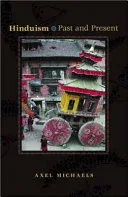
Axel Michaels' 2004 book examines Hinduism not as a single religion but as diverse traditions with shared coherence.
Axel Michaels' "Hinduism" offers a scholarly examination of the diverse religious traditions originating from the Indian subcontinent. Rather than presenting a monolithic view, Michaels investigates the shared elements and underlying coherence that bind these practices together. He introduces the concept of an "identificatory habitus" as a critical lens, suggesting it is a formative force that enables Hindus to maintain a sense of common identity and resist external religious pressures. This approach moves beyond simple cataloging of beliefs and rituals to understand the dynamic processes of religious identification.
This work is intended for serious students of comparative religion, theology, and cultural studies. It appeals to those who seek a clear understanding of Hinduism, moving past superficial stereotypes. Scholars and researchers will find value in Michaels' theoretical framework, particularly his concept of "identificatory habitus." Readers interested in the sociology of religion, the dynamics of cultural transmission, and the enduring strength of distinct religious traditions will also benefit from this in-depth analysis.
Published in 2004, Michaels' "Hinduism" engages with academic discourse on South Asian religions. The book emerged in a period where scholars debated "Hinduism" as a singular entity versus a collection of varied traditions. Michaels' work contributes to this discussion by proposing a framework for understanding the internal cohesion of these distinct practices. Its appearance followed significant scholarship by authors like Wendy Doniger and Diana Eck, who also studied the complexities of Hindu identity and practice.
💡 Why Read This Book?
• Gain a scholarly understanding of Hinduism's internal cohesion, moving beyond simplistic categorizations, by grasping Michaels' concept of the "identificatory habitus" as a unifying force. • Analyze how religious traditions adapt and persist through foreign influences, using the book's exploration of the period following the 2004 publication and its engagement with existing scholarship. • Appreciate the dynamic interplay between diverse practices and collective identity, as demonstrated by the examination of specific rituals and textual traditions within the "identificatory habitus" framework.
⭐ Reader Reviews
Honest opinions from readers who have explored this book.
❓ Frequently Asked Questions
What is Axel Michaels' "identificatory habitus" in the context of Hinduism?
Michaels' "identificatory habitus" refers to a shared system of dispositions, practices, and perceptions that binds various Hindu traditions together, enabling them to maintain a collective identity and resist foreign influences.
When was Axel Michaels' book 'Hinduism' first published?
Axel Michaels' "Hinduism" was first published in 2004, positioning it within contemporary academic discussions on South Asian religions.
Does the book cover specific Hindu deities or scriptures?
While focusing on overarching concepts, the work explores the diverse forms of Hindu worship and the significance of textual traditions, implicitly referencing deities and scriptures as components of the identified habitus.
Is this book suitable for beginners interested in Hinduism?
The book is academically rigorous and best suited for students of religion or those with prior exposure to scholarly analyses of religious traditions, rather than absolute beginners.
What distinguishes Michaels' approach from other books on Hinduism?
Michaels distinguishes his work by introducing and applying the "identificatory habitus" concept, offering a theoretical lens to understand the internal coherence and resilience of Hindu traditions.
How does the book address the diversity within Hinduism?
It addresses diversity by analyzing the commonalities and shared identity-forming mechanisms across different Hindu practices, rather than treating them as entirely separate entities.
🔮 Key Themes & Symbolism
The Identificatory Habitus
The core concept, the "identificatory habitus," is presented not as a fixed doctrine but as a dynamic set of shared perceptions and practices that foster a sense of commonality among diverse Hindu traditions. Michaels posits this habitus as the crucial element that allows Hinduism to maintain its distinct identity and adapt over centuries, absorbing and integrating external influences without losing its essential character. This framework is key to understanding how a religion with such vast regional and sectarian variations can still be recognized as a coherent whole.
Religious Cohesion and Foreign Influence
Michaels critically examines how Hindu traditions have historically navigated and responded to foreign religious and cultural influences. The "identificatory habitus" serves as the mechanism through which this cohesion is maintained. The work explores how shared rituals, pilgrimage sites, and textual interpretations act as unifying forces, fortifying the tradition against assimilation or fragmentation when confronted by external belief systems or political pressures.
Diversity within Unity
Rather than attempting to homogenize Hinduism, Michaels' analysis emphasizes the "diversity within unity." The "identificatory habitus" accommodates a wide spectrum of beliefs, practices, and philosophies, from devotional movements to ascetic orders. The book demonstrates that the shared habitus provides a common ground that allows for this rich diversity to flourish without necessarily creating irreconcilable divisions, highlighting the adaptive capacity of the tradition.
Ritual and Practice as Identity Markers
The book underscores the role of common rituals and practices in shaping and reinforcing the "identificatory habitus." Specific examples, such as temple worship, festivals, and life-cycle ceremonies, are analyzed not just for their theological content but for their function in creating shared experiences and perpetuating a collective Hindu identity across generations and geographical distances.
💬 Memorable Quotes
Direct passages from the work, attributed to the author.
“The identificatory habitus is a cohesive force binding Hindu religions.”
— This core assertion from Michaels frames his central argument: that despite outward diversity, a shared underlying structure of perception and practice unites Hindu traditions and strengthens them against external pressures.
“Hindus hold traditions, beliefs, and rituals in common.”
— This statement highlights the foundational premise of the book – that commonalities exist and are significant, forming the basis for Michaels' exploration of a unifying 'habitus'.
“The habitus fortifies them against foreign influences.”
— This emphasizes the defensive and adaptive function of the identified habitus, suggesting it provides resilience and continuity for Hindu traditions in the face of external challenges or changes.
“Examining traditions through the lens of its 'identificatory habitus'.”
— This points to the methodological approach of the book, indicating that the author uses this specific theoretical concept as his primary analytical tool for understanding Hindu religious phenomena.
“What Hindus hold in common.”
— This concise phrase captures the subject matter Michaels aims to explore, focusing on the shared elements that contribute to a collective religious identity.
🌙 Esoteric Significance
Tradition
While not strictly an occult text, Michaels' work touches upon perennial philosophical concerns relevant to esoteric traditions. The concept of an "identificatory habitus" can be seen as analogous to the subtle body or psychic structure that binds individuals within a particular spiritual lineage or esoteric school. It speaks to the underlying energetic or psychological patterns that create group cohesion, a concept explored in traditions like Theosophy and various forms of Western esotericism that seek to understand universal laws of connection and identity.
Symbolism
The book implicitly engages with symbolism by exploring how shared rituals and practices, which are often deeply symbolic, contribute to the "identificatory habitus." For example, the symbolism inherent in major pilgrimage sites like Varanasi, or the shared recognition of certain deities and their iconographies, function as potent unifying symbols that reinforce collective identity across diverse geographical and sectarian lines within Hinduism.
Modern Relevance
Contemporary scholars and practitioners interested in the sociology of religion, identity politics, and the endurance of cultural traditions find Michaels' "identificatory habitus" concept highly relevant. It provides a robust model for understanding how any large, diverse religious or cultural group maintains its coherence and distinctiveness in a globalized world, offering insights applicable to both traditional religious studies and broader analyses of social cohesion in the 21st century.
👥 Who Should Read This Book
• Students of comparative religion and cultural studies seeking to understand the dynamics of religious identity formation beyond doctrinal analysis. • Researchers investigating the mechanisms of social cohesion and resilience in diverse communities, using the "identificatory habitus" as a theoretical framework. • Individuals interested in the historical and sociological underpinnings of major world religions, particularly those seeking a nuanced view of Hinduism's internal structures.
📜 Historical Context
Axel Michaels' "Hinduism," published in 2004, entered a vibrant academic discourse on South Asian religions. The early 21st century saw continued scholarly engagement with the challenges of defining "Hinduism" as a singular entity versus a complex of diverse traditions. Michaels’ work contributed to this by offering the theoretical framework of the "identificatory habitus." This period was influenced by scholars like Wendy Doniger, whose work often explored the fluidity and mythological dimensions of Hinduism, and Diana Eck, who focused on the urban and sacred geography of India. Michaels’ approach, emphasizing internal cohesion and identification, offered a distinct perspective. While not subject to significant censorship, academic works on religion in this era often navigated debates surrounding essentialism versus constructivism in religious studies. Michaels' contribution was recognized for its sophisticated theoretical apparatus in understanding religious identity formation.
📔 Journal Prompts
The concept of the 'identificatory habitus' in Hinduism.
Shared rituals and their role in fortifying religious traditions.
How foreign influences shape religious identity.
The balance between diversity and unity in belief systems.
The function of common practices in maintaining group cohesion.
🗂️ Glossary
Identificatory Habitus
A central concept introduced by Axel Michaels, referring to the shared dispositions, perceptions, and practices that create a sense of collective identity within a religious tradition, enabling it to maintain cohesion and resist foreign influences.
Esoteric
Relating to or accessible only by a select group of initiated people; concerned with the inner spiritual meaning or purpose of something, often contrasted with exoteric or public teachings.
Comparative Religion
The academic study of different religions, focusing on their similarities and differences in beliefs, practices, and historical development.
Religious Traditions
A system of beliefs, practices, rituals, and often moral codes that are passed down through generations within a community, forming a distinct religious identity.
Foreign Influences
External factors, such as other religions, cultures, or political systems, that interact with and potentially alter or challenge a given religious tradition.
Cohesion
The action or fact of forming a united whole; sticking together. In a religious context, it refers to the internal unity and solidarity of a group.
Pan-Indian
Encompassing or characteristic of the entire Indian subcontinent, as opposed to regional or local variations.