The Gospel of the Unknown Jesus
 79
79

The Gospel of the Unknown Jesus
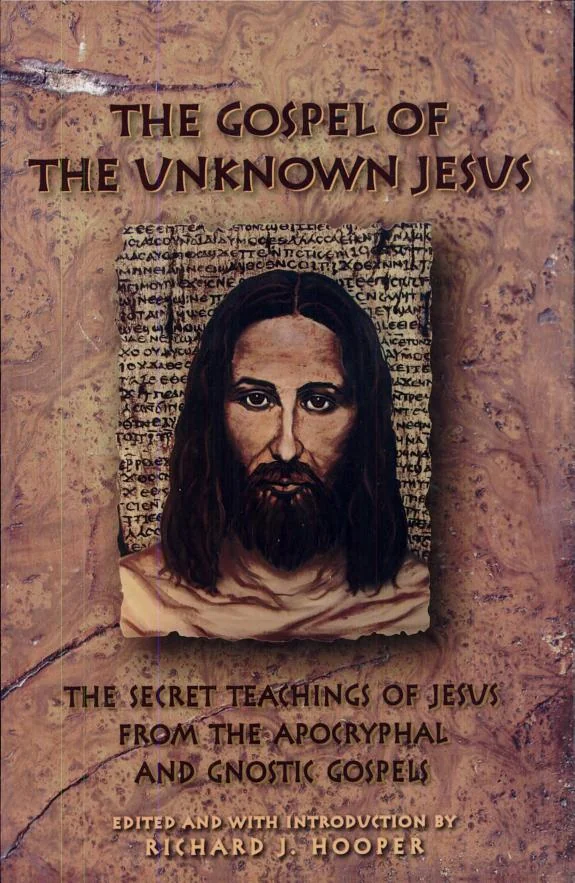
Richard J. Hooper’s "The Gospel of the Unknown Jesus" undertakes the commendable task of assembling sayings from Jesus found outside the canonical Gospels. Its strength lies in the thematic organization, allowing for a more cohesive examination of specific teachings, such as the internal nature of the Kingdom of Heaven, which stands in contrast to later, more institutionalized Christian doctrines. The collection effectively highlights the mystical and gnostic currents present in early Christianity, offering a valuable counterpoint to standard New Testament exegesis. However, the book's primary limitation is its reliance on secondary compilations without always providing deep critical analysis of the source texts' provenance or translation challenges. A particularly striking passage concerns the interpretation of the "Kingdom of God is within you," which Hooper presents not as a metaphor but as a literal, accessible inner state. While informative for those already familiar with Gnostic texts, the absence of extensive scholarly commentary might leave newcomers seeking deeper contextualization. This is a useful anthology for exploring alternative Jesus traditions.
📝 Description
79
Richard J. Hooper's 2008 compilation gathers Jesus's sayings found only in extra-canonical scriptures.
The Gospel of the Unknown Jesus collects sayings and teachings attributed to Jesus, sourced solely from scriptures outside the New Testament canon. Published in 2008, this work focuses on a different aspect of early Christian thought, diverging from the familiar narratives of the New Testament Gospels. Hooper organizes the texts thematically, allowing for concentrated study of specific ideas rather than a chronological or biographical approach. This structure helps readers view Jesus's words as a consistent source of esoteric understanding.
This book is for individuals interested in the historical Jesus beyond the standard biblical accounts. It will appeal to students of early Christianity, comparative religion, and those drawn to Gnostic and other non-traditional spiritual paths. Readers who question established doctrines and seek a wider perspective on the Christ figure will find substantial material here, particularly those examining alternative interpretations of Christ's teachings or the development of early Christian theology and its divergence from proto-Orthodox beliefs.
This compilation draws from early Christian texts omitted from the New Testament, including writings like the Gospel of Thomas and Gospel of Mary. These extra-canonical scriptures offer a distinct view of Jesus's ministry and message, contrasting with canonical accounts. The book's 2008 publication aligns with a modern resurgence of academic and esoteric interest in these alternative Gospels, amplified by discoveries such as the Nag Hammadi library in 1945. It situates itself within traditions that explore suppressed or non-mainstream interpretations of early Christianity.
💡 Why Read This Book?
• You will learn about the concept of the "Kingdom of God" as an internal, present reality, as presented in extra-canonical texts, offering a different perspective than traditional eschatology. • You will gain exposure to teachings attributed to Jesus from non-canonical sources, such as those found in the Gospel of Thomas, which were omitted from the New Testament canon. • You will understand the emphasis on "gnosis" or direct spiritual knowledge as a path to salvation, a central tenet in many Gnostic traditions that diverged from early orthodox Christianity.
⭐ Reader Reviews
Honest opinions from readers who have explored this book.
❓ Frequently Asked Questions
What are extra-canonical texts in the context of "The Gospel of the Unknown Jesus"?
Extra-canonical texts are writings about Jesus or attributed to him that were not included in the final New Testament canon by early Christian authorities. This book draws from such texts, offering teachings not found in Matthew, Mark, Luke, or John.
When was "The Gospel of the Unknown Jesus" first published?
The first publication date for "The Gospel of the Unknown Jesus" by Richard J. Hooper was July 9, 2008.
How are the teachings arranged in this book?
The teachings are arranged thematically, grouping similar concepts and sayings together. This structure allows readers to explore specific subjects like the nature of the Kingdom or inner wisdom without adhering to a chronological narrative.
What is the primary focus of the teachings presented in the book?
The primary focus is on Jesus's esoteric and mystical teachings, emphasizing self-knowledge, the internal spiritual state, and direct spiritual insight (gnosis) as pathways to understanding and liberation.
Does this book contain the same stories as the Gospels in the Bible?
No, this book specifically focuses on sayings and teachings attributed to Jesus that are found in texts *outside* of the canonical Gospels, providing a different set of his purported words.
Who is Richard J. Hooper?
Richard J. Hooper is the author and compiler of "The Gospel of the Unknown Jesus." His work aims to bring attention to the less-known sayings of Jesus from early Christian apocryphal and Gnostic literature.
🔮 Key Themes & Symbolism
The Inner Kingdom
This theme explores the concept of the Kingdom of God as an internal, present reality rather than an external, future event. Extra-canonical texts often present Jesus teaching that the divine realm is accessible within one's own consciousness, achieved through spiritual awakening and self-understanding. This perspective contrasts sharply with later interpretations that emphasize a physical, future coming of the Kingdom, suggesting a more immediate and personal path to spiritual realization for the individual seeker.
Gnosis and Self-Knowledge
Central to many of the collected sayings is the idea of gnosis, or direct, intuitive spiritual knowledge. The teachings suggest that true salvation and enlightenment come not from blind faith or adherence to external laws, but from understanding one's true divine nature and the hidden truths of existence. This emphasis on inner knowing positions Jesus as a revealer of secrets and a guide for individuals seeking to unlock their own innate spiritual potential through introspection and direct experience.
Allegorical Interpretation
The book highlights Jesus's use of parables and symbolic language to convey deeper spiritual truths. Rather than taking his words literally, the teachings encourage an allegorical approach, seeking the hidden meanings behind the stories and metaphors. This method of interpretation aligns with esoteric traditions that view scripture as a coded message, requiring spiritual insight to decipher its wide implications for the human soul.
The Divine Within
A recurring motif is the inherent divinity within each human being. The Unknown Jesus's teachings, as presented here, often point to the "spark" of the divine that resides within all individuals, waiting to be recognized and awakened. This perspective fosters a sense of empowerment and direct connection to the divine, bypassing the need for intermediaries and emphasizing personal spiritual responsibility.
💬 Memorable Quotes
Direct passages from the work, attributed to the author.
“The Kingdom of God is within you.”
— This frequently cited saying, found in extra-canonical texts, is interpreted as Jesus's assertion that spiritual realization and the divine realm are not distant future events but accessible states of consciousness available in the present moment through inner work.
“Seek and you will find; knock and it will be opened to you.”
— This encouragement emphasizes the active role of the seeker. It suggests that sincere effort, persistent inquiry, and a willingness to engage with the spiritual path will inevitably lead to discovery and revelation of hidden truths.
“Blessed are the poor in spirit, for theirs is the Kingdom of Heaven.”
— Interpreted esoterically, 'poor in spirit' refers not to material poverty but to detachment from ego, worldly desires, and intellectual pride, creating an inner emptiness receptive to divine wisdom and spiritual sovereignty.
“Know yourselves, and you will know the universe and God.”
— This maxim underscores the Gnostic principle that self-awareness is the ultimate path to cosmic understanding. By understanding the depths of one's own being, one can perceive the underlying divine structure of reality.
“He who is near me is near the fire.”
— This powerful metaphor suggests that proximity to Jesus's teachings or spiritual essence ignites a transformative, purifying fire within the seeker, leading to spiritual awakening and the burning away of lower aspects.
🌙 Esoteric Significance
Tradition
This work primarily engages with the Gnostic tradition, a diverse set of early Christian and Hellenistic philosophies emphasizing gnosis (spiritual knowledge) as the key to salvation. It aligns with movements that viewed the material world as a flawed creation and sought liberation through direct, often mystical, insight into the divine. The compilation departs from mainstream Christianity by centering inner experience and esoteric understanding over institutional dogma and faith alone.
Symbolism
The "fire" mentioned in some sayings symbolizes spiritual illumination, purification, and the divine presence that ignites transformation within the seeker. The "Kingdom of God" is often presented not as a physical place but as a state of consciousness, a symbol of inner peace and divine connection achieved through gnosis. "Light" serves as a pervasive symbol for divine truth, awareness, and the inherent spiritual nature of humanity.
Modern Relevance
Contemporary spiritual seekers, particularly those interested in Gnosticism, esoteric Christianity, and mystical psychology, draw heavily on these alternative Jesus traditions. Thinkers exploring consciousness studies, comparative mysticism, and non-dual philosophies find resonance in the emphasis on inner knowing and direct experience of the divine, often referenced in modern spiritual movements and psychological approaches to self-discovery.
👥 Who Should Read This Book
• Students of comparative religion and early Christianity seeking to understand the diversity of beliefs beyond the canonical New Testament. • Individuals interested in Gnostic teachings and esoteric interpretations of Jesus's message, who wish to explore concepts like inner gnosis and the immanent Kingdom of God. • Spiritual explorers questioning established religious doctrines and looking for alternative perspectives on wisdom traditions and the nature of spiritual realization.
📜 Historical Context
The early centuries of Christianity were a period of intense theological diversity, with numerous groups and individuals interpreting Jesus's teachings in varied ways. The extra-canonical texts compiled in "The Gospel of the Unknown Jesus" stem from this fertile, often contentious, period, representing currents like Gnosticism and other Wisdom traditions. Many of these writings, such as the Gospel of Thomas, were composed between the 2nd and 4th centuries CE. They offer perspectives that diverged significantly from the theological trajectory that would eventually become orthodox Christianity, codified by figures like Irenaeus of Lyons, who actively argued against Gnostic interpretations in the late 2nd century. The eventual canonization of the New Testament, solidified by church councils in the 4th century, led to the marginalization and sometimes suppression of these alternative Gospels, making their later recovery, particularly following the Nag Hammadi discovery in 1945, crucial for understanding the full spectrum of early Christian thought.
📔 Journal Prompts
Reflect on the "Kingdom of God is within you" concept as presented in the book.
Consider the "fire" metaphor in relation to personal spiritual transformation.
Analyze the emphasis on "gnosis" versus faith in the teachings.
Explore the meaning of "poor in spirit" from an esoteric perspective.
Meditate on the implications of "Know yourselves" for universal understanding.
🗂️ Glossary
Extra-canonical
Referring to texts, particularly religious scriptures, that are not included in the official canon of a religious tradition. In this context, it means Gospels and sayings of Jesus not found in the Bible's New Testament.
Gnosis
A Greek term meaning 'knowledge,' often referring to a direct, intuitive, or mystical spiritual knowledge. In Gnosticism, it is considered the key to salvation and liberation from the material world.
Gnosticism
A diverse set of religious and philosophical movements that flourished in the early Christian era. Gnostics emphasized spiritual knowledge (gnosis) and often viewed the material world as flawed or evil.
Apocryphal
Literally meaning 'hidden,' apocryphal texts are ancient writings, often religious, that were not accepted into the canon of scripture. They frequently contain narratives or teachings related to biblical figures.
The Kingdom of God
In this context, often interpreted as an inner spiritual state of divine consciousness and peace accessible to individuals, rather than solely a future physical reign or a geographical location.
Logia
A Greek term meaning 'sayings' or 'words.' In the context of early Christian studies, it often refers to collections of Jesus's sayings, such as those found in the Gospel of Thomas.
Theosis
A concept, particularly in Eastern Orthodox Christianity but also relevant to Gnostic thought, referring to the process of becoming like God, or deification, through spiritual development and union with the divine.
This book appears in 1 collection
🔮 Readers Also Liked
Browse all →







From the “Gnostic Gospels” Collection
View all →







More Free Sacred Texts & Gnosticism Books
View all →