Daily Readings with the Desert Fathers

 83
83

Daily Readings with the Desert Fathers
The 1990 Templegate edition of Daily Readings with the Desert Fathers offers a stark, unvarnished look at early Christian asceticism. Its strength lies in its directness; the aphorisms and anecdotes attributed to figures like Macarius of Egypt or John the Dwarf cut through theological niceties to address the raw practice of spiritual discipline. One passage, discussing the monk's constant battle against intrusive thoughts, vividly illustrates the internal warfare central to their practice. However, the volume’s organization, while designed for daily use, can sometimes feel repetitive without deeper contextualization. The lack of extensive scholarly apparatus means the reader must bring considerable background knowledge or consult external sources to fully grasp the nuances of concepts like *apatheia* or the specific monastic communities referenced. Despite these limitations, it remains a valuable, if austere, resource for understanding the foundational elements of monastic spirituality.
📝 Description
83
Templegate published Daily Readings with the Desert Fathers in May 1990, collecting sayings from early Christian monks.
This book gathers spiritual teachings and ascetic wisdom attributed to the early Christian monks of the Egyptian desert. It is not a historical account but a collection of aphorisms, anecdotes, and admonitions for daily reflection. The aim is to convey the core principles of the eremitical life, emphasizing humility, prayer, and detachment from worldly concerns.
The volume is for those seeking a deeper understanding of asceticism and early Christian mysticism. It will interest scholars of religious history interested in monasticism and contemplative prayer. It also suits individuals on a personal spiritual path drawn to the simplicity and discipline of the Desert Fathers. Readers who value ancient wisdom traditions and inner stillness will find material for contemplation and practice.
The Desert Fathers, active from the 3rd to the 5th centuries CE, represented a radical withdrawal from the institutionalizing Church and secular world. Figures like Antony the Great and Pachomius established ascetic patterns in the Egyptian desert that profoundly influenced monasticism. Their teachings, often transmitted orally or through collections of sayings like the *Apophthegmata Patrum*, offered a path of intense spiritual discipline and direct experience of the divine, separate from worldly structures.
💡 Why Read This Book?
• Gain direct exposure to the foundational ascetic principles of early Christian monasticism, as exemplified by the sayings collected from figures active in the Egyptian desert around the 4th century. • Understand the practical, daily struggles and disciplines advocated by the Desert Fathers, such as the internal combat against *logismoi* (passions/thoughts), offering a tangible path to spiritual focus. • Explore the concept of *hesychia* (inner stillness) through concise, impactful statements, providing a counterpoint to modern distractions and a model for contemplative practice.
⭐ Reader Reviews
Honest opinions from readers who have explored this book.
❓ Frequently Asked Questions
What is the historical period of the Desert Fathers mentioned in the book?
The Desert Fathers were most active from the 3rd to the 5th centuries CE, emerging in the Egyptian desert following the legalization of Christianity and a desire for a more radical spiritual life.
Who were some key figures associated with the Desert Fathers?
Prominent figures include Antony the Great, often considered the father of Christian monasticism, and Pachomius, who established some of the first structured monastic communities. Many sayings are attributed to less historically documented, yet spiritually significant, monks.
What does the term 'logismoi' refer to in the context of the Desert Fathers' teachings?
'Logismoi' is a Greek term referring to thoughts, impulses, or passions that arise in the mind, often seen as temptations or distractions that a monk must vigilantly combat.
Is this book a historical account of monastic life?
No, it is a collection of aphorisms, anecdotes, and spiritual teachings intended for daily reflection and practice, rather than a chronological historical narrative.
What is the spiritual goal emphasized by the Desert Fathers?
The primary goal is inner transformation through rigorous self-discipline, detachment from worldly desires, ceaseless prayer, and the cultivation of profound humility and stillness.
Where did the Desert Fathers live and practice their asceticism?
They primarily lived in the desert regions of Egypt, establishing communities or solitary cells away from major urban centers and societal distractions.
🔮 Key Themes & Symbolism
Ascetic Discipline
The core of the Desert Fathers' teachings revolves around rigorous self-discipline as a means to spiritual purification. This involves not just physical austerity but, crucially, the constant vigilance over one's thoughts (*logismoi*) and desires. The readings offer practical, often stark, advice on overcoming pride, anger, and lust through prayer, humility, and obedience. The aim is to strip away the ego and worldly attachments, thereby creating space for divine presence. This theme underscores the belief that spiritual progress is an active, arduous struggle requiring unwavering commitment and self-denial.
Contemplative Prayer
The practice of prayer is presented not merely as a devotional act but as a continuous state of communion with God. The Desert Fathers advocated for 'unceasing prayer,' a state of inner awareness and devotion that transcends formal liturgical services. This involves cultivating a quiet mind, free from distractions, where one can directly experience the divine. The readings often illustrate how simple, heartfelt prayers, even those repeated frequently, can lead to profound spiritual insight and inner peace (*hesychia*). It emphasizes interiority over outward performance.
Humility and Obedience
Humility is consistently portrayed as the a core part of the spiritual life, the antidote to pride, which the Fathers saw as the root of all sin. Readings often feature stories of monks deliberately seeking out humiliation or placing themselves under the guidance of elders to cultivate this virtue. Obedience to spiritual guides is paramount, seen as a surrender of personal will that facilitates spiritual growth and protects against deception. This theme highlights the communal and relational aspect of the spiritual journey, even for those living in solitude.
Spiritual Warfare
The texts frequently depict the spiritual life as a constant battle against demonic forces and internal temptations. This 'spiritual warfare' requires constant alertness and the use of specific spiritual weapons, primarily prayer and the sign of the cross. The sayings provide insights into the nature of these temptations, their origins, and effective strategies for overcoming them. The emphasis is on the inner battlefield, where the monk's mind and heart are the primary sites of conflict and victory, leading to a purified soul.
💬 Memorable Quotes
Direct passages from the work, attributed to the author.
“A monk must always be praying, even when he is working.”
— This reflects the ideal of 'unceasing prayer' advocated by the Desert Fathers, suggesting that all activities can be infused with spiritual awareness and devotion, blurring the lines between the sacred and the secular in daily life.
“If you want to make progress, remain in your cell.”
— This highlights the importance of solitude and stability (*stability of place*) in the ascetic life. The cell is seen as a microcosm of the spiritual journey, a place for intense self-examination and focus away from worldly distractions.
“The mind is a field where the demons sow evil thoughts.”
— This illustrates the concept of *logismoi* and the necessity of spiritual vigilance. It portrays the mind as a battleground requiring constant attention to weed out negative or tempting thoughts before they take root.
“Humility is the garment of Christ.”
— This metaphorical statement emphasizes humility as the most essential virtue, aligning the practitioner with Christ himself. It suggests that true spiritual attainment is inseparable from a profound sense of lowliness and self-emptying.
“Do not judge, and you will not be judged.”
— A simple yet powerful admonition against the sin of judgment, urging self-reflection and mercy. It underscores the internal focus of the spiritual path, where one's own spiritual state is the primary concern.
🌙 Esoteric Significance
Tradition
While rooted in early Christianity, the Desert Fathers' emphasis on inner experience, direct communion with the divine, and rigorous self-mastery aligns with certain esoteric currents. Their practices of contemplative prayer and discernment of spiritual states can be seen as precursors or parallels to later mystical traditions within and outside of Christianity. Their withdrawal from societal structures and focus on the inner life speaks to Gnostic ideals of seeking hidden knowledge and escaping worldly illusion, though their theological framework remains orthodox Christian.
Symbolism
The desert itself is a potent symbol, representing a place of purification, testing, and direct encounter with the divine, stripped bare of worldly distractions. The cell symbolizes the inner space of the soul, where spiritual battles are fought and won. The struggle against demons and passions (*logismoi*) symbolizes the alchemical process of transmutation, where base desires are refined into spiritual virtues through intense effort and divine grace.
Modern Relevance
Contemporary contemplative practices, mindfulness movements, and even certain forms of psychological self-help draw upon the principles espoused by the Desert Fathers. Thinkers and practitioners in Christian contemplative traditions, as well as those exploring comparative mysticism, find their emphasis on inner stillness, the critique of ego-driven desires, and the pursuit of authentic spiritual experience highly relevant today.
👥 Who Should Read This Book
['• Students of early Christian history and monasticism seeking primary source material on ascetic practices and foundational spiritual teachings.', '• Contemplative practitioners and spiritual seekers interested in the roots of Christian meditation and the cultivation of inner stillness (*hesychia*).', '• Readers drawn to ancient wisdom traditions focused on self-discipline, overcoming internal obstacles, and achieving profound spiritual clarity.']
📜 Historical Context
The Desert Fathers emerged in the wake of Christianity's establishment as a state religion under Emperor Constantine in the early 4th century. Their movement represented a counter-cultural impulse, a radical withdrawal from the perceived compromises and secularization of the Church. Figures like Antony the Great, who retreated to the Egyptian desert around 270-275 CE, became exemplars of this eremitical life. Their teachings and practices, often collected in compilations like the *Apophthegmata Patrum*, profoundly shaped the development of Christian monasticism. This ascetic movement stood in contrast to the more institutionalized forms of Christianity developing concurrently. While contemporary theologians like Augustine of Hippo were formulating complex doctrines, the Desert Fathers focused on experiential spirituality, direct engagement with temptations, and the pursuit of inner stillness (*hesychia*). Their influence was vast, spreading through the writings of figures like John Cassian, who introduced their principles to Western monasticism.
📔 Journal Prompts
The monk's constant vigilance against *logismoi*.
The symbolism of the desert as a place of encounter.
The practice of *hesychia* in a modern context.
Cultivating humility through obedience to guidance.
The spiritual battle within the solitary cell.
🗂️ Glossary
Asceticism
A lifestyle characterized by severe self-discipline and abstinence from all forms of indulgence, typically for religious or spiritual reasons. It aims at spiritual purification and heightened awareness.
Desert Fathers
Early Christian monks and hermits who lived in the deserts of Egypt, Syria, and Palestine from the 3rd to the 5th centuries CE, seeking spiritual perfection through solitude and austerity.
Logismoi
Greek term for thoughts, impulses, or passions that arise in the mind. The Desert Fathers taught that these must be recognized, resisted, and overcome through prayer and vigilance.
Hesychia
A Greek term meaning stillness, quietude, or tranquility. In the context of the Desert Fathers, it refers to a state of inner peace and profound contemplation achieved through prayer and ascetic discipline.
Apophthegmata Patrum
A collection of sayings and anecdotes attributed to the Desert Fathers, serving as a primary source for their teachings and spiritual practices. Often translated as 'Sayings of the Desert Fathers'.
Cell
In monastic context, a small room or dwelling where a monk lives and works, often symbolizing the inner space of the soul and the site of spiritual discipline.
Discernment
The ability to judge well, particularly in spiritual matters. It involves distinguishing between good and evil thoughts, divine inspiration and demonic deception.
This book appears in 1 collection
🔮 Readers Also Liked
Browse all →
![The Byrhtferth's Manuscript (MS 17) † Saint John’s College † Oxford † [1111]](/img/thumb/the-byrhtferth-s-manuscript-ms-17-saint-john-s-college-oxford-1111-the-monk-byrhtferth.webp)






From the “Desert Fathers” Collection
View all →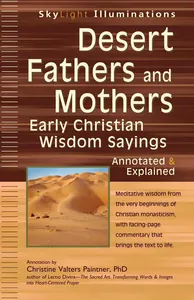






More Free Sacred Texts & Gnosticism Books
View all →