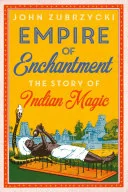
Empire of Enchantment
 78
78

Empire of Enchantment
Zubrzycki’s exploration of India's long engagement with magic is commendable for its breadth, moving beyond the common perception of Indian performers as mere exotic curiosities. The author effectively details the period from the 18th century onward, showcasing how Indian conjuring became a global phenomenon, often misunderstood and appropriated by Western showmen. A particular strength lies in the depiction of the cultural exchange, where Indian performers navigated the colonial landscape with remarkable skill. However, the work occasionally feels more like a historical survey of performance than a deep dive into the esoteric philosophy that often informed these arts. While the book mentions the spiritual underpinnings, it could benefit from more explicit analysis of the magical theories or cosmologies that shaped these practices, particularly when detailing the transformations of Western magicians adopting Indian personas. The account of P.T. Barnum’s engagement with Indian performers, for example, is vivid but leaves one wanting a more thorough examination of the actual magical traditions involved. Despite this, Zubrzycki offers a valuable chronicle of a fascinating cultural intersection.
📝 Description
78
John Zubrzycki's *Empire of Enchantment* chronicles Indian magic from ancient courts to the colonial stage.
This book examines the long history of magic in India, showing how it predates and influenced Western traditions. From the courts of Hindu rulers to the Mughal emperors, illusionists and conjurors were part of Indian culture. The book details how these practices evolved and interacted with global trends.
It continues into the colonial period, describing how Indian performers and their styles were adopted by Western entertainers. Indian magic became a notable part of the subcontinent's image, with Western illusionists incorporating Indian techniques and personas. The book also explores how Indian magicians maintained their art and skill despite colonial pressures, sometimes challenging the dominance of Western magic. This shows a complex cultural exchange and negotiation.
*Empire of Enchantment* also touches on the philosophical and spiritual aspects that informed Indian magical arts, linking them to older Indian thought and spiritual practices.
While focusing on the historical and performance aspects of Indian magic, *Empire of Enchantment* acknowledges the deeper spiritual and philosophical underpinnings. These practices often drew from ancient Indian traditions of thought and spiritual discipline, suggesting a worldview where illusion and reality were intertwined. The book gestures toward this esoteric dimension without making it the primary focus, situating the public art of magic within a broader cultural and spiritual context.
💡 Why Read This Book?
• Learn about the specific adaptations of Indian magic by Western performers in the late 19th century, as detailed in the chapter discussing figures who adopted Indian attire and stage names. • Understand the historical context of Indian conjurors gaining respect from British audiences, a narrative exemplified by accounts of Indian jugglers during the colonial period. • Gain insight into the centuries-long association between Indian rulers and magicians, a tradition stretching back to the courts of Hindu maharajas and Mughal emperors.
⭐ Reader Reviews
Honest opinions from readers who have explored this book.
❓ Frequently Asked Questions
What historical periods does 'Empire of Enchantment' cover regarding Indian magic?
The book spans thousands of years, from ancient times through the era of Hindu maharajas and Mughal emperors, and critically examines the colonial period when Indian magic was widely adopted and adapted by Western performers.
How did British colonialism impact Indian magic traditions?
British colonialism led to the widespread perception of Indian wonder-workers as exotic. Western magicians appropriated Indian performance styles and names, while Indian performers often had to adapt to gain respect and recognition in a globalizing entertainment industry.
Are there specific magicians or emperors mentioned in the book?
The book references the courts of Hindu maharajas and Mughal emperors as significant venues for magical performance, illustrating the historical integration of conjurors within Indian royalty.
Does the book discuss the philosophical or spiritual aspects of Indian magic?
While primarily focused on the history of performance and cultural exchange, the work acknowledges the esoteric and spiritual dimensions that often underpinned Indian magical practices, suggesting connections to ancient philosophies.
What is the origin of the title 'Empire of Enchantment'?
The title reflects the historical reach and pervasive influence of Indian magic, which extended from ancient Indian empires to its global dissemination and appropriation during the era of the British Empire.
Who is the author of 'Empire of Enchantment'?
The author is John Zubrzycki, and the book was first published on October 1, 2018.
🔮 Key Themes & Symbolism
The Maharaja and Mughal Courts
The work highlights the significant role of magicians and conjurors within the opulent courts of India's historical rulers, such as Hindu maharajas and Mughal emperors. These performers were not mere entertainers but integral figures who demonstrated the pervasive presence of magic and illusion in the highest echelons of Indian society for centuries, shaping courtly life and royal patronage of the arcane arts.
Colonial Appropriation of Indian Magic
A central theme is the way Western magicians during the British colonial period appropriated Indian magical traditions, attire, and stage names. This section details how figures transformed themselves into 'Oriental' mystics, presenting a romanticized and often misunderstood version of Indian magic to Western audiences, thereby influencing global perceptions of the art.
Indian Performers' Resilience
Zubrzycki emphasizes the agency and skill of Indian conjurors and illusionists who navigated the complexities of the colonial era. The book recounts how these performers, including jugglers, earned grudging respect through their abilities, demonstrating a form of cultural resistance and adaptation that ensured their craft persisted despite imperial dominance.
The Esoteric Underpinnings
While focusing on performance, the book acknowledges the deeper philosophical and spiritual foundations of Indian magic. It gestures towards the esoteric knowledge and worldview that informed these practices, suggesting that the public displays of conjuring were often connected to ancient Indian spiritual disciplines and metaphysical understandings.
💬 Memorable Quotes
Direct passages from the work, attributed to the author.
“Conjurors and illusionists dazzled the courts of Hindu maharajas and Mughal emperors.”
— This phrase underscores the historical integration of magic within the highest levels of Indian society, positioning it as a significant element of royal courts long before its global popularization.
“As British dominion spread over the subcontinent, such wonder-workers became synonymous with India.”
— This highlights the period where Indian magic gained international recognition, albeit often through a lens of exoticism and colonial perception, solidifying its association with the Indian subcontinent in the Western imagination.
“Western magicians appropriated Indian attire, tricks and stage names.”
— This points to the cultural exchange and often one-sided borrowing that occurred, where Western performers adopted elements of Indian magical traditions for their own acts, transforming their presentation for a global audience.
“Indian jugglers fought back and earned their grudging respect.”
— This suggests a narrative of resilience and skill, where Indian performers asserted their capabilities and challenged Western dominance in the field of magic during the colonial era, achieving recognition through their own merit.
“India's association with magicians goes back thousands of years.”
— This foundational statement establishes the profound antiquity and deep cultural roots of magical practices within India, setting the stage for a long and intricate history explored in the book.
🌙 Esoteric Significance
Tradition
The work situates Indian magic within a lineage stretching back millennia, deeply intertwined with Vedic, Tantric, and yogic traditions. While not strictly adhering to a single Western esoteric school like Hermeticism or Kabbalah, it explores practices that share common ground in their exploration of altered states of consciousness, symbolic manipulation, and the interaction between the material and unseen worlds, common themes in many esoteric systems.
Symbolism
The book touches upon symbols inherent in Indian performance. For instance, the act of transformation, central to many illusions, mirrors the yogic concept of *siddhi* (supernatural powers) and the broader spiritual goal of personal metamorphosis. The use of illusion itself can be seen as a metaphor for Maya, the cosmic illusion that veils ultimate reality in Hindu philosophy, suggesting deeper metaphysical implications behind public displays.
Modern Relevance
Contemporary practitioners of yoga and meditation, as well as scholars of comparative religion and performance studies, find relevance in Zubrzycki's work. It provides historical context for the continued global fascination with Indian spiritual and performance arts, demonstrating how ancient magical and philosophical concepts continue to influence modern practices and perceptions of the mystical East.
👥 Who Should Read This Book
• Students of South Asian history and cultural studies seeking to understand the role of performance and illusion within historical Indian societies and their interaction with colonial powers. • Researchers of the history of magic and illusion who wish to broaden their perspective beyond Western traditions and explore the global diffusion and adaptation of magical arts. • Enthusiasts of comparative mythology and religious studies interested in the intersection of performance, spirituality, and esoteric beliefs across different cultures.
📜 Historical Context
Published in 2018, John Zubrzycki's *Empire of Enchantment* arrived at a time when scholarship on the history of magic and performance was expanding, with a growing interest in non-Western traditions. The late 19th and early 20th centuries, a key focus of the book, saw the professionalization of magic globally. This era was marked by figures like Jean-Eugène Robert-Houdin in France and the rise of stage illusions, often framed within imperialistic narratives. Zubrzycki’s work engages with this broader context by specifically detailing how Indian magic interacted with and was perceived by the expanding British Empire. Unlike purely Western-centric histories of magic, this book foregrounds the subcontinent's unique contributions and the complex dynamics of cultural exchange. While reception details are sparse, the work implicitly challenges the Eurocentric view prevalent in earlier magic histories, offering a corrective by highlighting the agency and enduring influence of Indian performers.
📔 Journal Prompts
The historical association of Indian magicians with Hindu maharajas and Mughal emperors.
Western magicians' appropriation of Indian attire, tricks, and stage names.
The specific ways Indian jugglers earned respect during the colonial era.
The ancient origins of India's connection to magic and conjuring.
The evolution of wonder-workers from ancient India to the colonial period.
🗂️ Glossary
Maharajas
Indian monarchs or princes who ruled over princely states. Their courts were often centers of culture, patronage, and entertainment, including the art of magic.
Mughal Emperors
Rulers of the Mughal Empire in India, known for their grand courts, patronage of arts and sciences, and the presence of various performers, including conjurors.
Conjurors
Individuals skilled in performing magic tricks and illusions, often for entertainment or to demonstrate perceived supernatural abilities.
Illusionists
Performers who create and present illusions, typically through sleight of hand, misdirection, and elaborate stagecraft.
Wonder-workers
A term used to describe magicians or performers who produce astonishing or seemingly miraculous feats.
Subcontinent
Refers to the Indian subcontinent, a large peninsula in South Asia, including countries like India, Pakistan, and Bangladesh.
Appropriation
The adoption or use of elements of one culture by members of another culture, often without understanding or respect for their original context.
This book appears in 1 collection
🔮 Readers Also Liked
Browse all →







From the “Enchantment” Collection
View all →





More Free Esoteric History & Biography Books
View all →