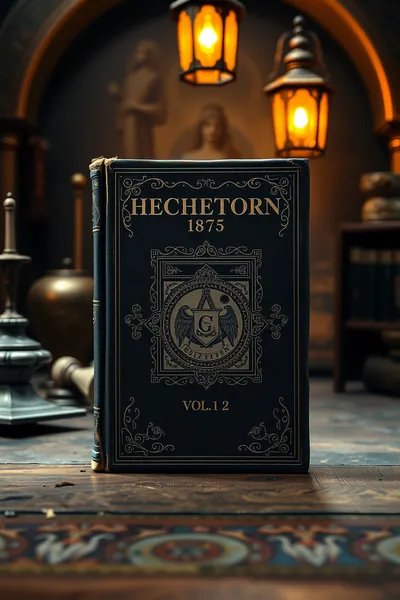
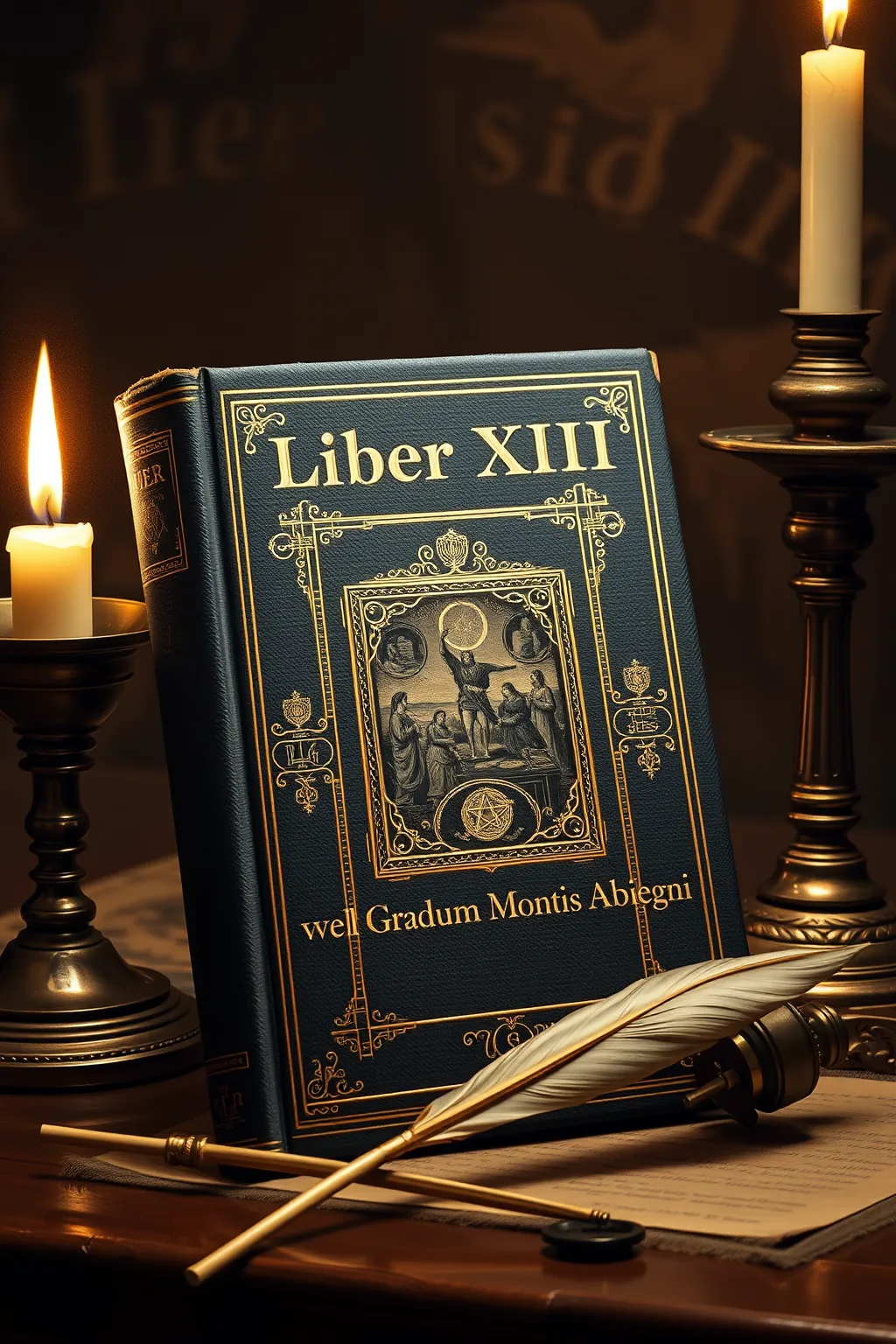
Liber XIII vel Graduum Montis Abiegni
 83
83

Liber XIII vel Graduum Montis Abiegni


Marcus Thorne, Esoteric Sciences Reviewer – 'Liber XIII vel Graduum Montis Abiegni' offers a rare glimpse into the structured progression of esoteric knowledge, particularly within the labyrinthine corridors of Masonic and fraternal mysteries. The syllabus format is both accessible and profound, providing a clear, albeit symbolically dense, roadmap for spiritual development. Its strength lies in its ability to distill complex initiatory processes into actionable, conceptual steps. This is essential reading for serious practitioners and historians of Western esotericism, offering a valuable lens through which to examine the evolution of secret society teachings and their enduring relevance to the quest for self-mastery and higher consciousness. A seminal work for the discerning occultist.
📝 Description
83
Published in the early 20th century, 'Liber XIII vel Graduum Montis Abiegni' details initiatory steps.
'Liber XIII vel Graduum Montis Abiegni' presents a structured sequence of stages for spiritual advancement. The text, attributed to 'A Syllabus of the Steps Upon the Path,' outlines a path of initiation, drawing parallels to Masonic teachings and the practices of other secret societies. It does not simply list ceremonies but instead uses them as symbolic representations of a seeker's ascent beyond ordinary life.
The book creates an atmosphere of ancient mystery where symbolism guides the reader. The difficult process of spiritual growth is shown through coded statements and symbolic imagery. This work is intended for those seriously studying the occult, metaphysics, or for practitioners aiming to grasp the core ideas of transformative learning. Its value comes from simplifying complex spiritual ideas into a clear set of steps that can guide personal growth and awaken hidden abilities.
This text aligns with hermetic and Rosicrucian traditions that emphasize a structured path to spiritual knowledge. Its syllabus format suggests a curriculum for neophytes, common in Western esotericism since the 19th century. The focus on symbolic interpretation and inner transformation echoes the teachings found in magical orders and philosophical societies that seek to decode the universe and humanity's place within it.
💡 Why Read This Book?
Uncover the hidden architecture of spiritual growth within the context of venerable secret societies. 'Liber XIII' provides a structured, symbolic path for seekers of esoteric wisdom, ideal for those fascinated by Freemasonry's deeper meanings or practitioners of occult disciplines. Scholars will find it invaluable for understanding initiatory traditions, while the dedicated student will discover a potent guide for personal transformation and the ascent towards higher understanding.
⭐ Reader Reviews
Honest opinions from readers who have explored this book.
❓ Frequently Asked Questions
What is the primary purpose of 'Liber XIII'?
The primary purpose of 'Liber XIII' is to delineate a structured, symbolic pathway of initiatory steps for spiritual and personal development, drawing heavily on the esoteric traditions found within Freemasonry and secret societies.
Who is 'A Syllabus of the Steps Upon the Path'?
'A Syllabus of the Steps Upon the Path' is the pseudonym or collective designation given to the author(s) of 'Liber XIII,' suggesting a text compiled from established teachings rather than a single individual's singular creation.
What is the significance of the title 'Montis Abiegni'?
Translated as 'Mountain of Fir' or 'Abies Mountain,' 'Montis Abiegni' likely symbolizes the arduous, yet ultimately rewarding, ascent towards higher spiritual states or enlightenment, akin to climbing a sacred, challenging peak.
Is this book a literal guide to Masonic rituals?
While it draws inspiration from Masonic symbolism and initiatory frameworks, 'Liber XIII' functions more as an allegorical and philosophical guide to the inner spiritual journey rather than a literal manual for performing specific rituals.
What kind of esoteric knowledge can one expect to find?
Readers can expect to find knowledge pertaining to spiritual ascent, the overcoming of personal obstacles, the understanding of symbolic language, and the progressive unlocking of consciousness, framed within the context of secret society teachings.
🔮 Key Themes & Symbolism
The Initiatory Ascent
This theme explores the concept of spiritual progression as a series of deliberate steps, mirroring the arduous yet useful climb up a sacred mountain. It emphasizes that enlightenment is not a sudden revelation but a cultivated journey, requiring perseverance, dedication, and a willingness to confront internal and external challenges. Each 'step' represents a phase of transformation, a shedding of ignorance, and an acquisition of deeper understanding, echoing the progressive degrees found in many esoteric orders. The text suggests that the path itself, with its inherent difficulties and triumphs, is as crucial as the destination.
Symbolism and Allegory in Secret Societies
The work looks at the profound use of symbolism and allegory as the primary language of esoteric traditions, particularly within Freemasonry and similar clandestine organizations. It posits that these symbolic narratives are not mere decorative elements but potent keys designed to unlock higher levels of consciousness and convey complex metaphysical truths that elude direct linguistic expression. The text encourages readers to interpret these symbols not literally, but as metaphors for inner states, universal principles, and the hidden architecture of reality, thereby facilitating a deeper communion with the divine and the self.
Perseverance Through Adversity
A central tenet of 'Liber XIII' is the unwavering importance of persistence in the face of failure and suffering on the spiritual quest. Drawing parallels to monumental constructions like pyramids, the text admonishes against despair when initial efforts yield pain or seem insufficient. It champions the spirit of the true aspirant, one who understands that foundational work, though unseen and arduous, is essential for future grandeur. This theme underscores the resilience required to read through the 'path' and the ultimate reward of enduring commitment to the Great Work.
💬 Memorable Quotes
Direct passages from the work, attributed to the author.
“The foundations of the pyramid were hewn in the living rock ere sunset.”
— This highlights the importance of diligent, foundational work, suggesting that significant spiritual or material achievements begin with profound, often unseen, efforts laid deep within.
“Did the king weep at dawn that the crown of the pyramid was yet unquarried in the distant land?”
— This rhetorical question challenges impatience, illustrating that the ultimate goals of a grand undertaking, though distant, are only achieved through sustained effort and the completion of each necessary stage.
“The steps upon the path are not merely traversed, but embodied.”
— This suggests that true spiritual progress involves internalizing the lessons and transformations associated with each stage, making them an intrinsic part of one's being.
💡 Key Ideas
Editorial paraphrase of the work's core concepts — not direct quotes.
Let not the failure and the pain turn aside the worshippers.
This quote emphasizes resilience on the spiritual path, urging practitioners to remain steadfast despite setbacks, viewing them as integral to the process rather than reasons for abandonment.
Seek not the summit ere the base is secure.
A direct admonition against premature ambition, this quote stresses the necessity of mastering fundamental principles and establishing a strong inner foundation before pursuing higher spiritual attainments.
🌙 Esoteric Significance
Tradition
This work is deeply rooted in the Western Esoteric Tradition, particularly drawing from the symbolic language and initiatory structures found within Freemasonry, Hermeticism, and Gnosticism. It represents a pedagogical approach to spiritual realization, framing the journey towards enlightenment as a series of progressive stages, akin to the degrees of a Masonic lodge or the ascent through Kabbalistic worlds.
Symbolism
Key symbols revolve around the 'mountain' as a metaphor for spiritual attainment, the 'steps' representing stages of inner transformation, and the 'pyramid' signifying the monumental effort required for achieving higher consciousness. The text implies that these symbols are not static but dynamic keys, unlocking deeper layers of meaning as the aspirant progresses on their path.
Modern Relevance
In an era often characterized by spiritual seeking and a desire for structured guidance, 'Liber XIII' offers a timeless framework for personal growth. Its emphasis on perseverance, symbolic understanding, and the internal nature of the 'Great Work' speaks to contemporary practitioners seeking authentic paths to self-discovery and transcendence beyond superficial spiritual trends.
👥 Who Should Read This Book
This text is highly recommended for dedicated students of esoteric philosophy and occult sciences, particularly those with an interest in Freemasonry's symbolic dimensions. Practitioners of magical and spiritual disciplines seeking a structured approach to inner development will find its syllabus format invaluable. Scholars of comparative religion and secret societies will benefit from its insights into initiatory traditions. While the concepts can be challenging, earnest seekers willing to engage with allegorical language and profound metaphysical ideas will find 'Liber XIII' a rewarding and useful guide.
📜 Historical Context
Composed likely within the milieu of 19th or early 20th-century esoteric revivalism, 'Liber XIII vel Graduum Montis Abiegni' emerges from a period where Freemasonry, Rosicrucianism, and other secret societies were intensely studied and reinterpreted through a mystical and occult lens. This era saw a surge in published esoteric texts, often presented as rediscovered ancient wisdom or symbolic keys to established fraternal orders. The text reflects the intellectual currents of the time, where philosophical idealism, Neoplatonic thought, and a fascination with symbolic systems merged with a desire for practical spiritual disciplines. Its syllabus format suggests an attempt to codify and disseminate initiatory knowledge, making it accessible to a wider, though still select, audience of spiritual seekers and scholars interested in the hidden dimensions of Western esotericism.
📔 Journal Prompts
Reflect on the 'foundation' of your spiritual practice. What are the living rock elements that support your journey?
Describe a time you experienced 'failure and pain' on a path of pursuit. How did you navigate it, and what did you learn?
Imagine yourself at a critical 'step' on your personal mountain. What does this step represent, and what qualities are required to ascend it?
How does the concept of a 'quarried crown' resonate with your long-term aspirations? What distant goals are you working towards?
Consider the symbolic language of your own life. What are the hidden meanings in your daily experiences and personal challenges?
🗂️ Glossary
Aspirant
An individual who is earnestly seeking spiritual knowledge, enlightenment, or initiation into esoteric mysteries. They are on a journey of personal transformation and self-discovery.
Gnosis
A Greek term meaning 'knowledge,' specifically referring to intuitive, spiritual, or mystical knowledge that leads to salvation or enlightenment. It is a direct experience of the divine rather than intellectual understanding.
Great Work (Major work)
In esoteric traditions, this refers to the process of spiritual transformation, self-perfection, and the attainment of higher consciousness or divine union. It is the ultimate goal of esoteric practice.
Initiation
A ritual or process by which an individual is formally admitted into a new stage, order, or level of knowledge within a spiritual or esoteric group. It signifies a transition and often involves symbolic teachings and tests.
Esotericism
Teachings and practices that are designed for or understood by only a small number of people with specialized knowledge or initiation. It contrasts with exotericism, which is outward or public.
This book appears in 2 collections
🔮 Readers Also Liked
Browse all →









From the “Secret Societies” Collection
View all →






More Free Freemasonry & Secret Societies Books
View all →![Proofs Of A Conspiracy [Against All The Religions And Governments Of Europe, Carried On In The Secret Meetings Of Freemasons, Illuminati And Reading Societies].pdf (PDFy mirror)](/img/thumb/proofs-of-a-conspiracy-against-all-the-religions-and-governments-of-europe-carried-on-in-the-secret-meetings-of-freemasons-illuminati-and-reading-societies-pdf-pdfy-mirror.webp)