Gurdjieff
 77
77

Gurdjieff
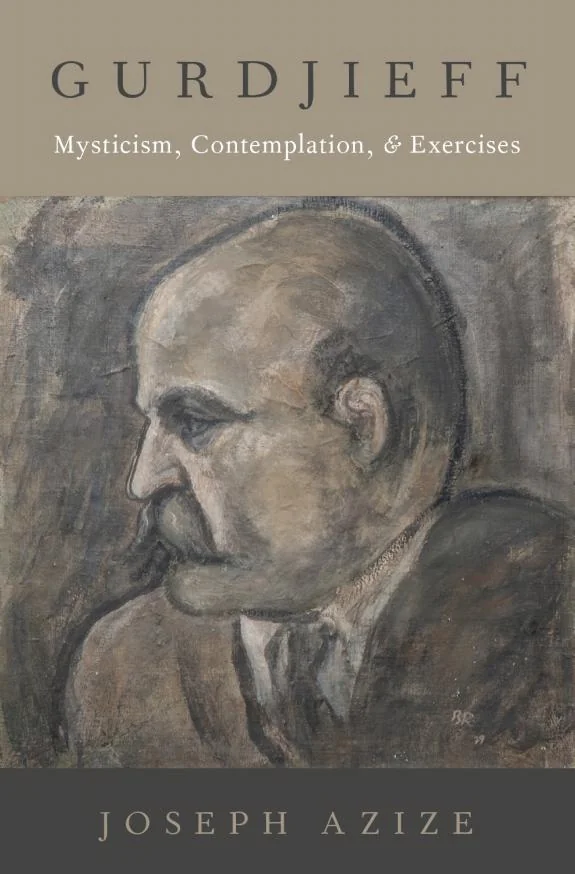
Azize’s "Gurdjieff" moves beyond hagiography to offer a scholarly dissection of the practical exercises central to Gurdjieff’s system. The author’s meticulous tracing of exercises, including those from the Adie students, is commendable, providing a much-needed consolidation of primary material. The biographical section, particularly its analysis of Gurdjieff’s collaborations with Ouspensky and Orage, offers fresh perspectives on the practicalities and eventual ruptures in their shared endeavors. While the book excels in detailing the 'what' and 'how' of Gurdjieff’s methods, it occasionally assumes a prior familiarity with the terminology, which might leave absolute newcomers somewhat adrift. The assertion of Gurdjieff as primarily a mystic with potential monastic influences is a strong thesis, well-supported by the textual evidence presented. Overall, Azize provides a valuable, if demanding, resource for serious Gurdjieff students.
📝 Description
77
Joseph Azize's 2020 book examines George Gurdjieff's internal exercises and their transmission.
Joseph Azize's 2020 book, "Gurdjieff," offers a detailed look at the esoteric teachings of George Gurdjieff, with a particular focus on his internal exercises and those passed down through his students, George and Helen Adie. The author analyzes Gurdjieff's published writings alongside supplementary practices, aiming to clarify the practical aspects of his complex system for a more structured understanding.
This study is written for serious students and researchers of esoteric philosophy, especially those drawn to the Gurdjieffian tradition. It moves beyond simple biographies or philosophical summaries to illuminate the practical methods Gurdjieff advocated. Individuals involved in contemplative practices or comparative studies of mystical traditions will find substantial material within its pages.
Azize places Gurdjieff's work within the spiritual currents of the early 20th century. The book discusses Gurdjieff's relationships with figures like P.D. Ouspensky and A.R. Orage, considering their collaborations and eventual separations. It suggests Gurdjieff was primarily a mystic, with methods potentially influenced by traditions from Mount Athos, offering an alternative to solely psychological or philosophical readings of his work.
Azize situates Gurdjieff's teachings within the broad spectrum of early 20th-century spiritual movements, contrasting them with more common psychological or philosophical interpretations. The book specifically examines Gurdjieff's system for self-awareness and transformation, focusing on his internal exercises as the practical core. It suggests potential roots for these methods in traditions from Mount Athos, placing Gurdjieff's approach as a distinct mystic path that emphasizes direct experience and the interruption of habitual patterns.
💡 Why Read This Book?
• Gain a structured understanding of Gurdjieff's internal exercises, as detailed in Chapter 3, "The Exercises," offering practical tools for self-observation. • Explore the complex relationships between Gurdjieff, P.D. Ouspensky, and A.R. Orage, as examined in the biographical study, to grasp the social dynamics of early 20th-century esoteric movements. • Understand the proposed connections between Gurdjieff's methods and contemplative practices from Mount Athos, as discussed in the introductory sections, to contextualize his teachings within older mystical traditions.
⭐ Reader Reviews
Honest opinions from readers who have explored this book.
❓ Frequently Asked Questions
What makes Joseph Azize's book on Gurdjieff unique compared to other biographies?
This book distinguishes itself by focusing on a comprehensive analysis of Gurdjieff's published internal exercises and those taught by his students, George and Helen Adie, rather than solely biographical or philosophical accounts.
Does the book cover Gurdjieff's relationship with P.D. Ouspensky?
Yes, the book includes a fresh biographical study that offers ground-breaking observations on Gurdjieff's relationships, particularly with P.D. Ouspensky and A.R. Orage, exploring the reasons for their collaboration and its breakdown.
What is the primary esoteric tradition discussed in relation to Gurdjieff's methods?
The work suggests that Gurdjieff's contemplation-like methods were probably drawn from traditions such as those found on Mount Athos, positioning him fundamentally as a mystic.
Is "Gurdjieff" by Joseph Azize suitable for beginners in esoteric studies?
While it offers detailed analysis, the book is best suited for those with some prior interest or knowledge of Gurdjieff's work, as it delves deeply into specific exercises and historical context.
When was Joseph Azize's "Gurdjieff" first published?
The book "Gurdjieff" by Joseph Azize was first published in 2020, making it a relatively recent scholarly contribution to the study of Gurdjieff's teachings.
What specific Gurdjieffian concepts are explored in the book?
The book examines Gurdjieff's internal exercises, the 'fourth way,' and the practical application of concepts aimed at achieving a more conscious state of being.
🔮 Key Themes & Symbolism
Practical Gurdjieffian Exercises
The core of Azize's work lies in its systematic analysis of Gurdjieff's internal exercises. These are presented not as abstract theories but as practical tools for self-awareness and transformation. The book details specific movements, meditations, and contemplative practices that Gurdjieff intended to awaken individuals from mechanical habitual states. It emphasizes the disciplined application required, drawing parallels to monastic traditions, suggesting a path for conscious evolution through deliberate inner work.
Gurdjieff's Mystic Nature
Azize strongly posits Gurdjieff as fundamentally a mystic, a perspective that informs the interpretation of his entire system. This viewpoint suggests that the elaborate structures and exercises were not merely psychological or philosophical constructs, but channels for direct spiritual experience. The book explores potential influences, such as those from Mount Athos, to support this characterization, framing Gurdjieff's quest as a deeply spiritual endeavor to reconnect humanity with its essential nature.
Collaborations and Divergences
A significant portion of the book is dedicated to the intricate relationships Gurdjieff maintained with key disciples like P.D. Ouspensky and A.R. Orage. Azize scrutinizes the motivations behind these collaborations, why Gurdjieff sought to work with them, and the specific reasons their partnerships ultimately faltered. This historical lens provides crucial context for understanding the dissemination and evolution of Gurdjieff's teachings, highlighting the challenges inherent in transmitting such profound and demanding material.
The Fourth Way and Conscious Effort
The concept of the 'Fourth Way' is central to understanding Gurdjieff's approach as presented here. Unlike traditional monastic or solitary paths, the Fourth Way allows for engagement with ordinary life while pursuing spiritual development through conscious effort. The book elaborates on how the exercises facilitate this by demanding attention and presence, aiming to break down the illusion of a fixed self and foster a more awakened perception of reality.
💬 Memorable Quotes
Direct passages from the work, attributed to the author.
“Gurdjieff was, fundamentally, a mystic.”
— This assertion frames the entire analysis, suggesting that Gurdjieff's practices and teachings should be understood through the lens of spiritual seeking and direct experience, rather than purely psychological or philosophical frameworks.
“His contemplation-like methods were probably drawn from Mt Athos.”
— This interpretation links Gurdjieff's unique practices to a specific, ancient monastic tradition known for its contemplative disciplines, providing a potential historical and spiritual lineage for his 'work'.
“Analysis of all of Gurdjieff's published internal exercises.”
— This highlights the book's primary contribution: a systematic and detailed examination of the practical, experiential components of Gurdjieff's teachings, serving as a guide for practitioners.
“Ground-breaking observations on his relationships with P.D. Ouspensky and A.R. Orage.”
— This points to the book's original biographical research, offering new insights into the dynamics and eventual breakdown of crucial collaborations within the early Gurdjieff movement.
“Includes exercises taught by his students, George and Helen Adie.”
— This indicates the book's scope extends beyond Gurdjieff's direct writings, incorporating the transmission and interpretation of his methods through his immediate disciples, providing a broader view of the tradition.
🌙 Esoteric Significance
Tradition
This work fits within the lineage of modern esoteric movements that sought to synthesize Eastern and Western mystical traditions for Western practitioners. While not strictly Hermetic, Gnostic, or Kabbalistic, Gurdjieff's system shares with them the goal of gnosis or awakened consciousness. Azize's book emphasizes the practical, contemplative aspects, suggesting links to Orthodox Christian mysticism (Mount Athos), positioning Gurdjieff's 'Work' as a distinct path focused on self-remembering and conscious evolution.
Symbolism
The book implicitly engages with the symbolic nature of Gurdjieff's exercises, which function as living symbols of inner processes. Concepts like the "Law of Three" (thesis, antithesis, synthesis) and the "Law of Seven" (represented by the enneagram) are not merely abstract principles but are embodied in the structured movements and attention required during practice. The exercises themselves symbolize the process of breaking habitual patterns and awakening dormant potentials within the individual.
Modern Relevance
Contemporary thinkers and practitioners in areas like consciousness studies, transpersonal psychology, and mindfulness continue to draw inspiration from Gurdjieff's methods. Schools of thought focusing on embodied cognition and the integration of spiritual practice into daily life find resonance in the Gurdjieffian emphasis on 'work in life.' Azize's detailed exploration of the exercises provides a resource for modern seekers looking for structured techniques to enhance self-awareness and intentionality.
👥 Who Should Read This Book
• Serious students of G.I. Gurdjieff's teachings seeking a detailed analysis of his practical exercises and historical context. • Researchers in comparative mysticism interested in potential links between Gurdjieff's methods and traditions like those from Mount Athos. • Individuals engaged in esoteric philosophy who wish to understand the dynamics of transmission and potential divergences within early 20th-century spiritual movements.
📜 Historical Context
Published in 2020, Joseph Azize's "Gurdjieff" arrives in an era where G.I. Gurdjieff's influence continues to be felt across esoteric, philosophical, and psychological circles. The early 20th century, when Gurdjieff himself was active, was a fertile ground for spiritual innovation, influenced by figures like Helena Blavatsky and the Theosophical Society, as well as movements like Anthroposophy spearheaded by Rudolf Steiner. Azize’s work engages directly with Gurdjieff's complex relationships, particularly with P.D. Ouspensky and A.R. Orage, whose own writings were instrumental in disseminating Gurdjieff's ideas. The book’s emphasis on Gurdjieff as a mystic with potential roots in traditions like Mount Athos offers a specific interpretive angle, contrasting with purely psychological analyses that gained traction later. The reception of Gurdjieff's ideas has historically been varied, often met with both intense devotion and skepticism, making Azize's focused study on the practical exercises a valuable contribution to understanding the system's core.
📔 Journal Prompts
The practical application of Gurdjieff's internal exercises as described in Chapter 3.
Gurdjieff's motivation for collaborating with P.D. Ouspensky and A.R. Orage.
The potential influence of Mount Athos traditions on Gurdjieff's methods.
The concept of the 'Fourth Way' and its distinction from other spiritual paths.
Personal reflections on the effort required to interrupt habitual thought patterns.
🗂️ Glossary
Internal Exercises
Specific physical movements, contemplative practices, and attention-training techniques developed by Gurdjieff intended to awaken consciousness and develop self-awareness.
The Work
A common term within Gurdjieffian circles referring to the entire system of teachings and practices aimed at spiritual transformation and conscious evolution.
The Fourth Way
Gurdjieff's term for a path of spiritual development that can be pursued while living an ordinary life, distinct from the 'way of the fool' (ordinary life), the 'way of the fakir' (physical discipline), and the 'way of the monk' (emotional/devotional discipline).
Self-Remembering
A core Gurdjieffian practice involving maintaining awareness of oneself as an object, simultaneously present to external reality and one's own inner state.
Mount Athos
An autonomous monastic state in Greece, a major center of Eastern Orthodox monasticism, known for its long tradition of contemplative prayer and Hesychasm.
P.D. Ouspensky
A Russian philosopher and esotericist who was an early and influential student of Gurdjieff, later developing his own interpretations of the teachings.
A.R. Orage
An English journalist and esotericist who became a key proponent of Gurdjieff's ideas in England, playing a significant role in establishing the movement there.
This book appears in 1 collection
🔮 Readers Also Liked
Browse all →







From the “Western Esotericism” Collection
View all →









More Free Esoteric History & Biography Books
View all →