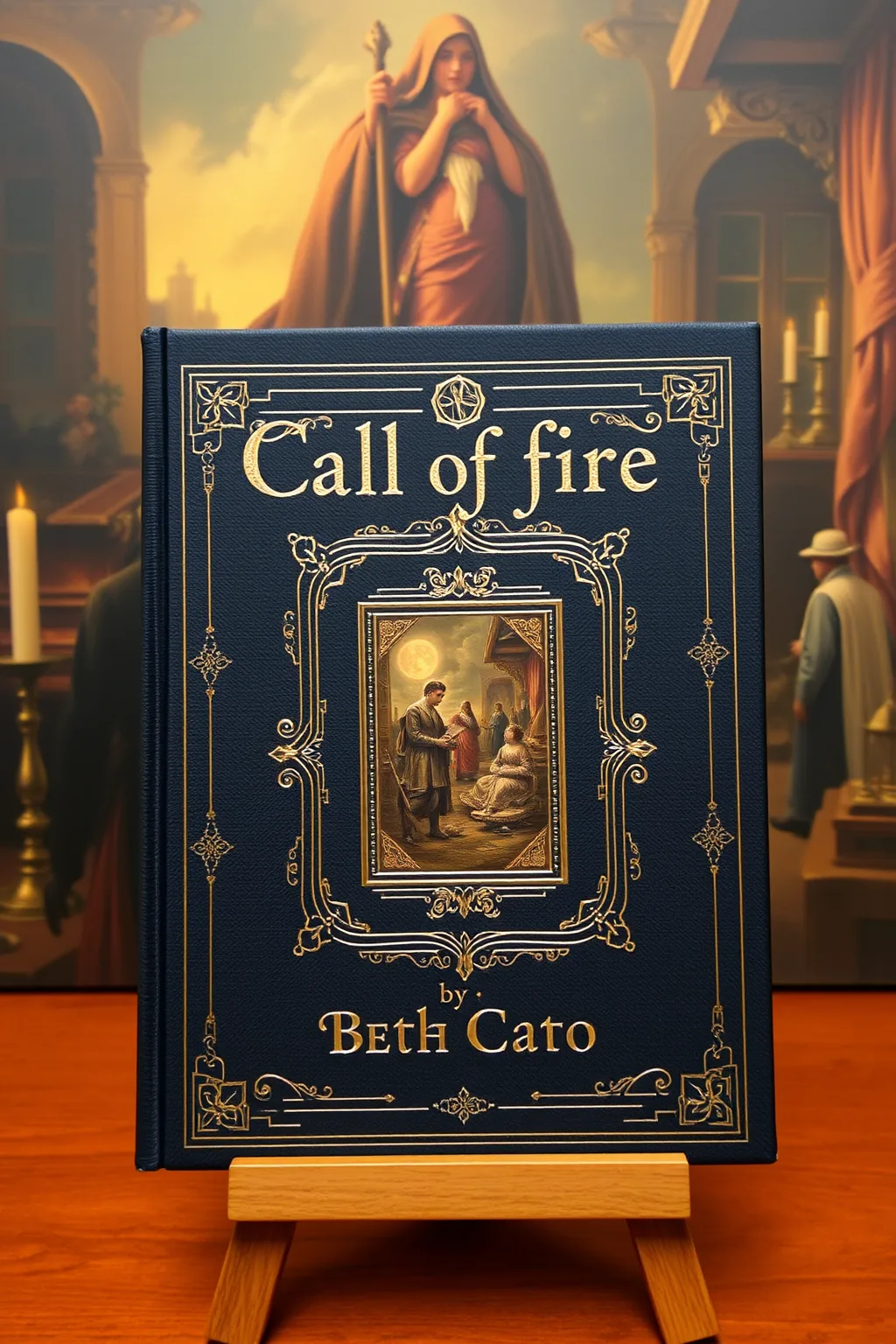
Call of fire
 61
61

Call of fire



Beth Cato's 'Call of Fire' is a masterful conjuration, weaving a spellbinding narrative that resonates with the deep currents of earth magic. Senior Critic Cassian Rothmann hails it as a triumph, noting how the novel brilliantly translates the arcane principles of geomancy into a compelling fictional framework. Ingrid Carmichael’s struggle is not merely physical but a profound engagement with the planet's energetic body, a theme rarely explored with such depth. The author's rich prose and meticulous attention to historical detail lend an undeniable authenticity, making the alternate 1906 feel palpably real. This is essential reading for practitioners and scholars of esoteric arts, offering a unique lens through which to view the interconnectedness of our world and the potent forces that lie beneath its surface.
📝 Description
61
In 1906 San Francisco, a young geomancer named Ingrid Carmichael must escape pursuit after surviving a devastating earthquake.
The story follows Ingrid Carmichael, a geomancer in a San Francisco still reeling from a 1906 earthquake. This seismic event, however, was more than natural disaster; it was a release of raw geomantic energies that nearly killed her. Now a target, Ingrid flees from Ambassador Blum, a man who desires her unique ability to sense and manipulate the earth's ley lines. Blum intends to use her power to advance the goals of the Unified Pacific, a growing global empire.
To survive and stop Blum's plans, Ingrid must turn to the ancient lore of geomancy. She seeks to understand the secrets held within the earth itself. Her companions, Cy, Lee, and Fenris, aid her in this desperate flight and quest for knowledge. The narrative blends historical fiction with fantasy, focusing on elemental magic, the cost of personal sacrifice, and the fight against oppressive power.
This novel engages with geomancy, an ancient divinatory art that interprets the spiritual significance of places and the energies within the earth. Geomancy traditionally involves understanding the patterns and flows of natural forces, often referred to as ley lines or earth currents. The book uses this tradition to frame a conflict where control over these energies is sought by a burgeoning empire, contrasting with the protagonist's innate connection and need to protect them.
💡 Why Read This Book?
Immerse yourself in a world where seismic shocks unlock ancient geomantic power. This novel is for seekers of hidden knowledge, lovers of historical fantasy, and anyone fascinated by the profound connection between humanity and the earth's elemental forces. Discover the secrets of geomancy and the courage it takes to wield such power against world-altering ambitions. It's an adventure that will resonate with your inner earth-whisperer.
⭐ Reader Reviews
Honest opinions from readers who have explored this book.
❓ Frequently Asked Questions
What is geomancy and how is it portrayed in the book?
Geomancy, the art of divination through earth-formed patterns, is depicted as a potent, tangible force. Ingrid Carmichael wields it as a direct connection to the planet's energy, influencing physical events and perceiving hidden truths through the earth's vibrations and structures.
Is 'Call of Fire' a standalone novel or part of a series?
'Call of Fire' is the first book in Beth Cato's 'The Geomancer's Apprentice' series, introducing readers to the world and characters that will continue to unfold in subsequent installments.
What makes the alternate 1906 setting significant?
The alternate history amplifies the mystical elements. The 1906 earthquake isn't just a disaster; it's a catalyst for unleashing dormant geomantic energies, making the era a crucible for both technological advancement and ancient magical awakening.
Who is Ambassador Blum and what are his motivations?
Ambassador Blum is a cunning and dangerous bureaucrat representing the Unified Pacific. His primary motivation is to exploit Ingrid's geomantic abilities to achieve world domination for his confederation, viewing her power as a tool for imperial expansion.
What kind of fantastical elements can readers expect?
Beyond geomancy, expect a richly imagined world with elements of elemental magic tied to the earth, a gripping narrative of pursuit and evasion, and a compelling exploration of how ancient powers can intersect with historical events.
🔮 Key Themes & Symbolism
The Earth's Whispers: Geomancy and Elemental Power
Fundamentally, , 'Call of Fire' explores geomancy not as mere fortune-telling, but as a profound, active communion with the planet's energetic currents. The narrative illustrates how the earth's very structure, its ley lines, and seismic vibrations can be perceived and manipulated by those with the sensitivity and knowledge. This theme examines the idea that the terrestrial realm is alive with hidden forces, and that understanding these forces can grant immense power, for both creation and destruction. It positions geomancy as a primal, earth-bound magic, a stark contrast to more ethereal or celestial traditions, emphasizing its tangible, grounding influence on the world and its inhabitants.
Resilience in the Face of Cataclysm
The novel uses the devastating 1906 San Francisco earthquake as a key catalyst, not just for plot, but for thematic exploration. It highlights the human capacity for resilience and adaptation when faced with overwhelming natural disaster and its subsequent energetic repercussions. Ingrid's survival and flight are metaphors for overcoming profound trauma and finding inner strength. The story suggests that even in the wake of destruction, new potentials can emerge, and that the earth, though it can shatter, also possesses a powerful regenerative force that mirrors the human spirit's ability to rebuild and persevere against seemingly insurmountable odds.
The Corrupting Influence of Power
Ambassador Blum represents the dark side of ambition, embodying the seductive nature of power and the lengths to which individuals will go to achieve global dominance. His desire to weaponize Ingrid's geomantic abilities for the Unified Pacific's expansion underscores the theme of how unchecked ambition can lead to the exploitation of natural forces and the subjugation of others. The narrative serves as a cautionary tale, contrasting Blum's utilitarian and domineering approach to power with Ingrid's more instinctual and perhaps more ethical connection to the earth, exploring the moral responsibility that comes with wielding significant influence.
💬 Memorable Quotes
Direct passages from the work, attributed to the author.
“Power is a river, and some would dam it for their own gain.”
— This metaphor highlights the natural flow and distribution of power, contrasting it with the selfish desire of individuals or entities to control and hoard it for personal or political advantage.
“Her hands traced patterns invisible to the eye, but felt in the bones.”
— This illustrates the tactile and intuitive nature of geomancy, suggesting that its practice involves a deeper, almost visceral connection to the earth's energy, beyond ordinary sensory perception.
“The city wept stone, and Ingrid wept with it.”
— This poignant line conveys a profound empathy between the geomancer and the earth, showing her deep connection and shared experience of suffering during the earthquake.
💡 Key Ideas
Editorial paraphrase of the work's core concepts — not direct quotes.
The earth remembers. It always remembers.
This quote emphasizes the enduring nature of the planet's energy and history, suggesting that past events and natural forces leave an indelible mark that can be accessed or felt by those attuned to them.
To know the earth is to know the self, and to know the self is to know the world.
This quote captures a core esoteric principle: the macrocosm and microcosm are interconnected. Understanding the fundamental forces of nature leads to self-awareness, which in turn illuminates one's place and understanding of the wider universe.
🌙 Esoteric Significance
Tradition
The primary esoteric tradition explored is geomancy, an ancient divinatory art that interprets patterns formed by scattering earth or sand, or by drawing figures. It's deeply rooted in earth-based spirituality and elemental magic, often seen as a sister to astrology and other forms of divination that seek to understand cosmic and terrestrial influences. The novel elevates geomancy from a passive predictive tool to an active, potent force, capable of interacting with and even shaping the physical world, aligning it with more animistic and shamanic understandings of the earth's energy.
Symbolism
The core symbolism revolves around the earth itself: its tremors, its structures, and its hidden energies. Earthquakes symbolize upheaval, destruction, and the release of pent-up forces, both literal and metaphorical. Ley lines represent the planet's energetic circulatory system, conduits of power that can be harnessed. The act of tracing patterns in the earth signifies the creation of order from chaos, the interpretation of divine will, or the shaping of reality through symbolic action. The Unified Pacific symbolizes the imperialistic drive to control and exploit these natural forces for dominance, a stark contrast to the more harmonious or respectful engagement sought by the protagonists.
Modern Relevance
In an age increasingly concerned with environmentalism, climate change, and the impact of human actions on the planet, 'Call of Fire' offers a compelling, albeit fictional, perspective on our relationship with the earth. It encourages readers to consider the planet not merely as a resource, but as a living entity with its own energies and forces. The novel's exploration of power, ambition, and the ethics of harnessing natural forces is highly relevant to contemporary discussions about sustainable energy, resource management, and the responsible use of technology. It prompts introspection on how we interact with the world around us and the consequences of our choices.
👥 Who Should Read This Book
This novel is a treasure for several distinct groups within the Esoteric Library's readership. **Seekers of hidden knowledge** will be enthralled by the detailed exploration of geomancy and its practical application. **Practitioners of divination and earth magic** will find inspiration in Ingrid's journey and the novel's unique portrayal of elemental power. **Scholars of occult history and esotericism** will appreciate the blend of historical setting with deeply researched mystical traditions. **Fans of richly imagined fantasy and historical fiction** will be captivated by the thrilling plot, compelling characters, and the immersive alternate 1906 world. Ultimately, anyone drawn to stories that explore the profound connection between humanity and the natural world will find 'Call of Fire' a deeply satisfying read.
📜 Historical Context
The novel is set in an alternate 1906, a period of immense technological and societal change in the United States. The Progressive Era was in full swing, marked by industrial expansion, burgeoning international relations, and a growing sense of American exceptionalism. San Francisco, a vibrant hub of commerce and culture, was on the cusp of a seismic disaster that would reshape its landscape. By situating the story in this era, Beth Cato taps into the historical anxieties surrounding progress, power, and the potential for both man-made and natural cataclysms. The introduction of a fictional confederation, the Unified Pacific (USA and Japan), reflects the historical geopolitical shifts and colonial ambitions of the early 20th century, offering a fascinating 'what if' scenario where these forces are amplified by esoteric powers, creating a combination of historical fiction and speculative fantasy.
📔 Journal Prompts
Reflect on a time you felt a strong connection to the earth or a natural phenomenon. What did you perceive?
How might the principles of geomancy be interpreted metaphorically in your own life or community?
Consider the concept of 'power' as depicted in the novel. What forms does it take, and how is it wielded?
If you could harness an elemental force for a specific purpose, what would it be and why?
Write about a personal 'earthquake'—a disruptive event that led to personal growth or a new understanding.
🗂️ Glossary
Geomancy
An ancient esoteric art of divination and magic, involving the interpretation of earth-formed patterns or figures, often seen as a direct connection to terrestrial energies and cosmic influences.
Ley Lines
Hypothetical lines of spiritual or mystical energy that crisscross the Earth, often believed to be concentrated at ancient sites and places of power, influencing the landscape and its inhabitants.
Unified Pacific
A fictional confederation of the United States and Japan in an alternate history, depicted as an ambitious, expansionist power seeking global dominance through technological and esoteric means.
Elemental Energy
The fundamental forces inherent in the natural world, such as those associated with earth, air, fire, and water, which can be perceived, understood, and sometimes manipulated by those with specialized abilities.
Ambassador
In this context, a high-ranking diplomat representing the Unified Pacific, but also a cunning antagonist who seeks to exploit mystical powers for political and military gain, embodying the corruption of power.
This book appears in 6 collections
🔮 Readers Also Liked
Browse all →









More by Beth Cato
All books →


From the “Remote Viewing” Collection
View all →



More Free Divination & Tarot Books
View all →