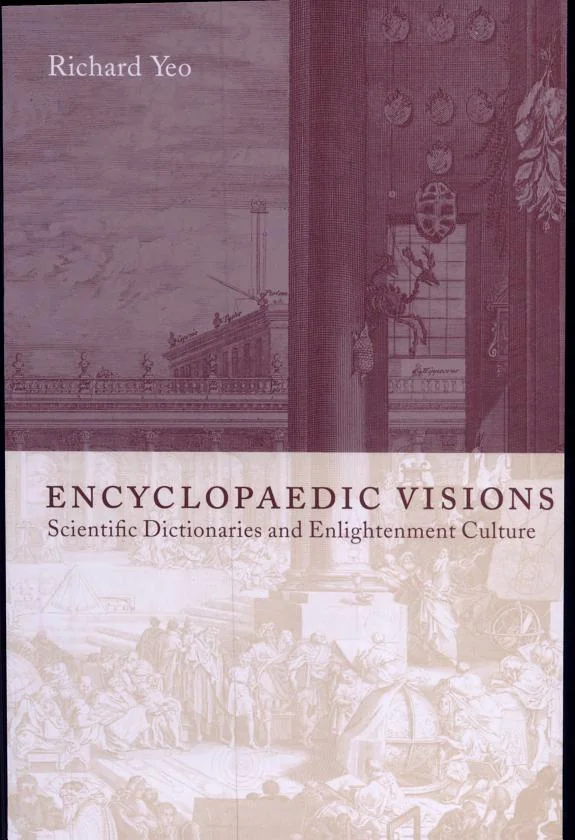
Encyclopaedic Visions
 78
78

Encyclopaedic Visions
Richard Yeo's analysis of 18th-century scientific dictionaries offers a sharp, if sometimes narrowly focused, perspective on the organization of knowledge. The strength of the book lies in its meticulous dissection of editorial practices and the intellectual debates surrounding the very concept of an "encyclopaedia" during the Enlightenment. Yeo rightly points out the deliberate exclusion of biography and history from many early scientific dictionaries, a decision that speaks volumes about the era's priorities. However, the book occasionally suffers from an over-reliance on academic jargon, which can obscure the fascinating historical material for a broader audience. A particularly illuminating section details the debates on how to arrange entries, revealing the profound philosophical implications of seemingly simple cataloguing choices. While the dense prose might deter casual readers, for specialists in the history of science and print culture, Encyclopaedic Visions provides valuable insights into a crucial moment of intellectual systematization.
📝 Description
78
Richard Yeo's 2018 book examines early modern English encyclopedias of arts and sciences.
Encyclopaedic Visions analyzes the creation and role of early modern English dictionaries covering arts and sciences. These reference works, which emerged in the late 17th and 18th centuries, aimed to organize and spread an ever-growing body of knowledge. Yeo places these compendia within their historical and intellectual surroundings, showing how they affected views on learning and education.
The book scrutinizes the conceptual structures behind these early encyclopedias. It looks at the decisions made by editors, the standards for what information was included or left out, and the basic ideas about how knowledge should be arranged. Yeo demonstrates that these dictionaries did more than just mirror the intellectual world; they actively shaped it, affecting how knowledge was perceived, educated, and consumed.
This study is for scholars and dedicated students of intellectual history, the history of science, and book history. Anyone interested in how systematic knowledge developed, how academic fields were classified, and the cultural effects of printed reference works will find it especially useful. It will appeal to readers who value thorough archival research and careful historical analysis.
While not directly about occult or mystical traditions, this book touches on the esoteric impulse to systematize and reveal hidden connections within knowledge. Early encyclopedias, by their nature, attempted to map the known universe of arts and sciences, reflecting a desire to understand underlying principles and order. Yeo's work situates these efforts within a broader cultural context where the organization and dissemination of knowledge itself held a certain power, akin to the ordering principles found in more overtly esoteric systems.
💡 Why Read This Book?
• Gain a precise understanding of how 18th-century scientific dictionaries, like Ephraim Chambers's *Cyclopædia* (1728), structured knowledge, moving beyond a general appreciation of encyclopedic aims. • Appreciate the specific debates surrounding the exclusion of biography and history from early scientific texts, revealing contemporary intellectual hierarchies and priorities. • Grasp the concrete editorial challenges and philosophical underpinnings involved in classifying diverse fields of art and science in the pre-modern era.
⭐ Reader Reviews
Honest opinions from readers who have explored this book.
❓ Frequently Asked Questions
What was the primary goal of the English dictionaries of arts and sciences in the 18th century?
These dictionaries aimed to consolidate and present essential knowledge in arts and sciences, responding to an information explosion by offering coherent accounts and defining what an educated person should know.
What types of content were often excluded from early scientific encyclopedias?
Many early scientific dictionaries deliberately excluded biography and history, focusing instead on systematic accounts of scientific and artistic disciplines.
Who is Richard Yeo and what is his expertise?
Richard Yeo is a historian specializing in the history of science and intellectual history, focusing on the development and organization of knowledge during the Enlightenment.
How did these encyclopedias respond to the growth of information?
They responded by attempting to reduce knowledge to its essentials, emphasizing a structured and coherent presentation of scientific principles and artistic techniques.
What cultural debates influenced the arrangement of knowledge in these works?
Debates about the nature of knowledge, the classification of disciplines, and the desired scope of education for the populace significantly influenced how these encyclopedias were arranged.
When was Richard Yeo's 'Encyclopaedic Visions' first published?
The book 'Encyclopaedic Visions' by Richard Yeo was first published on March 29, 2001.
🔮 Key Themes & Symbolism
The Ordering of Knowledge
This theme examines the deliberate strategies employed by 18th-century encyclopedists to categorize and present the expanding universe of arts and sciences. It scrutinizes the criteria for inclusion, the hierarchical arrangements of subjects, and the philosophical assumptions guiding the classification of information. The work highlights how these decisions were not merely practical but reflected profound debates about the nature of truth, the structure of reality, and the ideal form of learned discourse.
Encyclopaedias as Cultural Artefacts
Beyond mere repositories of facts, these dictionaries are presented as crucial cultural artefacts that both mirrored and molded intellectual life. Their very structure, the emphasis on scientific principles, and the exclusion of other forms of knowledge reveal the values and priorities of the Enlightenment. Yeo explores how these ambitious print projects aimed to cultivate a specific type of educated citizen, shaping perceptions of what constituted essential learning.
The Limits of Definition
Yeo investigates the inherent limitations and deliberate exclusions within these comprehensive works. The decision to omit biography and history, for instance, was a conscious editorial choice reflecting a particular view of scientific knowledge. This theme explores what was left out and why, exposing the boundaries of acceptable discourse and the evolving definition of 'science' during the period.
The Republic of Letters
The book situates the creation of these dictionaries within the broader context of the Republic of Letters, the intellectual community of Enlightenment Europe. It considers how these reference works facilitated or complicated communication among scholars, how they were received, and their role in the ongoing discourse about the progress and dissemination of knowledge across national and disciplinary borders.
💬 Memorable Quotes
Direct passages from the work, attributed to the author.
“Early encyclopaedias responded to the explosion of information by reducing knowledge to essentials.”
— This highlights the core function of these works: to act as curated guides through an overwhelming influx of new discoveries and ideas, providing a foundational understanding for the educated.
“These early encyclopaedias stressed the need for a coherent account of the sciences.”
— The emphasis on coherence signifies a move towards systematic understanding, aiming to present scientific knowledge not as disparate facts but as an interconnected and logical whole.
“The arrangement of knowledge was a subject of significant debate.”
— This points to the philosophical underpinnings of encyclopedic projects, suggesting that decisions about how to order information were deeply tied to conceptions of the structure of reality and human understanding.
“Biography and history were often excluded from scientific dictionaries.”
— This editorial decision reveals a specific prioritization of abstract principles and empirical data over narrative accounts of human endeavors or historical development in the formation of scientific knowledge.
“The dictionaries aimed to contain all knowledge a person of education should possess.”
— This ambitious claim underscores the cultural authority these works sought, positioning themselves as definitive arbiters of necessary intellectual content for the educated elite of the era.
🌙 Esoteric Significance
Tradition
While not overtly esoteric, the book touches upon Hermetic principles through its exploration of the classification and ordering of knowledge. The desire to create comprehensive systems that encompass all arts and sciences carries the Hermetic ideal of *'Quicquid intra se continet'* – 'whatever contains within itself'. The encyclopaedias, in their attempt to map the cosmos of human understanding, reflect a rationalist approach to divinatory or alchemical ordering, seeking universal principles through systematic compilation.
Symbolism
The very structure of an encyclopaedia can be seen as symbolic. The alphabetical arrangement, while seemingly mundane, represents an attempt to impose order on the chaos of existence, a common theme in Hermetic thought. The deliberate inclusion or exclusion of subjects like alchemy or natural magic within these dictionaries reflects the shifting boundaries between 'science' and 'occultism' during the Enlightenment, symbolizing the intellectual currents that sought to rationalize or discard older forms of knowledge.
Modern Relevance
Contemporary efforts in digital knowledge organization, the curation of online encyclopedias like Wikipedia, and the academic study of information architecture can draw parallels to the challenges faced by 18th-century encyclopedists. Thinkers and practitioners interested in the history of epistemology, the philosophy of information, and the evolution of scientific discourse find Yeo's work relevant to understanding the foundational principles of how knowledge is structured and perceived today.
👥 Who Should Read This Book
• Historians of science and intellectual history seeking to understand the Enlightenment's drive towards systematization and the creation of reference works. • Librarians and information scientists interested in the historical evolution of classification systems and the cultural impact of encyclopedic endeavors. • Scholars of the book trade and print culture examining how printed materials shaped the dissemination and consumption of knowledge in the 18th century.
📜 Historical Context
The late 17th and 18th centuries, the heart of the Enlightenment, witnessed an unprecedented surge in scientific discovery and a burgeoning print culture. This era fostered a deep intellectual commitment to systematization and dissemination of knowledge. Richard Yeo's study places the scientific dictionaries of this period within this dynamic context, a time when figures like Ephraim Chambers published his influential *Cyclopædia* in 1728, striving to create comprehensive overviews. These projects were not undertaken in a vacuum; they engaged directly with contemporary debates about epistemology, the utility of various disciplines, and the very definition of 'science'. Competing schools of thought, ranging from the empirical methods championed by figures like Isaac Newton to more philosophical approaches, influenced the content and structure of these encyclopedic efforts. The reception of these works, though not always marked by major censorship events, was integral to their role in shaping the intellectual landscape and defining the educated mind.
📔 Journal Prompts
The deliberate exclusion of biography and history from scientific dictionaries.
The criteria for selecting essential knowledge in 18th-century arts and sciences.
The impact of alphabetical versus hierarchical arrangement on understanding knowledge.
The role of encyclopaedias in defining the 'educated person' of the Enlightenment.
The relationship between scientific dictionaries and the broader 'Republic of Letters'.
🗂️ Glossary
Encyclopaedia
A comprehensive work that contains information on all branches of knowledge, typically arranged alphabetically or thematically.
Arts and Sciences
In the context of the Enlightenment, this encompassed both theoretical knowledge (science) and practical skills or creative endeavors (arts).
Epistemology
The branch of philosophy concerned with the theory of knowledge, investigating its nature, scope, and justification.
Republic of Letters
An intellectual community of Enlightenment Europe, characterized by correspondence and the exchange of ideas among scholars across national borders.
Dissemination of Knowledge
The process by which knowledge is spread and shared among individuals and communities, often facilitated by print media.
Classification of Knowledge
The systematic organization and categorization of different fields of study or information based on specific criteria.
Enlightenment
An 18th-century intellectual and cultural movement emphasizing reason, individualism, and skepticism towards traditional authority.
This book appears in 1 collection
🔮 Readers Also Liked
Browse all →






From the “Enlightenment” Collection
View all →



More Free Esoteric History & Biography Books
View all →