The Sacred Theory of the Earth
 81
81

The Sacred Theory of the Earth


Isolde Whitaker, Sacred Texts Editor: Thomas Burnet's 'The Sacred Theory of the Earth' remains a cornerstone of esoteric historical literature. This ambitious treatise presents a meticulously crafted, allegorical cosmology, linking biblical narratives with philosophical speculation. Burnet’s genius lies in his ability to imbue geological events with profound spiritual meaning, offering a captivating vision of the Earth's cyclical journey. The work is essential for understanding the intellectual landscape of the late 17th century and its deep engagement with the sacred dimensions of natural philosophy. Ideal for scholars of esotericism, theological history, and those seeking a rich, symbolic interpretation of our world's origins and ultimate fate.
📝 Description
81
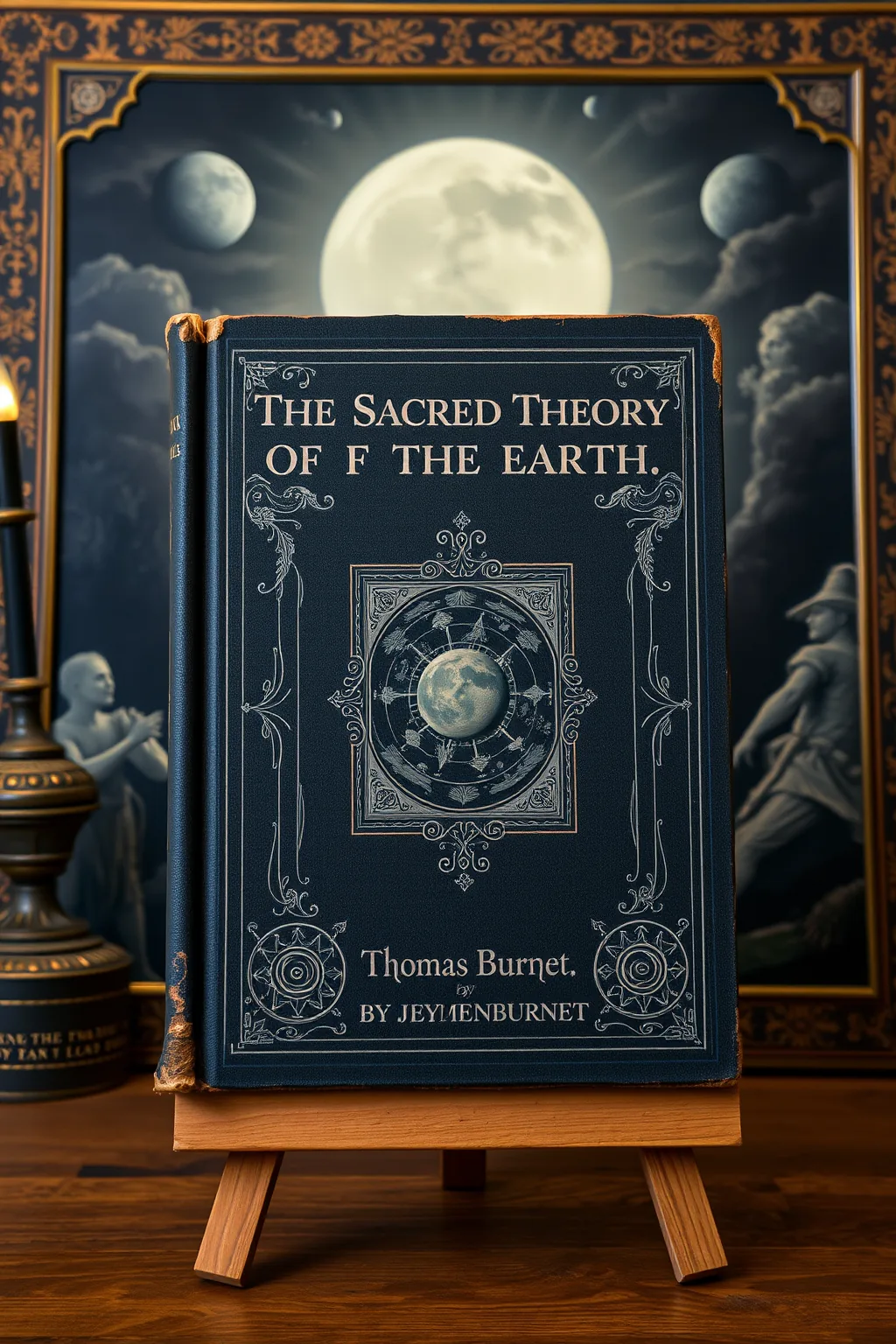
Thomas Burnet's 1681 'The Sacred Theory of the Earth' proposed a cosmic history for the planet.
Published in 1681, Thomas Burnet's 'The Sacred Theory of the Earth' presents a cosmological history of the planet. Burnet sought to reconcile biblical accounts of creation and the Flood with emerging scientific ideas. He imagined the Earth as a living organism, undergoing stages from primordial chaos to a final fiery end. His work details a cyclical view of the planet's existence, influenced by both ancient myths and early modern natural philosophy.
The book interprets biblical narratives, such as Genesis and Noah's Flood, as allegorical representations of geological processes. Burnet also drew upon classical sources, integrating them into his grand vision of the Earth's past and future. This approach reflects a period when scholars often merged theological, mythological, and scientific understandings to explain the natural world. His theories aimed to reveal a divine order underlying the Earth's physical transformations.
Burnet's work sits within a tradition of cosmological speculation that sought to find divine meaning in the natural world. It connects to Renaissance Neoplatonism and Hermeticism, which viewed the Earth as a microcosm reflecting heavenly patterns. The book attempts to bridge faith and reason, interpreting scripture through a natural philosophical lens to understand God's creation. This pursuit of hidden truths within the physical universe marks it as a key text in early modern esoteric thought.
💡 Why Read This Book?
Embark on a metaphysical exploration of our planet's profound journey. 'The Sacred Theory of the Earth' offers a unique synthesis of science, theology, and myth, revealing hidden patterns in creation and destruction. Ideal for seekers of ancient wisdom, scholars of esoteric thought, and practitioners interested in the symbolic language of the cosmos.
⭐ Reader Reviews
Honest opinions from readers who have explored this book.
❓ Frequently Asked Questions
What is the primary focus of 'The Sacred Theory of the Earth'?
The book focuses on a divinely ordained, cyclical theory of the Earth's existence, detailing its origin, transformations through events like the Deluge and Paradise, and its ultimate eschatological destiny.
What historical period does this book represent?
It represents the late 17th century, a pivotal era where early scientific inquiry began to intersect with deeply ingrained theological and mythological frameworks for understanding the natural world.
Is this a purely scientific or a spiritual text?
It is a profound synthesis of both. Burnet uses observable phenomena and emerging scientific ideas to support a deeply spiritual and theological interpretation of Earth's history and purpose.
Who was Thomas Burnet?
Thomas Burnet (c. 1635–1715) was an English theologian and natural philosopher, known for his highly influential and controversial work on the sacred theory of the Earth.
What makes this book 'esoteric'?
Its esoteric nature lies in its allegorical approach, symbolic interpretations of biblical and natural events, and its exploration of hidden, divine principles guiding the Earth's grand cosmic narrative.
🔮 Key Themes & Symbolism
The Primordial Earth and Paradise
Burnet theorizes an initial state of perfect, spherical order, the Earth as a terrestrial paradise, a field of pristine beauty and harmony before the introduction of sin. This concept studies the symbolic representation of an unfallen world, a state of divine grace and balance, drawing parallels with Edenic narratives. It explores the philosophical idea of an original, perfect creation and the subsequent fall from grace, setting the stage for the Earth's dramatic transformations.
The Universal Deluge as Cosmic Cleansing
The Great Deluge is presented not merely as a historical event but as a divinely orchestrated cataclysm, a necessary force for purging the Earth and initiating a new phase of existence. Burnet's interpretation transcends the literal, envisioning the waters as a potent symbol of chaos, divine judgment, and eventual renewal. This theme explores the cyclical nature of destruction and rebirth, reflecting ancient myths of world-ending floods that pave the way for a fresh creation.
Eschatological Transformation and Final Restoration
Burnet's theory culminates in a profound vision of the Earth's ultimate fate, foretelling its fiery dissolution and subsequent renewal into a perfected, eternal state. This eschatological perspective frames Earth's history as a grand, divinely guided journey towards a final restoration, echoing themes of apocalypse and millennialism. It speaks to a deep human desire for ultimate order and redemption, suggesting that even the material world is destined for a spiritual apotheosis.
💬 Memorable Quotes
Direct passages from the work, attributed to the author.
“Paradise was the Earth's first and most glorious state.”
— This emphasizes the concept of an original, perfect Earth, a lost utopia embodying divine harmony and innocence, serving as a benchmark for subsequent epochs.
“The Waters were the universal womb of the Earth.”
— This metaphorical statement portrays water as the primal, generative force, essential for both the initial formation and the subsequent cataclysmic transformations of the planet.
“The Earth, like man, has its infancy, its maturity, and its old age.”
— This anthropomorphic analogy illustrates Burnet's cyclical view of Earth's history, suggesting a life cycle with distinct developmental stages, from creation to eventual decay and renewal.
“There is a secret Providence that governs all these changes.”
— This underscores the core tenet of Burnet's theory: that all terrestrial events, from the grandest cataclysms to the subtlest shifts, are guided by an unseen, divine hand.
💡 Key Ideas
Editorial paraphrase of the work's core concepts — not direct quotes.
The World is a great and sacred Machine, which God himself has set in motion.
This quote highlights Burnet's view of the cosmos as a divinely engineered, purposeful system, where natural phenomena are manifestations of divine will and design.
🌙 Esoteric Significance
Tradition
Burnet's work is deeply rooted in the Western esoteric tradition, particularly within the Neoplatonic and Hermetic streams that influenced Renaissance and early modern thought. It shares common ground with alchemical symbolism, where natural processes are seen as mirroring spiritual transformations. The emphasis on cyclical time, divine architecture, and the hidden order of the universe aligns with Gnostic cosmology and Kabbalistic interpretations of creation. The theory can be seen as an attempt to clarify divine action through a symbolic, allegorical lens, revealing a cosmic blueprint accessible to the discerning mind.
Symbolism
Key symbols abound in Burnet's theory: the perfect sphere representing primordial order, the 'chaos' of primordial waters signifying potential and dissolution, and the cataclysmic Deluge as a symbol of purification and divine judgment. Paradise embodies the ideal state of grace, while the fiery transformation signifies ultimate spiritualization. The Earth itself becomes a potent symbol of humanity's journey through trials and tribulations towards a final, perfected existence. These symbols are not mere decorations but integral components of a larger symbolic language designed to convey profound metaphysical truths about existence.
Modern Relevance
In an era often characterized by a perceived disconnect between science and spirituality, Burnet's 'Sacred Theory' offers a compelling argument for their integration. It challenges modern reductionism by suggesting that the Earth's history is imbued with profound meaning and purpose. For contemporary seekers, it provides a rich source of symbolic language and cosmological frameworks that can inform personal spiritual journeys. Its exploration of cyclical patterns, destruction, and renewal appeals to ecological concerns and the modern understanding of planetary systems, offering a historical perspective on humanity's relationship with the Earth.
👥 Who Should Read This Book
This key work is essential for a diverse readership. Scholars of intellectual history, theology, and the history of science will find invaluable insights into the late 17th-century worldview. Esoteric practitioners and students of comparative mythology will appreciate its rich symbolic language and cosmological framework. Seekers of deeper meaning and those interested in the intersection of natural philosophy and divine revelation will find 'The Sacred Theory of the Earth' a profound and thought-provoking read, offering a grand, unified vision of our planet's sacred journey.
📜 Historical Context
Published in 1691, 'The Sacred Theory of the Earth' emerged during a transformative period in European intellectual history. The late 17th century witnessed the burgeoning of the Scientific Revolution, with figures like Newton and Boyle challenging established Aristotelian physics. Yet, alongside this empirical surge, a deep-seated reverence for biblical cosmology and theological interpretations of natural phenomena persisted. Burnet's work masterfully navigates this intellectual terrain, attempting to reconcile scriptural accounts with nascent geological and astronomical observations. It reflects a worldview where divine revelation and natural philosophy were not seen as disparate but as complementary avenues to understanding God's creation. The book's ambitious scope and speculative nature resonated with a public grappling with both newfound scientific knowledge and enduring spiritual questions.
📔 Journal Prompts
How does Burnet's concept of a 'sacred machine' resonate with your understanding of the universe?
Reflect on the symbolism of the Deluge in your own life or in global narratives.
Imagine the Earth as a conscious entity; what would be its 'sacred theory'?
In what ways can the 'ideal' of Paradise inform our present-day aspirations?
Consider the cyclical nature of destruction and renewal in your personal journey.
🗂️ Glossary
Chaos
In early cosmologies, the primordial state of disorder and unformed matter from which the universe or specific elements were created. Burnet uses it to describe the initial state of the Earth before its ordered formation.
Deluge
The catastrophic, universal flood described in biblical accounts, notably in the story of Noah's Ark. Burnet interprets it as a fundamental geological and divine event in Earth's history.
Eschatology
The branch of theology concerned with the final events of history, the ultimate destiny of the world, and humanity. Burnet's theory includes a detailed eschatological vision for the Earth.
Natural Philosophy
The historical term for the study of nature and the physical universe before the development of modern science. It encompassed what we now call physics, chemistry, geology, and astronomy, often intertwined with theological speculation.
Primordial
Existing at or from the beginning of time; ancient and fundamental. Burnet's theory often refers to the primordial state of the Earth and its early conditions.
This book appears in 3 collections
🔮 Readers Also Liked
Browse all →









From the “Transcendental Meditation” Collection
View all →







More Free Esoteric History & Biography Books
View all →