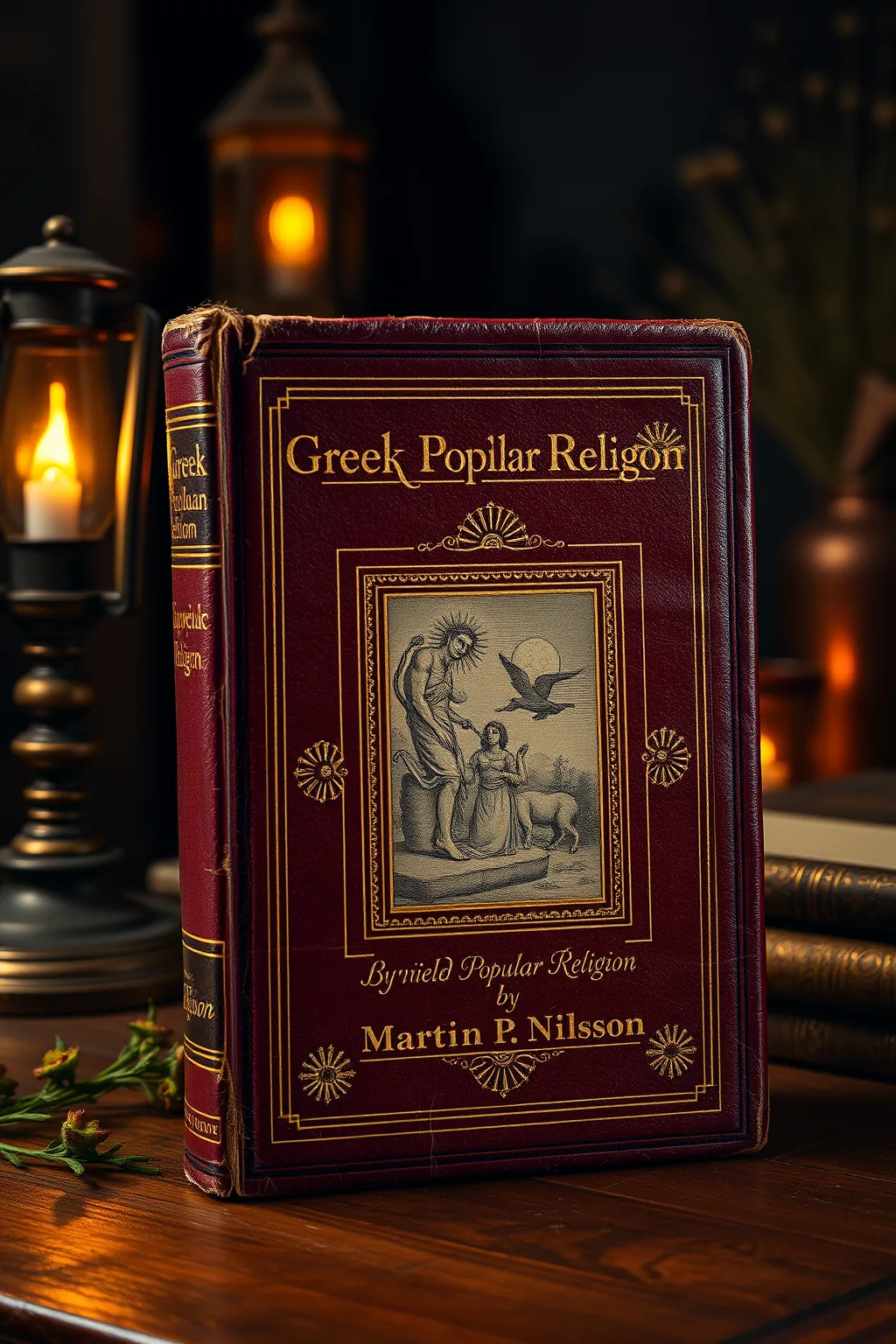
Greek Popular Religion
 77
77

Greek Popular Religion

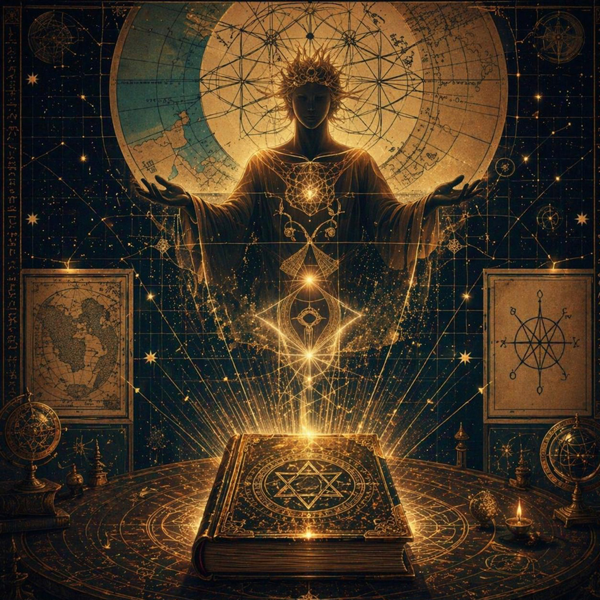

Isolde Whitaker, Sacred Texts Editor: Martin P. Nilsson's "Greek Popular Religion" is an indispensable cornerstone for any serious exploration of ancient spiritual currents. Eschewing the Olympian pantheon's grand narratives, Nilsson meticulously excavates the grassroots beliefs and practices that were the true lifeblood of Hellenic society. His profound insights into the interplay of ancestral cults, chthonic rituals, and the pervasive influence of magic offer a rare, unvarnished view of lived faith. This book is a vital resource for scholars, practitioners of ancient traditions, and anyone seeking to understand the deeper, more immanent dimensions of human spirituality. An essential acquisition for the Esoteric Library.
📝 Description
77
Martin P. Nilsson's 1940 study examines the everyday religious practices of ancient Greece.
Published in 1940, Martin P. Nilsson's "Greek Popular Religion" moves past the well-known Olympian deities to investigate the lived religious experience of ordinary people in ancient Greece. The book details the customs, festivals, and rituals that formed the core of their spiritual lives, often separate from the official state cults. Nilsson reconstructs a world where belief in spirits, divination through oracles, and the use of folk magic were common.
This work is not a simple recounting of myths but a deep look into the actual practices and beliefs that shaped the daily existence of many Greeks. It highlights the importance of ancestral worship, local cults, and personal rituals in understanding the broader religious landscape. Nilsson's research provides a window into the less documented aspects of Hellenic spirituality, revealing how these practices continued to influence the culture.
Nilsson’s work engages with the study of popular religion, a field that often intersects with esoteric traditions by examining beliefs and practices outside mainstream, formalized theology. While not strictly an esoteric text itself, it illuminates the substratum of magic, folk beliefs, and personal piety that often underpins or runs parallel to more recognized religious structures. It offers a scholarly perspective on the 'unseen' aspects of ancient life, including divination and spirit invocation, which are frequently of interest to those exploring esoteric history.
✍️ Author
Martin P Nilsson
Harry Edward Nilsson III (June 15, 1941 – January 15, 1994), sometimes credited and often referred to as Nilsson, was an American singer-songwriter who reached the peak of his success in the early 1970s. His work is characterized by pioneering vocal overdu…
💡 Why Read This Book?
Delve into the authentic, lived spiritual experience of ancient Greece, far from mythic grandeur. Discover forgotten rituals, folk magic, and the profound connection to ancestral spirits that shaped daily life. This book is ideal for seekers of hidden knowledge, scholars of esoteric traditions, and practitioners looking to connect with ancient earth-based spiritualities.
⭐ Reader Reviews
Honest opinions from readers who have explored this book.
❓ Frequently Asked Questions
What distinguishes 'popular religion' from Olympian mythology?
Popular religion focuses on the everyday, often private, rituals, superstitions, and direct interactions with spirits and the divine that ordinary people practiced, contrasting with the public, formalized worship of the Olympian gods.
Does the book cover magical practices?
Yes, Nilsson extensively explores the role of folk magic, amulets, curses, and healing rituals that were integral to popular Greek religious life.
What is the significance of ancestral cults in this context?
Ancestral cults were foundational, with the deceased often venerated and appeased, playing a crucial role in the well-being and fortune of the living family and community.
Is this book suitable for beginners?
While deeply scholarly, its accessible style and focus on tangible practices make it a rewarding entry point for those new to the study of ancient religions.
What role did festivals play?
Festivals were vital communal gatherings, often blending religious observance with social and economic activities, providing opportunities for both worship and communal bonding.
🔮 Key Themes & Symbolism
The Unseen World of Spirits and Daimones
This theme studies the pervasive belief in a vibrant spirit realm that directly influenced human affairs. Nilsson illuminates the reverence for ancestral spirits, local daimones, and nymphs who were not distant deities but active participants in daily life, requiring appeasement, offering, and invocation. It explores how these entities were perceived as sources of fortune, misfortune, and guidance, shaping the very fabric of Greek social and personal existence through their unseen agency.
Ritual and Sympathetic Magic
Fundamentally, popular religion was a practice of interaction and influence. This theme examines the myriad rituals, from domestic rites to public ceremonies, designed to invoke divine favor, ward off evil, and ensure prosperity. It uncovers the logic of sympathetic magic, where actions mirrored desired outcomes, and the use of amulets, incantations, and votive offerings to manipulate spiritual forces for tangible results, revealing a deeply practical and often potent approach to the sacred.
Initiation, Oracles, and the Quest for Knowledge
Beyond communal worship, Nilsson highlights the role of secretive initiations and the lasting impact of oracular pronouncements in the quest for divine knowledge and personal destiny. This theme explores the transformative power of mystery cults and the widespread reliance on oracles as conduits to the divine will. It reveals how individuals sought to penetrate the veil of the unknown, receiving guidance and participating in rites that promised enlightenment or salvation, demonstrating a deep-seated human desire for hidden wisdom.
💬 Memorable Quotes
Direct passages from the work, attributed to the author.
“Ancestors were the first gods.”
— Highlighting the foundational importance of ancestor veneration, this suggests the earliest forms of worship stemmed from familial ties and respect for the departed.
“Magic was the science of the common man.”
— This phrase positions folk magic as a practical, accessible system of belief and action for everyday Greeks seeking to influence their world.
“The oracle spoke the will of the gods.”
— Emphasizing the oracles' role as divine messengers, this illustrates the deep trust placed in them for guidance on crucial matters of life and fate.
“Ritual bound the community together.”
— This speaks to the social function of religious practices, showing how shared ceremonies and observances forged and maintained communal bonds.
💡 Key Ideas
Editorial paraphrase of the work's core concepts — not direct quotes.
The gods were not remote beings, but neighbours.
This quote captures the immanent nature of Greek popular religion, where the divine was perceived as ever-present and accessible in daily life, not aloof or distant.
🌙 Esoteric Significance
Tradition
This work is foundational to the study of Hellenistic esoteric traditions, particularly those rooted in folk magic, chthonic worship, and the practical application of spiritual forces. It bridges the gap between academic history and esoteric practice by detailing the mechanisms of belief and ritual that informed personal and communal spiritual journeys, revealing a lineage of immanent divinity and earth-based spirituality.
Symbolism
Nilsson implicitly explores the symbolism inherent in votive offerings, amulets, and ritual gestures – each imbued with potent, often pragmatic, meaning. The symbolism lies not in abstract representation but in the active invocation of forces: the bull for strength, the owl for wisdom, the serpent for renewal and healing. These symbols were not merely decorative but were active agents in the magical and religious worldview.
Modern Relevance
The book's relevance lies in its illumination of enduring human spiritual needs: connection to ancestors, seeking guidance, and influencing one's destiny through ritual. For modern practitioners of Neo-Paganism, Hellenismos, and other earth-based spiritualities, Nilsson provides a vital historical and practical context for understanding the roots of their practices and the deeply ingrained human impulse to engage with the sacred in tangible ways.
👥 Who Should Read This Book
This clear work is essential for scholars of classical antiquity and religious history seeking to understand the lived experience of faith. It is equally vital for practitioners of Hellenic reconstructionism, Neo-Paganism, and those interested in folk magic and ancestral veneration, offering a wide range of historical practices. For the general seeker of esoteric knowledge, "Greek Popular Religion" provides a profound glimpse into the enduring human quest for meaning and connection through ritual and belief, revealing the sacred in the mundane.
📜 Historical Context
Published in 1940, Martin P. Nilsson's "Greek Popular Religion" emerged during a period of intense scholarly interest in ancient civilizations, yet it dared to look beyond the monumental and the elite. The early 20th century saw a growing appreciation for social history and the lives of ordinary people, moving away from purely political or military narratives. Nilsson's work resonated with this shift, excavating the 'unwritten' history of religious practice. It provided a crucial counterpoint to the idealized portrayals of Greek religion often found in classical scholarship, grounding the divine in the everyday soil of human experience and ritual, thus influencing subsequent generations of historians and religious scholars.
📔 Journal Prompts
Reflect on a personal or communal ritual that holds deep significance for you. How does it connect you to the past or to unseen forces?
Consider the concept of 'neighboring gods.' How might you perceive the divine as being present and accessible in your immediate environment?
Explore the role of folk magic in your own life or cultural background. What are its underlying principles and perceived effects?
How does the idea of seeking divine guidance through oracles or other forms of divination resonate with you today?
Imagine you are an ancient Greek participating in a popular festival. What sensory details and emotions would define your experience?
🗂️ Glossary
Daimon
A supernatural being or spirit in ancient Greek religion, often acting as an intermediary between humans and gods, and sometimes possessing individual characteristics or domains.
Chthonic
Pertaining to the underworld or the earth; referring to deities or rituals associated with the earth, the dead, and the subterranean realms.
Votive Offering
An object or gift presented to a deity or sacred place as a token of gratitude, supplication, or fulfillment of a vow.
Oracle
A person or agency considered to be a source of divine wisdom or prophecy, typically consulted for guidance on important matters.
Amulet
An object worn or carried for protection against evil, harm, or illness, often believed to possess magical properties.
This book appears in 1 collection
🔮 Readers Also Liked
Browse all →









More by Martin P Nilsson
All books →
From the “Transcendental Meditation” Collection
View all →








More Free Esoteric History & Biography Books
View all →