The Holy Grail
 79
79

The Holy Grail
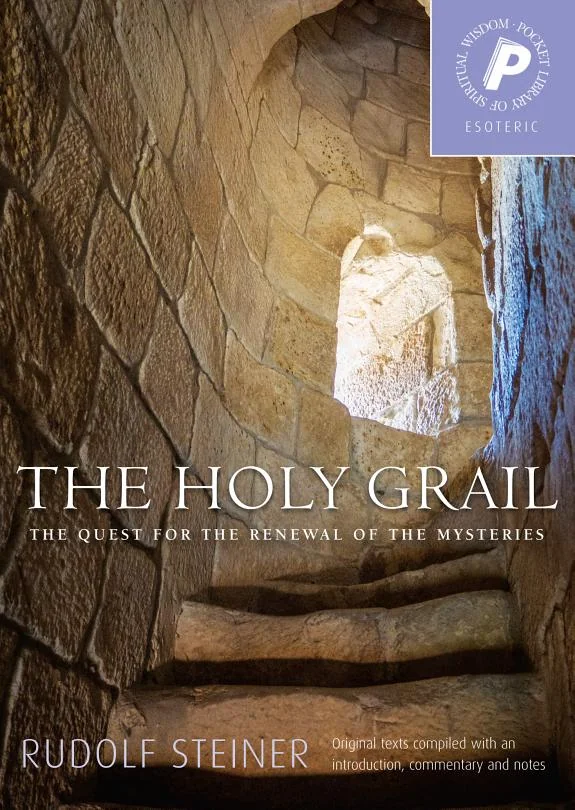
Rudolf Steiner's "The Holy Grail" presents a challenging, albeit rewarding, reinterpretation of Christian symbolism and ancient mysteries. His assertion that the Grail legend embodies the evolution of the human ego towards spiritual perception is a compelling thesis. The work excels in connecting seemingly disparate ancient traditions, particularly Egyptian death and resurrection rites, to the Christian Mystery of Golgotha. However, Steiner's dense prose and highly specific Anthroposophical terminology can present a significant barrier to entry for those unfamiliar with his system. A passage discussing the "Mystery of the Higher Ego" offers a particularly intricate explanation of how the Grail impulse fosters spiritual development, moving beyond mere intellectual understanding. While dense, the book offers a unique perspective on spiritual history, demanding careful study but ultimately providing a framework for understanding the Christ event as a cosmic evolutionary turning point. It is a demanding text, best approached with prior knowledge of Steiner's work.
📝 Description
79
Rudolf Steiner delivered lectures on the Holy Grail between 1904 and 1914.
Rudolf Steiner's "The Holy Grail" is a compilation of lectures from the early 20th century that addresses the spiritual foundations of human development. Steiner examines ancient traditions, particularly those of Egypt, and their evolution into early Christianity. He argues that the Grail legend represents more than a medieval story; it symbolizes humanity's growing consciousness and its links to spiritual entities. The book discusses initiation, death, resurrection, and the development of the human ego. It draws connections between historical spiritual practices and the spiritual challenges faced in modern times.
This work is aimed at dedicated students of Anthroposophy and esoteric Christianity. Those familiar with Steiner's philosophy will find it helps clarify his cosmology and ideas on consciousness. It also appeals to readers interested in comparative religion from an occult viewpoint, especially the shift from ancient mystery religions to Christianity. Individuals looking to grasp the spiritual meaning of symbols like the Grail, beyond literary or historical readings, will find value here.
Steiner delivered these lectures during a period of significant spiritual and intellectual activity in Europe, roughly between 1904 and 1914. This era saw the emergence of Theosophy, Spiritualism, and various occult revival movements. Steiner himself was a central figure, having departed the Theosophical Society to establish his own spiritual science, Anthroposophy. His writings offered a spiritual perspective in response to prevailing scientific materialism. "The Holy Grail" reinterprets Christian mysteries through his developing Anthroposophical cosmology.
💡 Why Read This Book?
• Learn how Steiner connects the Egyptian Mysteries to the Christian era, understanding the evolution of spiritual initiation practices from ancient rites to the modern era. • Grasp the symbolic meaning of the Holy Grail as an emblem for the development of the human Higher Ego and conscious spiritual perception, as detailed in the lecture on "The Mystery of the Higher Ego". • Explore the evolutionary role of the Mystery of Golgotha, as Steiner presents it, and its significance for humanity's path beyond archaic clairvoyance.
⭐ Reader Reviews
Honest opinions from readers who have explored this book.
❓ Frequently Asked Questions
What is Rudolf Steiner's primary argument in "The Holy Grail" regarding ancient mysteries?
Steiner argues that ancient mystery traditions, particularly those involving death and resurrection rites in places like ancient Egypt, were preparatory stages for the spiritual evolution initiated by the Mystery of Golgotha.
How does Steiner interpret the Holy Grail symbol?
He interprets the Holy Grail as a symbol for the development of the human Higher Ego and the capacity for conscious spiritual perception, representing humanity's evolving connection to spiritual worlds.
What is the "Gnostic Crisis" as discussed by Steiner in this work?
Steiner views the Gnostic Crisis as a historical period where the direct experience and transmission of the ancient Mysteries were challenged, leading to a loss of esoteric understanding that he seeks to recover.
What role does the "Mystery of Golgotha" play in Steiner's thesis?
The Mystery of Golgotha is presented as a pivotal event in human and planetary evolution, empowering humanity to develop individual spiritual freedom and consciousness, moving beyond collective archaic clairvoyance.
When were the lectures that comprise "The Holy Grail" originally delivered?
The lectures that form "The Holy Grail" were originally delivered by Rudolf Steiner in the period between 1904 and 1914, reflecting his developing Anthroposophical teachings.
Does "The Holy Grail" discuss reincarnation?
Yes, the work implicitly addresses reincarnation and karma as frameworks through which human spiritual evolution unfolds across lifetimes, particularly in relation to the enduring influence of past spiritual epochs.
🔮 Key Themes & Symbolism
Spiritual Evolution of Humanity
Steiner posits that humanity is undergoing a continuous process of spiritual evolution, moving from ancient, instinctual clairvoyance towards conscious, individual spiritual perception. The book examines key stages, including the influence of the Mysteries and the transformative impact of the Mystery of Golgotha. The "Holy Grail" itself is presented as a potent symbol for this evolving consciousness, representing the development of the Higher Ego and humanity's capacity to consciously engage with spiritual realities beyond the physical.
The Mystery of Golgotha
This event is central to Steiner's understanding of human and cosmic history. He interprets Golgotha not merely as a historical occurrence but as a cosmic event that fundamentally altered the trajectory of human evolution. It provided the impulse for humanity to develop individual consciousness, freedom, and the capacity for spiritual rebirth, moving away from the collective, unconscious clairvoyance of earlier ages. The work explores how this event enabled the development of the "Higher Ego".
Ancient Mysteries and Initiation
Steiner analyzes the role and function of ancient mystery traditions, such as those found in Egypt. These were schools designed to cultivate specific spiritual capacities in initiates, often involving symbolic representations of death and resurrection. He connects these ancient practices to the later Christian revelation, suggesting that the Grail legend carries forward the legacy of these Mysteries, albeit in a new form suited for a different stage of human evolution.
The Grail as a Symbol of the Higher Ego
Beyond its legendary status, Steiner presents the Holy Grail as a profound esoteric symbol. It represents the development of the "Higher Ego" – the spiritual core of the human being that can achieve conscious connection with the spiritual world. The "Grail and the Spiritual Evolution of Humanity" section details how the pursuit of the Grail mirrors humanity's own quest for higher consciousness and spiritual self-realization in the modern age.
💬 Memorable Quotes
Direct passages from the work, attributed to the author.
“The Mystery of the Higher Ego – the Holy Grail.”
— This concise statement captures Steiner's central thesis: the Grail legend is not merely a story but an esoteric symbol for the awakening and development of humanity's spiritual self, the Higher Ego.
“Death and Resurrection in Ancient Egypt - the Miracle of Initiation.”
— This highlights Steiner's method of connecting ancient Egyptian religious practices to universal spiritual principles, framing initiation as a process mirroring cosmic cycles of death and rebirth.
“The Gnostic Crisis and the Loss of the Mysteries.”
— This points to a historical turning point where direct esoteric knowledge, transmitted through the Mysteries, became obscured or fragmented, leading to a challenge in accessing spiritual truths.
“Stages of Evolution – Archaic Clairvoyance.”
— This phrase refers to the early human capacity for perceiving spiritual realities directly, a state Steiner contrasts with the conscious spiritual perception achievable in later stages of evolution.
“The Secret of Evolution – the Holy Grail.”
— This suggests that understanding the Grail mythos holds the key to comprehending the deeper purpose and direction of humanity's ongoing spiritual development across epochs.
🌙 Esoteric Significance
Tradition
Steiner's work belongs to the tradition of esoteric Christianity and spiritual science, heavily influenced by Anthroposophy, which he founded. While drawing on Gnostic and Hermetic concepts of initiation and spiritual transformation, his approach is uniquely focused on the evolutionary destiny of human consciousness. He departs from earlier Theosophical interpretations by emphasizing the Christ event as a singular, powerful impulse for planetary and human evolution, distinct from Eastern traditions.
Symbolism
The "Holy Grail" is the primary symbol, representing the chalice that holds spiritual nourishment and facilitates the development of the "Higher Ego." Golgotha, the site of Christ's crucifixion, symbolizes a cosmic event enabling human freedom and spiritual rebirth. "Archaic Clairvoyance" represents the primal, instinctual spiritual sight of earlier humanity, contrasted with the conscious spiritual perception sought today.
Modern Relevance
Contemporary thinkers and practitioners within Anthroposophy continue to engage with Steiner's interpretation of the Grail and Golgotha. His emphasis on spiritual evolution and the development of consciousness influences movements in Waldorf education, biodynamic agriculture, and holistic medicine. The work remains relevant for those seeking a spiritual cosmology that addresses modern challenges and seeks to understand the Christ impulse as a living force in human development.
👥 Who Should Read This Book
• Students of Rudolf Steiner and Anthroposophy seeking a deeper understanding of his cosmology, particularly concerning the evolution of consciousness and the significance of Christ. • Researchers in comparative religion and esoteric studies interested in occult interpretations of Christian symbolism and the connection between ancient Mysteries and modern spirituality. • Individuals drawn to the Grail legend from a spiritual perspective, looking for an esoteric exegesis that moves beyond literary or historical analysis to explore its role in human spiritual development.
📜 Historical Context
Rudolf Steiner delivered the lectures forming "The Holy Grail" between 1904 and 1914, a period marked by a resurgence of interest in esotericism and spiritual philosophy across Europe. This era saw figures like Helena Blavatsky's Theosophy gaining traction, and various occult orders flourishing. Steiner himself was a significant figure, having recently broken from the Theosophical Society to establish Anthroposophy, his own spiritual science. His work presented a distinctive interpretation of Christianity, seeking to reconcile spiritual realities with scientific inquiry, often in opposition to prevailing materialistic philosophies. "The Holy Grail" emerged within this milieu as an attempt to re-energize Christian spiritual understanding by linking it to ancient mystery traditions and positing a cosmic significance for the event of Golgotha, offering an alternative to both orthodox religion and secularism.
📔 Journal Prompts
The Mystery of the Higher Ego: How does the Grail impulse relate to your personal spiritual development?
Reflect on the "Stages of Evolution – Archaic Clairvoyance" versus conscious spiritual perception.
Consider the "Mystery of Golgotha" as a central event for human freedom.
Analyze the "Gnostic Crisis and the Loss of the Mysteries" in contemporary spiritual seeking.
Explore the "Grail and the Spiritual Evolution of Humanity" through personal contemplation.
🗂️ Glossary
Higher Ego
In Anthroposophy, this refers to the spiritual, immortal aspect of the human being, distinct from the personal ego. The development and awakening of the Higher Ego is a central goal of spiritual evolution.
Mystery of Golgotha
Steiner's term for the events surrounding Christ's crucifixion and resurrection, viewed not just historically but as a cosmic event that fundamentally transformed human and planetary evolution.
Archaic Clairvoyance
A form of instinctual, non-conscious spiritual perception characteristic of early humanity, contrasted with the conscious, developed spiritual awareness Steiner posits for the future.
Initiation
A process of spiritual development and awakening within esoteric traditions, often involving trials and stages that lead to higher knowledge and consciousness.
Anthroposophy
A spiritual philosophy founded by Rudolf Steiner, seeking to understand the spiritual nature of the human being and the cosmos through spiritual-scientific methods.
Gnostic Crisis
A historical period, as interpreted by Steiner, where Gnosis (direct spiritual knowledge) associated with the ancient Mysteries faced challenges, leading to a fragmentation of esoteric understanding.
Grail
In Steiner's context, the Holy Grail is a symbolic vessel representing the development of the Higher Ego and the attainment of conscious spiritual perception.
This book appears in 1 collection
🔮 Readers Also Liked
Browse all →









From the “Holy Grail” Collection
View all →








More Free Sacred Texts & Gnosticism Books
View all →