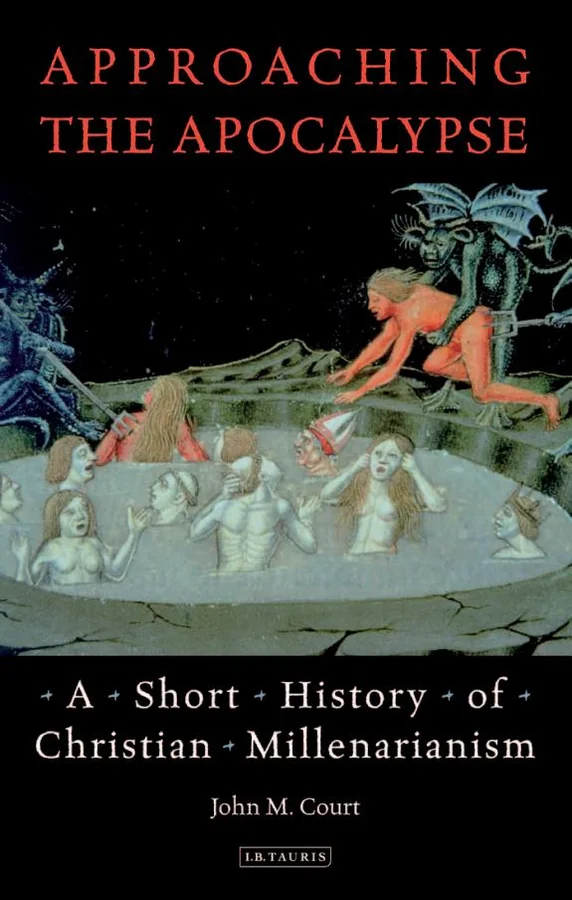
Approaching the Apocalypse
 76
76

Approaching the Apocalypse
John M. Court’s “Approaching the Apocalypse” offers a dense, academically rigorous exploration of Christian eschatological thought, a topic that has long captivated believers and scholars alike. The work’s strength lies in its meticulous tracing of the historical trajectory of end-times ideas, particularly their roots in the Book of Revelation. Court avoids sensationalism, presenting a measured, scholarly account of how these potent narratives have been interpreted and reinterpreted across millennia. One notable aspect is the detailed examination of how specific theological concepts, like the millennium, have been understood differently by various historical actors, providing a nuanced perspective on their evolution. A limitation, however, is that the sheer academic density might prove challenging for readers without a prior background in theological or historical studies. The section discussing the early Church Fathers' engagement with apocalyptic texts, while informative, requires careful attention. Ultimately, Court delivers a definitive handbook for understanding the historical and theological underpinnings of Christian doomsday beliefs, grounded in deep scholarship.
📝 Description
76
### What It Is "Approaching the Apocalypse" by John M. Court is a scholarly examination of eschatological thought within Christian history. First published in 2008, the book traces the development of ideas concerning the end times, divine judgment, and the millennial reign of Christ. It focuses on how these concepts have been interpreted and applied across centuries, drawing heavily on scriptural texts and historical theological discourse. The work functions as a comprehensive survey, detailing the evolution of apocalyptic expectations and their impact on religious and political movements.
### Who It's For This volume is intended for students and scholars of religion, history, and political science with a specific interest in Christian eschatology. It will appeal to those seeking a rigorous, historically grounded understanding of how apocalyptic narratives have shaped belief systems and societal expectations throughout the Christian era. Readers interested in the intellectual history of end-times prophecies, particularly those stemming from the Book of Revelation, will find it a valuable resource. It is also suited for individuals engaged in comparative religious studies who wish to understand a significant thread in Western religious thought.
### Historical Context Court's work emerges from a long tradition of theological and historical scholarship on Christian apocalypticism. The enduring fascination with the Book of Revelation, a text central to Christian eschatology since its inclusion in the New Testament canon, has fueled centuries of interpretation. From early Christian communities to later millenarian movements, the expectation of a divinely orchestrated end has been a recurrent theme. The 2008 publication date places it within contemporary academic discourse, engaging with modern critical analyses of religious texts and historical phenomena, while standing on the shoulders of earlier scholars who documented and analyzed these beliefs.
### Key Concepts The book systematically unpacks core concepts related to Christian end-times prophecy. It explores the theological underpinnings of divinely inspired disaster, examining how concepts of judgment, redemption, and ultimate divine victory have been understood. Central to this is the interpretation of the Book of Revelation, with its complex symbolism and prophetic pronouncements. Court also investigates the historical manifestations of these beliefs, looking at how individuals and groups have prepared for and reacted to perceived signs of the apocalypse, including expectations surrounding the thousand-year reign of Christ and his saints.
💡 Why Read This Book?
• Gain a structured understanding of Christian end-times prophecies, moving beyond sensationalism to explore their historical and theological roots, as detailed in the book's analysis of the Book of Revelation. • Comprehend the enduring influence of apocalyptic thought on Western civilization by examining its impact on religious and political movements across centuries, referencing specific periods of heightened expectation. • Appreciate the scholarly interpretation of divine disaster narratives, understanding how concepts like the millennium have been debated and applied by theologians and believers since the early Church.
⭐ Reader Reviews
Honest opinions from readers who have explored this book.
❓ Frequently Asked Questions
What is the primary focus of John M. Court's "Approaching the Apocalypse"?
The book primarily focuses on the historical development and theological interpretation of Christian eschatology, particularly ideas concerning the end times and divine judgment, drawing heavily from the Book of Revelation.
Who is the intended audience for "Approaching the Apocalypse"?
This book is intended for students and scholars of religion, history, and politics, especially those interested in Christian end-times prophecy and its intellectual history.
What scriptural text is central to the themes explored in the book?
The Book of Revelation is central to the themes explored in "Approaching the Apocalypse," serving as a primary source for the apocalyptic narratives and symbolism discussed.
Does the book discuss modern-day interpretations of the apocalypse?
While the book's primary focus is historical, its examination of enduring themes in Christian thought provides context for understanding contemporary interpretations of apocalyptic events.
When was "Approaching the Apocalypse" first published?
John M. Court's "Approaching the Apocalypse" was first published on August 30, 2008.
What historical periods does the book cover regarding apocalyptic beliefs?
The book covers a broad sweep of history, tracing apocalyptic beliefs from early Christian thought through centuries of theological development and societal engagement with end-times prophecies.
🔮 Key Themes & Symbolism
Christian Eschatology
This theme examines the theological framework of Christian beliefs about the end times, divine judgment, and the ultimate future of humanity and the cosmos. It looks at how these doctrines have been shaped by scripture, particularly the Book of Revelation, and interpreted across different historical epochs. The work explores the persistent human fascination with divinely ordained conclusions and the structure of God's ultimate plan for creation, offering a scholarly perspective on this fundamental aspect of Christian theology.
The Book of Revelation
Central to Court's analysis is the Book of Revelation, the final book of the New Testament. The work scrutinizes its complex symbolism, prophetic pronouncements, and its profound influence on Christian thought regarding apocalyptic events. It traces how generations of believers and theologians have engaged with its visions of cosmic conflict, divine intervention, and the establishment of God's kingdom, dissecting its role as a foundational text for understanding Christian eschatological expectations.
Millennialism and Divine Reign
The concept of the millennium, the thousand-year reign of Christ and his saints, is a significant focus. This theme investigates the varied interpretations of this future period, from literal understandings to symbolic ones, and its implications for believers' expectations of earthly and heavenly kingdoms. The book charts how the anticipation of this era has motivated religious movements and shaped theological discourse throughout Christian history, offering a comprehensive overview of its theological and historical significance.
Historical Interpretations of Doomsday
This theme addresses the enduring human tendency to anticipate and prepare for the end of the world, as inspired by religious admonitions. Court examines how individuals and communities throughout history have identified signs of the apocalypse and structured their lives and beliefs around imminent eschatological events. It provides a historical perspective on the societal impact of these beliefs, showcasing the continuity and evolution of doomsday prophecies within the Christian tradition.
💬 Memorable Quotes
Direct passages from the work, attributed to the author.
“Ideas about divinely-inspired disaster have an enduring place in the history of Christian thought.”
— This statement captures the book's core premise: that apocalyptic thinking is not a fringe element but a significant, persistent thread woven throughout the fabric of Christian theology and practice across centuries.
“For centuries men and women have made preparations for the imminent end of the world.”
— This highlights the practical and lived dimension of eschatological belief, showing how abstract theological concepts have translated into concrete actions and societal behaviors driven by the expectation of the world's conclusion.
“The thousand year reign of Christ and his saints.”
— This phrase points to a specific, debated concept within Christian eschatology that the book likely explores in detail, examining its various interpretations and historical significance.
“Inspired principally by the startling texts of the "Book of Revelation".”
— This indicates the primary scriptural foundation for the apocalyptic ideas discussed in the book, underscoring the profound and ongoing influence of this particular New Testament text on Christian end-times theology.
“Embracing two thousand years of intense and fiery admonition.”
— This evocative phrase suggests the book covers a vast historical span and deals with powerful, potentially challenging religious messages concerning judgment and the end times.
🌙 Esoteric Significance
Tradition
While "Approaching the Apocalypse" is primarily a work of historical and theological scholarship, its subject matter—Christian eschatology—intersects with various esoteric traditions that often interpret biblical prophecies through symbolic, allegorical, or Gnostic lenses. The book's rigorous historical approach provides a grounded counterpoint to more speculative esoteric readings of the Book of Revelation, yet it also offers the foundational knowledge upon which such interpretations are built. It situates mainstream Christian apocalypticism as a precursor and parallel to later esoteric explorations of cosmic cycles and divine intervention.
Symbolism
The Book of Revelation is replete with potent symbols that Court's work analyzes. Key among these are the 'Four Horsemen' of the Apocalypse, often interpreted as harbingers of divine judgment and cosmic upheaval, representing conquest, war, famine, and death. Another significant motif is the 'Beast' and its mark, which has historically been a focus of identification and fear regarding Antichrist figures and systems of control. The number '666' itself is a potent symbol of imperfection and evil, contrasting with divine perfection.
Modern Relevance
Contemporary thinkers and movements engaged with comparative religion, historical theology, and even certain branches of New Age spirituality draw upon the historical understanding of apocalyptic narratives that Court provides. His work offers a scholarly baseline for understanding the roots of end-times thinking, which can inform discussions on religious fundamentalism, the psychology of belief, and the historical influence of prophecy on societal actions. Scholars examining the ongoing cultural impact of biblical narratives find Court's analysis essential for tracing the lineage of these powerful ideas.
👥 Who Should Read This Book
• Students of comparative religion seeking to understand the historical roots and theological nuances of Christian end-times beliefs, particularly as derived from the Book of Revelation. • Academic researchers in history and theology requiring a scholarly overview of how apocalyptic ideas have shaped Western thought and religious practice across centuries. • Individuals interested in the intellectual history of Doomsday narratives, wanting to move beyond sensationalism to a grounded, historically informed perspective on Christian eschatology.
📜 Historical Context
John M. Court's "Approaching the Apocalypse" was published in 2008, a period when academic interest in religious history and eschatology remained robust. The work engages with a tradition stretching back to the early centuries of Christianity, where texts like the Book of Revelation were subject to intense study and interpretation. Throughout history, various schools of thought, from medieval monasticism to later millenarian movements, have grappled with apocalyptic prophecies. Court's scholarship situates itself within modern critical analysis, building upon the foundational work of scholars like R.H. Charles, who extensively studied apocalyptic literature. The reception of such works often involves academic debate on hermeneutics and historical context, rather than public controversy, though the underlying themes have consistently resonated with popular religious sentiment, particularly during times of societal upheaval.
📔 Journal Prompts
The Book of Revelation's symbolism and its historical interpretations.
John M. Court's examination of the 'thousand year reign of Christ and his saints'.
The concept of 'divinely-inspired disaster' in Christian history.
Preparations made for the 'imminent end of the world' across different eras.
The enduring place of apocalyptic ideas within Christian thought.
🗂️ Glossary
Eschatology
The theological study of end times, including beliefs about the final events in history, the ultimate destiny of humanity, and the nature of the afterlife or a renewed creation.
Millennium
A period of one thousand years, specifically referring in Christian eschatology to the prophesied reign of Christ on Earth, as described in the Book of Revelation.
Book of Revelation
The final book of the New Testament, attributed to John of Patmos, containing apocalyptic visions concerning the end times, divine judgment, and the establishment of God's kingdom.
Apocalypticism
A religious belief that the world is fundamentally a dualistic struggle between good and evil, moving toward a final, dramatic divine intervention and the establishment of a new, perfected order.
Theological Admonition
A warning or piece of advice given from a religious or theological perspective, often concerning divine judgment, sin, or the consequences of unrighteousness.
Orthodox Christian Thought
The established doctrines, interpretations, and traditions within Christianity, particularly concerning scripture, theology, and practice, as developed over centuries.
Divinely-Inspired Disaster
Cataclysmic events perceived as being caused or orchestrated by divine will or intervention, often as a form of judgment or purification.
This book appears in 1 collection
🔮 Readers Also Liked
Browse all →









From the “Millenarianism” Collection
View all →





More Free Sacred Texts & Gnosticism Books
View all →