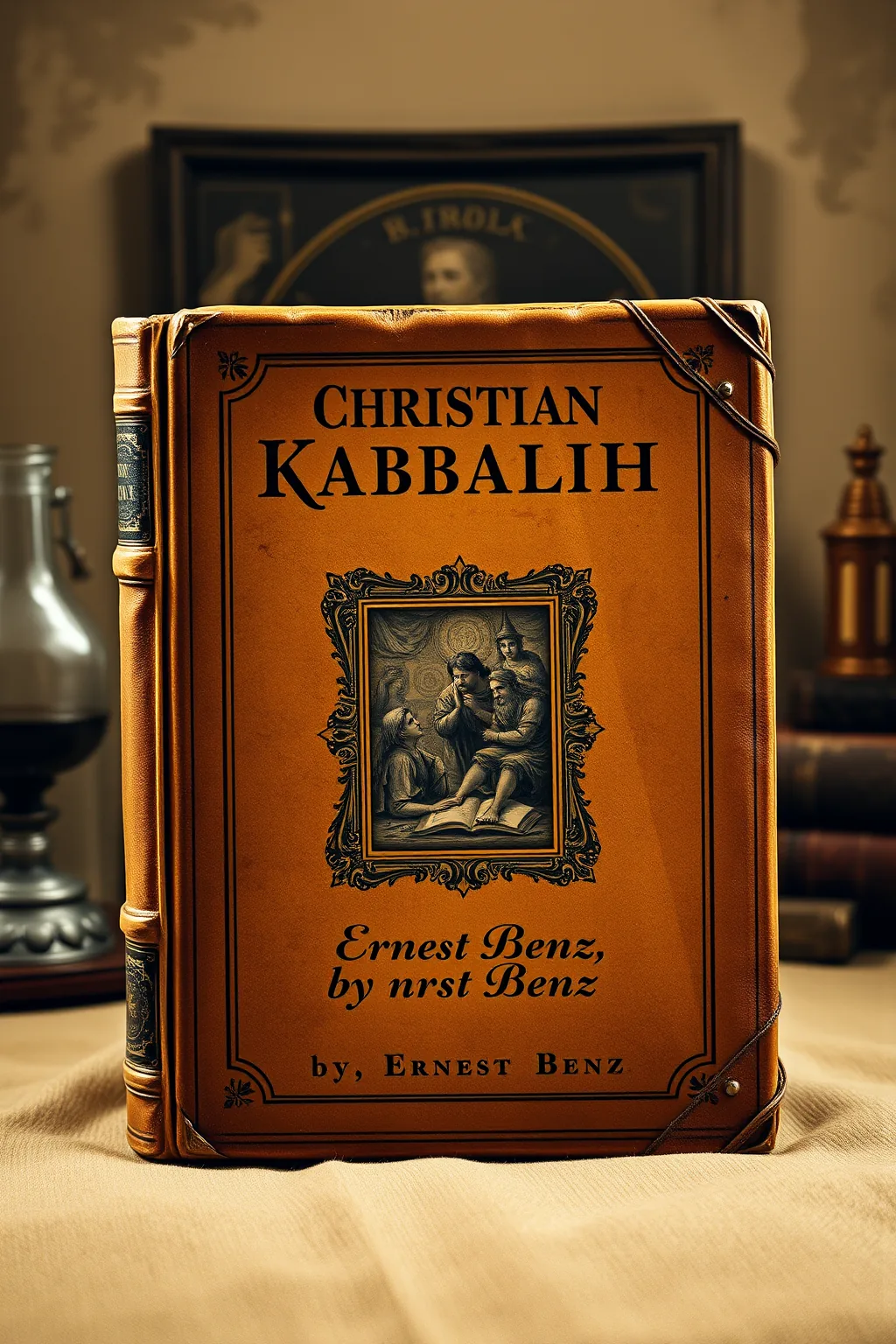
Christian Kabbalah
 61
61

Christian Kabbalah


Ernst Benz's 'Christian Kabbalah' is a magisterial exposition, a beacon for those lost in the labyrinth of comparative mysticism. Benz, with unparalleled erudition, illuminates the astonishing syncretism that occurred when Kabbalistic wisdom encountered Christian esotericism. He meticulously unravels the symbolic language and theological implications, revealing how figures like Pico della Mirandola and Johannes Reuchlin forged a path for a distinct Christian Kabbalistic tradition. This work is not merely academic; it’s a vibrant testament to the universality of mystical quests. Essential reading for scholars and practitioners alike, it offers profound insights into the enduring power of symbolic interpretation and the divine spark present across diverse spiritual landscapes.
📝 Description
61
Ernst Benz's Christian Kabbalah, first published in 1975, examines how Jewish mysticism influenced Christian thought.
Ernst Benz's Christian Kabbalah investigates the historical connections between Jewish Kabbalah and Christian theological traditions. Benz traces how Christian thinkers, from the Renaissance onward, engaged with Kabbalistic concepts and symbolism. He analyzes their interpretations of the Sephirotic Tree, divine names, and Hebrew letters, showing how these elements were adapted to Christian frameworks.
The book details how Kabbalistic ideas were used to understand divine nature, cosmology, and the path of the human soul toward God. Benz focuses on figures who sought a mystical or esoteric understanding of Christianity, finding parallels and integrations with Jewish mystical practices. This work illuminates a less-explored area of religious history, demonstrating a dialogue between these distinct spiritual paths.
This book situates itself within the study of Western esotericism, specifically exploring the cross-pollination between Jewish Kabbalah and Christian theological and mystical currents. It examines how esoteric traditions, often operating outside mainstream religious institutions, could influence and be integrated into established religious thought. Benz's work highlights the historical instances where Christian scholars and mystics adopted and reinterpreted Kabbalistic concepts, viewing them as pathways to deeper spiritual understanding or as keys to unlocking divine mysteries.
💡 Why Read This Book?
Uncover the secret history of how Kabbalistic mysticism profoundly influenced Christian thought. Explore the esoteric symbolism of the Sephiroth and divine names as reinterpreted through a Christian lens. This book is crucial for scholars, mystics, and seekers yearning to understand the deep, often hidden, connections between major Western spiritual traditions and access a richer, more nuanced understanding of divine revelation.
⭐ Reader Reviews
Honest opinions from readers who have explored this book.
❓ Frequently Asked Questions
What is Christian Kabbalah?
Christian Kabbalah refers to the adaptation and interpretation of Jewish Kabbalistic concepts, symbolism, and texts by Christian thinkers, primarily during the Renaissance, seeking to find Christian truths within the mystical framework of the Kabbalah.
Who were the key figures in Christian Kabbalah?
Prominent figures include Pico della Mirandola, Johannes Reuchlin, and later, figures like Athanasius Kircher and Giles of Rome, who sought to synthesize Kabbalistic ideas with Christian dogma.
What are the Sephiroth in the context of Christian Kabbalah?
In Christian Kabbalah, the Sephiroth, the ten emanations of God in Jewish mysticism, were often reinterpreted to align with Christian concepts of the Trinity, divine attributes, and angelic hierarchies.
Is this book suitable for beginners?
While dense with scholarship, the book's clear explanations and focus on symbolism make it accessible to dedicated beginners interested in the esoteric. Prior knowledge of Kabbalah is helpful but not strictly required.
What is the historical period covered?
The book primarily focuses on the Renaissance period, from the late 15th to the 17th centuries, when Christian Kabbalah experienced its most significant development and influence.
🔮 Key Themes & Symbolism
The Syncretic Bridge
This theme explores the remarkable historical phenomenon of Christian thinkers engaging with and reinterpreting Jewish Kabbalistic texts and concepts. Benz meticulously details how figures like Pico della Mirandola and Johannes Reuchlin saw Kabbalah not as a foreign doctrine, but as an ancient, divinely inspired tradition that could illuminate Christian mysteries. The focus is on the intellectual and spiritual bridges built between these two seemingly distinct traditions, revealing a shared yearning for divine knowledge and a desire to unlock the hidden meanings within scripture and the cosmos.
Symbolic Language of the Divine
Fundamentally, Christian Kabbalah is a study of symbolic language. This theme studies how the intricate Hebrew alphabet, the divine names, and the structure of the Sephirotic Tree were adopted and recontextualized by Christian mystics. Benz illustrates how these symbols became vehicles for understanding the nature of God, the Trinity, the divine plan for creation, and the path of human spiritual ascent. The exploration emphasizes the power of these ancient symbols to convey profound metaphysical truths and facilitate a deeper, more intuitive apprehension of the divine.
The Quest for Universal Wisdom
This theme highlights the Renaissance humanist ideal of 'prisca theologia' – the ancient, universal wisdom believed to be present in various traditions. Christian Kabbalah was seen as a crucial part of this universal wisdom, a key to unlocking a deeper, more unified understanding of God and reality. Benz showcases how Kabbalah was perceived as a potent hermeneutical tool, capable of revealing hidden allegories and spiritual insights within Christian scripture, thereby fostering a more profound and mystical interpretation of faith.
💬 Memorable Quotes
Direct passages from the work, attributed to the author.
“The Kabbalah is the key to the Christian mysteries.”
— This statement captures the central thesis: Kabbalah, for certain Christian thinkers, was not separate from their faith but rather a profound key to unlocking its deepest, most esoteric meanings.
“Through the Hebrew letters, God's creation is understood.”
— Highlights the Kabbalistic belief in the sacred power of the Hebrew alphabet as the fundamental building blocks of reality, a concept embraced by Christian Kabbalists to decipher divine will.
“The Sephirotic Tree reveals the divine emanations.”
— Refers to the ten Sephiroth, the branches of the Tree of Life, which were seen as pathways or divine attributes through which God manifests in creation, a core visual and conceptual tool.
“A bridge between two worlds of divine revelation.”
— Emphasizes the syncretic nature of Christian Kabbalah, viewing it as a vital conduit connecting the rich mystical traditions of Judaism with the spiritual aspirations of Christianity.
“Seeking the hidden face of God.”
— This speaks to the ultimate aim of the Kabbalist, both Jewish and Christian: to move beyond superficial understanding and apprehend the ineffable, transcendent essence of the Divine.
🌙 Esoteric Significance
Tradition
Christian Kabbalah represents a unique esoteric tradition that sought to synthesize the mystical insights of Jewish Kabbalah with Christian theological doctrines. It is a branch of Western esotericism, drawing heavily from Neoplatonic philosophy and Hermeticism, which were themselves influential during the Renaissance. This tradition views Kabbalistic symbolism and cosmology as keys to understanding Christian mysteries, offering a path to direct spiritual experience and divine illumination.
Symbolism
The core symbolism revolves around the Sephirotic Tree, the divine names, and the Hebrew alphabet. The Sephiroth, ten emanations of God, were reinterpreted to align with Christian concepts like the Trinity and angelic hierarchies. Divine names were seen as potent incantations and keys to unlocking divine power and understanding. The Hebrew letters themselves were imbued with cosmic significance, viewed as both the building blocks of creation and carriers of profound spiritual secrets, offering a visual and linguistic roadmap to the divine.
Modern Relevance
In contemporary esotericism, Christian Kabbalah remains relevant for its exploration of symbolic language and its demonstration of interfaith mystical dialogue. It offers modern seekers a framework for understanding the complex interplay between different spiritual traditions and provides a rich source of contemplative imagery and metaphysical concepts. Its emphasis on finding hidden meanings and experiencing the divine through symbolic interpretation continues to inspire those on a path of spiritual inquiry and personal transformation.
👥 Who Should Read This Book
This profound work is essential for scholars of comparative religion, occult history, and Renaissance studies, offering outstanding depth and scholarly rigor. Mystical practitioners and seekers of esoteric knowledge will find a rich source of contemplation, symbolic interpretation, and a unique perspective on divine revelation. Beginners interested in the intersection of Kabbalah and Christianity will benefit from its clear exposition, though prior familiarity with basic Kabbalistic concepts is advantageous. Ultimately, anyone fascinated by the hidden currents of spiritual thought and the potential for profound synthesis between traditions will discover immense value within these pages.
📜 Historical Context
Ernst Benz's 'Christian Kabbalah' emerges from the fertile intellectual soil of the Renaissance, a period marked by a renewed interest in ancient wisdom, Hermeticism, and Neoplatonism. Scholars and mystics of this era, such as Pico della Mirandola and Johannes Reuchlin, sought to reconcile Christian theology with diverse esoteric traditions, believing that a universal divine truth permeated all ancient religions. The rediscovery and translation of Kabbalistic texts from Hebrew into Latin provided a rich new source for these explorations. Christian Kabbalah was not merely an academic curiosity; it was a vibrant spiritual movement aiming to find profound allegorical meanings within Christian scripture and to achieve a more direct, mystical apprehension of God. This era witnessed a fascinating attempt to integrate the symbolic richness of Jewish mysticism into the framework of Christian doctrine, creating a unique and influential branch of Western esotericism.
📔 Journal Prompts
How might the Sephirotic Tree be understood as a map of the human soul's journey towards the divine within a Christian context?
Reflect on a specific Hebrew letter discussed and its potential symbolic resonance with a Christian concept or narrative.
Consider the idea of 'divine names' as tools for spiritual connection. What names or attributes of the Divine resonate most deeply with you, and why?
Explore the concept of 'prisca theologia' in your own spiritual search. Where do you see traces of universal wisdom across different traditions?
How can the study of symbolic language, as presented in Christian Kabbalah, deepen your personal understanding of your own faith or spiritual path?
🗂️ Glossary
Sephiroth
In Kabbalah, the ten divine emanations or attributes through which God reveals himself and creates the universe. In Christian Kabbalah, these were often reinterpreted to align with Christian theology.
Gematria
A Kabbalistic system of numerology where Hebrew letters are assigned numerical values, used to find hidden meanings and connections within texts and words.
Tzimtzum
A Kabbalistic concept referring to God's 'contraction' or withdrawal to create a void for creation to exist. Christian Kabbalists sometimes reinterpreted this concept.
Prisca Theologia
Latin for 'ancient theology,' a Renaissance concept suggesting that a single, true theology existed in antiquity, accessible through various ancient wisdom traditions.
Cabala Denudata
A significant Latin translation of Kabbalistic texts by Knorr von Rosenroth, which greatly influenced Christian Kabbalists and esotericists.
This book appears in 1 collection
🔮 Readers Also Liked
Browse all →







More by Ernst Benz
All books →

From the “Kabbalah” Collection
View all →






More Free Kabbalah & Jewish Mysticism Books
View all →