Hinduism a Scientific Religion
 73
73

Hinduism a Scientific Religion
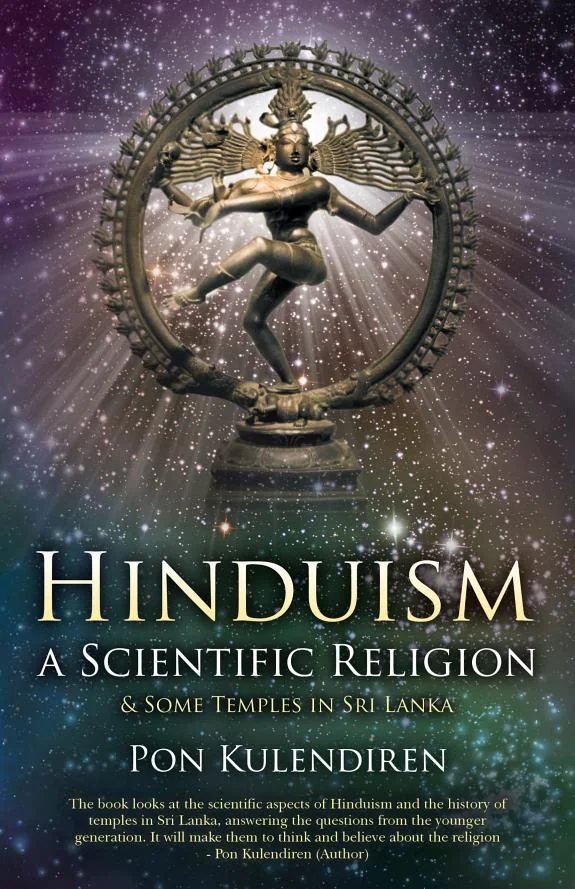
Pon Kulendiren's "Hinduism: A Scientific Religion" attempts to reframe the vast tradition of Hinduism through a lens of cosmic energetics, moving away from sectarian labels. The book's strength lies in its ambition to connect ancient practices to universal scientific principles, particularly the concept of "Cosmic Energy." Kulendiren posits that the origins of Hinduism are unknown, emphasizing its non-denominational nature, a perspective that challenges conventional religious histories. However, the work's primary limitation is its assertion of a "scientific religion" without providing rigorous, empirically verifiable scientific data to substantiate its claims about "Cosmic Energy" distribution, as mentioned in the blurb. While the interpretation of Lord Shiva as the "Cosmic Dancer" is a common symbolic motif, its direct linkage to measurable energy dynamics remains largely conceptual within the text. For readers seeking an alternative, scientifically-inflected interpretation of Hindu cosmology, the book offers a unique perspective, though it operates more within philosophical speculation than empirical demonstration. The work is an intriguing, albeit speculative, exploration of ancient wisdom's potential scientific underpinnings.
📝 Description
73
Pon Kulendiren's 2012 book, Hinduism a Scientific Religion, proposes Hinduism is a universal truth tied to cosmic energies.
First published in 2012, Hinduism a Scientific Religion by Pon Kulendiren frames Hinduism not as a creed, but as a universal truth connected to cosmic energies. The author suggests its origins are unknown, cultivated by ancient Rishis and Saints. This work links Hindu traditions and culture to the natural world, asserting a scientific basis for its practices and philosophy.
This book is for those who seek to understand Hinduism beyond standard religious views. It will interest readers at the intersection of spirituality and science, especially concerning cosmic energy. Those curious about universal aspects of ancient wisdom traditions, or investigating the scientific underpinnings of spiritual practices, will find value. Kulendiren's 2012 work appears during a time of growing global interest in Eastern philosophies and their harmony with modern science. While not engaging deeply with academic debates, it stands against purely dogmatic religious views, aligning with a mid-20th century movement seeking universal principles in spiritual traditions.
This book positions Hinduism as a system governed by 'Cosmic Energy,' a concept that resonates with certain esoteric traditions that view the universe as a manifestation of energetic forces. The interpretation of Lord Shiva as the 'Cosmic Dancer' and its link to energetic processes connects to yogic and tantric philosophies that explore the dynamic interplay of creation and dissolution through divine energies. It aligns with perennialist philosophies that seek universal truths underlying diverse spiritual expressions, suggesting a scientific or observable framework for what are often considered mystical experiences.
💡 Why Read This Book?
• Gain a novel perspective on Hinduism as a non-sectarian truth tied to "Cosmic Energy," moving beyond typical religious frameworks. • Understand the symbolic representation of Lord Shiva as the "Cosmic Dancer" through the lens of energetic processes, as explored in the book. • Explore the book's attempt to visually explain the distribution of "Cosmic energy" through diagrams, offering a unique conceptual model for spiritual science.
⭐ Reader Reviews
Honest opinions from readers who have explored this book.
❓ Frequently Asked Questions
What is the central argument of 'Hinduism: A Scientific Religion'?
The book argues that Hinduism is not a man-made religion or a sect, but a universal, non-denominational "Cosmic Truth" intrinsically linked to the principles of cosmic energy and nature.
Who is credited with nurturing Hinduism according to the book?
The book states that while its founder is unknown, ancient Rishis and Saints are credited with nurturing and reviving Hinduism into its current form.
What role does 'Cosmic Energy' play in the book?
'Cosmic Energy' is presented as a fundamental concept linking Hinduism's traditions and culture to nature, with diagrams provided to illustrate its distribution.
How does the book interpret Lord Shiva?
Lord Shiva is interpreted as the "Cosmic Dancer," symbolizing the energetic processes inherent in the universe and Hinduism's connection to these forces.
Is 'Hinduism: A Scientific Religion' a historical or philosophical text?
It functions more as a philosophical exploration, reinterpreting Hindu concepts through a proposed scientific framework, rather than a strict historical or empirical scientific treatise.
When was 'Hinduism: A Scientific Religion' first published?
The book was first published in 2012 by author Pon Kulendiren.
🔮 Key Themes & Symbolism
Cosmic Energy as Universal Truth
The core thesis posits Hinduism as a non-sectarian "Cosmic Truth" fundamentally connected to "Cosmic Energy." This energy is presented as a universal force that underpins the traditions and culture of Hinduism, linking them directly to the natural world. The book aims to illustrate this concept, suggesting that understanding this energy is key to comprehending the scientific basis of this ancient wisdom. It moves beyond religious dogma to propose a more fundamental, energetic reality.
The Rishi and Saint Tradition
The work highlights the role of ancient Rishis and Saints in preserving and developing Hindu traditions. It emphasizes that Hinduism's longevity and depth are not attributable to a single founder but to a lineage of enlightened individuals who nurtured its wisdom over millennia. This perspective underscores the organic, evolutionary nature of the tradition, presenting it as a living system that has been continuously refined and revived.
Shiva as the Cosmic Dancer
Lord Shiva's iconography as the "Cosmic Dancer" (Nataraja) is central to the book's interpretation. This symbolism is explored not just as a mythological representation but as a profound statement on the universe's dynamic, energetic nature. The dance signifies creation, preservation, and destruction—cyclical processes that are framed within the context of cosmic energy flows, offering a visual metaphor for universal energetic transformations.
Nature and Tradition Intertwined
A significant theme is the intrinsic link between Hindu traditions, culture, and the natural world. The book suggests that ancient Hindu practices and philosophies are deeply rooted in observing and harmonizing with natural rhythms and energies. This connection implies that the "scientific religion" aspect of Hinduism arises from this profound, ecologically-aware understanding of existence.
💬 Memorable Quotes
Direct passages from the work, attributed to the author.
“Hinduism... is non denominational and universal and its founder is unknown.”
— This statement reframes Hinduism from a specific religion to a universal, unauthored truth. It challenges the common perception of religious origins and emphasizes a broader, cosmic perspective on spiritual knowledge.
“The Cosmic Truth of Hinduism is non denominational and universal.”
— This asserts that the core principles of Hinduism are not confined to any single sect or belief system, but represent fundamental truths applicable to all of existence.
“ancient Rishis and Saints have nurtured and revived it into what it is today.”
— This highlights the continuous, evolutionary nature of Hindu wisdom, attributing its development to a succession of spiritual luminaries rather than a single historical figure.
“Hinduism's basic concept is unique with its link to Cosmic Energy.”
— This points to the central thesis that the scientific and spiritual underpinnings of Hinduism are intrinsically tied to the concept of 'Cosmic Energy,' setting it apart from other traditions.
“Lord Shiva is the Cosmic dancer.”
— This iconic description is interpreted as representing the dynamic, energetic, and cyclical processes of the universe, a key metaphor for the book's scientific-spiritual framework.
🌙 Esoteric Significance
Tradition
This work aligns with the broader esoteric tradition of viewing world religions not as distinct, often conflicting, doctrines, but as diverse expressions of a singular, underlying Universal Wisdom or Perennial Philosophy. It reflects the Theosophical movement's interest in finding scientific and mystical correlations within ancient traditions, seeking to present Hinduism as a scientific system rather than a mere religion.
Symbolism
The book prominently features Lord Shiva as the "Cosmic Dancer." In esoteric traditions, this symbolizes the eternal cycles of creation and destruction, representing the dynamic, pulsating energy of the cosmos. The concept of "Cosmic Energy" itself, while broadly interpreted, points towards a universal life force or ether, a common motif in various esoteric philosophies aiming to explain the fabric of reality.
Modern Relevance
Kulendiren's approach speaks to contemporary interest in consciousness studies, quantum physics metaphors in spirituality, and the search for scientifically validated spiritual practices. Thinkers and practitioners exploring the intersection of ancient wisdom and modern science, particularly those interested in energy medicine or vibrational theories of consciousness, may find conceptual parallels in this work.
👥 Who Should Read This Book
• Students of comparative religion interested in non-traditional interpretations of Hinduism, particularly those focusing on philosophical and cosmological aspects. • Seekers of spiritual knowledge who are drawn to the idea of a universal "Cosmic Truth" and are exploring potential scientific underpinnings for spiritual concepts. • Individuals fascinated by the symbolism of figures like Lord Shiva and seeking deeper, potentially energetic, interpretations beyond mythological narratives.
📜 Historical Context
Published in 2012, Pon Kulendiren's "Hinduism: A Scientific Religion" emerges in a period marked by widespread interest in synthesizing Eastern spiritual traditions with Western scientific paradigms. This intellectual current gained momentum in the late 20th and early 21st centuries, influenced by figures like Fritjof Capra and his work "The Tao of Physics" (1975), which explored parallels between modern physics and Eastern mysticism. Kulendiren’s book contributes to this ongoing dialogue by presenting Hinduism not as a faith-based system but as a potentially verifiable "Cosmic Truth" rooted in observable (though not explicitly detailed) cosmic energies. While the book doesn't directly engage with specific academic critiques or scholarly debates of its time, its premise implicitly challenges purely theological or anthropological approaches to Hinduism, aligning with a broader movement seeking universal, scientific underpinnings for spiritual phenomena.
📔 Journal Prompts
The concept of "Cosmic Energy" in Hinduism: how does this differ from conventional scientific or religious energy concepts?
Reflecting on Lord Shiva as the "Cosmic Dancer": what universal energetic processes might this symbol represent?
The unknown founder of Hinduism: implications for its universal and non-denominational nature.
Connecting Hindu traditions to nature: identify specific practices or beliefs that exemplify this link.
Exploring the idea of Hinduism as a "Cosmic Truth": what does this perspective suggest about the nature of reality?
🗂️ Glossary
Cosmic Energy
A fundamental, universal force proposed by the book that links the traditions and culture of Hinduism to the natural world, suggesting a scientific basis for spiritual concepts.
Rishis
Ancient sages or seers in Hinduism, revered for their spiritual wisdom and contribution to the development and preservation of Hindu scriptures and traditions.
Saints
Holy persons recognized in Hinduism for their spiritual achievements, devotion, and role in guiding followers and nurturing the tradition.
Non-denominational
Not affiliated with any specific religious denomination or sect; universal in its principles and applicability.
Cosmic Dancer (Lord Shiva)
An interpretation of Lord Shiva's role, symbolizing the dynamic, cyclical processes of creation, preservation, and destruction within the universe, linked to energetic flows.
Universal Truth
A concept suggesting that the core principles of Hinduism transcend specific cultural or religious boundaries, representing fundamental realities applicable to all existence.
Tradition and Nature Link
The proposed connection between Hindu practices and culture, and the rhythms and energies of the natural world, suggesting an inherent ecological and scientific foundation.
This book appears in 1 collection
🔮 Readers Also Liked
Browse all →








From the “Hinduism” Collection
View all →








More Free Sacred Texts & Gnosticism Books
View all →