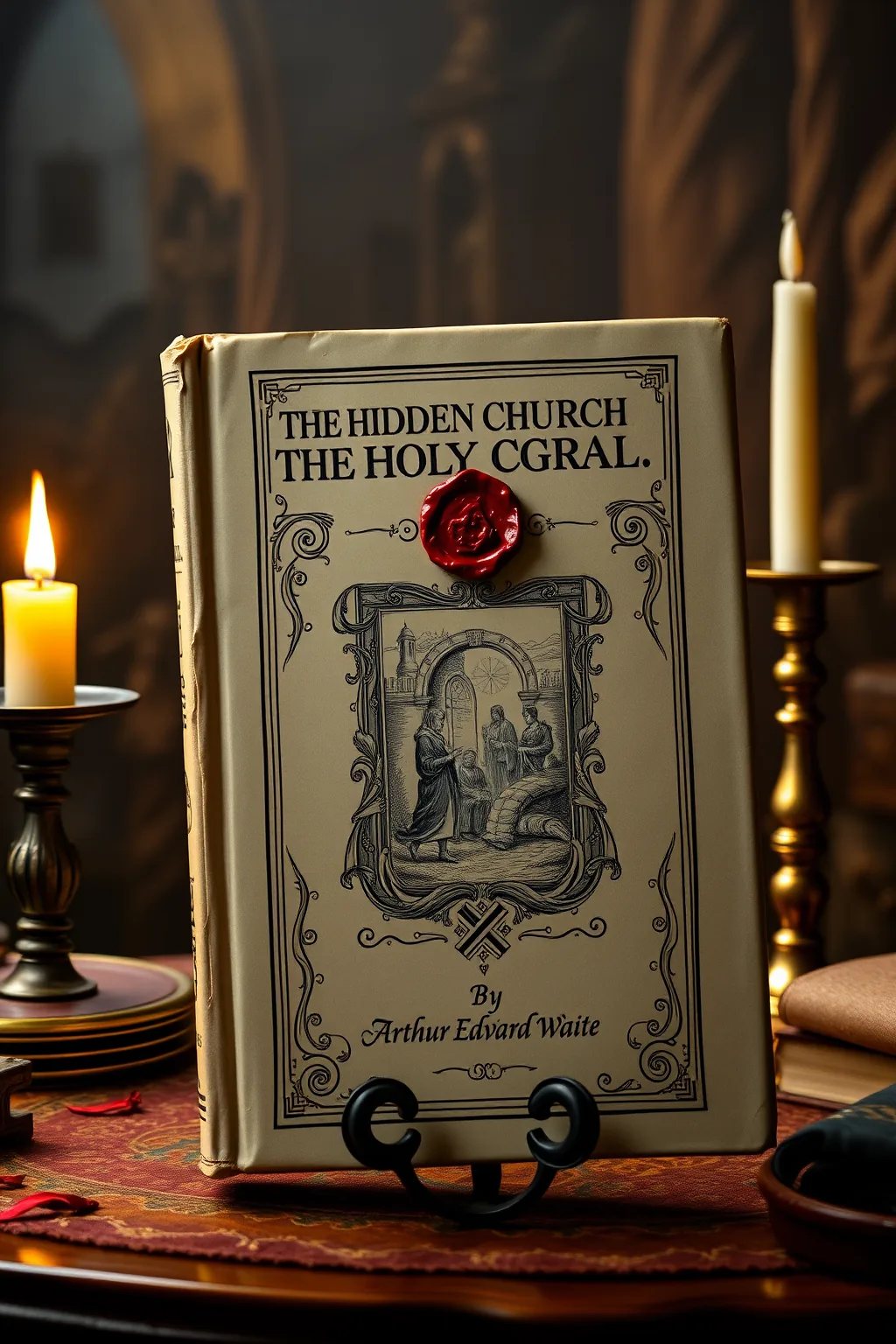
The Hidden Church of the Holy Graal
 71
71

The Hidden Church of the Holy Graal


Arthur Edward Waite's 'The Hidden Church of the Holy Graal' remains an indispensable cornerstone for anyone serious about the Grail legends and their esoteric underpinnings. Waite, a titan of occult scholarship, meticulously dissects the intricate tapestry of medieval romances, revealing the profound spiritual and initiatory currents that lie beneath the surface. His work is not merely a historical account but a spiritual exegesis, guiding the reader through the labyrinthine symbolism of lineage, relic, and hidden knowledge. This book is essential for serious students of the Grail, Freemasonry, and the history of Western esotericism, offering unparalleled depth and insight.
📝 Description
71
Arthur Edward Waite published 'The Hidden Church of the Holy Graal' in 1909, examining the origins of Grail legends.
Arthur Edward Waite's 1909 study, 'The Hidden Church of the Holy Graal,' investigates the medieval origins of the Grail narrative. He traces the story's roots to the 13th century, connecting it to legends of fugitive Christians, powerful relics, and secret knowledge that could challenge established religious beliefs. Waite examines the layers of symbolism and esoteric traditions embedded in these tales. He focuses on the idea of an ancient bloodline that preserved profound spiritual truths through generations.
The book invites readers who look beyond conventional historical accounts, appealing to students of hermeticism and those interested in hidden spiritual knowledge. It highlights how myths function to maintain spiritual lineages and suggests a concealed tradition that has influenced Western esoteric thought over centuries. Waite's work encourages a reevaluation of faith and history through its engagement with ancient themes and philosophical questions.
Published in 1909, Waite's work sits within the tradition of late 19th and early 20th-century esotericism, a period marked by intense interest in medieval romances, Gnostic traditions, and occult interpretations of history. It engages with the scholarly and popular fascination with the Holy Grail, which had been popularized by Richard Wagner's opera and the writings of figures like Wolfram von Eschenbach. Waite's approach, while scholarly, also seeks to uncover a hidden spiritual reality underlying these legends, aligning with the broader Hermetic, Rosicrucian, and mystical currents of the time.
💡 Why Read This Book?
Uncover the esoteric roots of the Holy Grail legend, tracing a hidden spiritual lineage through medieval romances. Essential for scholars of occultism, Freemasonry, and seekers of forgotten wisdom. Understand the profound symbolism of relics and secret knowledge that challenged the established church, offering a unique perspective on Western spiritual history.
⭐ Reader Reviews
Honest opinions from readers who have explored this book.
❓ Frequently Asked Questions
What is the core premise of 'The Hidden Church of the Holy Graal'?
The book explores the theory that a hidden Christian lineage, carrying powerful relics and secret knowledge, emerged in the 13th century, influencing Western esoteric traditions.
Who was Arthur Edward Waite?
Arthur Edward Waite was a prolific scholar and occultist, renowned for his extensive research into Freemasonry, Rosicrucianism, the Tarot, and the Holy Grail.
Is this book suitable for beginners?
While comprehensive, the book delves into complex historical and esoteric concepts. Beginners might benefit from foundational knowledge in mythology or occult history first.
What is the significance of the 'hidden church' concept?
It refers to a clandestine spiritual tradition and lineage believed to have preserved authentic Christian teachings and relics outside of mainstream ecclesiastical control.
How does this book relate to Freemasonry?
Waite investigates potential links between the Grail legends, secret societies, and the symbolic architecture of Freemasonry, exploring shared themes of initiation and hidden wisdom.
🔮 Key Themes & Symbolism
The Esoteric Grail Tradition
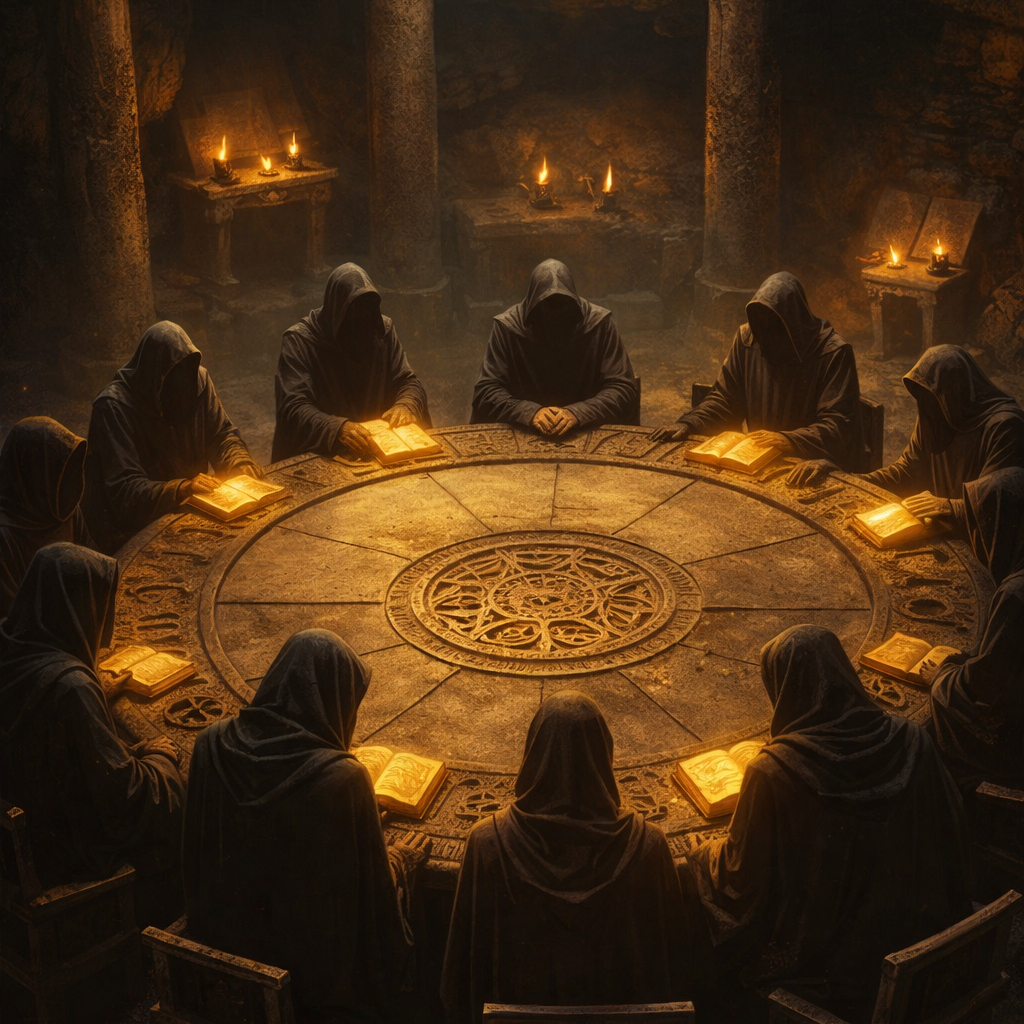
This theme examines the profound spiritual underpinnings of the Holy Grail legends, positing their origin not merely as romantic tales, but as vehicles for transmitting a hidden initiatory wisdom. Waite examines the concept of a secret lineage, the preservation of potent relics, and the clandestine transmission of knowledge that challenged the established religious and political order of medieval Europe. It explores how these narratives served as a spiritual map for those seeking deeper truths beyond orthodox doctrines, revealing the Grail as a symbol of ultimate spiritual attainment and divine revelation.
Symbolism of Relics and Bloodlines
The book meticulously analyzes the symbolic weight attributed to sacred relics and the concept of a protected bloodline within the Grail mythology. Waite argues that these elements are not merely historical artifacts but represent profound spiritual principles: relics as focal points of divine energy and memory, and bloodlines as conduits for preserving esoteric teachings across generations. This theme investigates how the continuity of spiritual authority and knowledge was envisioned through these tangible and genealogical connections, underscoring their a central role in maintaining a hidden spiritual heritage against external pressures.
The Subversive Power of Hidden Knowledge
Here, the focus is on the revolutionary potential inherent in the secret knowledge allegedly carried by the hidden church. Waite explores how this concealed wisdom, if revealed, possessed the power to fundamentally alter the established religious and societal structures of the time. The theme examines the strategies employed for the preservation and dissemination of this knowledge, often through allegory, myth, and symbolic language embedded within the Grail romances. It highlights the enduring human quest for truth and the inherent tension between established authority and the liberating force of esoteric understanding.
💬 Memorable Quotes
Direct passages from the work, attributed to the author.
“A lineage of divine knowledge preserved through the ages.”
— Highlights the concept of an unbroken chain of spiritual transmission, emphasizing the enduring nature of esoteric wisdom.
“Relics as anchors to forgotten spiritual truths.”
— Suggests that sacred objects are not mere historical curiosities but potent reminders of lost spiritual insights and divine presence.
“Mythology as a veil for profound initiation.”
— Posits that the stories and legends surrounding the Grail serve as allegorical pathways to spiritual enlightenment and transformative experiences.
“The power to reshape the world lies in concealed wisdom.”
— Underscores the revolutionary potential of esoteric knowledge and its ability to challenge and transform established paradigms.
💡 Key Ideas
Editorial paraphrase of the work's core concepts — not direct quotes.
The secret of the Grail is the secret of the hidden church.
This quote expresses the central thesis: the profound mysteries of the Holy Grail are inextricably linked to a clandestine spiritual institution.
🌙 Esoteric Significance
Tradition
This work is deeply rooted in the Western Esoteric Tradition, particularly its branches concerned with Christian Gnosticism, Hermeticism, and the mystical interpretations of Arthurian legend. Waite connects the Grail narrative to concepts of spiritual lineage, initiatory wisdom, and the preservation of a more direct, unmediated experience of the divine, distinct from institutionalized religion. It speaks to the perennial quest for the divine immanent within creation and the human soul.
Symbolism
The symbolism is rich and multilayered, with the Holy Grail itself representing the chalice of divine knowledge, spiritual attainment, or the bloodline of Christ. Relics symbolize concentrated spiritual power and historical continuity. The concept of a 'hidden church' signifies an inner, spiritual order existing parallel to, yet distinct from, external religious structures, often associated with the mysteries of the divine feminine and sacred geometry.
Modern Relevance
In an age often characterized by spiritual seeking and skepticism towards established institutions, Waite's exploration of hidden traditions and personal gnosis holds significant relevance. It speaks to the enduring human desire for deeper meaning, authenticity, and connection to ancient wisdom. The book encourages critical thinking about historical narratives and the potential for uncovering profound spiritual truths concealed within myth and legend, resonating with contemporary interest in alternative spiritualities.
👥 Who Should Read This Book
This book is a valuable collection for dedicated scholars of esotericism, occult history, and comparative mythology seeking a deep dive into the origins and esoteric interpretations of the Grail legends. Practitioners of Western magical traditions, particularly those interested in the spiritual symbolism of lineage and sacred objects, will find invaluable insights. Seekers of hidden knowledge and alternative spiritual histories will be drawn to its exploration of clandestine traditions. While challenging, it offers profound rewards for those with patience and a genuine curiosity for the mysteries that lie beneath the surface of conventional understanding.
📜 Historical Context
Emerging in the 13th century, the collection of Grail literature arose during a period of significant spiritual and intellectual ferment in medieval Europe. This era witnessed both the consolidation of institutional Christianity and the flourishing of mystical and vernacular religious movements. Arthur Edward Waite situates his analysis within this dynamic landscape, exploring how the Grail legends may have served as a counter-narrative or a complementary esoteric tradition. The rise of chivalric romance provided a popular medium for these complex themes, allowing for the dissemination of ideas about hidden lineages, sacred relics, and secret societies, often intertwined with Catharism and other heterodox movements that challenged the dominant religious authority.
📔 Journal Prompts
Reflect on the concept of a 'hidden church' in your own spiritual journey. Where do you perceive it manifesting?
Consider the power of relics and lineage. How do these concepts influence your understanding of tradition and spiritual continuity?
What does the Holy Grail symbolize for you personally? Explore its many-sided meanings beyond traditional interpretations.
How does the idea of 'hidden knowledge' challenge your current beliefs or understanding of the world?
In what ways do you see the themes of secret societies and preserved wisdom resonating in contemporary culture?
🗂️ Glossary
Grail
A mystical object of immense spiritual significance, often depicted as a chalice, associated with the Last Supper and the blood of Christ, symbolizing divine knowledge and spiritual attainment.
Bloodline
In esoteric contexts, a lineage believed to have preserved sacred knowledge or spiritual authority across generations, often associated with a hidden spiritual tradition.
Relics
Objects believed to possess sacred power or historical connection to significant spiritual figures or events, serving as focal points for devotion and esoteric transmission.
Esotericism
Teachings or practices that are understood by a select group of initiates, involving hidden knowledge, inner experience, and symbolic interpretation beyond exoteric (public) doctrines.
Gnosticism
A diverse set of religious and philosophical traditions that emphasize direct, intuitive knowledge (gnosis) of the divine as the path to salvation, often featuring dualistic cosmology and hidden spiritual truths.
This book appears in 2 collections
🔮 Readers Also Liked
Browse all →









From the “Secret Societies” Collection
View all →




More Free Freemasonry & Secret Societies Books
View all →