Dark Night of the Soul
 79
79

Dark Night of the Soul
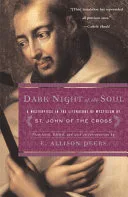
John of the Cross’s *Dark Night of the Soul* is less a narrative and more a theological exegesis on spiritual desolation. The E. Allison Peers translation, widely respected, renders John’s dense prose with clarity, though its 16th-century origins mean the language remains formal. The central argument, that periods of spiritual dryness are divinely ordained purifications, offers a profound reframe for those experiencing prayerful aridity. However, the sheer theological density and lack of narrative structure can make sections, particularly the detailed analysis of purgation, challenging for the uninitiated. The poem "Noche Oscura" itself, excerpted within, is a masterclass in concise, evocative mystical expression, a stark contrast to the surrounding prose. This work is essential for understanding Christian mysticism, though its accessibility varies with the reader's theological background.
📝 Description
79
Written in the late 16th century, 'Dark Night of the Soul' describes spiritual dryness as a path to divine union.
This text, attributed to John of the Cross, details a spiritual progression through periods of dryness and emptiness. It uses the metaphor of darkness not for literal despair, but for the soul's detachment from sensory comforts and intellectual grasp in its pursuit of God. The work identifies two main stages: the night of the senses, which purifies lower faculties, and the night of the spirit, a more challenging phase affecting intellect and will.
The book is for those engaged in deep spiritual practice, especially those wishing to move beyond superficial devotion. It speaks to individuals feeling a strong call to God yet experiencing arid spells in prayer. It offers a theological basis and encouragement to persist through these difficult times. A basic understanding of Christian contemplative traditions or a keen interest in spiritual purification is helpful for readers.
Composed around 1578-1579 during Spain's Catholic Reformation, 'Dark Night of the Soul' stems from the Carmelite mystical tradition. John of the Cross, a contemporary of Teresa of Ávila, wrote this treatise amidst personal hardship, including imprisonment. The work aligns with rigorous theological doctrine while expressing a deeply personal mystical experience. It fits within a lineage of Christian contemplative literature focused on the soul's direct encounter with God.
💡 Why Read This Book?
• Gain a theological framework for understanding spiritual dryness, recognizing its purpose as divine purification, as detailed in John of the Cross's analysis of the "night of the senses" and "night of the spirit." • Discover the Carmelite tradition's approach to achieving union with God, moving beyond emotional highs to a deeper, albeit obscure, apprehension of the Divine. • Understand the historical context of 16th-century Spanish mysticism, appreciating John of the Cross's role alongside Teresa of Ávila during the Catholic Reformation.
⭐ Reader Reviews
Honest opinions from readers who have explored this book.
❓ Frequently Asked Questions
What is the "Dark Night of the Soul" in St. John of the Cross's writing?
It refers to two stages of spiritual purification: the "night of the senses" and the "night of the spirit." These are periods of dryness and detachment from spiritual consolations, intended to draw the soul closer to God.
Who was St. John of the Cross?
He was a 16th-century Spanish Carmelite friar, mystic, and poet, co-founder of the Discalced Carmelites with Teresa of Ávila. He is a Doctor of the Church.
What is the primary goal of the "Dark Night"?
The ultimate aim is to achieve unitive love with God, detaching the soul from excessive reliance on sensory or intellectual spiritual experiences to foster a more direct, albeit difficult, apprehension of the Divine.
Is this book about literal darkness or depression?
No, the "darkness" is a metaphor for spiritual aridity and the absence of perceived divine presence or comfort, a process of purification, not clinical depression.
What is the significance of the E. Allison Peers translation?
E. Allison Peers's translation is highly regarded for its scholarly accuracy and readability, making the complex spiritual concepts of St. John of the Cross accessible to a wider audience since its initial publication.
When was "Dark Night of the Soul" written?
St. John of the Cross likely composed the work between 1578 and 1579, during a period of significant religious reform and personal hardship.
🔮 Key Themes & Symbolism
The Twofold Purification
The work meticulously details the "night of the senses" and the "night of the spirit." The former purges attachment to perceptible spiritual consolations and sensory pleasures, while the latter, more profound stage, purifies the intellect, memory, and will. This dual process aims to strip away all that is not God, preparing the soul for direct union through faith and love, rather than through understanding or feeling.
Divine Action and Passive Reception
A central tenet is that these purifications are primarily the work of God, not solely human effort. The soul's role is one of passive receptivity and acceptance of the divine action, even when it feels barren or obscure. This contrasts with more ascetical approaches that emphasize active self-discipline. The text stresses the soul's surrender to God's will during these trials.
The Goal of Unitive Love
The ultimate purpose of enduring the "dark nights" is to achieve a state of unitive love with God. This is not mere intellectual assent but a profound transformation where the soul's will becomes one with the divine will. The text describes this union as a "living flame of love," a state of intimate communion that transcends earthly understanding and sensation.
Faith Beyond Understanding
The "dark nights" necessitate a profound reliance on faith, moving the soul beyond the limitations of reason and sensory experience. By removing the supports of spiritual consolations and intellectual clarity, John of the Cross guides the reader toward a naked faith, an obscure but certain trust in God's presence and love, even when unfelt.
💬 Memorable Quotes
Direct passages from the work, attributed to the author.
“To come to the enjoyment of all, desire the enjoyment of none.”
— This aphorism captures the principle of detachment central to the "dark night." By relinquishing the desire for specific spiritual experiences or consolations, the soul paradoxically opens itself to a more complete, God-centered fulfillment.
“The soul that is attached to anything, however much, cannot attain that union with God which is necessary to it.”
— This highlights the necessity of radical detachment. Any attachment, whether to spiritual gifts or worldly things, creates an obstacle to the direct, unmediated union with the Divine that is the ultimate goal of the spiritual journey.
“In the evening of life, you will be examined on love.”
— This interpretation emphasizes the ultimate criterion for spiritual evaluation. Regardless of one's intellectual understanding or the intensity of spiritual experiences, the quality of one's love for God and neighbor is what truly matters.
“Begin by seeking God; the rest will be given to you.”
— This points to the primacy of seeking God above all else. It suggests that when the soul prioritizes its relationship with the Divine, other spiritual graces and understanding will follow naturally as part of God's providence.
“The soul that desires to be led by the Spirit must be empty of all things.”
— This statement underscores the need for spiritual emptiness and surrender. To be guided by the Divine, the soul must divest itself of all self-will, attachments, and preconceived notions, creating space for God's action.
🌙 Esoteric Significance
Tradition
While rooted in Catholic mysticism, *Dark Night of the Soul* offers useful insights applicable to broader esoteric traditions. Its emphasis on the negation of the ego, detachment from sensory and intellectual consolations, and the pursuit of direct experiential knowledge of the Absolute aligns with concepts found in Sufism, Neoplatonism, and certain schools of Eastern mysticism. It represents a potent articulation of the via negativa within a Christian framework.
Symbolism
The central symbol is the "dark night" itself, representing the soul's journey through spiritual aridity and purification. Light, often associated with divine presence, is paradoxically absent or obscure during this phase, forcing reliance on faith. Water symbols, though less prominent than in other texts, can represent the cleansing and transformative power of divine grace, washing away impurities during the purgative stages.
Modern Relevance
Contemporary spiritual seekers, psychotherapists exploring spiritual trauma, and comparative religion scholars continue to engage with John of the Cross's work. Its concepts of spiritual dryness and the process of ego-death are referenced in modern contemplative circles, mindfulness practices seeking detachment, and psychological theories examining the transformative potential of existential crises. Thinkers in the field of transpersonal psychology often cite its stages of spiritual development.
👥 Who Should Read This Book
• Individuals experiencing periods of spiritual dryness or questioning their faith journey, seeking theological understanding and encouragement to persevere through perceived aridity. • Students of Christian mysticism and comparative religion, interested in the rigorous contemplative practices and theological underpinnings of 16th-century Spanish spirituality. • Advanced practitioners of meditation and contemplative prayer, looking to deepen their practice beyond superficial consolations and explore the path of radical detachment.
📜 Historical Context
Written around 1578-1579, *Dark Night of the Soul* by Juan de la Cruz emerged during the Spanish Golden Age and the Counter-Reformation. This era saw intense theological debate and a flourishing of mystical literature, often alongside significant ecclesiastical scrutiny. John of the Cross, a Carmelite friar, was actively involved in reforming his order, a movement that brought him into conflict with some religious authorities, including periods of imprisonment. His contemporary, Teresa of Ávila, with whom he co-founded the Discalced Carmelites, was also a prominent mystic whose writings were similarly scrutinized. John's work provided a rigorous theological framework for the intense, often arduous, contemplative experiences characteristic of Spanish mysticism, positioning it within orthodox Catholic doctrine while articulating profound personal encounters with the Divine.
📔 Journal Prompts
The soul's detachment from sensory consolations during the night of the senses.
The necessity of faith when divine presence feels obscure.
The concept of unitive love as the ultimate goal of spiritual pursuit.
The role of divine action versus human effort in spiritual purification.
Comparing the "night of the spirit" to personal experiences of intellectual or volitional challenges.
🗂️ Glossary
Night of the Senses
The initial stage of spiritual purification where the soul detaches from excessive reliance on sensory pleasures and perceptible spiritual consolations, preparing the lower faculties.
Night of the Spirit
A deeper, more arduous stage of purification where the intellect, memory, and will are cleansed of subtle attachments and imperfections, leading to a more profound, albeit obscure, union with God.
Purgation
The process of cleansing or purification of the soul, ridding it of imperfections, attachments, and spiritual dryness through divine action.
Union of the Soul with God
The ultimate goal of the spiritual journey, a state of profound intimacy and conformity of the soul's will with God's will, often described as unitive love.
Spiritual Aridity
A state of dryness in prayer and spiritual life, characterized by a lack of perceived divine presence, consolation, or motivation.
Discalced Carmelites
A reformed branch of the Carmelite Order, co-founded by St. John of the Cross and St. Teresa of Ávila, emphasizing poverty and a more austere contemplative life.
Via Negativa
A spiritual path that emphasizes what God is not, rather than what God is, through negation and detachment from all finite concepts and experiences.