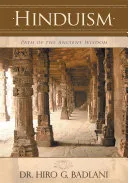
Hinduism
 79
79

Hinduism
Dr. Hiro G. Badlani's "Hinduism" offers a commendable effort to distill a sprawling spiritual tradition into a digestible format. The work's strength lies in its systematic presentation of complex ideas, particularly its clear delineation of concepts like Karma and Samsara, making them accessible to newcomers. The historical context provided, tracing roots back to the Vedic period, is also a valuable element for understanding the religion's evolution. However, the book occasionally feels more like a scholarly summary than a deeply engaging exploration. While it explains the "what" of Hindu philosophy with precision, the "why" – the lived experience and devotional aspects that are central to many practitioners – is sometimes less palpable. A particularly insightful passage discusses the multifaceted nature of Brahman, avoiding simplistic definitions. Ultimately, Badlani provides a solid, informative overview, best suited for those seeking foundational knowledge rather than an immersive spiritual encounter.
📝 Description
79
Dr. Hiro G. Badlani's Hinduism traces this tradition from the Indus Valley Civilization to its modern forms.
This book examines Hinduism, recognized as the world's oldest continuous religious tradition. It is not a single doctrine but a confluence of diverse philosophies that developed over millennia. The religion's influence has extended beyond its practitioners, inspiring thinkers across centuries and continents.
The origins of Hinduism are embedded in the Indian subcontinent, tracing back to the Indus Valley Civilization and the Vedic period. Its evolution is marked by seminal texts like the Vedas, Upanishads, and the Bhagavad Gita, which form the bedrock of its philosophical and ritualistic traditions. The religion has absorbed and synthesized various cultural and philosophical influences throughout its long history.
At its heart, Hinduism considers concepts such as Brahman, Atman, Karma, Samsara, and Moksha. These interconnected ideas shape a worldview focused on dharma and the pursuit of spiritual knowledge and self-realization.
As a sacred text and Gnosticism category book, Hinduism by Dr. Hiro G. Badlani approaches a tradition often seen as a precursor or parallel to Gnostic thought. Its focus on liberation (Moksha) from the cycle of rebirth (Samsara) and the realization of the true self (Atman) in relation to the ultimate reality (Brahman) resonates with Gnostic quests for gnosis, or direct knowledge of the divine. The book's examination of core Hindu philosophies offers a lens through which to view the perennial search for spiritual understanding and transcendence found across esoteric traditions.
💡 Why Read This Book?
• Gain clarity on the foundational concepts of Brahman and Atman, understanding their relationship as presented in the book's exploration of ultimate reality. • Grasp the mechanics of Karma and Samsara, as detailed in the historical context of the Vedic period, to understand the cyclical nature of existence within Hindu philosophy. • Appreciate the historical influence of Hinduism, as the book references its impact on thinkers like Voltaire, providing a concrete link to its global intellectual reach.
⭐ Reader Reviews
Honest opinions from readers who have explored this book.
❓ Frequently Asked Questions
When was Hinduism: Path of the Ancient Wisdom first published?
The first publication date for Dr. Hiro G. Badlani's "Hinduism: Path of the Ancient Wisdom" was September 30, 2008. This edition provides a foundational overview of the religion's spiritual and historical perspectives.
Who is Dr. Hiro G. Badlani?
Dr. Hiro G. Badlani is the author of "Hinduism: Path of the Ancient Wisdom." He authored this guidebook to offer an easy-to-understand perspective on the spiritual and historical dimensions of Hinduism.
What are the primary philosophical concepts covered in the book?
The book covers central Hindu concepts such as Brahman (ultimate reality), Atman (the soul), Karma (action and consequence), Samsara (cycle of rebirth), and Moksha (liberation). It aims to explain these complex ideas clearly.
Does the book discuss the historical influences of Hinduism?
Yes, the book explores the historical perspectives of Hinduism, tracing its origins and evolution. It also notes the religion's influence on various thinkers across different cultures and historical periods.
Is this book suitable for beginners to Hinduism?
Yes, the book is designed as an easy-to-understand guidebook, making it suitable for individuals new to Hinduism who want to learn about its spiritual and historical aspects.
What makes Hinduism the 'world's oldest living religion' according to the book?
The book highlights Hinduism's continuous practice and evolution over millennia, tracing its roots to ancient traditions and texts like the Vedas, distinguishing it as the oldest continuously practiced major religion.
🔮 Key Themes & Symbolism
The Nature of Ultimate Reality
The work explores the concept of Brahman, the supreme, unchanging reality that underlies all existence in Hinduism. It contrasts this with the individual soul, Atman, and investigates the profound connection and potential identity between the two, a central to Vedanta philosophy. The book clarifies how this understanding shapes the Hindu worldview, emphasizing unity and interconnectedness within the cosmos and the divine.
The Cycle of Existence
Central to the book is an explanation of Samsara, the perpetual cycle of birth, death, and rebirth. This is intrinsically linked to Karma, the universal law of cause and effect where actions in one life influence future existences. The text elucidates how this doctrine provides a framework for understanding suffering and moral responsibility, driving the pursuit of liberation.
Dharma and Righteous Living
The book details the concept of Dharma, often translated as righteousness, duty, or cosmic order. It explains how Dharma guides individuals in their actions and responsibilities according to their social standing, stage of life, and innate nature. Adhering to Dharma is presented as crucial for maintaining cosmic balance and individual spiritual progress towards Moksha.
Paths to Liberation (Moksha)
Hinduism offers various paths, or Yogas, for achieving Moksha, liberation from Samsara. Badlani's work outlines key approaches such as Karma Yoga (the path of action), Jnana Yoga (the path of knowledge), Bhakti Yoga (the path of devotion), and Raja Yoga (the path of meditation). Understanding these diverse practices is key to the religion's spiritual goal.
💬 Memorable Quotes
Direct passages from the work, attributed to the author.
“Hinduism embodies a wide spectrum of philosophies, beliefs, and customs.”
— This statement underscores the complex nature of Hinduism, highlighting its diversity rather than a single, rigid dogma. It suggests that understanding Hinduism requires appreciating its many expressions across different traditions and practices.
“It has prompted thinkers from an array of cultures and ages... to extol its influence.”
— This points to the significant, cross-cultural impact of Hindu thought. It suggests that the religion's philosophical depth has resonated with intellectuals globally, influencing their own ideas and worldviews across historical periods.
“An easy-to-understand guidebook that studies Hinduism's spiritual and historical perspectives.”
— This phrase defines the book's primary objective: to make the complex spiritual and historical dimensions of Hinduism accessible. It signals an intention to simplify without sacrificing the essence of the subject matter.
“The world's oldest living religion.”
— This assertion emphasizes Hinduism's remarkable continuity and enduring presence throughout human history. It highlights its ancient origins while affirming its ongoing vitality and relevance in the contemporary world.
“Dr. Hiro G. Badlani brings you Hinduism: Path of the Ancient Wisdom.”
— This introduces the author and the specific title of the work, positioning it as a curated presentation of ancient wisdom. It frames the book as a guide intended to illuminate the profound spiritual heritage of Hinduism.
🌙 Esoteric Significance
Tradition
While not strictly within a single Western esoteric lineage like Hermeticism or Kabbalah, "Hinduism: Path of the Ancient Wisdom" engages with concepts that are foundational to many esoteric traditions. Its exploration of Brahman, Atman, Karma, and Samsara aligns with universal metaphysical principles found in Gnostic, Neoplatonic, and Theosophical thought, which often sought parallels in Eastern philosophies. The book serves as a bridge, presenting these ancient Indian ideas in a manner that can inform and enrich esoteric studies.
Symbolism
Key symbols explored include the Om (Aum) symbol, representing the primordial sound and the totality of consciousness, and the Lotus flower, symbolizing purity, spiritual awakening, and detachment amidst the material world. The concept of Yogas, or paths to spiritual realization, also functions symbolically, representing different approaches to divine union, whether through knowledge, action, devotion, or meditation.
Modern Relevance
Contemporary thinkers and practitioners in fields like consciousness studies, transpersonal psychology, and yoga philosophy frequently draw upon Hindu concepts. Movements focused on mindfulness, meditation, and non-dual awareness often find resonance in the Vedanta philosophy detailed in works like Badlani's. It informs modern interpretations of self-realization and the interconnectedness of all beings, influencing spiritual seekers globally.
👥 Who Should Read This Book
• Students of comparative religion: Gain a structured understanding of one of the world's oldest and most complex religious systems, with clear explanations of its core philosophies and historical trajectory. • Seekers of spiritual knowledge: Explore foundational concepts like Brahman, Atman, Karma, and Moksha, providing a solid intellectual basis for personal spiritual inquiry. • Individuals interested in ancient wisdom traditions: Understand the philosophical underpinnings that have influenced global thought, with insights into concepts first articulated during the Vedic period.
📜 Historical Context
Published in 2008, Dr. Badlani's "Hinduism: Path of the Ancient Wisdom" arrived at a time when interest in Eastern religions and philosophies remained strong within Western academic and spiritual circles. The late 20th and early 21st centuries saw a continued engagement with texts like the Upanishads and the Bhagavad Gita, often through the lens of Theosophy and later New Age movements, though Badlani's approach appears more grounded in traditional scholarship. Competing schools of thought in comparative religion focused on anthropological or sociological analyses, sometimes overlooking the philosophical depth Badlani emphasizes. While specific reception events for this particular book are not widely documented, it entered a discourse already shaped by scholars like Wendy Doniger and proponents of Vedanta such as Swami Vivekananda, who had introduced Hindu philosophy to the West in the late 19th century.
📔 Journal Prompts
Reflect on the concept of Brahman as the underlying reality presented in the book.
Consider the interconnectedness of Karma and Samsara as described in the text.
Explore the significance of Dharma in guiding actions within the Hindu framework.
Identify the different Yogas or paths to Moksha discussed by Dr. Badlani.
Analyze the historical influence of Hinduism on thinkers like Voltaire mentioned in the book.
🗂️ Glossary
Brahman
The ultimate, unchanging reality or supreme cosmic spirit in Hinduism. It is considered the source and sustainer of all existence, encompassing everything.
Atman
The individual soul or self in Hinduism. It is often considered to be identical with Brahman, representing the eternal, unchanging essence of a living being.
Karma
The principle of cause and effect, where actions (karma) in this life determine the nature of future lives. It governs the cycle of rebirth.
Samsara
The continuous cycle of birth, death, and rebirth (reincarnation) that living beings are bound to in Hinduism, driven by karma and ignorance.
Moksha
Liberation or release from the cycle of Samsara. It is the ultimate spiritual goal in Hinduism, signifying freedom and union with the divine.
Dharma
The principle of righteousness, duty, cosmic law, or one's own essential nature. It guides ethical conduct and societal order.
Yoga
A spiritual discipline or path aimed at achieving union with the divine or liberation. Common paths include Karma, Jnana, Bhakti, and Raja Yoga.