The Jade Monkey
 78
78

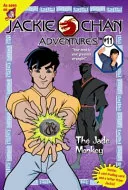
The Jade Monkey
Judy Katschke’s “The Jade Monkey,” first appearing in 2002, presents a compelling premise involving magical transformation gone awry. The core idea of Jade becoming trapped in a monkey form due to a shape-shifting talisman is immediately engaging, offering a fresh twist on escape narratives. The author effectively captures the disorienting experience of losing one’s familiar self, particularly through the specific challenges Jade faces in her new simian existence. A notable strength lies in the detailed depiction of her struggle to adapt to a purely instinctual, physical reality while retaining her human consciousness. However, the narrative occasionally feels constrained by its own setup; the antagonists, The Dark Hand, remain somewhat abstract, serving more as a plot device than a fully realized threat. The resolution of Jade's predicament, while offering closure, could have benefited from a deeper exploration of the long-term implications of her transformation. Ultimately, "The Jade Monkey" offers an imaginative exploration of identity and adaptation under duress.
📝 Description
78
In 2002, Judy Katschke published The Jade Monkey, a tale of unintended magical transformation.
Jade, a protagonist seeking escape from the clandestine organization The Dark Hand, finds herself on a secluded island. Her plan involves a monkey talisman that grants shape-shifting powers. However, her attempt to use this artifact for liberation results in a permanent transformation into a monkey, complicating her escape instead of ensuring it. This unintended change becomes her primary obstacle. The story examines the consequences of using powerful magical items without fully understanding their effects or reversibility. Jade's new form presents physical and existential challenges, forcing her to adapt to a drastically altered life on the island, which becomes a testing ground for her resilience. The island, initially a prison, serves as a crucible for her character development as she learns to navigate her new reality.
The Jade Monkey draws on the ancient motif of animal transformation, common in mythologies and shamanic traditions. Shape-shifting, particularly into a monkey, carries symbolic weight in many Eastern cultures, representing agility, intelligence, and sometimes trickster archetypes. This theme connects to spiritual journeys and the blurring of boundaries between human and animal existence, placing the narrative within a broader context of folklore that explores the power and peril of altering one's form.
💡 Why Read This Book?
• Understand the symbolic weight of animal transformation narratives as explored through Jade’s predicament, offering insights into ancient shamanic practices and their modern interpretations. • Experience the narrative tension generated by the specific threat of The Dark Hand on a secluded island, highlighting themes of entrapment and the fight for autonomy. • Grasp the esoteric implications of talismanic magic, particularly the monkey talisman’s power and its unintended consequences for the wielder.
⭐ Reader Reviews
Honest opinions from readers who have explored this book.
❓ Frequently Asked Questions
What is the primary magical element in "The Jade Monkey"?
The primary magical element is the monkey talisman, which grants the power of shape-shifting. The story explores the consequences when this power is used and the user, Jade, becomes permanently transformed into a monkey.
Who is the antagonist group in "The Jade Monkey"?
The antagonist group is known as The Dark Hand. They are depicted as a clandestine organization that has trapped Jade on an island, setting the stage for her escape attempt.
When was "The Jade Monkey" first published?
"The Jade Monkey" by Judy Katschke was first published in 2002, placing it within early 21st-century literature exploring fantasy and esoteric themes.
What is the central conflict for the protagonist, Jade?
Jade's central conflict is her struggle to escape an island prison while trapped in the form of a monkey, a result of misusing a shape-shifting talisman.
Does the book explore themes beyond a simple escape narrative?
Yes, the book explores themes of identity, adaptation to radical change, the consequences of magical power, and the blurring of human and animalistic existence.
What is the significance of the monkey form in the story?
The monkey form is significant as it is both the means of Jade's attempted escape and the primary obstacle preventing it, forcing her to confront new instincts and challenges.
🔮 Key Themes & Symbolism
Talismanic Transformation
The narrative hinges on the monkey talisman, an artifact that bestows the power of shape-shifting. This theme studies the allure and peril of magical tools, particularly when their full capabilities or reversibility are not understood. Jade's experience highlights how a desired power can become an unforeseen curse, trapping the user in a new, challenging form. The story examines the Faustian bargain inherent in wielding such potent magic, where the desire for freedom leads to a profound alteration of self.
Island as Crucible
The secluded island serves as a potent symbol and literal prison for Jade. Isolated from her known world and forced into a non-human form, the environment acts as a crucible for her transformation. It strips away her human comforts and dependencies, forcing her to rely on primal instincts and her new physical capabilities. This setting amplifies her struggle for survival against both the natural elements and the threat of The Dark Hand, making it a space of intense personal trial.
Loss and Adaptation of Identity
Fundamentally, , "The Jade Monkey" is an exploration of identity. Jade’s transformation into a monkey fundamentally challenges her sense of self. The story grapples with what it means to be human when one's physical form and primary mode of interaction with the world are drastically altered. Her struggle to adapt involves reconciling her human consciousness with simian instincts, navigating a world that now perceives her solely as an animal, and finding a new way to exist.
The Dark Hand's Pursuit
The presence of The Dark Hand introduces an external conflict and a sense of urgency to Jade's plight. This clandestine organization represents a force seeking control or perhaps exploitation, adding a layer of danger to Jade's already precarious situation. Their pursuit ensures that Jade's battle is not just against her own altered form but also against a persistent, external threat that likely has specific intentions regarding her and the talisman.
💬 Memorable Quotes
Direct passages from the work, attributed to the author.
“She had sought freedom through change, only to find herself a prisoner of her new form.”
— This statement expresses the central irony of Jade's predicament. Her attempt to escape her captors using the monkey talisman backfires, leading to a transformation that itself becomes a new form of imprisonment, highlighting the unpredictable nature of magical power.
“The island offered no comfort, only the stark reality of instinct.”
— This phrase captures the harsh, unforgiving environment Jade faces after her transformation. It suggests a stripping away of civilization and a forced reliance on primal urges and survival mechanisms, emphasizing her isolation and the radical shift in her existence.
“The power of the monkey talisman was a double-edged blade, granting flight but severing the roots of her humanity.”
— This metaphorical description emphasizes the dual nature of the magical artifact. While it provided the means for escape and agility (flight), it also led to a profound disconnect from her human identity and former life (severing roots).
“The Dark Hand moved in shadows, their motives as veiled as the island mist.”
— This interpretation of the antagonist group's presence suggests their clandestine and enigmatic nature. Their hidden motives and shadowy operations create an atmosphere of suspense and threat, underscoring the danger Jade faces beyond her physical transformation.
“To change form was to risk losing the self that had sought the change.”
— This concept highlights the existential danger of deep magical alteration. It questions the continuity of identity when one's physical and behavioral being is fundamentally reshaped, suggesting that the act of transformation itself can lead to self-erasure.
🌙 Esoteric Significance
Tradition
While "The Jade Monkey" is a modern fantasy narrative, it draws upon the ancient esoteric concept of anima-talismanic magic, where enchanted objects grant specific powers, including transformation. This speaks to traditions that utilize magical artifacts for spiritual or physical alteration. The story echoes themes found in shamanic practices, where animal spirits and shape-shifting are integral to journeys of consciousness and healing, albeit presented here through a fictional lens.
Symbolism
The monkey talisman is a central symbol, representing agility, intelligence, and the trickster archetype, but also the potential for uncontrolled transformation and loss of self. The island functions as a symbol of isolation and a crucible for personal trial, forcing the protagonist to confront her new reality without external support. The act of shape-shifting itself symbolizes a radical alteration of being, blurring the lines between human consciousness and animalistic instinct.
Modern Relevance
Contemporary urban fantasy and paranormal romance often feature protagonists with magical abilities or transformations, reflecting a modern fascination with the blurring of boundaries between the mundane and the magical. The theme of identity crisis in the face of radical change is also highly relevant in today's rapidly evolving world, making Jade's struggle to reconcile her human mind with her animal form a relatable, albeit fantastical, metaphor for personal adaptation and self-discovery.
👥 Who Should Read This Book
• Young adult readers exploring themes of magical realism and adventure, who will appreciate the fast-paced plot and the unique challenge faced by Jade. • Enthusiasts of mythology and folklore who are interested in how ancient concepts like shape-shifting are reinterpreted in contemporary narratives. • Readers intrigued by stories that explore the consequences of magical power and the nature of identity when faced with extreme physical transformation.
📜 Historical Context
Published in 2002, Judy Katschke's "The Jade Monkey" emerged during a period of renewed interest in fantasy literature that often incorporated elements of spirituality and mythology. The early 2000s saw a continued exploration of archetypal narratives and the integration of magical systems, influenced by the popularity of works like J.R.R. Tolkien's and later, the burgeoning Young Adult fantasy genre. While not directly engaging with a specific philosophical movement like Hermeticism or Gnosticism in an academic sense, the book taps into a broader cultural fascination with ancient symbols and magical lore. Its premise of shape-shifting and entrapment can be seen as echoing themes found in folklore and mythological traditions worldwide. Contemporary authors like Neil Gaiman were also exploring dark fantasy with mythological roots, creating a receptive audience for stories that blended the magical with the human condition. The reception of such works often focused on their imaginative scope and character development, rather than strict adherence to established esoteric doctrines.
📔 Journal Prompts
Jade's reliance on the monkey talisman and its subsequent irreversible effect.
The island as a setting for profound personal change and survival.
The conflict between human consciousness and simian instinct in Jade's new form.
The nature of The Dark Hand and their role in Jade's entrapment.
The symbolic meaning of becoming an animal versus maintaining human form.
🗂️ Glossary
Monkey Talisman
A magical artifact imbued with the power of shape-shifting, specifically allowing the wielder to transform into a monkey. Its use by Jade leads to an unintended and potentially permanent transformation.
The Dark Hand
A clandestine organization or group that acts as the antagonist in the story. They are responsible for trapping Jade on the island and represent an external threat.
Shape-shifting
The magical ability to alter one's physical form, typically into that of another creature. In this narrative, it is a central magical element with significant consequences for the protagonist.
Primal Instinct
Basic, innate urges and behaviors characteristic of animals, as opposed to learned or rational thought. Jade experiences a heightened presence of these instincts after her transformation.
Crucible
A situation or place of severe trial, or in which different elements interact, leading to the creation of something new. The island serves as a crucible for Jade's character development.
Anima-Talismanic Magic
A conceptual category of magic involving enchanted objects (talismans) that affect or embody living essence (anima), often granting powers related to life force or transformation.
Archetype
A universal, inherited pattern of thought or imagery derived from the past, often appearing in myths, literature, and dreams. The monkey is often an archetype of agility and trickery.
This book appears in 1 collection
🔮 Readers Also Liked
Browse all →









From the “Talismans” Collection
View all →







More Free Occult Philosophy Books
View all →