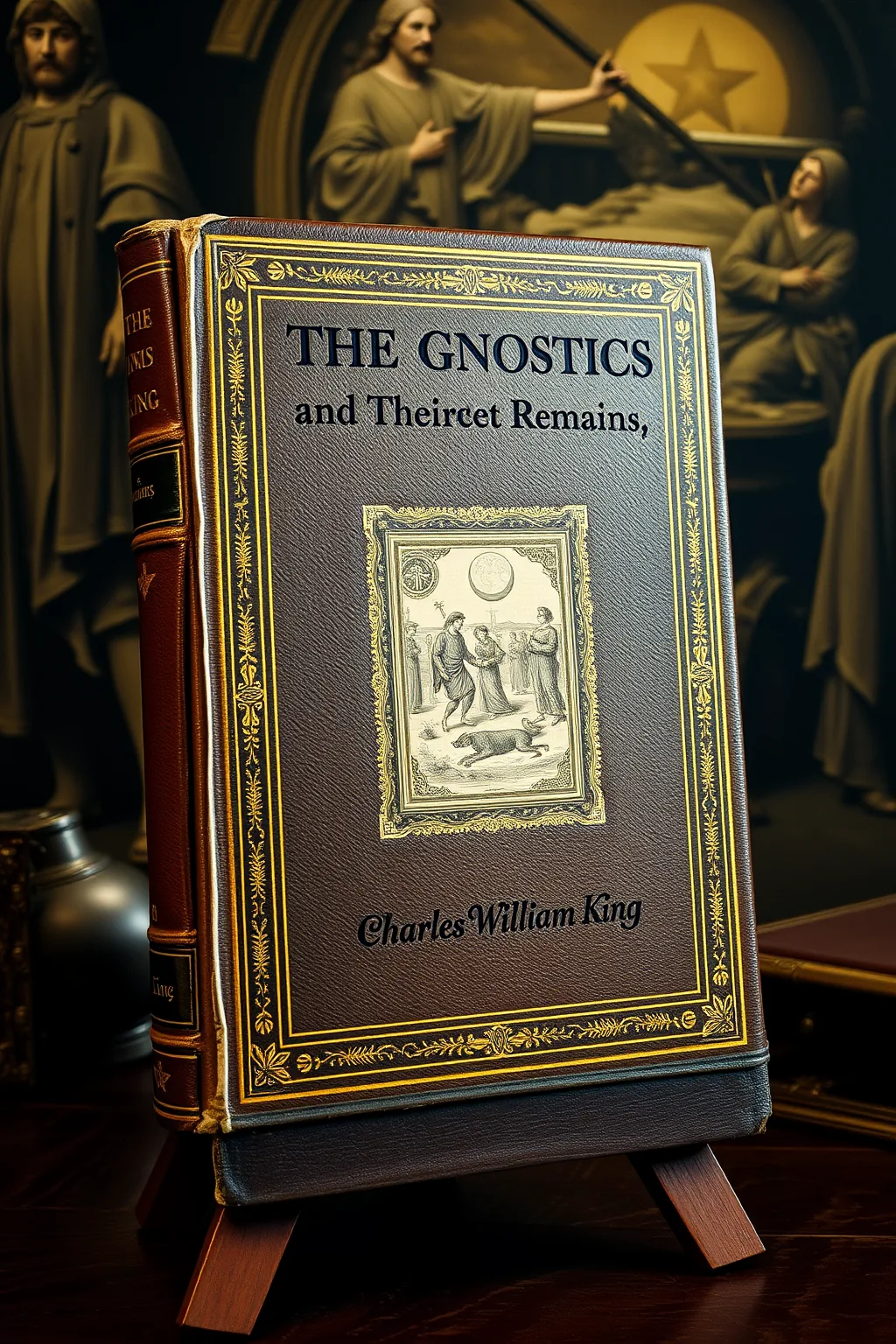
The Gnostics and Their Remains, Ancient and Medieval
 73
73

The Gnostics and Their Remains, Ancient and Medieval



The Gnostics and Their Remains, Ancient and Medieval by Charles William King is a foundational text for anyone delving into the mysteries of Gnosticism. Published in 1864, this book offers a meticulous exploration of Gnostic traditions, drawing from both ancient and medieval sources. King's scholarly approach provides a comprehensive overview of the esoteric beliefs and practices that have captivated seekers for centuries. For modern esoteric seekers, this text serves as a bridge to the past, offering insights into the spiritual and philosophical quests of our ancestors. The book's detailed analysis of Gnostic symbols and rituals makes it an invaluable resource for those looking to deepen their understanding of occult traditions. Despite being written over a century ago, King's work remains relevant and enlightening, making it a must-read for anyone interested in the esoteric and mystical.
📝 Description
73
Charles William King published 'The Gnostics and Their Remains' in 1887, detailing Gnostic systems and artifacts.
Charles William King's 1887 study, 'The Gnostics and Their Remains, Ancient and Medieval,' examines the complex systems and material evidence of Gnosticism. King meticulously details various Gnostic sects, their cosmological myths, and their symbolic language, drawing upon historical texts and archaeological finds. The work addresses the origins and development of Gnostic thought, presenting a thorough account of its adherents and their beliefs across antiquity and the medieval period. King's analysis covers their unique interpretations of scripture, their dualistic philosophies, and the iconography found in their art and amulets.
This book maps the historical presence of Gnostic groups and their intellectual legacy. It describes their distinctive doctrines concerning the divine, the material world, and salvation, often contrasting them with mainstream religious views of their time. King's research makes available to the reader a significant body of information on a tradition that has long been obscured by historical suppression and misinterpretation. The volume serves as a detailed historical survey of this esoteric movement.
Published in the late 19th century, this work emerged during a period of renewed interest in ancient religions and esoteric traditions. It contributed to the scholarly understanding of Gnosticism, a complex set of religious ideas often characterized by dualism and a focus on divine knowledge (gnosis). King's research placed these ancient movements within the broader history of Western esotericism, connecting them to later mystical and occult currents. The book remains a significant historical document for understanding how Gnosticism was perceived and studied by scholars and esotericists.
💡 Why Read This Book?
Reading The Gnostics and Their Remains, Ancient and Medieval today offers a unique opportunity to connect with the ancient wisdom of Gnosticism. This book provides readers with a deeper understanding of esoteric traditions and their enduring influence on modern spirituality. By exploring the ancient and medieval remains of Gnostic practices, readers can gain insights into the mystical quests that have shaped Western thought. This text is an essential read for anyone seeking to uncover the hidden layers of esoteric knowledge and its relevance in contemporary spiritual practices.
⭐ Reader Reviews
Honest opinions from readers who have explored this book.
❓ Frequently Asked Questions
What is the main focus of The Gnostics and Their Remains?
The main focus of the book is the exploration of ancient and medieval Gnostic traditions, their symbols, rituals, and philosophical underpinnings.
Is this book suitable for beginners in esoteric studies?
While the book is highly informative, it may be more suitable for those with some prior knowledge of esoteric studies due to its detailed and scholarly approach.
How does this book contribute to modern esoteric seekers?
The book provides a bridge to the past, offering insights into the spiritual and philosophical quests of our ancestors, which can enrich contemporary esoteric practices.
🔮 Key Themes & Symbolism
Hidden Knowledge
The book looks at the concealed wisdom of Gnosticism, offering readers a glimpse into the ancient mystical traditions that have shaped esoteric thought. King's work reveals the hidden teachings that have been passed down through generations, inviting seekers to uncover the deeper truths that lie beneath the surface of reality.
Symbolism
Symbolism plays a central role in Gnostic teachings, and King's book provides a detailed examination of the key symbols and their meanings. By understanding these symbols, readers can gain a deeper appreciation for the mystical and esoteric dimensions of Gnosticism.
Philosophical Significance
The philosophical significance of Gnostic teachings is explored in depth, offering readers a profound understanding of the spiritual and intellectual insights that have captivated mystics for centuries. King's work bridges the gap between ancient and modern thought, providing a foundation for deeper spiritual inquiry and personal transformation.
💬 Memorable Quotes
Direct passages from the work, attributed to the author.
“Symbols are the language of the mystics, speaking to the soul.”
— King emphasizes the importance of symbolism in Gnostic teachings, suggesting that symbols hold the key to understanding the mystical dimensions of reality.
“The ancient wisdom of the Gnostics offers a path to enlightenment.”
— King's work suggests that the ancient teachings of Gnosticism provide a roadmap for spiritual seekers, guiding them towards a deeper understanding of the self and the divine.
💡 Key Ideas
Editorial paraphrase of the work's core concepts — not direct quotes.
The mysteries of Gnosticism reveal a hidden world of spiritual truth.
This passage highlights the esoteric nature of Gnostic teachings, inviting readers to explore the deeper layers of spiritual knowledge.
The seeker of truth must journey into the depths of the unknown.
This quote underscores the transformative potential of Gnostic teachings, encouraging readers to begin a spiritual journey of discovery and self-realization.
The mysteries of the universe are revealed to those who seek them.
This passage emphasizes the active role of the seeker in uncovering the hidden truths of the mystical and esoteric traditions.
🌙 Esoteric Significance
Tradition
This book belongs to the Gnostic tradition, which emphasizes the pursuit of hidden knowledge and the exploration of mystical and esoteric dimensions of reality. Gnosticism, with its detailed symbolism and profound philosophical insights, has influenced various mystical and occult movements throughout history.
Symbolism
Key symbols in Gnostic teachings include the serpent, representing wisdom and transformation; the cross, symbolizing the union of divine and earthly realms; and the dove, embodying the spirit of enlightenment. These symbols hold deep esoteric meanings and are central to the mystical teachings of Gnosticism.
Modern Relevance
Today, Gnostic teachings continue to inspire modern practitioners of esoteric arts and spiritual seekers. The book's exploration of hidden knowledge and symbolism remains relevant, offering a pathway to deeper spiritual understanding and personal transformation.
👥 Who Should Read This Book
Beginners interested in mystical and esoteric traditions will find this book an excellent starting point, providing a comprehensive introduction to the rich and evocative world of Gnosticism. Scholars of occult studies will appreciate the detailed examination of ancient Gnostic texts and artifacts. Spiritual seekers and practitioners of mystical arts will benefit from the profound philosophical and spiritual insights offered in this volume.
📜 Historical Context
Written during the Victorian era, 'The Gnostics and Their Remains, Ancient and Medieval' emerged at a time when interest in ancient mystical traditions was on the rise. Charles William King's work was instrumental in bringing the esoteric teachings of Gnosticism to a wider audience, shedding light on the hidden knowledge and symbolism that had been largely overlooked by mainstream scholarship. The book's influence can be seen in the resurgence of interest in occult studies and mystical arts during the late 19th and early 20th centuries, as well as in the continued relevance of Gnostic teachings in modern esoteric thought.
📔 Journal Prompts
Reflect on the hidden knowledge you have discovered in Gnostic teachings.
Explore the symbolism in your dreams and how it relates to Gnostic symbols.
Consider the philosophical significance of Gnostic teachings in your own life.
Write about a personal transformation inspired by the mystical insights in this book.
What mysteries of the universe have you uncovered through your study of Gnosticism?
🗂️ Glossary
Gnosticism
An ancient mystical tradition that emphasizes the pursuit of hidden knowledge and the exploration of esoteric dimensions of reality.
Hidden Knowledge
The concealed wisdom and spiritual truths that are revealed to seekers of mystical and esoteric traditions.
Symbolism
The use of symbols to convey deep spiritual and philosophical insights in mystical and occult teachings.
Esoteric
Relating to knowledge that is intended for a small, select group of people with special knowledge or interests.
Mystical
Relating to experiences that involve direct communication with the divine or spiritual realms.
This book appears in 4 collections
🔮 Readers Also Liked
Browse all →







More by Charles William King
All books →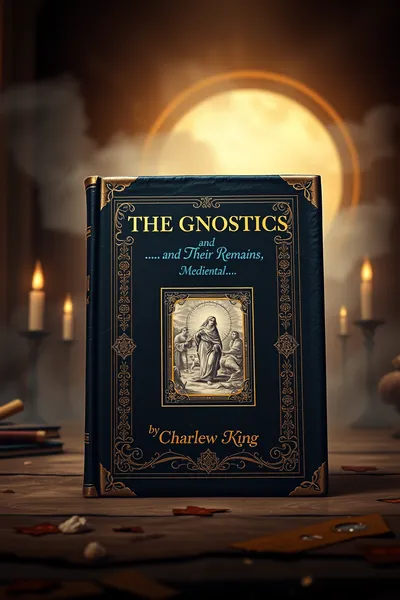





From the “Gnosticism” Collection
View all →







More Free Sacred Texts & Gnosticism Books
View all →