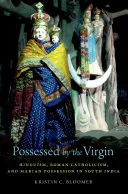
Possessed by the Virgin
 78
78

Possessed by the Virgin
Kristin C. Bloomer’s "Possessed by the Virgin" arrives not as a hagiography but as a sharp, critical examination of faith embodied. The author’s prolonged engagement with three Tamil Nadu women claiming Marian possession is commendable, providing a rich, ground-level view of their lives. Bloomer’s strength lies in meticulously detailing the social and personal implications of these claims, particularly how possession becomes a complex tool for agency within restrictive patriarchal structures. A minor limitation, however, is the occasional academic detachment that, while necessary for analysis, can sometimes distance the reader from the raw intensity of the women’s experiences. The passage describing the women's subtle negotiations of social space after perceived divine intervention is particularly insightful. Bloomer offers a sober, essential contribution to understanding embodied religiosity.
📝 Description
78
Kristin C. Bloomer's 2016 book examines Catholic women in South India claiming possession by Mary.
Kristin C. Bloomer's "Possessed by the Virgin" scrutinizes the lives of three Catholic women in Tamil Nadu, South India, who claim direct spiritual possession by Mary. Bloomer, an ethnographer, spent an extended period observing these women. Her work goes beyond mere documentation to analyze the complex social dynamics that shape these experiences. The book is relevant for scholars of religious studies, anthropology, and gender studies, especially those interested in lived religion outside Western cultures. It will appeal to readers curious about how spirituality, social power, and female autonomy interact within patriarchal religious systems. Those looking for in-depth ethnographic accounts of Marian apparitions and possession phenomena will find it particularly useful.
Bloomer places her study within the context of global Pentecostal and Charismatic movements of the late 20th century, showing how spiritual intensity can appear across different faiths. Her research engages with discussions about the validity of religious experiences, using anthropological methods developed in the post-colonial era to interpret how local people understand worldwide religious trends. The book addresses core concepts such as spiritual possession functioning as a means of agency, the negotiation of gender roles in religious settings, and the anthropological difficulty in confirming the 'authenticity' of subjective spiritual claims. Bloomer investigates how these women's claimed possessions by Mary alter their social standing and personal independence within their communities and the wider Catholic Church.
This work engages with traditions of Christian mysticism and devotional practices, specifically focusing on reported experiences of divine possession. While framed ethnographically, it touches upon historical and theological discussions surrounding the nature of spiritual encounters, particularly those involving figures like the Virgin Mary. It intersects with studies of embodied spirituality and the ways individuals claim direct communication or union with the divine, often in ways that challenge established religious hierarchies or social norms. The book explores how such intense personal spiritual experiences are interpreted and integrated within a specific cultural and religious community.
💡 Why Read This Book?
• Learn how spiritual possession, specifically by Mary in Tamil Nadu, can function as a complex form of female agency within patriarchal religious systems, a concept explored through extended ethnographic observation. • Understand the anthropological challenges of assessing authenticity in religious claims by examining Bloomer's multi-year study of three Catholic women and their direct experiences. • Gain insight into the negotiation of gender and social power in religious contexts, as demonstrated by the women's experiences in South India and their interactions with the Catholic Church.
⭐ Reader Reviews
Honest opinions from readers who have explored this book.
❓ Frequently Asked Questions
What specific region of India does Kristin C. Bloomer's research focus on?
Bloomer's ethnographic research for "Possessed by the Virgin" is centered in Tamil Nadu, a state located in South India. This region is significant for its unique cultural and religious landscape within the broader Indian context.
Who are the primary subjects of the book "Possessed by the Virgin"?
The book focuses on three Roman Catholic women residing in Tamil Nadu, South India, who assert that they are experiencing possession by Mary, the mother of Jesus.
What is the main anthropological question explored in the book?
The book critically explores questions of gender, social power, female agency, and the complex issue of authenticity concerning religious claims and experiences.
When was "Possessed by the Virgin" first published?
Kristin C. Bloomer's "Possessed by the Virgin" was first published on November 10, 2017.
What is the author's approach to studying religious phenomena?
The author employs an ethnographic approach, involving long-term observation and detailed study of the lived religious experiences of her subjects, rather than a purely theological or doctrinal analysis.
Does the book discuss the women's interactions with the Catholic Church hierarchy?
Yes, the work investigates how the women's claims of possession by Mary impact their social standing and agency, implicitly involving their relationship with the broader Catholic community and its structures.
🔮 Key Themes & Symbolism
Possession and Agency
The book critically examines spiritual possession not as passive affliction, but as a dynamic site for the assertion of agency, particularly for women in patriarchal societies. By claiming possession by Mary, the subjects in Tamil Nadu navigate and, in some instances, subvert established social hierarchies. This reconfigures their personal autonomy and social roles, demonstrating how spiritual experience can become a powerful tool for self-determination within religious frameworks.
Gender and Social Power
Bloomer interrogates the intricate relationship between gender and social power within the context of Roman Catholicism in South India. The experiences of women claiming possession by the Virgin Mary are analyzed through the lens of how gender shapes religious expression and access to authority. The work highlights how these women's claims challenge traditional gendered expectations and power dynamics, offering a nuanced view of female influence within the Church.
Authenticity in Religious Experience
A central concern of "Possessed by the Virgin" is the anthropological challenge of assessing the authenticity of religious claims. Bloomer avoids making definitive judgments, instead focusing on the lived reality and social consequences of these women's experiences of Marian possession. The book probes how 'authenticity' is constructed, negotiated, and recognized within a community and by the subjects themselves.
Embodied Spirituality
This work underscores the significance of embodied spirituality, where religious belief and practice are deeply intertwined with physical experience. The women's claims of possession by Mary are not merely intellectual or emotional; they manifest physically and socially. Bloomer's ethnographic approach reveals how these embodied experiences shape individual identity and community perceptions, offering a tangible understanding of faith.
💬 Memorable Quotes
Direct passages from the work, attributed to the author.
“The women claim to be possessed by Mary.”
— This direct statement sets the stage for the book's ethnographic exploration, highlighting the core phenomenon under investigation and the subjects' assertive spiritual claims.
“Investigating questions about gender, social power, agency, and authenticity.”
— This phrase expresses the analytical framework Bloomer employs, signaling a critical and scholarly approach to understanding the complex social and personal dimensions of religious experience.
“An ethnographic account of three Roman Catholic women in Tamil Nadu.”
— This specifies the methodology and geographical focus, grounding the study in a particular cultural and religious context while emphasizing the author's immersive research approach.
“Bloomer follows the lives of these women over many years.”
— This highlights the longitudinal nature of the research, underscoring the depth and commitment involved in understanding the evolving dynamics of the women's experiences and their social integration.
“The work explores possession as a form of agency.”
— This interpretation points to a key theoretical contribution, suggesting that the book reframes possession not as victimhood but as a potential source of empowerment and self-determination for the subjects.
🌙 Esoteric Significance
Tradition
While rooted in Roman Catholicism, the book's exploration of direct spiritual possession by a divine feminine figure touches upon themes resonant with certain esoteric traditions that emphasize mystical union and channeled divine experience. It departs from orthodox dogma by foregrounding the lived, embodied, and socially negotiated nature of such phenomena, aligning more with experiential mysticism than with institutionalized doctrine.
Symbolism
The Virgin Mary herself functions as a potent symbol, representing purity, divine motherhood, and intercession. Within the context of possession, her figure becomes a conduit for agency and social transformation for the women. The act of possession can be seen as a form of embodying the divine feminine, reclaiming spiritual authority, and enacting sacred power in the material world.
Modern Relevance
Contemporary interest in embodied spirituality, the divine feminine, and the reinterpretation of religious experiences outside institutional norms finds echoes in Bloomer's work. Thinkers and practitioners exploring ecstatic states, shamanic practices, and feminist theological interpretations of figures like Mary may draw insights from the book's depiction of possession as a source of personal power and social critique.
👥 Who Should Read This Book
• Scholars of religious studies and anthropology seeking in-depth ethnographic case studies on lived religious experience in South Asia. • Individuals interested in the intersection of gender, social power, and religious claims, particularly within Catholic communities. • Readers fascinated by the phenomenon of spirit possession and its potential as a framework for understanding agency and self-expression in diverse cultural settings.
📜 Historical Context
Published in 2017, "Possessed by the Virgin" emerged during a period of intensified global interest in lived religious experiences and the anthropology of Christianity, particularly in non-Western contexts. Bloomer's work engages with post-colonial critiques of ethnographic practice and the ongoing scholarly debates concerning the intersection of religious fervor and Pentecostal-like expressions that have proliferated worldwide since the mid-20th century. Her study implicitly dialogues with scholars like Talal Asad, who questioned universalizing tendencies in the study of religion, and specifically with anthropologists examining spirit possession phenomena across diverse cultures. While not directly engaging with a specific competing school of thought in the text itself, the work contributes to a broader academic discourse that moved beyond earlier, more essentialist views of religion toward nuanced understandings of how faith operates in specific socio-cultural terrains.
📔 Journal Prompts
The women's claims of Marian possession and their negotiation of social power.
How does the concept of 'authenticity' manifest in the subjects' experiences of possession?
Reflecting on the interplay between embodied spirituality and social agency for the women studied.
The symbolic weight of Mary in the context of female spiritual authority.
Analyzing the ethnographic method used to document possession in Tamil Nadu.
🗂️ Glossary
Ethnography
A qualitative research method involving the in-depth study of a particular social group or culture, often through immersive fieldwork and participant observation.
Possession
In a religious or spiritual context, the state of being controlled or influenced by a spirit, deity, or supernatural entity. The book examines this as a claimed experience.
Agency
The capacity of individuals to act independently and make their own free choices, particularly within social structures that may constrain them.
Tamil Nadu
A state located in the southernmost region of India, known for its distinct Dravidian culture, language, and religious traditions, including a significant Christian population.
Marian Possession
The specific claim by individuals that they are experiencing possession by Mary, the mother of Jesus, as explored in Kristin C. Bloomer's research.
Social Power
The ability to influence or control the behavior of people within a social structure, often related to status, authority, or resources.
Authenticity
The quality of being genuine or real; in religious studies, it refers to the perceived truthfulness or validity of spiritual experiences or claims.