Reclaiming the Enlightenment
 76
76

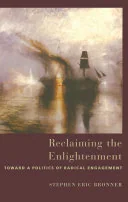
Reclaiming the Enlightenment
Stephen Eric Bronner's *Reclaiming the Enlightenment* is a vigorous, if occasionally strident, defense of Enlightenment principles against what he sees as their betrayal by the contemporary Left. The book’s strength lies in its direct confrontation with the problematic legacy of critiques like Horkheimer and Adorno's, which Bronner argues have led to an intellectual dead end. He effectively articulates the danger of abandoning reason and universalism, concepts he believes are crucial for progressive politics. A limitation, however, is the book's sometimes overly aggressive tone, which can overshadow nuanced argumentation. The section dissecting the Left's embrace of Counter-Enlightenment rhetoric, particularly its critique of the French Revolution's universalist aspirations, is particularly sharp. Bronner’s work is a necessary intervention for anyone concerned with the philosophical direction of contemporary social movements.
📝 Description
76
Stephen Eric Bronner's 2004 book argues the Left has lost its way by adopting Counter-Enlightenment critiques.
First published in 2004, Stephen Eric Bronner's Reclaiming the Enlightenment examines the intellectual direction of the Left. Bronner contends that progressive politics has moved away from the core ideas of the Enlightenment. He suggests that contemporary leftist thought has unintentionally adopted the language and imagery of movements that opposed the Enlightenment's ideals. Bronner's aim is to revive a progressive understanding of Enlightenment principles, asserting their potential for emancipation.
The book confronts the history of critiques leveled against the Enlightenment, particularly the influential work by Horkheimer and Adorno. Bronner argues that the pervasive nature of these critiques has caused the Left to incorporate elements of the very Counter-Enlightenment forces that stood against the revolutions of the 18th century. He distinguishes between a limited, instrumental form of reason and a broader, emancipatory Enlightenment vision. The work advocates for a renewed defense of reason and universalism against trends toward relativism and particularism.
While not strictly an esoteric text in the occult sense, Reclaiming the Enlightenment engages with intellectual traditions that question foundational assumptions about reason and progress. It enters a conversation with thinkers like Horkheimer and Adorno, whose critique of Enlightenment rationality itself has become a touchstone for later philosophical inquiry. Bronner's work can be seen as part of a broader intellectual effort to re-evaluate the legacy of modernity, particularly when such re-evaluations question dominant paradigms and probe the hidden costs or unintended consequences of seemingly rational systems. It shares with some esoteric thought a concern for uncovering obscured or distorted truths about the nature of knowledge and society.
💡 Why Read This Book?
• Understand how the 1947 critique by Horkheimer and Adorno shaped subsequent leftist thought, providing a crucial historical lens. • Gain a framework for distinguishing between instrumental reason and emancipatory Enlightenment ideals, essential for nuanced political discourse. • Explore Bronner's argument for re-engaging with the universalist aspirations of 1776 and 1789, offering a counter-narrative to post-modern critiques.
⭐ Reader Reviews
Honest opinions from readers who have explored this book.
❓ Frequently Asked Questions
What is the main argument of Stephen Eric Bronner's Reclaiming the Enlightenment?
Bronner argues that the Left has drifted into the language of the Counter-Enlightenment, a movement against the ideals of 1776 and 1789. He seeks to reclaim the progressive heritage of the Enlightenment.
Who are Horkheimer and Adorno, and what is their connection to the Enlightenment?
Max Horkheimer and Theodor W. Adorno, in their 1947 work *Dialectic of Enlightenment*, famously linked Enlightenment rationality to totalitarianism, a critique that heavily influenced subsequent intellectual discourse.
What historical events does Bronner reference when discussing the Enlightenment's legacy?
Bronner references the American Revolution (1776) and the French Revolution (1789) as key moments embodying the progressive, universalist aspirations he seeks to reclaim for the Left.
What is the Counter-Enlightenment in the context of this book?
The Counter-Enlightenment refers to movements and ideologies that arose in opposition to the core tenets of the Enlightenment, such as reason, individualism, and universalism, particularly in response to the revolutions of the late 18th century.
What does Bronner mean by 'reclaiming the Enlightenment'?
He means reasserting the positive, emancipatory potential of Enlightenment thought, distinguishing it from its instrumental or authoritarian interpretations, and applying its principles to contemporary progressive politics.
When was Reclaiming the Enlightenment first published?
Reclaiming the Enlightenment by Stephen Eric Bronner was first published in 2004.
🔮 Key Themes & Symbolism
Critique of the Left's Trajectory
Bronner meticulously details how contemporary leftist discourse has, in his view, strayed from its historical roots by adopting the critical stances of the Counter-Enlightenment. He argues that this has led to an unproductive paralysis, abandoning the universalist and rationalist foundations that once fueled progressive change. The work dissects specific intellectual trends and thinkers responsible for this shift, urging a re-evaluation of foundational progressive principles.
The Dialectic of Enlightenment
Central to Bronner's argument is his engagement with the influential 1947 text *Dialectic of Enlightenment* by Horkheimer and Adorno. He acknowledges its critical power in exposing the potential for reason to become instrumental or oppressive, but argues that its legacy has been overemphasized, leading to a wholesale rejection of Enlightenment ideals rather than a critical refinement. This section forms the intellectual backbone of his critique.
Reclaiming Universalism
The book champions the concept of universalism, a core Enlightenment ideal, as essential for any meaningful progressive politics. Bronner contends that the rejection of universal claims in favor of particularism or identity politics, a trend he associates with the Counter-Enlightenment, undermines the possibility of broad social solidarity and transformative change. He advocates for a renewed commitment to universal human rights and reason.
Progressive Politics and Reason
Bronner posits that a healthy progressive politics must be grounded in a robust defense of reason, not as a sterile, instrumental force, but as a tool for liberation and critique. He argues against the postmodern tendency to deconstruct reason entirely, suggesting that such moves leave progressives vulnerable to irrationalism and authoritarianism. The work calls for a sophisticated understanding and application of reason.
💬 Memorable Quotes
Direct passages from the work, attributed to the author.
“In 1947 Horkheimer and Adorno connected the Enlightenment with totalitarianism.”
— This statement highlights the seminal critique that Bronner aims to re-examine. It sets the stage for his argument that this specific connection, while important, has been disproportionately influential in shaping leftist thought.
“Since when the Left has drifted into the language and imagery of the European Counter-Enlightenment.”
— Bronner identifies a specific historical and intellectual drift, suggesting a departure from core progressive tenets towards ideologies that historically opposed Enlightenment values and revolutionary movements.
“Bronner sets out to reclaim the heritage of progressive politics.”
— This frames the book's central objective: not to discard Enlightenment ideals, but to re-evaluate and re-appropriate their emancipatory potential for contemporary political struggles.
“The movement against 1776 and 1789.”
— This concise phrase defines the Counter-Enlightenment as a force that actively opposed the foundational revolutions embodying Enlightenment principles of liberty and self-determination.
“Bronner argues for a renewed defense of reason against relativism.”
— This interpretation points to a key thematic conflict in the book: the tension between Enlightenment rationality and contemporary intellectual currents that question universal truth claims.
🌙 Esoteric Significance
Tradition
While not explicitly aligning with a specific esoteric lineage like Hermeticism or Gnosticism, Bronner's work engages with the philosophical underpinnings of Western rationalism, a tradition that has both influenced and been critically examined by esoteric thought. His attempt to reclaim a 'pure' or 'emancipatory' form of reason can be seen as a modern, secular echo of certain Gnostic quests for true knowledge and liberation from oppressive systems of thought.
Symbolism
The core 'symbols' Bronner engages with are not occult sigils but foundational Enlightenment concepts: 'Reason' (distinguished between instrumental and emancipatory forms), 'Universalism' (representing shared human potential and rights), and the 'Revolutions of 1776 and 1789' (symbols of liberation and self-determination). He seeks to purify these symbols from negative connotations imposed by the Counter-Enlightenment.
Modern Relevance
Bronner's ideas resonate with contemporary thinkers grappling with the crisis of progressive politics and the rise of irrationalism. His call to defend universalism and reason finds echoes in movements advocating for human rights, secularism, and evidence-based policy. Contemporary philosophers and political theorists who seek to rebuild a coherent progressive framework often find his arguments a crucial, albeit contentious, starting point.
👥 Who Should Read This Book
• Students of political philosophy and intellectual history seeking to understand the critiques and defenses of the Enlightenment. • Activists and organizers concerned with the theoretical foundations of progressive movements and the challenges posed by postmodern critiques. • Readers interested in the historical development of leftist thought and its engagement with foundational concepts like reason and universalism.
📜 Historical Context
Published in 2004, *Reclaiming the Enlightenment* emerged during a period of intense debate within critical theory and political philosophy. The shadow of the 1947 *Dialectic of Enlightenment* by Horkheimer and Adorno loomed large, with many on the Left internalizing its critique of reason as inherently linked to domination. This intellectual climate saw the rise of postmodernism and post-structuralism, which often deconstructed universal claims and grand narratives, including those of the Enlightenment. Bronner's work can be seen as a direct intervention against these trends, challenging thinkers like Jean-François Lyotard, whose *The Postmodern Condition* (1979) famously declared the 'incredulity toward metanarratives.' While not directly engaging in a public debate, Bronner's book represented a significant counter-current to the prevailing academic mood, advocating for a return to the emancipatory project of the Enlightenment and its associated revolutions of 1776 and 1789.
📔 Journal Prompts
The Left's drift into the language of the Counter-Enlightenment: where does this divergence originate?
Horkheimer and Adorno's connection of Enlightenment to totalitarianism: how does this influence contemporary thought?
The emancipatory potential of reason: how can it be distinguished from instrumental reason?
The heritage of 1776 and 1789: what universalist ideals can be reclaimed today?
Critiquing the critique: how to re-evaluate foundational Enlightenment principles without abandoning them?
🗂️ Glossary
Enlightenment
An 18th-century European intellectual and cultural movement emphasizing reason, individualism, human rights, and scientific inquiry, advocating for progress and challenging traditional authority.
Counter-Enlightenment
A diverse range of philosophical and political currents that emerged in opposition to Enlightenment ideals, often emphasizing tradition, authority, faith, and particularism over reason and universalism.
Dialectic of Enlightenment
A 1947 book by Max Horkheimer and Theodor W. Adorno, arguing that Enlightenment rationality, intended for liberation, paradoxically led to new forms of domination and barbarism.
Progressive Politics
Political ideologies and movements advocating for social reform, equality, and advancement, often drawing on Enlightenment principles of reason and human rights.
Instrumental Reason
A concept describing reason used purely as a tool for efficiency and control, often detached from ethical considerations or broader humanistic goals, as critiqued by Horkheimer and Adorno.
Universalism
The belief in the universality of certain truths, values, or rights that apply to all people regardless of their background, culture, or location.
1776 and 1789
Referencing the American Revolution (1776) and the French Revolution (1789), key historical events embodying Enlightenment ideals of liberty, self-governance, and universal rights.
This book appears in 1 collection
🔮 Readers Also Liked
Browse all →








From the “Enlightenment” Collection
View all →









More Free Esoteric History & Biography Books
View all →