The Book of Werewolves
 75
75

The Book of Werewolves
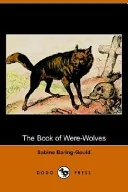
Sabine Baring-Gould’s "The Book of Werewolves" remains a cornerstone for anyone dissecting the history of lycanthropy, despite its age. Its strength lies in the sheer breadth of Baring-Gould’s research, meticulously compiling tales and alleged testimonies from across Europe. The inclusion of legal cases, such as those from the 16th-century trials in the Franche-Comté, offers a chilling glimpse into the fear that permeated society. However, the work’s primary limitation is its 1865 perspective; Baring-Gould often struggles to differentiate between genuine belief, fabrication, and psychological phenomena, at times leaning towards credulity. His discussion of the alleged "were-wolf of the Jura" exemplifies this blend of detailed reporting and uncritical acceptance of the supernatural. The book is an indispensable, if dated, primary source for understanding historical attitudes towards the werewolf.
📝 Description
75
Sabine Baring-Gould published "The Book of Werewolves" in 1865, examining lycanthropy through folklore and history.
In 1865, Sabine Baring-Gould compiled "The Book of Werewolves," a detailed study of werewolf legends. He gathered accounts from personal testimonies, legal documents, and ancient myths to trace the persistence of lycanthropy across different eras. The book presents a broad overview of reported werewolf phenomena, acknowledging its limitations in critical analysis.
This work is particularly useful for those studying folklore, mythology, and the history of the occult. It will also interest readers curious about the psychological roots of communal fears and the development of monstrous figures. Anyone researching historical crime, superstition, or the darker aspects of human belief will find the book's extensive records valuable.
Published during a period of growing interest in folklore and the supernatural, Baring-Gould's book emerged within a burgeoning field of occult studies. It engaged with contemporary discussions about superstition and rationalism, collecting evidence to understand rather than dismiss beliefs in shapeshifting. The book became a reference for later investigations into lycanthropy, contributing to the cataloging of folkloric and alleged supernatural occurrences.
💡 Why Read This Book?
• You will learn about the historical documentation of werewolf accusations, including specific legal proceedings from regions like the Franche-Comté, offering concrete examples of societal fear in the 16th century. • You will encounter Baring-Gould’s approach to analyzing folklore, understanding how he treated ancient myths and contemporary accounts from the 19th century as evidence for lycanthropy. • You will gain insight into the psychological and social factors that may have fueled werewolf beliefs, moving beyond simple superstition to consider the context of the time this book was written.
⭐ Reader Reviews
Honest opinions from readers who have explored this book.
❓ Frequently Asked Questions
When was The Book of Werewolves first published?
The Book of Werewolves by Sabine Baring-Gould was first published in 1865. This original publication date places it firmly within the Victorian era's fascination with folklore and the supernatural.
What kind of evidence does Baring-Gould use to discuss werewolves?
Baring-Gould utilizes a wide array of evidence, including ancient legends, personal testimonies, historical legal records from witch trials and lycanthropy cases, and psychological speculation.
Does the book offer a scientific explanation for werewolf phenomena?
While Baring-Gould touches upon psychological aspects and potential misidentifications, the book largely presents historical accounts and folklore without a modern scientific framework. It focuses on documenting belief rather than debunking it.
Is The Book of Werewolves considered a primary or secondary source?
It functions as both. It is a primary source for understanding 19th-century views on lycanthropy and folklore collection, and a secondary source compiling historical accounts and legends from earlier periods.
What is lycanthropy as discussed in the book?
Lycanthropy, as explored by Baring-Gould, refers to the belief that humans can transform into wolves, either through supernatural means, witchcraft, or mental affliction. The book examines this belief across different historical eras.
Where can I find information on the author, Sabine Baring-Gould?
Sabine Baring-Gould (1834-1924) was a prolific English hagiographer, antiquarian, novelist, and clergyman. He is known for his extensive collections of folklore, saints' lives, and hymns, including 'The Book of Werewolves'.
🔮 Key Themes & Symbolism
Folklore and Mythological Origins
Baring-Gould meticulously traces the werewolf legend back through ancient myths and folklore, examining its roots in classical literature and oral traditions. He explores how these narratives evolved over centuries, becoming embedded in European culture. The work highlights the persistent human fascination with shapeshifting and the archetype of the beast within, suggesting these tales are more than mere superstition but reflections of deep-seated psychological or cultural phenomena.
Historical Accounts and Legal Cases
A significant portion of the book is dedicated to alleged historical instances of lycanthropy, particularly focusing on legal trials from the 16th and 17th centuries, such as those in the Franche-Comté region. Baring-Gould presents confessions and testimonies, offering a stark view of how accusations of witchcraft and lycanthropy were treated by judicial systems, often resulting in severe punishment based on limited evidence or coerced statements.
Psychological and Societal Factors
Beyond folklore and legal records, Baring-Gould speculates on the psychological underpinnings of werewolf beliefs. He considers the impact of disease (like ergotism), mass hysteria, and the human tendency towards delusion or misinterpretation of natural events. The work attempts to contextualize these beliefs within the societal anxieties and superstitions prevalent in different eras, suggesting that the werewolf served as a focal point for collective fears.
The Nature of Belief and Testimony
The book implicitly questions the reliability of testimony and the formation of belief systems. By presenting a range of accounts – from ancient sagas to personal encounters – Baring-Gould invites readers to consider how legends are constructed, perpetuated, and accepted as truth. The work highlights the challenge of discerning fact from fiction when dealing with deeply ingrained cultural narratives and anecdotal evidence.
💬 Memorable Quotes
Direct passages from the work, attributed to the author.
“The were-wolf is a creature of flesh and blood.”
— This assertion underscores Baring-Gould's attempt to ground werewolf phenomena in tangible reality, differentiating his approach from purely symbolic or allegorical interpretations. It suggests a belief that these were not solely spectral beings but entities experienced physically by some.
“It is not necessary to believe that the men were really wolves.”
— This interpretation acknowledges the possibility of delusion or misperception. Baring-Gould considers that while the belief in being a wolf was real for the afflicted, the actual transformation might have been a manifestation of mental illness or psychological distress.
“The belief in were-wolves is as old as the hills.”
— This highlights the pervasive and ancient nature of the werewolf myth. Baring-Gould uses such phrasing to emphasize that lycanthropy is not a modern invention but a recurring theme throughout human history and across diverse cultures.
“Many persons have been condemned for the crime of lycanthropy.”
— This points to the severe real-world consequences of werewolf beliefs, particularly evident in historical legal proceedings. It highlights the book's focus on documented cases and the tangible impact of these legends on individuals' lives.
“We have only to imagine the state of mind of a man who believes himself to be a wolf.”
— This prompts empathy and psychological consideration. Baring-Gould encourages readers to consider the subjective experience of those who believed themselves transformed, moving towards an understanding of the mental state involved.
🌙 Esoteric Significance
Tradition
While Baring-Gould's work predates the formalization of many modern esoteric traditions like Theosophy or Golden Dawn Hermeticism, it deeply engages with themes central to Western esotericism. His exploration of shapeshifting, folklore, and the 'beast within' touches upon primal archetypes and the human psyche's darker potentials. The book can be seen as an early attempt to catalogue and understand phenomena often relegated to the occult or superstitious, laying groundwork for later esoteric interpretations of transformation and the shadow self.
Symbolism
The werewolf itself is a potent symbol of primal nature, uncontrolled instincts, and the duality of human existence – the civilized versus the savage. Baring-Gould's focus on the moon's influence on transformation relates to lunar symbolism prevalent in many esoteric traditions, representing cycles, the subconscious, and feminine energies. The act of transformation symbolizes a shedding of the mundane self to access a more potent, perhaps dangerous, primal power.
Modern Relevance
Contemporary practitioners of witchcraft, animism, and certain branches of Jungian psychology draw upon Baring-Gould's research. His detailed accounts of historical beliefs and legal cases provide source material for understanding the cultural persistence of the werewolf archetype. Modern thinkers exploring the 'shadow self,' the concept of the wild human, and the psychological impact of fear and superstition find his work useful for historical context and case studies.
👥 Who Should Read This Book
• Folklore and Mythology Enthusiasts: Individuals interested in the origins and evolution of myths, particularly concerning shapeshifting and monstrous figures across European history. • Historical Researchers: Scholars and students investigating the history of crime, superstition, witchcraft trials, and the societal anxieties of past centuries, especially the 16th and 17th. • Students of Esotericism and Psychology: Readers exploring the symbolic meaning of the werewolf archetype, the human psyche’s relationship with primal instincts, and the historical context of occult beliefs.
📜 Historical Context
Published in 1865, "The Book of Werewolves" emerged during a period of intense antiquarianism and burgeoning folkloric studies in Victorian England. Sabine Baring-Gould, an eclectic scholar and prolific writer, was deeply engaged with collecting and categorizing tales, legends, and historical accounts. The mid-19th century saw a growing academic interest in comparative mythology and the origins of belief systems, often viewed through lenses of both romanticism and nascent rationalism. Baring-Gould’s work contributed to this intellectual current by compiling extensive evidence of lycanthropy, a phenomenon that simultaneously fascinated and disturbed the Victorian imagination. While some contemporaries focused on purely rational explanations for folklore, Baring-Gould’s approach was more inclusive, incorporating anecdotal evidence and historical confessions, even if critically. His work was widely cited in subsequent studies of folklore and the supernatural, solidifying its place as a foundational text.
📔 Journal Prompts
The historical accounts of lycanthropy, particularly those from the Franche-Comté trials, suggest societal anxieties. How might these fears manifest today?
Baring-Gould's compilation of werewolf lore spans centuries. What common threads emerge in these ancient myths and later folk tales?
Consider the phrase 'The were-wolf is a creature of flesh and blood.' What does this imply about Baring-Gould's approach to the legend?
The book touches upon the potential for delusion. Reflect on how collective belief systems can shape individual perceptions of reality.
Analyze the symbolism of the moon in werewolf legends as presented by Baring-Gould and its potential esoteric connections.
🗂️ Glossary
Lycanthropy
The supposed supernatural transformation of a person into a wolf, or the belief that one is a wolf. It encompasses both the act of transformation and the psychological state of believing oneself to be a wolf.
Hagiographer
A writer of the lives of saints. Baring-Gould himself was a noted hagiographer, indicating his interest in historical biographies and religious or quasi-religious figures.
Antiquarian
A person who studies or collects antiquities (objects or relics from ancient times). This reflects Baring-Gould's scholarly approach to historical folklore and legends.
Folklore
The traditional beliefs, customs, and stories of a community, passed through the generations by word of mouth. Baring-Gould extensively documented European folklore.
Shapeshifting
The ability to change one's physical form into that of another creature, typically an animal. The werewolf is a primary example of this phenomenon in folklore.
Franche-Comté
A historical region in eastern France, which was the site of several infamous werewolf trials in the 16th century, documented within Baring-Gould's work.
Testimony
A formal written or spoken statement, especially one given in a court of law. Baring-Gould relies heavily on historical testimonies and confessions related to lycanthropy.
This book appears in 1 collection
🔮 Readers Also Liked
Browse all →









From the “Superstition” Collection
View all →





More Free Esoteric History & Biography Books
View all →