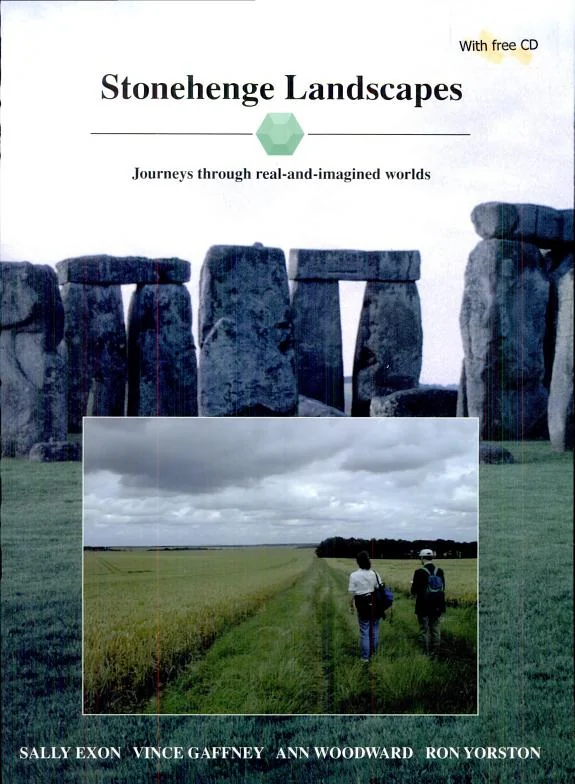
Stonehenge Landscapes
 83
83

Stonehenge Landscapes
Stonehenge Landscapes represents a monumental effort to synthesize a vast array of archaeological data into a coherent narrative of landscape evolution. The sheer scale of the digital analysis, encompassing over 1200 monuments, is impressive and offers a granular view of human activity around Stonehenge. The authors succeed in presenting the contents of barrows comprehensively, a valuable resource for specialists. However, the phenomenological lens, while aiming for a deeper understanding of perception, can sometimes feel abstract, particularly when discussing the Mesolithic to Early Bronze Age transitions. The strength lies in its data-driven approach; its limitation is the occasional difficulty in translating that data into a palpable sense of lived experience. The detailed appendices are invaluable, though the main text could benefit from more direct engagement with the implications for broader theories of ritual landscape development.
📝 Description
83
Stonehenge Landscapes, published in 2000, provides the most extensive digital analysis of the Stonehenge environs ever undertaken.
This book consolidates data from over 1200 monuments, presenting a detailed picture of the Stonehenge site and its surrounding landscape. The authors employ a phenomenological approach, examining how this environment was perceived and used from the Mesolithic period through the Early Bronze Age. It maps the spatial connections between monuments and details the contents of barrows for the first time systematically. The study represents a move toward viewing Stonehenge not as a solitary structure, but as the center of a complex ritual and social area.
The work is suited for archaeologists, landscape historians, and students of prehistoric Britain. Readers interested in how ancient sites were experienced, the use of digital analysis in archaeology, and the interaction between human activity and the environment over long periods will find it valuable.
While not explicitly esoteric, this book contributes to understanding ancient ritual landscapes. Its detailed mapping and analysis of spatial relationships between monuments, particularly in relation to perception and use over millennia, can inform studies of ancient cosmologies and ritual practices. The focus on how the landscape itself was experienced and organized offers a framework for interpreting the symbolic and spiritual dimensions of prehistoric sites, aligning with broader interests in the human experience of sacred geography.
💡 Why Read This Book?
• Gain insight into the complete archaeological inventory of the Stonehenge environs, as the book collates data from over 1200 monuments, offering a scope unmatched by previous studies. • Understand the phenomenological development of the Stonehenge landscape, tracing its transformation from the Mesolithic period through the Early Bronze Age, as detailed by the authors. • Access a first-time collation of the contents of Stonehenge barrows, presented in comprehensive appendices that provide crucial material evidence for scholarly analysis.
⭐ Reader Reviews
Honest opinions from readers who have explored this book.
❓ Frequently Asked Questions
What period does Stonehenge Landscapes cover?
The book focuses on the development of the Stonehenge landscape from the Mesolithic period through to the Early Bronze Age, providing a comprehensive view of human activity over several millennia.
What is the main methodological approach of Stonehenge Landscapes?
The study employs a large-scale digital analysis of the archaeological landscape and monuments, coupled with a phenomenological approach to understand how the landscape was perceived and utilized.
Who are the authors of Stonehenge Landscapes?
The authors are Sally Exon, Vincent L. Gaffney, and Ann Woodward, who collaborated on this extensive digital analysis of the Stonehenge archaeological landscape.
What new data does Stonehenge Landscapes present?
It presents the largest digital analysis of the Stonehenge landscape to date, including data from over 1200 monuments, and offers the first comprehensive collation of the contents of Stonehenge barrows.
Is Stonehenge Landscapes suitable for a general audience?
While providing a broad overview, the book's depth and technical detail, especially the appendices, are geared towards archaeologists, historians, and serious students of prehistory.
What is a key contribution of this book to Stonehenge studies?
Its primary contribution is the comprehensive digital analysis and phenomenological study of the entire Stonehenge landscape, moving beyond the central monument to its surrounding context.
🔮 Key Themes & Symbolism
Landscape as Lived Space
The work moves beyond viewing Stonehenge as a singular structure to understanding it as the nexus of a dynamic, multi-period landscape. By analyzing over 1200 monuments and their contents, the authors reconstruct how prehistoric peoples perceived, interacted with, and ritualistically engaged with their environment across millennia, from the Mesolithic hunter-gatherers to the Early Bronze Age communities.
Phenomenological Archaeology
Applying a phenomenological lens, the book investigates the experiential dimension of the Stonehenge landscape. It explores how the spatial organization of monuments, barrows, and natural features might have shaped human consciousness and ritual practice, seeking to understand the 'lived' experience of these ancient spaces rather than just their physical form.
Digital Synthesis in Prehistory
Stonehenge Landscapes represents a significant early application of large-scale digital analysis to prehistoric archaeology. The consolidation of data from numerous monuments into a unified digital framework allowed for new patterns and connections to emerge, demonstrating the power of computational methods in revealing complex relationships within ancient landscapes.
Barrow Contents and Ritual
A crucial element of the study is the systematic collation and presentation of the contents found within Stonehenge's barrows. This detailed examination of grave goods and skeletal remains provides tangible evidence for funerary practices, social structures, and belief systems prevalent during the Early Bronze Age, offering material grounding for phenomenological interpretations.
💬 Memorable Quotes
Direct passages from the work, attributed to the author.
“The Stonehenge barrows are collated for the first time.”
— This statement highlights a significant data-gathering achievement, presenting the contents of numerous burial mounds in a unified format for the first time, crucial for comparative analysis of funerary practices and material culture.
“The largest digital analysis of the archaeological landscape and monuments of Stonehenge ever attempted.”
— This emphasizes the scale and innovative methodology of the research, underscoring its ambition to map and analyze the vast network of sites surrounding the central monument using advanced digital techniques.
“A major phenomenological study of the development of the Stonehenge landscape.”
— This points to the book's core theoretical framework, aiming to understand the subjective experience and perception of the Stonehenge landscape by its ancient inhabitants across different periods.
“Data from more than 1200 monuments.”
— This provides a concrete measure of the study's scope, indicating the breadth of archaeological evidence incorporated to reconstruct the complex history of human interaction with the Stonehenge environs.
“From the Mesolithic to the Early Bronze Age.”
— This defines the temporal scope of the analysis, demonstrating the work's commitment to tracing the evolution of the landscape and its use over a vast span of prehistory.
🌙 Esoteric Significance
Tradition
While not explicitly aligned with a specific esoteric tradition like Hermeticism or Kabbalah, Stonehenge Landscapes contributes to a broader esoteric interest in sacred geography and archaeoastronomy. It provides rigorous archaeological data that can inform esoteric interpretations of landscape as a repository of ancient knowledge and power, bridging empirical research with the symbolic understanding of place fundamental to many mystical traditions.
Symbolism
The book's focus on the 'landscape' itself becomes a symbolic entity, representing the interconnectedness of human activity, ritual, and the natural world. Specific symbols explored implicitly include the barrows as markers of ancestral passage and sacred boundaries, and the alignment of monuments within the broader topography, suggesting a deliberate cosmic or terrestrial ordering.
Modern Relevance
Contemporary practitioners of geomancy, druidic traditions, and those interested in archaeoastronomy draw upon works like Stonehenge Landscapes for empirical grounding. The detailed mapping of monuments and understanding of landscape use from Mesolithic to Bronze Age provide a factual basis for modern ritual practices and explorations of sacred sites, informing how contemporary individuals connect with ancient power centers.
👥 Who Should Read This Book
• Archaeologists and researchers specializing in British prehistory or landscape archaeology, seeking a comprehensive digital analysis and phenomenological interpretation of the Stonehenge environs. • Students of comparative religion and ancient ritual practices, interested in understanding the material culture and spatial organization of prehistoric sacred landscapes. • Individuals fascinated by the deep history of Stonehenge and its surrounding area, who desire a data-rich, scholarly account of its development beyond popular theories.
📜 Historical Context
Published in 2000, Stonehenge Landscapes emerged during an important era for digital archaeology and landscape studies. The late 20th century saw increasing computational power enabling the synthesis of vast datasets, moving beyond single-site analysis to regional and landscape perspectives. This work stands as a prime example of applying these new tools to one of Britain's most iconic prehistoric complexes. It engaged with growing scholarly interest in the 'ritual landscape' concept, challenging earlier interpretations focused primarily on the henge monument itself. While not facing overt censorship, its meticulous data-driven approach and phenomenological focus distinguished it from more speculative or mythologically-oriented studies prevalent in popular discourse. Its significance was recognized through its comprehensive approach, influencing subsequent landscape archaeology projects and solidifying the integration of digital methods in understanding deep time human-environment interactions.
📔 Journal Prompts
The extensive data from over 1200 monuments: How might this map of human activity inform a contemporary understanding of sacred geography?
The phenomenological study of the Stonehenge landscape: Reflect on how perception of a place shapes its perceived power.
The collation of Stonehenge barrow contents: What do burial assemblages reveal about the cyclical nature of life and death in the Early Bronze Age?
The transition from Mesolithic to Early Bronze Age use of the landscape: Consider the continuity and change in human-environment relationships over millennia.
The digital analysis methodology: How can large-scale data integration illuminate subtle patterns in archaeological evidence?
🗂️ Glossary
Phenomenological Study
An approach in archaeology that seeks to understand the subjective experience and perception of a landscape or site by its inhabitants, focusing on how it was lived and felt rather than just its physical structure.
Barrows
Mounds of earth or stone built over ancient graves, particularly common in prehistoric Britain. They served as burial markers and often contained grave goods, providing insights into funerary rituals and social status.
Mesolithic Period
The middle part of the Stone Age, characterized by the development of more sophisticated stone tools and a shift towards more settled lifestyles following the last Ice Age, preceding the Neolithic period.
Early Bronze Age
A period in prehistory characterized by the widespread use of bronze for tools and weapons, typically following the Neolithic period. In Britain, this era saw the construction of many burial mounds and the development of complex social structures.
Digital Analysis
The use of computer-based methods and technologies to process, interpret, and visualize large volumes of archaeological data, enabling new forms of analysis and pattern recognition.
Archaeological Landscape
The entire physical environment of a region as shaped by past human activity, including monuments, settlements, agricultural features, and natural elements that hold archaeological significance.
Barrow Contents
The artifacts, human remains, and associated materials found within ancient burial mounds (barrows), offering direct evidence of burial practices, beliefs, and material culture of past societies.
This book appears in 1 collection
🔮 Readers Also Liked
Browse all →








From the “Stone Circles” Collection
View all →








More Free Esoteric History & Biography Books
View all →