Prehistoric Avebury
 79
79

Prehistoric Avebury
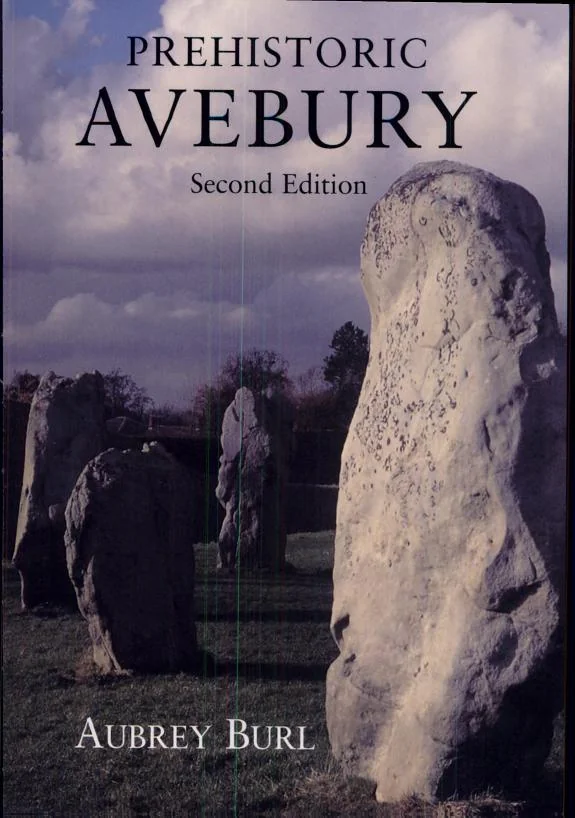
Aubrey Burl’s "Prehistoric Avebury" offers a sober, scholarly assessment of a monument that often invites more myth than analysis. Burl, an archaeologist of considerable repute, resists the sensational, grounding his account in rigorous examination of the available evidence. His strength lies in meticulously detailing the construction phases and the sheer scale of the Avebury complex, particularly its vast ditch and bank system which predates the stone settings. He effectively conveys the immense logistical undertaking involved, a feat often lost in more romanticized accounts. A limitation, however, is the book’s occasional dryness; the focus on archaeological detail, while accurate, can sometimes overshadow the human element, leaving the reader yearning for more speculative, yet evidence-based, connections to the lives of Avebury's builders. The chapter on the 'Avebury Calendar' and its astronomical alignments is particularly compelling, demonstrating Burl's ability to connect the physical structure to potential ritualistic or observational purposes. This is a vital resource for serious students of British prehistory, though perhaps less accessible for casual readers seeking ancient mysteries.
📝 Description
79
Aubrey Burl's 1979 book examines the prehistoric Avebury stone circles.
Aubrey Burl's "Prehistoric Avebury" meticulously details the history and construction of the Avebury stone circles in Wiltshire. The book addresses the difficulties in dating these megalithic monuments, which often predate Stonehenge. Burl investigates the substantial human effort involved in their erection. He also confronts the question of Avebury's purpose, considering its potential roles as a ritual center, astronomical observatory, or socio-political statement. Drawing on archaeological evidence, Burl reconstructs the spiritual and communal lives of the Neolithic people who built these structures. The work offers a detailed account of the site's layout, materials, and construction phases, appealing to those interested in megalithic building techniques and the scientific study of ancient sites. Burl paints a picture of a society engaged in monumental construction.
While primarily an archaeological study, "Prehistoric Avebury" touches on themes relevant to esoteric traditions concerned with ancient ritual sites and their possible astronomical or spiritual significance. Burl's examination of Avebury's potential as a ritual center and observatory aligns with interests in ley lines, earth energies, and the cosmological understanding of prehistoric peoples. The book's focus on the intentions and beliefs of the Neolithic architects resonates with esoteric perspectives that seek to understand the deeper meaning behind ancient monuments beyond purely practical explanations.
💡 Why Read This Book?
• Gain a concrete understanding of Avebury's construction phases, including the monumental ditch and bank, providing a factual basis for its megalithic significance beyond Stonehenge. • Learn about the archaeological challenges of dating Neolithic sites like Avebury, as explored in Burl's meticulous analysis of stratigraphy and artifact evidence. • Grasp the probable ritualistic or astronomical functions of Avebury, as detailed in chapters discussing alignments and the potential 'Avebury Calendar', offering a scholarly perspective on its purpose.
⭐ Reader Reviews
Honest opinions from readers who have explored this book.
❓ Frequently Asked Questions
How does Aubrey Burl's "Prehistoric Avebury" compare to Stonehenge in terms of scale and age?
Aubrey Burl's work highlights that Avebury's stone circle is significantly larger in diameter than Stonehenge's. The book also discusses how Avebury's earthworks and initial stone settings likely predate Stonehenge's sarsen stones, placing its origins in an earlier Neolithic period.
What archaeological evidence does "Prehistoric Avebury" present regarding the builders' lives?
The book examines artifacts and the monumental scale of construction to infer the social organization and communal effort of the Neolithic people who built Avebury. Burl interprets these findings to paint a picture of their lives, though often brief and focused on survival and ritual.
Does "Prehistoric Avebury" offer definitive answers about the purpose of the stone circles?
While Burl explores various theories, the book emphasizes the speculative nature of definitively knowing Avebury's purpose. He discusses potential ritualistic, astronomical, or social functions based on archaeological evidence and comparative studies of similar sites.
What is the significance of the ditch and bank at Avebury as discussed by Burl?
Burl details the immense ditch and bank surrounding Avebury as a primary and often earlier construction phase. This monumental earthwork, enclosing a vast area, is presented as a crucial element of the site's initial conception and construction.
Is "Prehistoric Avebury" accessible to readers without an archaeology background?
Aubrey Burl, as a leading archaeologist, writes with scholarly precision. While the book offers a comprehensive study, readers less familiar with archaeological terminology might find some sections dense, though the overarching narrative remains accessible.
When was Aubrey Burl's "Prehistoric Avebury" first published?
Aubrey Burl's "Prehistoric Avebury" was first published in 2002. This edition provides a synthesis of decades of archaeological research and interpretation concerning the Avebury henge complex.
🔮 Key Themes & Symbolism
Megalithic Engineering
Burl meticulously details the sheer scale and engineering prowess involved in constructing Avebury, a site that dwarfs Stonehenge. The work explores the logistics of moving and erecting massive sarsen stones and bluestones, alongside the creation of the enormous encircling ditch and bank. This theme emphasizes the human endeavor, organizational capacity, and sophisticated understanding of landscape required by Neolithic communities to manifest such enduring monuments.
Ritual and Social Function
A central focus is the potential purpose of Avebury. Burl analyzes archaeological findings to propose theories regarding its role as a ritualistic center, a place for communal gatherings, or an astronomical observatory. The book grapples with interpreting the symbolic meaning embedded in the stone alignments and the overall site layout, offering scholarly perspectives on how these structures may have served the spiritual and social needs of prehistoric peoples.
The Neolithic Builders
The book endeavors to reconstruct the lives of the people who built Avebury. Through the lens of their monumental achievements, Burl offers insights into their daily existence, their connection to the natural world, and their belief systems. This theme humanizes the distant past, presenting the creators not just as anonymous laborers but as individuals whose lives, though brief, were profoundly shaped by their participation in these grand projects.
Archaeological Methodology
Burl’s work implicitly showcases the scientific approach to understanding prehistoric sites. He discusses dating challenges, the interpretation of earthworks, and the analysis of stone sourcing. This theme highlights the rigorous process of archaeological investigation, demonstrating how evidence is gathered, analyzed, and synthesized to build a coherent, albeit often tentative, picture of ancient societies.
💬 Memorable Quotes
Direct passages from the work, attributed to the author.
“Avebury's ditch and bank enclosed an area of some 28.5 acres, a space far larger than the stone circle itself.”
— This factual statement underscores the initial, monumental scale of Avebury's construction, suggesting the earthworks were as significant, if not more so, than the later stone settings, pointing to a primary function tied to enclosure or defining sacred space.
“The precise dating of the Avebury stones remains a complex problem for archaeologists.”
— This highlights the ongoing challenges in pinpointing exact dates for prehistoric monuments. It suggests that while the general period of Avebury's construction is understood, precise chronological sequences and the duration of its use are subjects of scholarly debate.
“The builders of Avebury lived lives that were often brief and hard.”
— This interpretation of the lives of Avebury's creators emphasizes the harsh realities of Neolithic existence. It contextualizes their monumental efforts against a backdrop of survival, suggesting that these constructions held profound meaning to justify such immense labor.
“Avebury's great stone circle was probably a place of pilgrimage and assembly.”
— This proposed function suggests Avebury served as a central hub for dispersed Neolithic communities. It implies a socio-religious importance, drawing people from various regions for ceremonies, trade, or social cohesion.
“The stones at Avebury are sarsens, quarried from the Marlborough Downs.”
— This identifies the specific type of stone used for the main circle and its geographical origin. It speaks to the logistical undertaking of transporting these massive blocks, a key aspect of the engineering and planning involved in Avebury's construction.
🌙 Esoteric Significance
Tradition
While "Prehistoric Avebury" is primarily an archaeological text, its subject matter—ancient stone circles—inherently connects to various esoteric traditions that view these sites as centers of earth energy, celestial observation points, or sacred landscapes. The book's grounded approach provides the factual bedrock upon which more speculative esoteric interpretations can be built, offering a counterpoint to purely mystical accounts.
Symbolism
The primary symbols explored are the circles themselves, representing wholeness, the cosmos, and the cyclical nature of time. The alignment of stones with solstices and equinoxes, as discussed by Burl, points to solar and lunar symbolism crucial in many ancient belief systems. The sheer scale and deliberate placement of the stones can be interpreted esoterically as attempts to channel or harmonize with terrestrial or celestial energies.
Modern Relevance
Contemporary practitioners of Druidry, earth-based spirituality, and geomancy frequently engage with sites like Avebury. Burl's archaeological data informs modern understandings of these places as sacred landscapes, offering insights into potential ancient practices that resonate with contemporary rituals focused on nature, astronomy, and the sacredness of place.
👥 Who Should Read This Book
• Students of British Prehistory and Archaeology: Individuals seeking a comprehensive, evidence-based account of Avebury's history, construction, and potential functions from a leading expert. • Enthusiasts of Ancient Megalithic Sites: Readers fascinated by Stonehenge, Avebury, and similar structures worldwide who desire a scholarly perspective on their origins and significance. • Comparative Religion and Mythology Scholars: Those interested in understanding the roots of ritualistic practices and symbolic landscapes in prehistoric societies, providing a factual counterpoint to more speculative theories.
📜 Historical Context
Aubrey Burl's "Prehistoric Avebury," first published in 2002, arrived at a time when Neolithic studies were benefiting from advanced dating techniques and sophisticated landscape archaeology. The mid-20th century, during which Burl began his extensive work on British stone circles, saw a shift away from purely speculative interpretations towards more evidence-based analysis. While earlier archaeologists like Sir Flinders Petrie had meticulously documented sites, the post-war era saw a greater emphasis on understanding the social and economic context of megalithic construction. Burl's work engaged with the ongoing scholarly debate concerning the function and dating of sites like Avebury, often contrasting with more mystical or fringe theories that sometimes dominated popular perceptions. His rigorous approach placed him in dialogue with contemporaries such as Richard Atkinson and Colin Renfrew, who were also revolutionizing the understanding of prehistoric Britain through scientific methods. The reception of Burl's work has been largely positive within academic circles for its detailed scholarship.
📔 Journal Prompts
Avebury's scale and the effort required for its construction.
The proposed ritualistic or astronomical purposes of the stone circles.
The lives of the Neolithic builders as inferred from archaeological evidence.
The relationship between Avebury's ditch and bank and its stone settings.
The challenges in definitively dating and interpreting prehistoric monuments like Avebury.
🗂️ Glossary
Sarsen Stone
A type of hard sandstone found in Southern England, famously used in the construction of Stonehenge and Avebury. These massive stones were transported and erected by Neolithic peoples.
Neolithic Period
The final era of the Stone Age, typically dated in Britain from around 4000 BC to 2500 BC. This period is characterized by the development of agriculture, settled communities, and the construction of megalithic monuments.
Henge
A type of ceremonial or ritualistic monument consisting of a circular or oval earthwork, usually a ditch and bank, often containing standing stones or a stone circle within.
Megalith
A large stone that forms part of a prehistoric monument, either standing alone or used in conjunction with others. Avebury is famous for its megalithic stone circle.
Stratigraphy
The study of rock layers (strata) and layering (stratification). In archaeology, it refers to the analysis of the different layers of soil and debris found at a site to determine the relative age of artifacts and features.
Earthwork
A fortification or other structure made by piling up earth, such as mounds, ramparts, ditches, and banks. Avebury features a significant earthwork enclosure.
Bluestone
A type of igneous rock, specifically dolerite or rhyolite, found in the Preseli Hills of Wales. Smaller bluestones were transported to Stonehenge, though Avebury primarily uses sarsen stones.
This book appears in 1 collection
🔮 Readers Also Liked
Browse all →







From the “Stone Circles” Collection
View all →







More Free Occult Philosophy Books
View all →