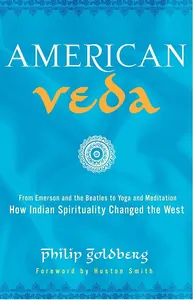
The Lost Lemuria
 83
83

The Lost Lemuria

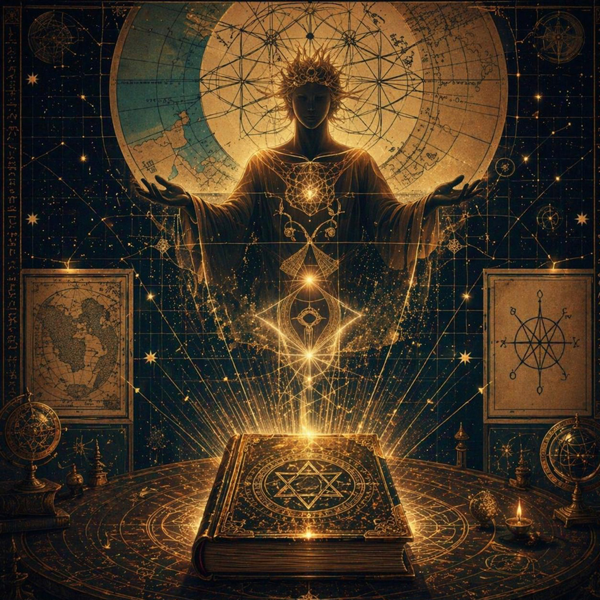

Alaric Kestrel, Metaphysical Studies Reviewer — W. Scott-Elliot's 'The Lost Lemuria' remains a cornerstone of esoteric literature, offering a compelling glimpse into a civilization predating our own. Drawing heavily on Theosophical teachings, the author meticulously reconstructs the physical and spiritual landscape of this lost continent. Its strength lies in its visionary approach, presenting Lemuria not merely as a geographical entity but as a pivotal stage in human spiritual evolution. While some may find the speculative nature challenging, its enduring appeal lies in its ability to spark imagination and contemplation on humanity's deep past. Essential for students of occult history and ancient mysteries.
📝 Description
83
W. Scott-Elliot published 'The Lost Lemuria' in 1896, detailing a lost continent.
W. Scott-Elliot's 1896 book, 'The Lost Lemuria,' describes a mythical sunken continent. He presents Lemuria as an early center of human civilization, drawing heavily on Theosophical teachings. The text outlines the continent's imagined history, from its origins to its eventual disappearance beneath the waves.
Scott-Elliot posits that Lemuria played a significant role in the spiritual and physical evolution of humanity. The book connects this ancient land to cycles of existence and the development of consciousness. It aims to illuminate forgotten aspects of human history and spiritual understanding for those interested in esoteric traditions.
Published in 1896, 'The Lost Lemuria' emerged from the Theosophical movement, which sought to synthesize Eastern and Western esoteric philosophies. Scott-Elliot's work fits within this tradition by presenting a detailed, speculative history of a pre-historic root race and continent. It aligns with Theosophical ideas about vast cosmic cycles, the evolution of consciousness through different stages of humanity, and the existence of hidden spiritual knowledge predating conventional historical accounts.
💡 Why Read This Book?
Uncover the secrets of a lost civilization and its profound impact on human evolution. 'The Lost Lemuria' offers a unique perspective on ancient history, spiritual development, and humanity's cosmic origins. Ideal for seekers of hidden knowledge, students of esoteric traditions, and anyone fascinated by the mysteries of our ancestral past.
⭐ Reader Reviews
Honest opinions from readers who have explored this book.
❓ Frequently Asked Questions
What is Lemuria according to this book?
Lemuria is presented as a vast, ancient continent that once existed in the Pacific Ocean, considered a cradle of early human civilization and a significant stage in humanity's spiritual and physical evolution.
What is the connection between Lemuria and Theosophy?
The book is deeply influenced by Theosophical principles, using them as a framework to interpret ancient myths, geological evidence, and spiritual teachings to reconstruct the history and significance of Lemuria.
Is this book a factual historical account?
While drawing on certain interpretations of ancient texts and geological theories, 'The Lost Lemuria' is primarily an esoteric and speculative work, offering a spiritual and historical reconstruction rather than a strictly empirical one.
Who was W. Scott-Elliot?
W. Scott-Elliot was a prominent figure within the Theosophical Society, known for his extensive research and writings on ancient civilizations, karma, and reincarnation, particularly concerning Lemuria and Atlantis.
What can readers expect to learn from 'The Lost Lemuria'?
Readers can expect to explore theories about humanity's origins, the evolution of consciousness, the cyclical nature of civilizations, and the spiritual lessons embedded in the myth of a lost continent.
🔮 Key Themes & Symbolism
The Myth of Lemuria and Its Origins
This theme explores the profound concept of Lemuria, a legendary continent believed to be a precursor to modern continents and a birthplace of early humanity. Scott-Elliot, drawing from Theosophical teachings and ancient lore, reconstructs the physical and spiritual characteristics of this lost land. It explores the geological and occult theories surrounding its existence, its inhabitants, and its eventual submersion. The narrative positions Lemuria not just as a geographical entity but as a crucial evolutionary stage for both the physical form and the developing consciousness of humankind, offering a unique perspective on our ancestral heritage and the cyclical nature of planetary development.
Spiritual Evolution and Ancient Civilizations
Fundamentally, , 'The Lost Lemuria' is a treatise on spiritual evolution, positing that ancient civilizations like Lemuria played a vital role in humanity's ascent. The book examines the spiritual advancement of Lemurian beings, their societal structures, and their understanding of cosmic laws. It suggests that the knowledge and wisdom accumulated in Lemuria were not lost but were passed down through various esoteric traditions, influencing subsequent cultures. This theme encourages readers to contemplate the continuity of spiritual development across vast epochs and to consider how the lessons from these ancient societies might offer guidance for our own contemporary journey towards higher consciousness.
Theosophical Interpretations of History
W. Scott-Elliot's work is a significant example of Theosophical historiography, blending scientific speculation with mystical insights. This theme focuses on how Theosophy provides a framework for understanding Earth's ancient past, particularly the existence and significance of civilizations like Lemuria and Atlantis. It highlights the concept of root races and the grand cycles of cosmic evolution as interpreted by Helena Blavatsky and her followers. The book demonstrates how Theosophical principles can be applied to reinterpret historical narratives, suggesting a hidden spiritual dimension to the physical world and offering a more profound understanding of humanity's place within the universal order.
💬 Memorable Quotes
Direct passages from the work, attributed to the author.
“Lemuria was a cradle of early civilization.”
— This succinctly captures the essence of Lemuria as a foundational period in human development, both physically and spiritually.
“Evolution is a spiral, not a straight line.”
— This reflects the cyclical view of progress inherent in Theosophical thought, suggesting development involves revisiting themes with increased complexity.
“The past holds the keys to the future.”
— This emphasizes the importance of studying ancient wisdom and lost histories to gain insights that can guide present and future actions.
“Consciousness evolves through many forms.”
— This points to the Theosophical concept of reincarnation and the progressive development of awareness across diverse physical and spiritual states.
💡 Key Ideas
Editorial paraphrase of the work's core concepts — not direct quotes.
The history of the world is the history of humanity.
This quote underscores the belief that understanding the past, particularly ancient civilizations, is key to understanding ourselves and our collective journey.
🌙 Esoteric Significance
Tradition
This work is a seminal text within the Theosophical tradition, a spiritual philosophy that seeks to understand the underlying unity of all religions, the nature of consciousness, and the evolutionary journey of humanity. Scott-Elliot's exploration of Lemuria is deeply rooted in Theosophical cosmology, which posits cycles of civilization and spiritual development across vast epochs. It offers a Theosophical perspective on human origins, reincarnation, and the development of physical and psychic faculties, providing a spiritual narrative to complement or challenge conventional historical and scientific accounts.
Symbolism
Lemuria itself serves as a potent symbol in esoteric thought, representing a primordial state of existence, a lost paradise, and the ancestral home of humanity. The continent's submersion symbolizes the inevitable cycles of destruction and rebirth inherent in cosmic and human evolution. The physical descriptions of Lemuria and its inhabitants often carry symbolic weight, representing stages of consciousness, the interplay of spirit and matter, and the unfolding of divine potential. The book's maps, depicting Lemuria at its greatest and later periods, symbolize the ebb and flow of power, knowledge, and civilization across time.
Modern Relevance
In contemporary times, 'The Lost Lemuria' continues to resonate with seekers interested in alternative histories, ancient wisdom, and the evolution of consciousness. Its themes of human origins, spiritual development, and the cyclical nature of existence remain pertinent in an age grappling with ecological crises and societal change. The book invites contemplation on our connection to the past, the potential for lost knowledge to inform our present, and the enduring human quest for meaning and spiritual understanding. It serves as a touchstone for discussions on forgotten civilizations and their potential lessons for modern humanity.
👥 Who Should Read This Book
This foundational text is essential for seekers of esoteric knowledge, students of ancient history and mythology, and enthusiasts of Theosophical literature. Beginners will find it an accessible, albeit speculative, introduction to concepts of lost continents and spiritual evolution. Scholars of comparative religion and ancient civilizations will appreciate its unique interpretive lens. Practitioners of spiritual disciplines may find inspiration in its vision of humanity's potential and its connection to primordial wisdom. It is a must-read for anyone drawn to the mysteries of our planet's deep past and the grand unfolding of human consciousness.
📜 Historical Context
Published in 1904, 'The Lost Lemuria' emerged during a vibrant period of spiritual and intellectual exploration, deeply influenced by the burgeoning Theosophical movement. Helena Blavatsky's foundational texts had ignited widespread interest in ancient wisdom, lost continents, and the esoteric interpretation of history. This era saw a fascination with pre-history, a questioning of established scientific paradigms, and a search for spiritual roots beyond mainstream religious narratives. Scott-Elliot's work was a product of this milieu, aiming to provide a coherent, albeit speculative, account of a lost epoch that resonated with the Theosophical vision of humanity's grand evolutionary journey. It served as a beacon for those seeking a deeper, more mystical understanding of our planet's past and our place within it.
📔 Journal Prompts
Imagine you are an inhabitant of Lemuria. Describe a typical day, focusing on your spiritual practices and connection to nature.
How does the concept of cyclical evolution, as presented in the book, relate to your personal experiences of growth and transformation?
What parallels can you draw between the perceived challenges of Lemurian society and the challenges facing humanity today?
Reflect on the idea of 'lost knowledge.' What ancient wisdom do you believe is crucial for humanity to rediscover or re-emphasize?
Considering the descriptions of Lemuria, what aspects of this ancient civilization do you find most inspiring or cautionary for our current world?
🗂️ Glossary
Theosophy
A spiritual philosophy seeking to understand the underlying unity of all religions, the nature of consciousness, and the evolutionary journey of humanity, often drawing from ancient wisdom traditions.
Root Races
In Theosophical cosmology, these are the successive stages of humanity's physical and spiritual evolution on Earth, with Lemuria and Atlantis being significant previous root races.
Cyclical Evolution
The concept that evolution and history unfold in grand cycles of birth, growth, decay, and rebirth, affecting both individuals and entire civilizations and planets.
Esoteric
Relating to or accessible only by a relatively small number of people with a specialized knowledge or interest; mystical or secret.
Cosmic Law
Underlying principles or forces that govern the universe, often including karma, reincarnation, and the spiritual order of existence, as understood in esoteric traditions.
This book appears in 4 collections
🔮 Readers Also Liked
Browse all →









From the “Transcendental Meditation” Collection
View all →






More Free Esoteric History & Biography Books
View all →