52,000+ Esoteric Books Free + Modern Compare Prices
Home Collections Stone Circles
📖

Stone Circle Books: Essential Reading for Students

Books on stone circles trace their history from early antiquarian investigations to contemporary archaeological analysis. William Stukeley's "Stonehenge, a Temple Restor'd to the British Druids" (1740) offers a foundational, albeit speculative, view, while Aubrey Burl's "The Stone Circles of Britain, Ireland, and Brittany" (1976) provides a more systematic survey. These texts, alongside works like "Prehistoric Avebury" (1979), delve into the construction, purpose, and cultural context of these ancient monuments. This guide outlines key readings for understanding stone circles, from introductory overviews to in-depth scholarly works.

Top Stone Circles Books

25 Stone Circles books

What are Stone Circles?

Stone circles are prehistoric monuments consisting of a ring of standing stones. Predominantly dating from the Neolithic and Bronze Age, their exact purpose remains debated, with theories ranging from astronomical observatories and religious sites to social gathering places and territorial markers. Evidence suggests construction often involved significant communal effort and sophisticated understanding of landscape and astronomy. Examples exist across Britain, Ireland, and continental Europe, each with unique characteristics and regional variations.

Best Books for Complete Beginners

For those new to stone circles, "A Guide to the Stone Circles of Britain, Ireland and Brittany" by Aubrey Burl (1999) offers an accessible introduction, detailing key sites and their features. "The Mystery of Stone Circles" by Paul Mason (2000) explores common questions and theories surrounding these structures in a clear, engaging manner. "Prehistoric Avebury" by Aubrey Burl (1979) provides a focused look at one of the most significant henge monuments. "Megalith" by Robin F. Heath and Chris Mansell (1992) also presents a broad overview of megalithic structures, including circles.

Intermediate Reading

Moving beyond introductory material, "The Stone Circles of Britain, Ireland, and Brittany" by Aubrey Burl (1976) offers a more detailed scholarly account. "Stonehenge Landscapes" by Exon, Gaffney, and Woodward (2007) examines the broader context of the Stonehenge monument. "From Carnac to Callanish" by Aubrey Burl and Dr Aubrey Burl (1996) compares monument traditions across different regions. "Building the Great Stone Circles of the North" by Colin Richards (2007) focuses on the construction and dating of specific northern sites.

Classical / Advanced Texts

Classical texts like William Stukeley's "Stonehenge, a Temple Restor'd to the British Druids" (1740) provide historical context to early interpretations, though they should be read critically. "Cromlechs, Dolmen und Menhire" by Udo Worschech (1990) offers a more specialized, albeit German-language, survey of megalithic structures. "The Neolithic age in eastern Siberia" by Henry N. Michael (1958) provides comparative data from a different geographical area. For broader prehistoric context, "Irish Origins of Civilization Vol 1" by Michael Tsarion (2008) explores ancient Irish cultures.

Reading Order — Step by Step

Begin with Aubrey Burl's "A Guide to the Stone Circles of Britain, Ireland and Brittany" for an accessible site overview. Follow with Paul Mason's "The Mystery of Stone Circles" to explore common questions. In Month 2, engage with Burl's "The Stone Circles of Britain, Ireland, and Brittany" for a more detailed academic study. Then, explore regional specifics with "Prehistoric Avebury" or "From Carnac to Callanish." For Month 3, delve into Stukeley's "Stonehenge, a Temple Restor'd to the British Druids" for historical interpretation, and consider "Stonehenge Landscapes" for archaeological context.

Frequently Asked Questions

Which stone circle book should I read first?

Start with Aubrey Burl's 'A Guide to the Stone Circles of Britain, Ireland and Brittany' for a clear, site-focused introduction. It covers key monuments and their basic context without requiring prior knowledge.

What was the purpose of stone circles?

The exact purpose is debated. Theories include astronomical calendars, religious or ritual sites, meeting places, or territorial markers. Archaeological evidence suggests multiple functions likely evolved over time and varied by region.

Are there any fictional books about stone circles?

Yes, Anthony Horowitz's 'Raven's Gate' and 'Evil Star' incorporate elements of mystery and ancient sites, offering a fictional exploration of themes related to stone circles and their potential influence.

How are stone circles dated?

Dating primarily relies on archaeological excavation, radiocarbon dating of organic materials found within or near the structures, and comparative analysis of associated artifacts and construction techniques.

Who were the Druids and what is their connection to stone circles?

Druids were ancient Celtic priests. Early antiquarians like William Stukeley linked them to stone circles, proposing they were temples. Modern archaeology generally views this connection as speculative, with circles predating the known Druidic period.

What is the difference between a stone circle and a henge?

A henge is a Neolithic monument defined by a circular bank and ditch, which may or may not contain standing stones. Stone circles are specifically rings of upright stones, and while some are found within henges (like Stonehenge), not all stone circles are part of henges.

Are stone circles found only in Britain and Ireland?

No, while Britain and Ireland have many famous examples, stone circles and similar megalithic structures are found across Europe, including France (Carnac), Scandinavia, and parts of Africa and Asia, reflecting widespread ancient practices.

Why Each Book Matters

The Forbidden History Of Europe

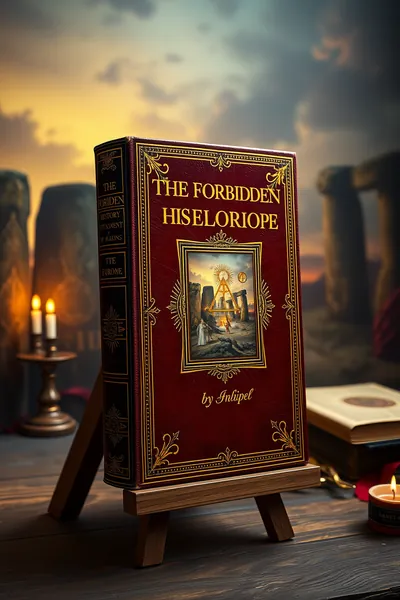
The Forbidden History Of Europe

*The Forbidden History Of Europe* challenges conventional historical narratives, presenting alternative theories that often encompass the origins and purposes of ancient structures like Stone Circles. This book explores suppressed knowledge and archaeological anomalies, suggesting that many megalithic sites possess functions beyond simple observatories or burial grounds, perhaps hinting at lost technologies or advanced ancient civilizations. It questions mainstream interpretations of prehistoric Europe, inviting readers to consider how Stone Circles might fit into a broader, more enigmatic historical tapestry, far removed from standard academic views.

The spiritual science of alchemy

The spiritual science of alchemy

by Adam McLean

Adam McLean's *The Spiritual Science of Alchemy* examines the profound philosophical and practical dimensions of alchemical traditions, which often intertwine with sacred geometry and the creation of ritually charged spaces. While not directly about Stone Circles, the book's exploration of cosmic harmony, elemental forces, and the transformation of matter and spirit provides a metaphorical framework for understanding the potential spiritual functions of these ancient structures. McLean highlights how alchemical principles of order and synthesis might have been mirrored in the precise alignments and circular forms of megalithic monuments, suggesting a shared pursuit of cosmic understanding.

Celtic art in Pagan and Christian times

Celtic art in Pagan and Christian times

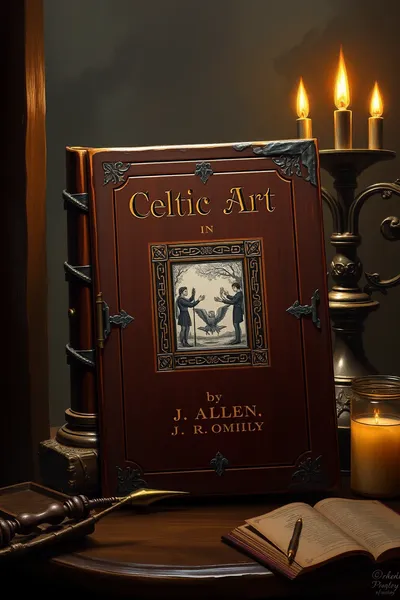
by Allen, J. Romilly (John Romilly)

J. Romilly Allen's *Celtic Art in Pagan and Christian Times* provides a comprehensive study of the artistic expressions of the Celtic peoples, whose descendants often lived near and interacted with ancient Stone Circles. The book meticulously details the intricate patterns, symbolism, and craftsmanship of Celtic art, offering a window into the worldview and spiritual beliefs that may have influenced, or been influenced by, the presence of these megalithic structures. Understanding Celtic aesthetics helps contextualize the cultural landscape in which many European Stone Circles were revered, even if not directly built by Celts.

Raven's Gate

Raven's Gate

by Anthony Horowitz

Anthony Horowitz's *Raven's Gate*, the thrilling debut of the *Alex Rider* series, introduces readers to a sinister estate in Yorkshire, a place whose ancient, isolated nature mirrors the enigmatic aura of Stone Circles. The story involves dark cults and a plot rooted in forgotten power, suggesting that certain geographical locations, much like megalithic sites, hold a potent, perhaps malevolent, energy. The narrative's exploration of ancient prophecies and secret organizations operating from desolate, powerful landscapes offers a fictional lens through which to consider the enduring mysteries and potential dangers attributed to Stone Circles.

Raven's Gate

Raven's Gate

Anthony Horowitz's *Raven's Gate*, the thrilling debut of the *Alex Rider* series, introduces readers to a sinister estate in Yorkshire, a place whose ancient, isolated nature mirrors the enigmatic aura of Stone Circles. The story involves dark cults and a plot rooted in forgotten power, suggesting that certain geographical locations, much like megalithic sites, hold a potent, perhaps malevolent, energy. The narrative's exploration of ancient prophecies and secret organizations operating from desolate, powerful landscapes offers a fictional lens through which to consider the enduring mysteries and potential dangers attributed to Stone Circles.

Evil Star

Evil Star

*Evil Star*, the second installment in Anthony Horowitz's *Alex Rider* series, continues the young spy's adventures, often placing him in locations imbued with ancient or mystical significance, echoing the enduring power of Stone Circles. Following the events of *Raven's Gate*, this book further explores themes of secret societies, hidden histories, and the manipulation of powerful forces, which are often speculated to be linked to megalithic sites. The narrative's high stakes and global scope connect modern espionage with ancient evils, drawing a fictional line to the mysterious, unexplainable energies that Stone Circles are often thought to possess.

Shadows

Shadows

D. R. Swan's *Shadows* likely weaves a narrative steeped in mystery and the supernatural, where ancient places or hidden histories play a pivotal role, much like the enduring enigma of Stone Circles. While specifics are elusive, such stories often tap into the primal fear and wonder associated with forgotten sites, suggesting they harbor secrets or unseen forces. The book's title itself evokes the idea of lingering presences or obscured truths, mirroring the speculative theories surrounding Stone Circles as portals, energy conduits, or sites of ancient, powerful rituals.

Ley Lines

Ley Lines

Danny Sullivan's *Ley Lines* provides an exploration into the fascinating, albeit controversial, theory of ley lines—straight alignments of ancient sites, including numerous Stone Circles, pagan monuments, and natural features. The book likely examines the historical origins of the ley line concept, popularized by Alfred Watkins, and delves into the various interpretations of their purpose, from ancient trackways to conduits of telluric energy. Sullivan's work offers a comprehensive overview of how these invisible lines are believed to connect and empower Stone Circles across the landscape, suggesting a sophisticated, forgotten understanding of geomancy.

Astrology and Cosmology in Early China

Astrology and Cosmology in Early China

by David W. Pankenier

David W. Pankenier's *Astrology and Cosmology in Early China* delves into the intricate relationship between celestial observations and cultural development in ancient China. Although it focuses on a different geographical region, the book offers crucial insights into how ancient civilizations worldwide integrated astronomical knowledge into their societal structures and sacred architecture. This comparative study illuminates the universal human impulse to map the cosmos, providing a framework for understanding the potential astronomical alignments and cosmological significance embedded within Stone Circles across Europe, suggesting a shared, deep-seated reverence for the heavens.

The Neolithic age in eastern Siberia

The Neolithic age in eastern Siberia

by Henry N. Michael

Henry N. Michael's *The Neolithic Age in Eastern Siberia* offers an academic exploration of prehistoric cultures in a region far from the classic European Stone Circles. While not focusing on circular megaliths, the book provides invaluable comparative context by detailing the tools, settlements, and cultural practices of Neolithic societies, which were the architects of many Stone Circles globally. It sheds light on the broader human ingenuity and cultural developments during the period when such monumental constructions were being erected, allowing for a deeper understanding of the technological and social capabilities of Stone Age peoples.

In Chatter Wood

In Chatter Wood

*In Chatter Wood* by Jac Jones likely presents a whimsical or fantastical narrative, possibly set in a magical woodland where ancient, mysterious elements, reminiscent of Stone Circles, might play a role. Children's literature often imbues natural or ancient settings with wonder and hidden secrets, teaching about the magic of the natural world. While not directly about Stone Circles, such stories capture the imagination about places that feel old and powerful, instilling a sense of awe similar to the feelings evoked by real megalithic monuments.

Circles of Stone

Circles of Stone

Kathryn Soar's *Circles of Stone* offers an accessible and comprehensive introduction to the vast topic of Stone Circles, exploring their global distribution, diverse forms, and the various theories surrounding their purpose. The book likely covers archaeological discoveries, astronomical alignments, and the cultural significance of these enigmatic monuments, from the iconic Stonehenge to lesser-known sites. Soar provides readers with a foundational understanding of who built these structures, when, and why, inviting further exploration into their enduring mysteries and the ingenuity of ancient peoples.

Irish Origins of Civilization Vol 1

Irish Origins of Civilization Vol 1

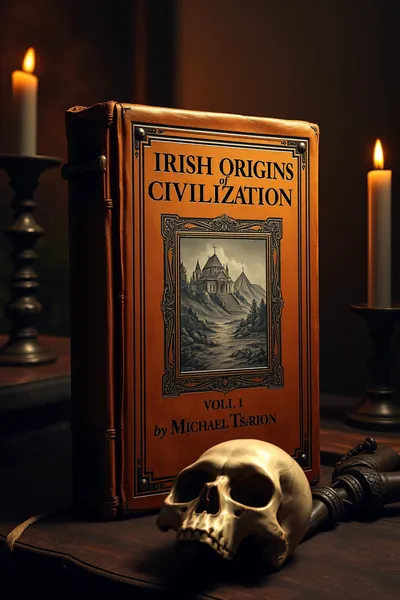
by Michael Tsarion

In *Irish Origins of Civilization Vol 1*, Michael Tsarion meticulously argues for Ireland's central role in the development of early civilization, extensively discussing its ancient megalithic sites, including numerous Stone Circles. Tsarion challenges conventional timelines and interpretations, proposing that these structures are evidence of a sophisticated, forgotten culture with advanced astronomical and esoteric knowledge. He connects Irish Stone Circles to global ancient mysteries and a revised understanding of human origins, presenting a provocative thesis that positions these monuments as crucial keys to unlocking humanity's true, hidden past.

Fellstones

Fellstones

Ramsey Campbell's *Fellstones* is a work of horror fiction that undoubtedly draws upon the eerie, primordial power often associated with ancient Stone Circles. The title itself suggests a connection to standing stones or megalithic sites, which in horror narratives frequently serve as settings for malevolent forces, forgotten rituals, or gateways to unspeakable horrors. Campbell, known for his subtle yet deeply unsettling prose, likely uses the ancient, silent presence of these stones to evoke a profound sense of dread and mystery, tapping into the collective unconscious fears surrounding places that predate recorded history.

Stone Circles

Stone Circles

Robert L. Roy's *Stone Circles* is a practical guide that likely explores the construction and design principles behind creating modern Stone Circles, or perhaps offers an accessible overview of ancient ones. The book may delve into the engineering challenges, the selection of stones, and the potential spiritual or aesthetic motivations for building such structures, drawing inspiration from historical examples. It offers a unique perspective by demystifying the physical act of creating a Stone Circle, providing insights into the ingenuity and dedication required, whether for ancient ritual or contemporary art.

Megalith

Megalith

*Megalith* by Robin F. Heath and Chris Mansell serves as an accessible introduction to the world of megalithic structures, including the iconic Stone Circles. The book likely explores the architectural principles, astronomical alignments, and cultural significance of these massive stone constructions, providing a foundational understanding for those new to the topic. It aims to demystify some aspects while celebrating the enduring mystery and ingenuity of the ancient peoples who engineered these monumental achievements across various landscapes.

Sacred Journey

Sacred Journey

Sally Griffyn's *Sacred Journey* likely guides readers through various spiritual sites and practices, often including ancient megalithic locations like Stone Circles. The book explores the concept of pilgrimage and the transformative power of sacred spaces, encouraging readers to connect with the earth's energies and historical echoes found in these revered places. It emphasizes the personal experience of visiting Stone Circles, understanding them not just as archaeological remains but as living sites that can inspire introspection and spiritual awakening, offering a contemporary perspective on their enduring allure.

Stone Certainty

Stone Certainty

Simon R Green's *Stone Certainty* likely plunges readers into a thrilling fantasy or urban fantasy world where ancient artifacts or powerful, stone-based magic are central, drawing a thematic link to Stone Circles. In such narratives, megalithic structures often serve as focal points for magical energy, forgotten spells, or gateways to other realms. The title itself suggests an inherent power or unwavering truth embedded within stone, mirroring the enduring mystery and perceived magical properties of Stone Circles as sites of ancient power and unyielding secrets.

Stonehenge, a Temple Restor'd to the British Druids

Stonehenge, a Temple Restor'd to the British Druids

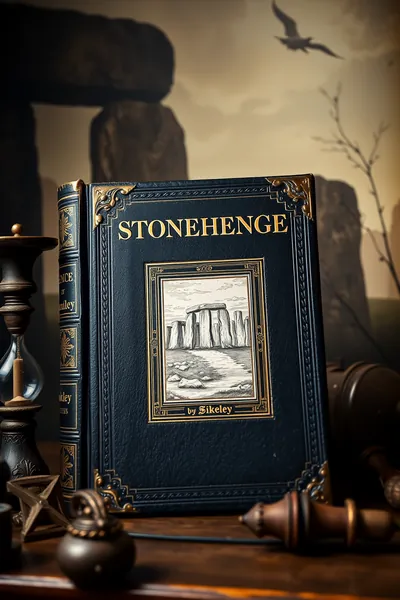
by Stukeley, William

William Stukeley's groundbreaking work, *Stonehenge, a Temple Restor'd to the British Druids*, is a seminal text in the study of British megaliths. Published in 1740, it presents one of the earliest systematic archaeological surveys of Stonehenge, complete with detailed engravings and measurements. Stukeley famously, though controversially, attributed the construction and use of Stonehenge to the ancient Druids, a theory that profoundly influenced subsequent interpretations of Stone Circles. His meticulous documentation, despite its later discredited Druidic associations, remains a vital historical record of the monument in the 18th century.

Inner Alchemy

Inner Alchemy

by Taylor Ellwood

Taylor Ellwood's *Inner Alchemy* explores personal transformation through magical and alchemical practices, drawing parallels to the profound energetic shifts that ancient Stone Circles were believed to facilitate. The book delves into techniques for spiritual growth and self-mastery, emphasizing the creation of sacred space and the manipulation of subtle energies, concepts that resonate deeply with the hypothesized functions of megalithic structures as ritualistic or astronomical centers. It offers a modern perspective on how ancient principles of sacred geometry and energetic alignment, perhaps embodied in Stone Circles, can be applied to individual spiritual development.

Needles of stone

Needles of stone

by Tom Graves

In *Needles of Stone*, Tom Graves investigates the subtle energies of the landscape and the role of ancient monuments, including Stone Circles, as focal points or conduits for these forces. The book specifically explores the concept of "needles of stone" as markers or activators within a broader energetic network, akin to acupuncture points on the Earth. Graves posits that these structures were deliberately placed to interact with ley lines and telluric currents, suggesting a sophisticated ancient understanding of geophysics and spiritual geography. His work provides a compelling, esoteric perspective on the true purpose and power of megalithic sites.

縄文とケルト

縄文とケルト

松木武彦's *縄文とケルト* (Jomon and Celt) offers a fascinating comparative study between Japan's ancient Jomon culture and the Celtic world, both of which developed distinct yet profound relationships with their natural environments and monumental structures. While Jomon culture is not known for classic European-style Stone Circles, the book explores their spiritual practices, artistic expressions, and the construction of ceremonial sites, providing a unique perspective on how different ancient societies interpreted and shaped their sacred landscapes. This cross-cultural examination enriches our understanding of the universal human impulse behind creating enduring markers in the land.

Esoteric Library
Browse Esoteric Library
📚 All 52,000+ Books 🜍 Alchemy & Hermeticism 🔮 Magic & Ritual 🌙 Witchcraft & Paganism Astrology & Cosmology 🃏 Divination & Tarot 📜 Occult Philosophy ✡️ Kabbalah & Jewish Mysticism 🕉️ Mysticism & Contemplation 🕊️ Theosophy & Anthroposophy 🏛️ Freemasonry & Secret Societies 👻 Spiritualism & Afterlife 📖 Sacred Texts & Gnosticism 👁️ Supernatural & Occult Fiction 🧘 Spiritual Development 📚 Esoteric History & Biography
Esoteric Library
📑 Collections 📤 Upload Your Book
Account
🔑 Sign In Create Account
Info
About Esoteric Library