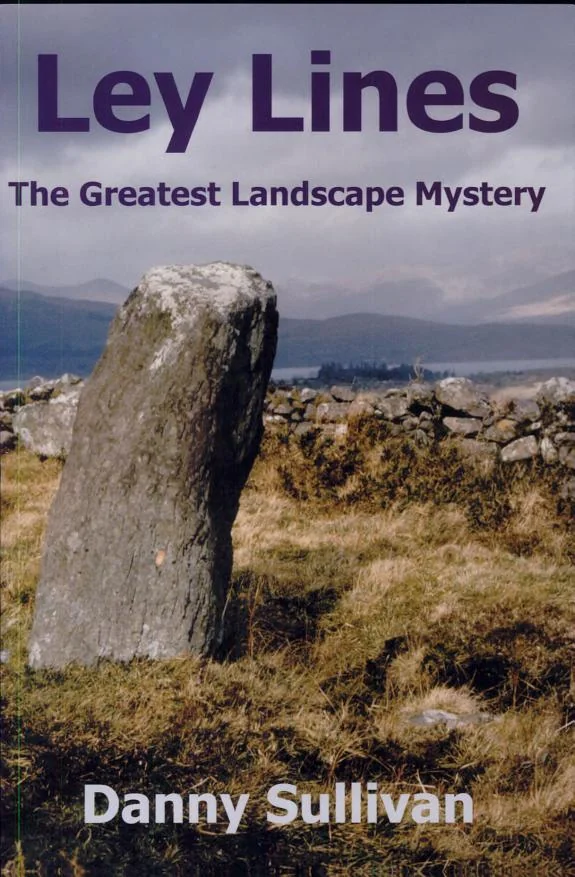
Ley Lines
 80
80

Ley Lines
Danny Sullivan's "Ley Lines" offers a thorough examination of a topic that straddles the line between folklore and serious earth science. The book's strength lies in its meticulous cataloging of alignments, particularly within the British Isles, building upon the foundational work of Alfred Watkins. Sullivan presents a compelling case for the deliberate construction of these energetic pathways, drawing connections between disparate ancient sites. However, the narrative occasionally gets bogged down in the sheer volume of data, making it less accessible for the casual reader. The section detailing the proposed energy flows between sites like Avebury and Stonehenge, while informative, could benefit from clearer visualization. Despite this, the work remains a vital resource for anyone seeking a deep dive into the historical and geographical evidence for ley lines, particularly its initial articulation in the early 20th century.
📝 Description
80
Danny Sullivan's 'Ley Lines' examines the theory of invisible energy pathways connecting ancient sites.
This book investigates the concept of ley lines, invisible terrestrial energy pathways that link significant historical and sacred locations globally. The author traces the theory's popularization to Alfred Watkins in the 1920s, detailing how ancient cultures may have intentionally arranged structures like stone circles and megaliths along these energetic grids. This suggests a sophisticated, pre-modern grasp of geomancy and earth energies. The text considers the historical context of this study, which gained attention alongside a revived interest in British history and folklore during the early 20th century. It differentiates these alignments from simple coincidence, discussing various theories about their origin and purpose, including ancient navigation, ritual paths, and conduits for earth energy. The book also touches on the symbolic weight of connected sites, such as henges, hill forts, and churches, and their reflection of a worldview integrated with the natural world.
'Ley Lines' is suited for students of geomancy, archaeoastronomy, and earth mysteries. It will appeal to individuals interested in the historical and geographical roots of sacred landscapes, particularly in the British Isles. Those seeking to understand the genesis of ley line theory, the contributions of Alfred Watkins, and ongoing research into these phenomena will find this work informative. The book delves into the nature of these alignments, exploring different hypotheses concerning their creation and function, whether for ancient travel, ceremonial use, or as channels for telluric currents.
The study of ley lines falls within the broader esoteric tradition concerned with earth energies and sacred geography. It echoes earlier ideas about geomancy and the energetic properties of land, often associated with dowsing or telluric currents. This field connects archaeological findings with a belief in the intentional manipulation of terrestrial forces by ancient peoples, seeking hidden patterns in the placement of megaliths, henges, and other sacred structures. The concept suggests a continuity of ancient wisdom regarding the Earth's energetic field, a theme present in various earth-based spiritualities and occult philosophies.
💡 Why Read This Book?
• Understand the foundational theories of ley lines as proposed by Alfred Watkins in the 1920s, moving beyond vague speculation to concrete site analysis. • Learn about specific ancient sites in the British Isles, such as stone circles and hill forts, and how their proposed connections reveal ancient landscape planning. • Grasp the concept of terrestrial energy grids and how they might have influenced prehistoric and early medieval construction and ritual practices.
⭐ Reader Reviews
Honest opinions from readers who have explored this book.
❓ Frequently Asked Questions
Who first coined the term 'Ley Lines' and when?
The term 'Ley Lines' was coined by Alfred Watkins, an amateur antiquarian and photographer. He first published his findings and the term in his book 'The Old Straight Track' in 1925.
What kind of sites are typically connected by Ley Lines?
Ley lines are theorized to connect various ancient and sacred sites, including stone circles, megaliths, hill forts, ancient churches, barrows, and natural landmarks, suggesting a deliberate pattern across the landscape.
Is there scientific evidence for Ley Lines?
While the existence of ley lines as energetic pathways is not accepted by mainstream science, the book explores the statistical likelihood of alignments and the historical significance of the connected sites, proposing a pattern that warrants investigation.
Does the book focus only on the British Isles?
The book primarily focuses on the British Isles, where the concept of ley lines gained prominence through Alfred Watkins' research. However, it may touch upon similar phenomena observed in other parts of the world.
What makes this edition of 'Ley Lines' by Danny Sullivan significant?
This revised and updated edition by Danny Sullivan is considered a classic, comprehensive guide that builds upon and expands the original research, offering a thorough exploration of the subject for contemporary readers.
What is the 'Old Straight Track' theory?
The 'Old Straight Track' theory, proposed by Alfred Watkins, posits that ancient peoples deliberately laid out straight lines across the landscape connecting prominent features, which are now identified as ley lines.
🔮 Key Themes & Symbolism
Geomantic Alignments
This theme centers on the concept that ancient civilizations possessed a profound understanding of terrestrial energies, which they utilized to align significant sites. The book details how natural and man-made features were deliberately placed to form interconnected grids. It examines the potential purpose of these alignments, ranging from ritualistic pathways and astronomical observation points to conduits for vital earth energies, suggesting a sophisticated geomantic system underpinning landscape design in antiquity.
Alfred Watkins' Legacy
A core focus is the pioneering work of Alfred Watkins, who in the 1920s, through diligent fieldwork and photography, identified patterns of straight lines connecting ancient monuments in the British landscape. His concept of the 'Old Straight Track' revolutionized the study of these phenomena, proposing that these alignments were not accidental but intentional, serving practical or spiritual purposes for our ancestors. The book critically evaluates his findings and their subsequent development.
Sacred Geography
The book explores the idea of sacred geography, where the landscape itself is imbued with spiritual significance and patterned by human intention. It investigates how sites like stone circles, henges, and ancient churches were not isolated monuments but nodes within a larger energetic network. This perspective suggests a holistic worldview where the physical environment, spiritual beliefs, and human activity were inextricably linked, with ley lines acting as the invisible threads binding them together.
Earth Energies
Central to the ley line concept is the belief in subtle earth energies. The book examines theories about what these energies might be and how they were perceived and harnessed by ancient peoples. It discusses the possibility that ley lines act as channels for these energies, influencing the health, fertility, or spiritual state of the surrounding land and its inhabitants. This exploration connects ancient beliefs with modern concepts of geomancy and dowsing.
💬 Memorable Quotes
Direct passages from the work, attributed to the author.
“Sacred sites are linked together by mysterious alignments on the landscape.”
— This statement expresses the core premise of ley line theory: that ancient peoples deliberately connected places of power or significance through invisible lines, forming a network across the earth's surface.
“First discovered in ancient times by the legendary Alfred Watkins, who first coined the term.”
— This highlights Alfred Watkins' central role in identifying and naming the phenomenon of ley lines, establishing him as the primary figure in the modern study of these landscape connections.
“They have been rigorously studied over the last fifty years.”
— This indicates a sustained academic and amateur interest in ley lines since their popularization, suggesting ongoing research, debate, and exploration into their nature and origins.
“This revised and updated edition of the book by Danny Sullivan is the classic, comprehensive guide to the subject.”
— This positions Danny Sullivan's work as a definitive resource, acknowledging its thoroughness and its importance within the field of ley line studies for current readers.
“In the British Isles these links have come to be known as Ley Lines.”
— This specifies the primary geographical focus where the concept of ley lines gained its most significant traction and recognition, linking the phenomenon directly to the ancient landscapes of Britain.
🌙 Esoteric Significance
Tradition
Ley line studies are deeply rooted in the Western esoteric tradition, particularly geomancy and earth mysteries, drawing parallels with ancient practices of dowsing and sacred landscape mapping. While not strictly Hermetic or Kabbalistic, it shares with these traditions a belief in underlying energetic patterns and correspondences between the terrestrial and celestial realms. The work engages with a lineage of thinkers who sought hidden order in the natural world, predating modern science and aligning with an animistic or panpsychist view of the Earth.
Symbolism
The primary symbols explored are the 'ley lines' themselves, representing invisible pathways of terrestrial energy. Connected sites like stone circles (e.g., Stonehenge, Avebury) and henges symbolize ancient cosmologies, ritual centers, and astronomical observatories. Hill forts represent defensive or sacred high places. The book also implicitly explores the symbolism of 'straightness' and 'alignment' as representing intention, order, and connection within a perceived sacred landscape, contrasting with chaotic or mundane space.
Modern Relevance
Contemporary practitioners of geomancy, dowsing, and sacred geometry continue to draw upon the foundational concepts of ley lines. Thinkers and groups focused on environmental spirituality, earth healing, and re-enchantment of the landscape often reference ley line networks. The idea also finds echoes in modern paganism and earth-based spiritualities, which seek to reconnect with the land's perceived energies and ancient sacred sites, influencing contemporary approaches to landscape archaeology and spiritual geography.
👥 Who Should Read This Book
• Amateur archaeologists and historians interested in alternative interpretations of ancient British sites, seeking to understand the historical development of ley line theory. • Geomancers and dowsers looking to explore the historical underpinnings of terrestrial energy mapping and its connection to ancient landscape planning. • Students of Western esotericism and earth mysteries interested in how ancient cultures perceived and interacted with their environment through energetic networks.
📜 Historical Context
Danny Sullivan's 'Ley Lines' emerges from a fertile period of esoteric and archaeological interest in Britain's ancient past. The book's first publication in 2004 builds upon decades of research initiated by Alfred Watkins in the 1920s, particularly his 'The Old Straight Track'. This work gained traction amidst a broader fascination with British megalithic sites and folklore, influenced by figures like Eleanor Hull and the emerging field of archaeoastronomy. While mainstream archaeology often viewed ley line theories with skepticism, often attributing alignments to coincidence or post-hoc rationalization, the concept found resonance within counter-cultural and earth-mysteries circles. Contemporary authors like John Michell, who explored sacred geometry and earth energies, also contributed to the intellectual climate in which ley line studies thrived, offering alternative interpretations of ancient sites beyond purely functional explanations.
📔 Journal Prompts
Reflect on the deliberate alignment of sites like Avebury and Stonehenge.
Consider the potential purpose of terrestrial energy pathways in ancient societies.
Analyze the concept of 'sacred geography' presented in the book.
Explore the historical context of Alfred Watkins' 'Old Straight Track' theory.
Map potential connections between local historical landmarks based on geomantic principles.
🗂️ Glossary
Ley Lines
Invisible pathways of terrestrial energy that are theorized to connect significant ancient and sacred sites across the landscape, first popularized by Alfred Watkins.
Geomancy
A practice of divination or a system of magic that involves interpreting patterns of lines or dots in the earth or sand, or understanding the energies of a landscape.
Alfred Watkins
An early 20th-century antiquarian who coined the term 'Ley Lines' and proposed the 'Old Straight Track' theory, identifying alignments of ancient sites.
Sacred Sites
Locations considered holy or possessing spiritual significance, often including stone circles, megaliths, ancient temples, churches, and natural landmarks.
Terrestrial Energy
Hypothesized subtle energies emanating from or flowing through the Earth, often associated with geological features and believed to have influenced ancient construction and ritual.
Alignment
The arrangement of sites or features in a straight line, often believed by ley line proponents to be intentional and indicative of a planned network.
Old Straight Track
The theory proposed by Alfred Watkins that ancient peoples created deliberate straight-line routes connecting prominent landscape features, which form the basis of what are now called ley lines.
This book appears in 1 collection
🔮 Readers Also Liked
Browse all →









From the “Stone Circles” Collection
View all →






More Free Occult Philosophy Books
View all →