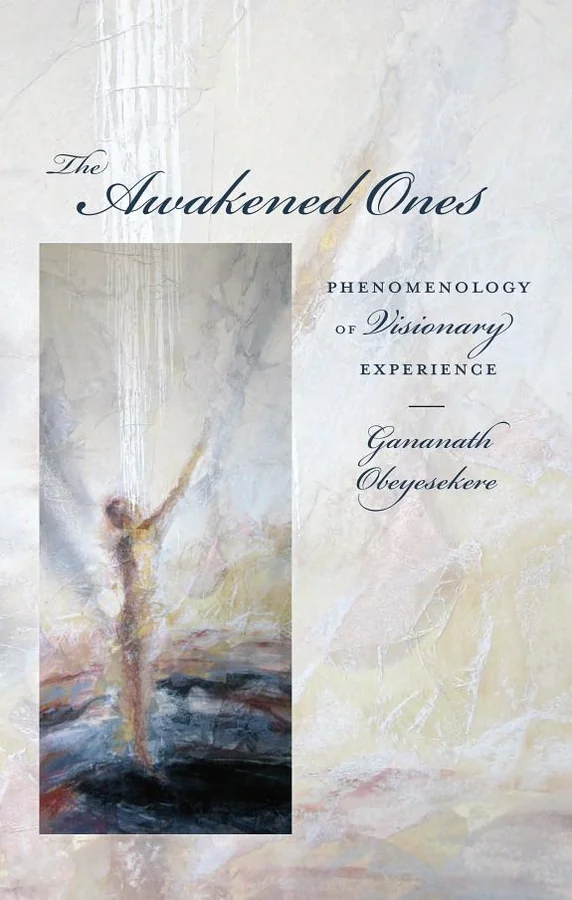
The Awakened Ones
 73
73

The Awakened Ones
Gananath Obeyesekere's "The Awakened Ones" offers a compelling, if densely academic, exploration of visionary states. Obeyesekere masterfully combines anthropological observation with psychoanalytic interpretation, presenting a robust argument for the cognitive and epistemic value of dreams and visions. His comparative analysis, spanning Buddhist and European traditions, is particularly strong, revealing intriguing commonalities in symbolic expression. A notable strength is the book's refusal to dismiss these experiences as mere pathology, instead treating them as vital pathways to understanding. However, the prose can be quite dense, occasionally obscuring the very intuitive impulses the book seeks to reawaken. The discussion of specific Buddhist meditative practices, while informative, could benefit from clearer linkages to the psychoanalytic framework for readers less familiar with both disciplines. The work's commitment to rigorous scholarship is undeniable, making it a significant contribution to the study of consciousness and culture. It challenges conventional notions of knowledge, proposing a more integrated understanding of the human mind.
📝 Description
73
Gananath Obeyesekere's 2012 book examines visionary experience through psychoanalysis and anthropology.
First published in 2012, this work analyzes visionary experiences by drawing on psychoanalysis and anthropology. Obeyesekere investigates how nonrational states, such as dreams and visions, can generate significant knowledge that ordinary rational consciousness might overlook. He examines these phenomena within both Buddhist and European traditions, aiming to grasp their symbolic meaning and their ability to restore intuitive and creative capacities.
This book is written for academics in comparative religion, anthropology, and psychology. It will also interest individuals curious about consciousness and altered states. Those who accept that knowledge can come from sources beyond empirical evidence and logical deduction, and who are open to the psyche's symbolic language, will find it valuable. Readers interested in how visionary experiences manifest across different cultures will discover much here.
This study emerges from a mid to late 20th-century academic current that merged anthropological fieldwork with psychoanalytic theory. While figures like Clifford Geertz and Erik Erikson focused on different cultural and psychological areas, they worked in similar interdisciplinary fields. Obeyesekere's specific attention to visionary experience, linking it to Buddhist cosmology and European mysticism, engages ongoing scholarly discussions about universal psychological structures versus culturally distinct interpretations of the sacred and the self.
💡 Why Read This Book?
• Gain an anthropological perspective on visionary states, understanding how experiences described in Buddhist traditions might inform interpretations of European mystical visions, as explored in Obeyesekere's comparative analysis. • Discover how psychoanalytic frameworks can illuminate the symbolic language of dreams and visions, offering tools to interpret these experiences beyond mere rational comprehension, a central tenet of the book's argument. • Re-evaluate the role of nonrational consciousness in knowledge acquisition, learning to recognize the potential for insight within intuitive and creative impulses, as encouraged by Obeyesekere's exploration of cross-cultural phenomena.
⭐ Reader Reviews
Honest opinions from readers who have explored this book.
❓ Frequently Asked Questions
What is the primary argument of Gananath Obeyesekere's 'The Awakened Ones'?
The book argues that visionary experiences, including dreams and visions from Buddhist and European traditions, hold significant knowledge often overlooked by rational consciousness, advocating for their psychoanalytic and anthropological interpretation.
When was 'The Awakened Ones' first published?
'The Awakened Ones' was first published in 2012.
What academic disciplines does Obeyesekere draw upon in this book?
Obeyesekere integrates psychoanalysis and anthropology to analyze visionary experiences, examining their cultural and psychological dimensions.
Does the book focus on a single religious tradition?
No, the book spans both Buddhist and European forms of visionary experience, comparing and contrasting them.
What is the book's stance on rational versus nonrational knowledge?
It posits that while rational consciousness grasps many truths, a richer knowledge is possible through confronting the symbolic depths of visions and dreams, reawakening intuitive impulses.
Who is the author of 'The Awakened Ones'?
The author is Gananath Obeyesekere.
🔮 Key Themes & Symbolism
Psychoanalytic Interpretation of Visions
Obeyesekere applies psychoanalytic concepts to understand the symbolic content of visionary experiences. He treats dreams and visions not as random occurrences but as meaningful expressions of the psyche, akin to how Freud analyzed dreams. This approach allows for the uncovering of latent meanings and the psychological underpinnings of these altered states, bridging the gap between internal psychic life and external cultural expressions of the sacred or the visionary.
Comparative Religious Symbolism
The book undertakes a comparative study of visionary phenomena within Buddhist and European contexts. It seeks to identify universal patterns in symbolic language and experiential structures across diverse cultures. By juxtaposing these traditions, Obeyesekere highlights how different societies interpret and articulate similar profound inner experiences, revealing shared human psychological landscapes beneath cultural specificities.
Epistemology of Nonrational States
A central theme is the epistemological value of nonrational states like dreams and visions. Obeyesekere challenges the Western philosophical preference for rational knowledge, arguing that intuitive and symbolic understanding derived from these states can yield profound truths. The work posits that embracing these nonrational pathways can lead to a more complete and integrated form of knowledge, fostering creativity and deeper self-awareness.
Anthropology of Consciousness
This work contributes to the anthropology of consciousness by exploring how cultural frameworks shape the experience and interpretation of altered states. Obeyesekere examines how societal beliefs and practices influence the manifestation and understanding of visions. The study underscores the importance of cultural context in deciphering the meaning and significance attributed to these profound psychological events.
💬 Memorable Quotes
Direct passages from the work, attributed to the author.
“A bold confrontation with the stuff of visions and dreams.”
— This phrase captures the book's central thesis: that true understanding requires engaging directly with subjective, nonrational experiences, rather than dismissing them.
“Reawakening the intuitive, creative impulses that power greater understanding.”
— This highlights the book's optimistic view of visionary states, suggesting they are not just sources of information but catalysts for developing deeper cognitive and creative abilities.
“Spanning both Buddhist and European forms of visionary experience.”
— This points to the book's methodological breadth, indicating a cross-cultural and comparative approach to understanding phenomena often siloed within specific traditions.
“The symbolic, nonrational depths of such phenomena.”
— This emphasizes the interpretive framework used, focusing on the symbolic language and non-logical nature of visions and dreams as keys to unlocking their meaning.
“While a rational consciousness grasps many truths...”
— This opening suggests a critique of purely rational approaches to knowledge, setting the stage for the book's argument that other modes of consciousness offer equally valid, if not richer, forms of insight.
🌙 Esoteric Significance
Tradition
While not strictly aligning with a single esoteric lineage like Hermeticism or Kabbalah, Obeyesekere's work engages with traditions that have esoteric dimensions, particularly certain interpretations within Buddhism and European mysticism. It bridges academic anthropology and psychoanalysis with themes central to esoteric thought: the exploration of consciousness, altered states, and symbolic interpretation beyond literal meaning. It positions these phenomena as valid pathways to knowledge, a stance often found within esoteric traditions that value inner experience and intuition.
Symbolism
The book explores the symbolic language inherent in visions and dreams. While specific symbols are analyzed within their cultural contexts (Buddhist mandalas, European archetypes), the overarching symbolism relates to the psyche's attempt to communicate profound truths. The 'awakened' state itself functions as a symbol of heightened awareness and integrated knowledge, contrasting with the 'sleeping' or purely rational consciousness, suggesting a journey from ordinary perception to extraordinary insight.
Modern Relevance
Obeyesekere's work remains relevant for contemporary thinkers in consciousness studies, transpersonal psychology, and comparative mysticism. It provides a scholarly framework for understanding practices like lucid dreaming, shamanic journeying, and contemplative practices that involve altered states. Its emphasis on the validity of subjective experience speaks to modern interest in mindfulness, psychedelic-assisted therapy, and the integration of intuitive knowing into scientific and personal development paradigms.
👥 Who Should Read This Book
• Anthropologists and religious studies scholars: To understand a sophisticated psychoanalytic and cross-cultural approach to visionary phenomena and their meaning-making. • Students of comparative religion: To explore the parallels and divergences in how Buddhist and European traditions conceptualize and experience altered states of consciousness. • Psychologists and psychoanalytic practitioners: To gain insights into interpreting symbolic content from dreams and visions within a broader cultural and anthropological context.
📜 Historical Context
Gananath Obeyesekere's "The Awakened Ones" (2012) emerged in an academic landscape still grappling with the legacy of post-structuralism and the ongoing dialogue between anthropology and psychology. The mid-to-late 20th century saw prominent anthropologists like Clifford Geertz exploring cultural systems of meaning, while psychoanalytic thought continued to influence interpretations of the human psyche. Obeyesekere's work builds upon this interdisciplinary foundation, particularly the psychoanalytic anthropology of figures like George Devereux. While the initial publication date is 2012, Obeyesekere's career and the intellectual currents he engaged with stretch back decades, positioning the book as a culmination of long-standing research interests. It entered a field where scholars like Tanya Luhrmann were also examining the anthropology of religion and altered states, offering a counterpoint to purely neuroscientific or purely sociological explanations by emphasizing the symbolic and interpretive dimensions of visionary experience.
📔 Journal Prompts
The symbolic language of visions: How do the interpretations offered in the Buddhist and European examples compare to your own dream symbolism?
Confronting the nonrational: Reflect on a personal experience where intuition offered knowledge beyond logical deduction.
Psychoanalytic interpretation: Apply the concept of uncovering latent meanings to a recurring dream or a powerful vision.
Reawakening impulse: How can intentionally engaging with creative or intuitive states enhance your understanding of complex issues?
Rational vs. intuitive knowledge: Consider a situation where purely rational analysis felt insufficient; what other modes of knowing were present?
🗂️ Glossary
Visionary Experience
Subjective experiences involving perceptions or insights that transcend ordinary waking consciousness, often including vivid imagery, symbolic encounters, or profound emotional states.
Rational Consciousness
The state of awareness characterized by logical thought, empirical reasoning, and objective analysis, as opposed to intuitive, emotional, or symbolic modes of knowing.
Psychoanalysis
A set of psychological theories and therapeutic techniques originating with Sigmund Freud, focusing on the unconscious mind, repressed memories, and the interpretation of dreams and symbolic behavior.
Anthropology
The scientific study of humanity, concerned with human behavior, human biology, cultures, societies, and linguistics, in both the present and past, including past human species.
Symbolic Depth
The layers of meaning embedded within phenomena, particularly dreams, visions, or cultural expressions, that require interpretation to understand their underlying psychological or cultural significance.
Intuitive Impulses
Inner promptings or feelings that arise spontaneously without conscious reasoning, often perceived as a form of direct knowing or insight.
Epistemology
The branch of philosophy concerned with the theory of knowledge, investigating its nature, scope, and justification; how we know what we know.
This book appears in 1 collection
🔮 Readers Also Liked
Browse all →









From the “Visions” Collection
View all →





More Free Sacred Texts & Gnosticism Books
View all →