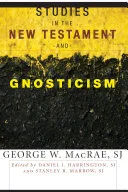
Studies in the New Testament and Gnosticism
 81
81

Studies in the New Testament and Gnosticism
George W. MacRae's *Studies in the New Testament and Gnosticism* is a formidable collection, offering a deep dive into the textual and theological currents that shaped early Christianity. MacRae’s command of the primary sources, particularly evident in his discussions of the Gospel of John, is undeniable. His analysis of the interplay between nascent Christianity and various Gnostic schools reveals a nuanced understanding of these complex movements. A particular strength lies in his meticulous dissection of scriptural interpretation, challenging simplistic categorizations. However, the collection's academic density may prove a barrier for casual readers; the prose, while precise, rarely deviates from a strictly scholarly tone. The section examining the Sethian Gnostic cosmology, for instance, is exceptionally detailed but demands significant prior knowledge. MacRae's work is an essential, albeit challenging, resource for those committed to rigorous historical scholarship on the period.
📝 Description
81
George W. MacRae's 1973 collection examines the New Testament's connections to Gnosticism.
This volume gathers scholarly essays by George W. MacRae, a noted academic with degrees from Cambridge and teaching positions at Weston School of Theology and Harvard University. The studies focus on the New Testament and its interactions with early Gnostic movements. MacRae's work is not for devotional reading; it is an academic analysis of historical and theological questions arising from these texts. The essays reflect a rigorous approach to understanding early Christian writings and the complex religious environment of the Roman Empire.
Academics, graduate students, and serious researchers in New Testament studies, early Christianity, and Gnosticism will find this book valuable. Readers interested in the historical Jesus, the evolution of Christian doctrine, or the variety of religious thought in the ancient world will appreciate MacRae's detailed scholarship. It is also recommended for those studying comparative religion or seeking historical context for later esoteric traditions that use early Christian imagery.
Published in 1973, MacRae's scholarship engaged with the growing academic interest in Gnosticism, fueled in part by the 1945 discovery of the Nag Hammadi library. This period saw scholars like Elaine Pagels and Hans Jonas actively investigating Gnostic cosmology and its links to emerging Christian orthodoxy. MacRae's work contributed to a critical re-evaluation of early Christian texts and doctrines through historical methods, situating Gnosticism as a significant, albeit heterodox, element within the broader religious landscape of the first centuries CE.
💡 Why Read This Book?
• Gain a scholar's perspective on the Gospel of John, understanding its unique theological contributions as detailed in MacRae's extensive research. • Explore the intricate relationship between early Christianity and Gnostic systems, learning about concepts like dualism and salvation as analyzed by a leading New Testament expert. • Appreciate the historical context of 1st and 2nd-century religious thought, understanding how scholars like MacRae, who taught at Harvard, reconstruct these diverse movements.
⭐ Reader Reviews
Honest opinions from readers who have explored this book.
❓ Frequently Asked Questions
Who was George W. MacRae and what was his academic background?
George W. MacRae (1928-1985) was an internationally recognized scholar in New Testament studies. He earned his doctorate from Cambridge University and held professorial positions at Weston School of Theology and Harvard University, where he also served as acting dean of the theology faculty.
What is the primary focus of 'Studies in the New Testament and Gnosticism'?
The book focuses on scholarly examinations of the New Testament, particularly the Gospel of John, and its relationship with various Gnostic movements and philosophies prevalent in the early centuries CE.
When was 'Studies in the New Testament and Gnosticism' first published?
The collection of essays by George W. MacRae was first published on September 1, 2007.
What specific Gnostic traditions are discussed in the book?
While the book covers Gnosticism broadly, MacRae's work specifically engages with Sethian Gnosticism and its cosmological and theological frameworks in relation to early Christian texts.
Is this book suitable for beginners in Gnostic studies?
This volume is primarily aimed at advanced students and scholars due to its academic rigor and specialized terminology. Beginners might find it challenging without foundational knowledge of New Testament scholarship and Gnosticism.
What was MacRae's specific area of expertise within New Testament studies?
George W. MacRae was particularly renowned as a scholar on the Gospel of John, dedicating significant research to its interpretation and theological content.
🔮 Key Themes & Symbolism
Johannine Theology
MacRae's scholarship significantly illuminates the Gospel of John, a text often considered distinct within the New Testament canon. He examines its unique christology, its dualistic language (light/darkness, spirit/flesh), and its complex presentation of Jesus's divine and human natures. The work dissects how John's Gospel potentially engaged with, or was perceived by, contemporary philosophical and religious currents, including nascent Gnostic ideas, offering a deeper understanding of its theological innovations and its place in the early Christian tradition.
Gnostic Cosmology
The book provides detailed analysis of Gnostic cosmological systems, particularly those found in texts associated with Sethian Gnosticism. MacRae unpacks the intricate hierarchies of aeons, the concept of the Pleroma, and the creation of the material world by a lesser deity (the Demiurge). This exploration highlights the radical departure from mainstream Jewish and Christian creation narratives, emphasizing a dualistic worldview where the material realm is seen as flawed or illusory, and salvation involves gnosis (knowledge) of one's divine origin.
Textual Interpretation
A central theme is MacRae's rigorous approach to textual interpretation. He applies historical-critical methods to both canonical New Testament texts and apocryphal writings, seeking to understand their historical contexts and authorial intentions. The work emphasizes careful exegesis, comparing different manuscript traditions and scholarly interpretations. This meticulous approach allows for a more precise understanding of the nuances in early Christian and Gnostic literature, moving beyond broad generalizations to specific textual evidence.
Early Christian Diversity
MacRae's studies underscore the significant diversity within early Christianity and its surrounding religious landscape. The book illustrates that 'Christianity' was not a monolithic entity in the 1st and 2nd centuries but comprised a spectrum of beliefs and practices, including what would become orthodox traditions and various heterodox movements like Gnosticism. Understanding this diversity is crucial for appreciating the debates, theological developments, and eventual formation of the New Testament canon and orthodox doctrine.
💬 Memorable Quotes
Direct passages from the work, attributed to the author.
“The Gospel of John presents a distinctive theological perspective.”
— This highlights MacRae's focus on the unique christology and dualistic language found in the Fourth Gospel, setting it apart from the Synoptic Gospels and offering a specific lens for examining early Christian thought.
“Gnostic systems often posit a complex hierarchy of divine beings.”
— This points to MacRae's exploration of Gnostic cosmology, emphasizing concepts like aeons and the Pleroma, and contrasting them with simpler creation narratives found elsewhere.
“The relationship between Christian orthodoxy and Gnosticism was one of both engagement and polemic.”
— This suggests MacRae's analysis of the historical interactions, where early church fathers often debated or condemned Gnostic ideas, revealing a dynamic and contested religious environment.
“Scholarly analysis requires careful examination of primary texts.”
— This reflects MacRae's methodological commitment to historical-critical scholarship, emphasizing rigorous textual analysis and exegesis as fundamental to understanding ancient religious movements.
“The early centuries CE saw a proliferation of religious ideas.”
— This underscores the book's broader theme of early Christian diversity, illustrating that the landscape was far from uniform, containing numerous competing and complementary spiritual currents.
🌙 Esoteric Significance
Tradition
While MacRae's work is grounded in academic New Testament scholarship, it significantly informs the study of Gnosticism, a tradition often categorized within esoteric or mystical paths. His meticulous textual analysis provides a critical foundation for understanding Gnostic cosmology and soteriology, which emphasize direct, experiential knowledge (gnosis) over dogma. By clarifying the historical context and theological nuances of Gnostic texts, his research allows modern practitioners and scholars to engage with these ancient traditions with greater accuracy and depth, bridging historical inquiry with esoteric exploration.
Symbolism
MacRae's work implicitly touches upon key Gnostic symbols. The stark dualism of light and darkness, spirit and matter, prevalent in Gnostic thought, is explored through his analysis of texts like the Gospel of John, where such dichotomies are also prominent. Furthermore, his examination of Gnostic creation myths often involves the figure of the Demiurge, a flawed creator, symbolizing the alienation of the material world from the divine Pleroma. Understanding these symbolic representations is crucial for grasping the Gnostic worldview and its quest for liberation from material entrapment.
Modern Relevance
Contemporary esoteric thinkers and practitioners focused on Gnosticism, or those interested in comparative mysticism, draw upon the foundational scholarship MacRae provided. His detailed analyses of Gnostic texts and their historical context enable modern seekers to move beyond simplistic or romanticized notions of Gnosticism. Academic courses on Western Esotericism, comparative religion, and early Christianity often reference his work, ensuring its continued relevance for those exploring alternative spiritualities and the historical roots of mystical traditions.
👥 Who Should Read This Book
• Graduate students and academics specializing in New Testament studies or Gnosticism, who require rigorous, source-based analysis. • Independent researchers interested in the historical diversity of early Christianity and the philosophical underpinnings of Gnostic systems. • Comparative religion scholars seeking to understand the complex interactions between nascent Christian movements and Hellenistic philosophical traditions.
📜 Historical Context
George W. MacRae’s scholarship emerged in the latter half of the 20th century, a central time for Gnostic studies following the 1945 discovery of the Nag Hammadi library. This outstanding cache of Gnostic texts provided scholars with primary source material previously unavailable, revolutionizing the field. MacRae’s work engaged directly with this new evidence, offering rigorous analysis of texts like the Gospel of John and their relationship to Gnostic thought. His academic career at prestigious institutions like Harvard placed him at the center of theological discourse. He was part of a generation of scholars, including Elaine Pagels and Hans Jonas, who were reassessing early Christian history and the nature of Gnosticism, often challenging established interpretations and pushing for a more nuanced understanding of the diverse religious milieu of the Roman Empire.
📔 Journal Prompts
The concept of gnosis as presented in Gnostic texts explored by MacRae.
MacRae's analysis of the Gospel of John's unique theological claims.
Reflecting on the dualistic worldview discussed in relation to Sethian Gnosticism.
The historical context of the Nag Hammadi library discoveries and their impact.
Comparing the creation narratives MacRae examines from different early traditions.
🗂️ Glossary
Gnosticism
A diverse set of religious and philosophical movements prominent in the early centuries CE, characterized by a belief in salvation through esoteric knowledge (gnosis) and often featuring a dualistic worldview separating spirit from matter.
Gospel of John
The fourth book of the Christian New Testament, known for its distinct theological content, including its prologue identifying Jesus as the divine Logos, and its emphasis on belief, light, and truth.
Demiurge
In Gnostic cosmology, the lesser divine being, often identified with the God of the Old Testament, who is believed to have created the imperfect material world, distinct from the supreme, transcendent God.
Pleroma
In Gnostic theology, the fullness or totality of divine powers and emanations surrounding the supreme God, from which the material world is seen to be alienated.
Aeons
In Gnostic cosmology, divine beings or emanations that proceed from the supreme God, forming the Pleroma. They represent various aspects of the divine nature.
Soteriology
The study of religious doctrines of salvation. In Gnosticism, salvation is typically achieved through the acquisition of special knowledge (gnosis).
Dualism
A philosophical or religious concept characterized by the division of reality into two fundamental, often opposing, principles, such as spirit and matter, good and evil, or light and darkness.