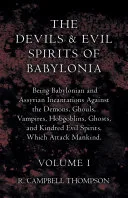
The Devils And Evil Spirits Of Babylonia, Being Babylonian And Assyrian Incantations Against The Demons, Ghouls, Vampires, Hobgoblins, Ghosts, And Kindred Evil Spirits, Which Attack Mankind. Volume II
 75
75

The Devils And Evil Spirits Of Babylonia, Being Babylonian And Assyrian Incantations Against The Demons, Ghouls, Vampires, Hobgoblins, Ghosts, And Kindred Evil Spirits, Which Attack Mankind. Volume II
Thompson's meticulous translation of Babylonian and Assyrian incantations in Volume II offers a starkly practical view of ancient spiritual warfare. The sheer catalog of named malevolent entities – from the 'ghoul' to the 'hobgoblin' – is striking, revealing a society deeply attuned to unseen threats. The strength lies in the direct access to primary magical texts, unvarnished by later interpretation. However, the scholarly dryness, while necessary for accuracy, can be a barrier for the casual reader. A particularly arresting passage involves the detailed enumeration of afflictions caused by the 'lilû' and 'lilitu' spirits, demonstrating the tangible fear these beings inspired. While not a narrative, the collection itself forms a chilling ethnography of ancient anxieties. This volume is essential for serious researchers of Mesopotamian demonology.
📝 Description
75
Volume II of R. Campbell Thompson's 1903 work presents ancient Mesopotamian incantations against a variety of malevolent spirits.
This volume contains English translations of Babylonian and Assyrian incantations aimed at warding off various evil entities. It details a range of spirits, including demons, ghouls, vampires, and hobgoblins, along with the rituals and spells employed against them. The texts offer direct insight into the practical concerns and spiritual beliefs of ancient Mesopotamians.
Scholars of ancient Near Eastern religions, historians of magic, and students of comparative mythology will find this work useful. It is particularly suited for those interested in textual analysis of primary sources and the practical application of spiritual beliefs. Researchers examining the history of occult traditions will also benefit from its contents.
Reginald Campbell Thompson compiled these translations as part of his extensive research in Mesopotamia. Published in 1903, this work provided direct access to incantatory literature at a time when Assyriology was developing. It contributed to the academic understanding of Mesopotamian spiritual practices.
This collection belongs to the tradition of documenting and translating ancient magical and ritualistic texts. It focuses on the practical application of spiritual beliefs in ancient Mesopotamia, where incantations served as a primary means to combat perceived threats from malevolent supernatural forces. The work highlights a worldview that saw direct interaction between the human and spirit realms, with specific verbal and performative technologies used to maintain order and well-being.
💡 Why Read This Book?
• Understand the specific methods of ancient Mesopotamian spiritual defense, learning about incantations used against entities like the 'ghoul' mentioned in the text. • Gain insight into the historical development of demonology, examining texts from the Babylonian and Assyrian periods (roughly 18th to 6th centuries BC) as documented by Thompson. • Explore the practical application of ritual, as detailed in the 'Evil Spirit Texts', which reveals how ancient peoples directly addressed perceived supernatural threats to their well-being.
⭐ Reader Reviews
Honest opinions from readers who have explored this book.
❓ Frequently Asked Questions
What specific types of evil spirits are detailed in The Devils And Evil Spirits Of Babylonia, Volume II?
Volume II details a wide array of malevolent entities, including demons, ghouls, vampires, hobgoblins, and ghosts, as described in Babylonian and Assyrian incantations against spirits that attacked mankind.
Who was R. Campbell Thompson and why is his work significant?
R. Campbell Thompson (1876–1941) was a British archaeologist and Assyriologist. His work is significant for providing scholarly translations of ancient Mesopotamian texts, offering direct insight into their religious and magical beliefs.
What is the primary focus of Volume II of this book?
The primary focus of Volume II is the English translation of Babylonian and Assyrian incantations specifically designed to combat various classes of evil spirits and demons that were believed to harm humans.
What historical period do the texts in this volume cover?
The texts translated in this volume originate from the Babylonian and Assyrian civilizations, which flourished in ancient Mesopotamia from approximately the 18th to the 6th centuries BC.
Are these translations of original cuneiform texts?
Yes, the work is based on translations of original cuneiform texts, representing a significant scholarly effort to make these ancient magical and religious documents accessible.
What kind of knowledge can one expect to gain from reading these incantations?
Readers can expect to gain knowledge about ancient Mesopotamian cosmology, their understanding of disease and misfortune, and the ritualistic and verbal means they employed to seek protection from supernatural malevolence.
🔮 Key Themes & Symbolism
Demonology and Spirit Taxonomy
The volume meticulously categorizes a wide spectrum of malevolent entities, moving beyond a monolithic concept of 'evil.' It details the specific forms and perceived functions of demons, ghouls, vampires, hobgoblins, and ghosts, reflecting a complex Mesopotamian cosmology. Understanding these distinct classifications is key to grasping the targeted nature of the incantations, where specific rituals were employed against named or described spiritual adversaries.
Ritual Efficacy and Incantation
Central to the work is the belief in the power of spoken word and ritual action to influence the spiritual realm. The incantations are not mere prayers but active spells designed to bind, repel, or appease dangerous spirits. This theme underscores the pragmatic approach to spiritual matters in ancient Mesopotamia, where magical formulas were a vital tool for maintaining order and personal safety against perceived supernatural incursions.
Human Vulnerability and Spiritual Defense
The texts reveal a profound awareness of human susceptibility to unseen forces. Sickness, misfortune, and psychological distress were often attributed to the direct intervention of evil spirits. Consequently, a significant portion of the literature is dedicated to outlining the methods of spiritual defense, highlighting the anxieties and protective strategies employed by individuals and communities in ancient Babylonia and Assyria.
Mesopotamian Worldview
By presenting these incantations, the book offers a window into the broader worldview of the Babylonians and Assyrians. It illustrates a society where the divine and the demonic were active participants in daily life, and where maintaining a relationship with the spiritual cosmos was paramount. The focus on averting malevolent spirits provides a crucial counterpoint to texts dealing with divine worship and cosmology.
💬 Memorable Quotes
Direct passages from the work, attributed to the author.
“The demons, ghouls, vampires, hobgoblins, ghosts, and kindred evil spirits, which attack mankind.”
— This phrase directly enumerates the catalog of malevolent entities that formed the focus of the incantations presented. It highlights the specific, tangible fears that drove the creation and recitation of these ancient magical texts.
“English translations of various 'Evil Spirit Texts'.”
— This describes the core content of Volume II, emphasizing its function as a conduit for accessing primary source material on Mesopotamian demonology and magical practices through translation.
“Reginald C. Thompson that looks at the religion and spiritual beliefs of Babylon.”
— This contextualizes the work within the broader scholarly endeavors of its author, positioning it as a key study on the religious and spiritual range of ancient Babylonia.
“large and important sections of the native literature concerning Babylonian and Assyrian demonology.”
— This statement underscores the significance of the 'Evil Spirit Texts' as substantial components of the original Mesopotamian literary corpus related to the study of demons and malevolent spiritual forces.
“powerful kingdom in ancient Mesopotamia that existed from the 18th to 6th centuries BC.”
— This provides essential historical and geographical context, grounding the subject matter in the specific civilization and timeframe of ancient Babylonia.
🌙 Esoteric Significance
Tradition
This work is foundational for understanding ancient Mesopotamian magical traditions, a precursor to many later esoteric systems. While not directly Hermetic or Kabbalistic, its focus on spirit classification, warding rituals, and the efficacy of spoken spells provides crucial historical context for the development of Western ceremonial magic and demonology, influencing later occultists interested in comparative grimoires.
Symbolism
The symbolism is deeply embedded in the names and descriptions of the spirits themselves. Entities like the 'lilû' and 'lilitu' (often associated with night and predatory behavior) represent primal fears of the unknown and the predatory forces that threaten human safety and sanity. The act of incantation itself symbolizes humanity's attempt to impose order and control over a chaotic, spirit-filled universe through divine or magical authority.
Modern Relevance
Contemporary practitioners of occultism and scholars of comparative religion continue to draw upon Thompson's translations for primary source material on ancient demonology. The detailed taxonomy of spirits and the structure of the incantations inform modern magical theory and practice, particularly for those seeking to understand the historical roots of spirit invocation and banishing rituals across different cultures.
👥 Who Should Read This Book
• Scholars of ancient Near Eastern religions and mythologies seeking direct translations of Mesopotamian incantatory texts. • Students of comparative demonology and the history of magic interested in the origins of spirit-based belief systems. • Occult practitioners focused on historical magical traditions and the evolution of ritualistic practices for protection and spiritual defense.
📜 Historical Context
First published in 1903, R. Campbell Thompson's "The Devils And Evil Spirits Of Babylonia" emerged during a flourishing period for Assyriology, driven by extensive archaeological finds in Mesopotamia. This era saw scholars like Archibald Sayce and George Smith making significant contributions to deciphering cuneiform scripts and understanding Babylonian culture. Thompson's work, particularly Volume II, was crucial in bringing the practical, often grim, aspects of Mesopotamian spiritual life into academic discourse. It offered a stark contrast to the more idealized portrayals of religion found in some contemporary scholarship, directly engaging with the materiality of magical practice. While Thompson was a respected figure, his focus on demonology and incantations might have been viewed with academic caution by those concentrating on state religion or epic literature, though its value for understanding popular belief was undeniable.
📔 Journal Prompts
The spectrum of evil spirits cataloged, from demons to hobgoblins.
The specific nature of afflictions attributed to the 'lilû' and 'lilitu' spirits.
The structure and intent of a Babylonian incantation designed to repel a specific demon.
The perceived relationship between human vulnerability and supernatural attack in Mesopotamian belief.
The role of spoken word and ritual in achieving spiritual defense.
🗂️ Glossary
Incantation
A use of spells or verbal charms spoken or chanted to invoke, repel, or appease supernatural beings or forces.
Demonology
The study of demons or beliefs about demons, particularly within religious or occult contexts.
Ghoul
In Mesopotamian belief, a type of malevolent spirit or supernatural being associated with graveyards and the consumption of human flesh.
Vampire
A supernatural being believed to subsist by drawing and consuming the life force or blood of living creatures, often associated with the night.
Hobgoblin
A mischievous or troublesome sprite or goblin, often depicted as a minor, potentially malevolent supernatural entity.
Cuneiform
An ancient Mesopotamian writing system characterized by wedge-shaped marks impressed on clay tablets.
Mesopotamia
An ancient region in Western Asia, situated between the Tigris and Euphrates rivers, corresponding to modern-day Iraq.