Heaven and Hell
 82
82

Heaven and Hell
Ehrman’s meticulous examination of biblical texts and early Christian writings reveals how the concepts of heaven and hell, as popularly understood, are more a product of historical evolution than ancient, immutable truth. His strength lies in his lucid prose and his ability to unpack complex theological shifts for a general audience. He effectively demonstrates that early Hebrew scriptures offer little on eternal conscious torment, a notion that solidified much later. A limitation, however, is the sheer volume of textual analysis, which, while thorough, can sometimes feel exhaustive rather than illuminating for the casual reader. The way Ehrman dissects passages from the Book of Revelation to show its complex and often contradictory depictions of the end times is particularly compelling. Ultimately, Ehrman provides a crucial historical lens on deeply ingrained beliefs.
📝 Description
82
Bart Ehrman's 2023 book traces Western afterlife concepts from ancient Judaism to early Christianity.
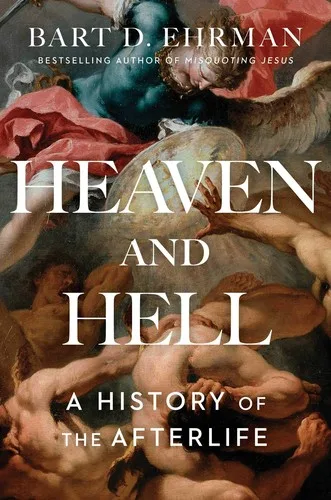
Bart Ehrman's "Heaven and Hell" examines the historical development of Western ideas about the afterlife. Ehrman, a historian of early Christianity, argues that the common notions of eternal reward and punishment are not consistent biblical teachings. Instead, he shows how these concepts evolved over centuries through various Jewish and Christian texts, shaped by different cultural and theological influences.
The book is suited for readers interested in how religious ideas, especially within Christianity and its predecessors, have changed over time. It is for those who look for scholarly, evidence-based explanations behind common beliefs, including skeptics and theology students curious about eschatology. The work is not intended for those seeking devotional material or literal interpretations of religious texts.
Ehrman situates this evolution within Second Temple Judaism and early Christianity, from the 1st century BCE to the 2nd century CE. He contrasts early Jewish apocalyptic writings, which focused more on earthly kingdoms and divine judgment, with later Christian interpretations that developed more elaborate visions of heaven and hell. The work touches on historical debates between eternalism and annihilationism, demonstrating significant shifts in understanding.
This work examines the formation of eschatological beliefs, a significant area within the study of esoteric traditions. While Ehrman focuses on mainstream early Jewish and Christian developments rather than fringe groups, his analysis of how doctrines surrounding the afterlife, divine judgment, and eternal destinies solidified is relevant. The book shows how philosophical ideas, particularly Plato's concept of the immortal soul, became integrated into religious thought, a process common in the syncretic environments where many esoteric systems arose. It highlights the historical contingency of beliefs often considered fixed, revealing their development through textual interpretation and cultural exchange.
💡 Why Read This Book?
• Learn how specific biblical passages, like those in the Book of Revelation, were interpreted and reinterpreted to form later doctrines of hell, offering a historical perspective distinct from theological pronouncements. • Understand the philosophical influences, such as Platonic ideas of the immortal soul, that shaped early Christian eschatology, providing context beyond purely religious texts. • Discover why the concept of eternal punishment, as presented in 2nd-century Christian writings, differed significantly from earlier Jewish notions of Sheol, highlighting a specific historical trajectory of belief.
⭐ Reader Reviews
Honest opinions from readers who have explored this book.
❓ Frequently Asked Questions
Are heaven and hell concepts found in the earliest parts of the Bible?
No, Bart D. Ehrman argues that detailed concepts of a literal heaven and hell as eternal reward and punishment are largely absent from the earliest Hebrew scriptures. These ideas developed significantly in later Jewish and Christian writings.
When did the idea of hell become prominent in Christianity?
Ehrman traces the development of hell, showing it solidified in Christian thought primarily from the 2nd century CE onwards, influenced by apocalyptic literature and philosophical ideas about the soul.
What role did Greek philosophy play in Christian afterlife beliefs?
Greek philosophical concepts, particularly Plato's idea of an immortal soul, significantly influenced early Christian thinkers, providing a framework for developing doctrines of eternal reward and punishment.
Did Jesus teach about hell as commonly understood today?
Ehrman suggests Jesus's teachings about judgment and the afterlife were more varied and less focused on a detailed, eternal hell than later Christian interpretations, drawing from diverse Jewish traditions.
What is Sheol in the Hebrew Bible?
Sheol refers to the underworld or grave in the Hebrew Bible, generally depicted as a shadowy place of the dead with little distinction between the righteous and wicked, unlike later Christian hell.
How does Ehrman's view differ from traditional Christian theology?
Ehrman's historical-critical approach highlights the evolutionary nature of heaven and hell concepts, often contrasting with traditional theological claims of their consistent, ancient biblical origin.
🔮 Key Themes & Symbolism
Biblical Evolution of Eschatology
The work meticulously details how eschatological concepts, particularly those concerning the afterlife, were not static but evolved over centuries. Ehrman contrasts the sparse references to the underworld in early Hebrew texts like the Pentateuch with the more developed imagery found in later apocalyptic literature and early Christian writings. He demonstrates that the vivid descriptions of eternal torment and bliss, often assumed to be foundational biblical teachings, are largely later developments, influenced by cultural and philosophical shifts, particularly following the 1st century CE.
Influence of Greek Philosophy
A significant aspect explored is the impact of Greek philosophical thought, especially Plato's concept of the immortal soul, on early Christian beliefs about the afterlife. Ehrman shows how this philosophical underpinning provided fertile ground for developing notions of a distinct heaven for the saved and a hell for the damned, moving away from earlier Hebrew conceptions of a unified, shadowy underworld (Sheol). This integration of Hellenistic ideas is presented as a crucial step in shaping Western eschatology.
The Invention of Hell
Ehrman directly confronts the popular image of hell, arguing it was 'invented' or at least significantly elaborated upon within early Christianity. He traces the textual lineage of hell through various early Christian authors and texts, highlighting how the graphic descriptions and theological justifications for eternal punishment emerged over time, rather than being a direct, consistent revelation from the earliest scriptures. This challenges the common assumption of hell's ancient and singular origin.
The Enduring Power of Belief
The book also probes why these concepts of heaven and hell continue to hold such sway, even in secularizing societies. Ehrman suggests their endurance stems from deep-seated human desires for justice, order, and meaning in the face of mortality. The stark contrast between ultimate reward and punishment provides a powerful framework for moral instruction and existential comfort, explaining their persistent hold on the popular imagination.
💬 Memorable Quotes
Direct passages from the work, attributed to the author.
“The ideas of heaven and hell did not, in fact, spring forth fully formed from the biblical text.”
— This statement expresses Ehrman's central thesis: that the popular conceptions of an eternal heaven and hell are not ancient, monolithic teachings but rather historical constructs that evolved over time through interpretation and cultural influence.
“Most people who hold these beliefs are Christian and assume they are the age-old teachings of the Bible.”
— This highlights the disconnect Ehrman aims to bridge between popular, often unexamined, religious assumptions and the historical evidence found in ancient texts regarding afterlife beliefs.
“Eternal rewards and punishments are found nowhere in the Old Testament.”
— This is a provocative claim that directly challenges traditional interpretations, setting the stage for Ehrman's detailed historical tracing of how these concepts emerged in later Jewish and Christian thought.
“The New Testament itself is not entirely clear on the details of the afterlife.”
— This interpretation acknowledges the textual complexities and variations within early Christian writings regarding eschatology, underscoring Ehrman's argument that a single, unified doctrine of heaven and hell is not readily apparent.
💡 Key Ideas
Editorial paraphrase of the work's core concepts — not direct quotes.
The idea of hell as a place of eternal torment for the wicked developed over centuries.
This paraphrased concept emphasizes the temporal and developmental aspect of the doctrine of hell, positioning it as a theological and cultural product rather than an original scriptural dictate.
🌙 Esoteric Significance
Tradition
While not strictly within a defined esoteric lineage like Hermeticism or Gnosticism, Ehrman's work serves an esoteric function by clarifying and deconstructing commonly held religious beliefs. It aligns with the esoteric principle of seeking hidden or underlying truths behind exoteric doctrines. By revealing the historical construction of heaven and hell, it encourages a more critical and less literal engagement with religious texts, a hallmark of many esoteric traditions that prioritize inner understanding over dogma.
Symbolism
The book inherently engages with the symbolic weight of 'heaven' and 'hell.' Heaven, often symbolized as ultimate divine union, peace, or a perfected realm, represents the aspiration for transcendence and eternal bliss. Hell, conversely, symbolizes ultimate separation, punishment, and the fear of oblivion or unending suffering. Ehrman analyzes these not as literal places but as powerful conceptual tools developed within human history to address morality, justice, and the human condition.
Modern Relevance
Contemporary thinkers exploring the psychology of belief, the sociology of religion, and the historical roots of Western culture draw heavily on Ehrman's approach. His work is relevant to modern discussions on skepticism, the impact of religious narratives on ethics, and the historical contingency of seemingly eternal truths. It informs spiritual but not religious individuals seeking a non-dogmatic understanding of existence and provides foundational context for comparative mythology and religious studies.
👥 Who Should Read This Book
• Skeptical inquirers seeking historical and textual evidence to understand the origins of popular religious beliefs about the afterlife, particularly concerning Christianity. • Students of comparative religion and theology looking for a scholarly yet accessible analysis of eschatological development from ancient Judaism to early Christianity. • Individuals questioning traditional doctrines who want to explore the historical construction of concepts like heaven and hell, moving beyond literal interpretations.
📜 Historical Context
Bart D. Ehrman's "Heaven and Hell" emerged in 2020, a period marked by continued academic scrutiny of religious texts and a public fascination with origins. The book's arguments resonate with ongoing scholarly debates initiated by figures like Albert Schweitzer and later developed by scholars examining the historical Jesus and early Christianity. Ehrman builds upon a tradition of critical biblical scholarship that questions traditional interpretations, particularly concerning the historical development of doctrines. While not directly engaging with a specific named contemporary rival in this work, his approach places him in dialogue with theologians and historians who uphold more traditional views on biblical authority and the immutability of doctrine. The reception of Ehrman's work generally falls within academic circles and among intellectually curious lay readers, often praised for its accessibility while sometimes critiqued by those holding more orthodox theological positions.
📔 Journal Prompts
The evolution of the concept of Sheol compared to later Christian hell.
Influence of Plato's concept of the immortal soul on early Christian afterlife beliefs.
The textual journey of specific biblical passages related to judgment and reward.
Personal reflections on the enduring appeal of heaven and hell narratives.
The distinction between historical development and theological doctrine in religious concepts.
🗂️ Glossary
Eschatology
The branch of theology concerned with death, judgment, and the final destiny of the soul and of humankind. It explores beliefs about the end times and the afterlife.
Sheol
In the Hebrew Bible, the underworld or grave, generally depicted as a shadowy, neutral realm for all the dead, distinct from later concepts of hell or heaven.
Apocalyptic Literature
A genre of revelatory literature common in ancient Judaism and early Christianity, often featuring symbolic visions, divine judgment, and cosmic battles.
Immortal Soul
The philosophical concept, particularly associated with Plato, that the soul is indestructible and continues to exist after the death of the physical body.
Second Temple Judaism
The period of Jewish history from the rebuilding of the Second Temple in Jerusalem (c. 516 BCE) to its destruction by the Romans in 70 CE.
Patristic Period
The period of Christian history from the 1st to the 8th century AD, referring to the writings and influence of the early Church Fathers.
Hellenization
The historical spread of classical Greek culture, language, and way of life, particularly after the conquests of Alexander the Great.