Occult Imperium
 72
72

Occult Imperium
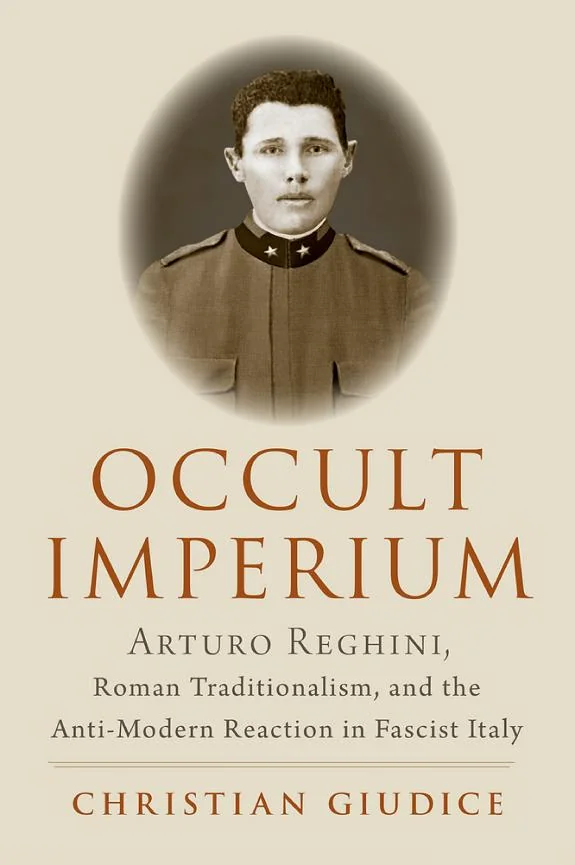
Christian Giudice's *Occult Imperium* offers a granular look at Arturo Reghini, a figure whose influence on Italian esoteric circles is substantial but often underserviced in English-language scholarship. Giudice meticulously traces Reghini's intellectual trajectory, demonstrating how his engagement with Roman Traditionalism was shaped by the specific socio-political climate of early 20th-century Italy. The book's strength lies in its deep reliance on Reghini's primary writings, providing a well-supported analysis rather than speculative interpretation. A limitation, however, is the dense academic prose, which may challenge readers not already familiar with Traditionalist philosophy or Italian intellectual history. The detailed exploration of Reghini's concept of a 'spiritual Romanity' and its divergence from other national occultisms is particularly illuminating. *Occult Imperium* serves as a crucial resource for understanding a unique strand of European esotericism.
📝 Description
72
Christian Giudice's 2016 book, Occult Imperium, examines Arturo Reghini's role in Italian occultism.
Occult Imperium offers a detailed study of Arturo Reghini (1878-1946), a significant figure in Italian esoteric thought. Christian Giudice analyzes Reghini's writings, including his articles, books, and personal correspondence, to clarify his position within Roman Traditionalism and his engagement with wider esoteric currents. The book places Reghini's work within the context of early 20th-century Italy, a period marked by strong nationalist sentiment and intellectual exploration.
Giudice situates Reghini as a thinker who sought to connect modern Italian identity with ancient Roman spiritual traditions, often through occult philosophy. The study considers Reghini's interactions with contemporary avant-garde movements and broader philosophical ideas of the time, noting the influence of René Guénon. Key concepts examined include Reghini's formulation of a 'Roman Traditionalism' distinct from other European esoteric schools, his interpretations of ancient Roman religion and symbolism, and his critiques of modernity.
This book situates Arturo Reghini within the broader Traditionalist school, a philosophical and spiritual current that sought to recover ancient wisdom traditions. Within this context, Giudice highlights Reghini's specific development of a 'Roman Traditionalism,' a nationalistic esoteric current distinct from the more internationalist or Eastern-focused approaches of figures like René Guénon. It illuminates how esoteric ideas were adapted and applied to forge a modern Italian spiritual and cultural identity in the early 20th century.
💡 Why Read This Book?
• Gain specific insights into Arturo Reghini's "Roman Traditionalism," a distinct Italian esoteric current, by examining his personal letters and published works from the early 20th century. • Understand the complex relationship between occultism and nascent national identity in Italy, particularly Reghini's efforts to link esoteric principles with Roman heritage. • Explore the interaction between Traditionalist thought and avant-garde movements in Italy, as detailed through Giudice's analysis of Reghini's engagement with contemporary cultural trends.
⭐ Reader Reviews
Honest opinions from readers who have explored this book.
❓ Frequently Asked Questions
What is the primary focus of Christian Giudice's *Occult Imperium*?
The book primarily analyzes the Italian national forms of occultism, with a deep dive into the life and extensive writings of Arturo Reghini (1878-1946) and his connection to Roman Traditionalism.
When was *Occult Imperium* first published?
Christian Giudice's *Occult Imperium* was first published on December 17, 2021.
What intellectual movement is Arturo Reghini associated with in this book?
Arturo Reghini is prominently discussed in relation to 'Roman Traditionalism,' an esoteric philosophical and political movement seeking to revive ancient Roman spiritual and cultural ideals.
Does the book discuss Reghini's interaction with other cultural movements?
Yes, the book considers the interaction between Reghini's occultism and Traditionalism with various facets of modernity, including avant-garde movements prevalent in early-twentieth-century Italy.
What kind of primary sources does *Occult Imperium* utilize?
The book extensively uses Arturo Reghini's own writings, including his articles, books, and personal letters, as the basis for its analysis.
What specific historical period does *Occult Imperium* cover?
The book focuses on the early-twentieth century, specifically examining the intellectual landscape and esoteric activities in Italy during that era.
🔮 Key Themes & Symbolism
Roman Traditionalism
This theme centers on Arturo Reghini's concept of 'Roman Traditionalism,' a unique esoteric interpretation of ancient Roman religion and philosophy aimed at forging a spiritual identity for Italy. Giudice uses Reghini's writings to dissect how this ideology sought to revive ancient virtues and symbols, positioning them as a counter-narrative to modernity and other esoteric schools. It examines Reghini's attempts to codify a specifically Italian esoteric path, distinct from broader European Traditionalist movements, by drawing on classical antiquity.
Occultism and Modernity
The book explores the complex relationship between occult thought and the forces of modernity in early 20th-century Italy. It analyzes how figures like Arturo Reghini engaged with, critiqued, and attempted to synthesize esoteric principles with contemporary intellectual and cultural trends, including avant-garde movements. This theme investigates the challenges and opportunities presented by modernization for traditional esoteric frameworks.
Arturo Reghini's Intellectual Legacy
This theme is dedicated to understanding the breadth and depth of Arturo Reghini's contributions to esoteric thought. Giudice meticulously examines Reghini's copious writings—books, articles, and correspondence—to map his intellectual evolution, his role in disseminating Traditionalist ideas, and his specific influence on Italian occultism. It highlights Reghini as a key, albeit often overlooked, figure in the history of Western esotericism.
National Identity and Esotericism
A significant theme is the intersection of esoteric philosophy with national identity, particularly within the Italian context. The work investigates how occultists like Reghini sought to construct or reinforce a spiritual basis for national consciousness, drawing parallels between ancient Roman ideals and contemporary aspirations. This explores the potential for esoteric traditions to serve as a foundation for cultural and political movements.
💬 Memorable Quotes
Direct passages from the work, attributed to the author.
“Reghini's extensive writings served as a guide to his engagement with modernity.”
— This highlights how the author uses Reghini's own published works and personal correspondence as the primary evidence to chart his intellectual journey and philosophical positions.
“The book examines the interaction between Occultism, Traditionalism, and different facets of modernity in early-twentieth-century Italy.”
— This statement underscores the book's focus on the dynamic interplay between esoteric beliefs and the rapidly changing social, cultural, and intellectual field of Italy during a specific historical period.
“Roman Traditionalism offered a distinct national form of occultism.”
— This interpretation emphasizes the unique character of the Italian esoteric current studied, suggesting it possessed specific attributes that set it apart from other occult or Traditionalist movements in Europe.
“Reghini's work considered ties with avant-garde movements.”
— This points to the book's exploration of how esoteric thinkers like Reghini were not isolated but engaged with, and were potentially influenced by, contemporary artistic and philosophical avant-garde circles.
“The analysis considers factors particular to the Italian peninsula.”
— This indicates that the book's approach is sensitive to the specific historical, cultural, and geographical context of Italy, arguing that its esoteric traditions cannot be fully understood without reference to these unique elements.
🌙 Esoteric Significance
Tradition
Occult Imperium situates Arturo Reghini within the broader Traditionalist school, heavily influenced by René Guénon, but emphasizes the unique development of 'Roman Traditionalism' as a distinctly Italian esoteric lineage. It departs from Guénon's more universalist approach by focusing on the specific spiritual heritage of ancient Rome as the foundation for modern Italian identity. This work explores how Reghini adapted and localized Traditionalist principles, creating a unique branch rooted in classical antiquity.
Symbolism
The book likely engages with symbols drawn from Roman antiquity, such as the SPQR (Senatus Populusque Romanus) insignia, the eagle standard (aquila), and classical deities like Janus or Jupiter. These symbols, within the context of Roman Traditionalism, would represent concepts of order, authority, spiritual sovereignty, and the perennial principles Reghini sought to revive. The interpretation would focus on their esoteric meaning as conduits to a lost sacred tradition.
Modern Relevance
Contemporary scholars and practitioners interested in the intersection of nationalism, esotericism, and political philosophy find value in *Occult Imperium*. Thinkers exploring the historical roots of European Traditionalism, the relationship between occultism and political movements, or the specific development of esoteric thought in non-Anglo-Saxon contexts may draw upon Giudice's research. It provides a case study for understanding how esoteric ideas can be adapted to serve nationalistic agendas.
👥 Who Should Read This Book
• Students of Western Esotericism: Those seeking to understand the diverse manifestations of occultism beyond mainstream Theosophy or Hermeticism will find a detailed exploration of an Italian-specific current. • Researchers of Italian Intellectual History: Academics and enthusiasts interested in the cultural and philosophical field of early 20th-century Italy will gain context on a significant, often overlooked, intellectual movement. • Followers of Traditionalist Philosophy: Individuals familiar with René Guénon and the broader Traditionalist school will benefit from understanding a key divergence and development within this tradition.
📜 Historical Context
The early twentieth century in Italy was a crucible of intense political and cultural transformation. Amidst the rise of nationalism and the turbulent aftermath of World War I, intellectual currents grappled with modernity, tradition, and national identity. It was within this environment that figures like Arturo Reghini (1878-1946) sought to articulate a spiritual and philosophical basis for Italian identity, drawing heavily on classical Roman antiquity and esoteric traditions. Reghini's 'Roman Traditionalism' offered an alternative to both secular modernity and the perceived spiritual vacuum of the era, positioning itself against both socialist internationalism and the broader Catholic framework. His work engaged with thinkers like René Guénon, the principal figure of Traditionalism, yet sought to forge a distinct Italian path. The intellectual landscape was further complicated by the rise of Fascism, with which some esoteric circles, including Reghini's, had complex relationships. This period saw a proliferation of esoteric societies and publications attempting to synthesize ancient wisdom with contemporary national aspirations.
📔 Journal Prompts
Arturo Reghini's 'Roman Traditionalism' and its divergence from Guénon.
The role of avant-garde movements in shaping Italian occultism.
Reghini's interpretation of ancient Roman symbols for modern esoteric use.
The challenges of reconciling esoteric traditions with secular modernity.
The construction of national identity through esoteric philosophy.
🗂️ Glossary
Roman Traditionalism
An esoteric philosophical current, primarily associated with Arturo Reghini, that sought to revive ancient Roman spiritual and cultural principles as a foundation for modern Italian identity. It emphasized classical antiquity as a source of perennial wisdom.
Arturo Reghini
An influential Italian writer, esotericist, and mathematician (1878-1946) central to *Occult Imperium*. He was a key proponent of Roman Traditionalism and engaged deeply with occultism, Freemasonry, and philosophical Traditionalism.
Traditionalism (philosophical)
A metaphysical doctrine, most famously articulated by René Guénon, positing the existence of a primordial, universal tradition of divine origin, which has been progressively lost or corrupted in the modern era. It emphasizes hierarchy, symbolism, and the critique of materialism.
Esotericism
A broad category of spiritual, mystical, or occult traditions characterized by secret knowledge or initiation, often involving hidden meanings, symbolism, and practices aimed at spiritual transformation or attainment.
Avant-garde movements
Innovative and experimental artistic, cultural, or intellectual groups that emerged in the early 20th century, often challenging traditional norms and exploring new forms of expression. Reghini's work is examined in relation to these.
Modernity
The historical period and social condition characterized by industrialization, secularization, rationalism, and rapid technological and social change, often viewed critically by Traditionalist thinkers.
Perennial Philosophy
The concept, central to Traditionalism, that all major religious and spiritual traditions share a common, underlying metaphysical truth or wisdom, originating from a single divine source.
This book appears in 1 collection
🔮 Readers Also Liked
Browse all →







From the “Western Esotericism” Collection
View all →







More Free Sacred Texts & Gnosticism Books
View all →