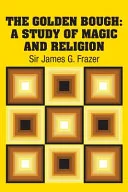
The Golden Bough
 79
79

The Golden Bough
Frazer's *The Golden Bough* is less a narrative and more a vast, systematic cataloging of human belief and ritual, organized with an almost encyclopedic zeal. Its sheer scale, drawing parallels between ancient Sumerian priests and contemporary European folklore, is its primary strength. The book’s relentless pursuit of a universal evolutionary path for religion, however, also reveals its limitations. Frazer’s insistence on a singular trajectory from magic to religion, while insightful in its comparative scope, sometimes flattens the distinctiveness of individual cultural expressions. A particularly striking section details the ritual sacrifice of kings in various societies, illustrating his thesis about the sacred ruler's role and eventual demise. The work’s enduring legacy lies not in its definitive conclusions, but in its compelling compilation of evidence that challenged prevailing Western views of religion and myth. It remains a foundational text for understanding the comparative study of human culture.
📝 Description
79
Sir James G. Frazer's *The Golden Bough*, first published in 1890, compares magic and religion worldwide.
This massive study examines the global prevalence of magic and religious beliefs in ancient and tribal societies. Frazer's comparative method analyzes myths, rituals, and social structures across different cultures, tracing the evolution of human thought. The work details the transition from early magic to organized religion through extensive cross-cultural data. It is a significant work for understanding the historical development of belief systems and their connection to societal structures. The book's detailed analysis offers insights into how humans have sought to understand and control the natural world.
First appearing in 1890, *The Golden Bough* was produced during a time of academic interest in the origins of religion. Frazer used a wide range of ethnographic information for his comparative approach. The book has influenced later thinkers, although its evolutionary assumptions and generalizations have drawn criticism. Its broad scope and synthesis of global data established it as an important study in its field.
While *The Golden Bough* is primarily a work of anthropology and folklore, it touches upon themes that resonate within esoteric traditions. Frazer's examination of sympathetic magic, the belief in the power of symbols and imitative action, mirrors concepts found in various magical systems. His focus on the dying god motif and the sacred king connects to archetypal patterns explored in mystery religions and Gnostic thought. The book's systematic attempt to find universal principles underlying religious and magical practices also aligns with the goals of some esoteric philosophies that seek a unified understanding of spiritual phenomena.
💡 Why Read This Book?
• Understand the evolution of religious thought by examining Frazer's detailed analysis of sympathetic magic and its global manifestations, a concept crucial to understanding pre-Christian belief systems. • Gain insight into the widespread myth of the dying god by exploring specific examples from Greek, Babylonian, and Celtic traditions as presented in the book's comparative framework. • Appreciate the historical development of anthropological studies by engaging with Frazer's 1890 publication, a landmark work that synthesized ethnographic data to explore early forms of worship and kingship.
⭐ Reader Reviews
Honest opinions from readers who have explored this book.
❓ Frequently Asked Questions
When was Sir James G. Frazer's 'The Golden Bough' first published?
The first edition of Sir James G. Frazer's 'The Golden Bough' was published in 1890. Subsequent expanded editions, notably the 1900-1915 twelve-volume version, significantly increased its scope and influence.
What is the central thesis of 'The Golden Bough'?
The central thesis posits a progression in human thought from magic to religion, exploring worldwide beliefs and rituals. Frazer argues that early humans attempted to control nature through magical means before developing religious systems.
What specific ancient practices does 'The Golden Bough' illuminate?
The book illuminates ancient practices such as nature worship, fertility rites, the divine sacrifice of kings, and the widespread myths surrounding dying and resurrected gods across various cultures.
How does 'The Golden Bough' relate to anthropology?
It is considered a foundational text in comparative anthropology and folklore studies. Frazer's work pioneered the cross-cultural comparison of myths and rituals, influencing subsequent generations of scholars.
Is 'The Golden Bough' considered controversial?
Yes, the work has faced criticism for its evolutionary assumptions, perceived overgeneralizations, and a Eurocentric perspective in interpreting global cultures. However, its vast compilation of data remains significant.
What are some key concepts explored in 'The Golden Bough'?
Key concepts include sympathetic magic, taboos, the belief in the efficacy of ritual, the figure of the dying god, and the sacredness of kingship. It also examines the role of the scapegoat.
🔮 Key Themes & Symbolism
Sympathetic Magic and Ritual
Frazer meticulously details the principles of sympathetic magic – the belief that like affects like and that the cause and effect are on a similar level. He illustrates this with numerous examples, from ancient healing practices to agricultural rituals, demonstrating how humans sought to manipulate natural forces through imitation and correspondence. This theme underscores the early human attempt to impose order and predictability onto a seemingly chaotic world, forming a crucial step in his proposed evolutionary path from magic to religion.
The Dying and Resurrected God
A significant portion of the study is dedicated to the widespread motif of the dying and resurrected deity. Frazer analyzes myths and rituals from various cultures, including Adonis, Osiris, and Attis, suggesting a common archetype representing the cyclical nature of life, death, and rebirth. This concept is intrinsically linked to fertility cults and the agricultural calendar, reflecting humanity's deep-seated connection to the earth's regenerative powers and the perennial human hope for renewal.
Divine Kingship and Sacrifice
The book explores the concept of the divine king, often seen as a mediator between humanity and the gods, and sometimes embodying the land's fertility. Frazer examines the immense power vested in these figures, as well as the precariousness of their position, frequently leading to ritualistic sacrifice. This theme highlights the complex relationship between political power, religious authority, and the perceived need for appeasement or renewal through bloodshed in ancient societies.
Taboo and Social Order
Frazer investigates the concept of taboo as a widespread mechanism for maintaining social order and regulating interaction with the sacred or dangerous. He connects taboos to the avoidance of contamination and the preservation of purity, often found surrounding kings, priests, and sacred objects. This theme reveals how early societies established boundaries and prohibitions to manage social structures and spiritual beliefs, influencing communal behavior.
💬 Memorable Quotes
Direct passages from the work, attributed to the author.
“The world is not governed by chance, but by law.”
— This statement reflects Frazer's underlying belief in an ordered universe, even if that order is initially understood through magical principles. It suggests a rational framework beneath seemingly superstitious practices, paving the way for scientific inquiry.
“The belief in magic is a fundamental part of human nature.”
— Frazer posits that the impulse to understand and influence the world through ritual and belief is an inherent human characteristic, preceding more formalized religious structures and scientific reasoning.
“Kings were often seen as embodiments of the land's fertility.”
— This concept emphasizes the sacred role attributed to rulers in many ancient societies, where their well-being and efficacy were directly linked to the prosperity and abundance of their territory.
“Ritual sacrifice was a means of appeasing divine powers.”
— This interpretation points to the function of sacrifice in early religious systems, serving as a method to gain favor, avert disaster, or ensure continuity by offering a valuable tribute to the gods.
💡 Key Ideas
Editorial paraphrase of the work's core concepts — not direct quotes.
The myth of the dying god is a universal theme.
This paraphrase highlights Frazer's observation of recurring narratives across disparate cultures concerning deities who experience death and resurrection, often tied to natural cycles of fertility and renewal.
🌙 Esoteric Significance
Tradition
While not strictly an esoteric text in the Gnostic or Hermetic sense, *The Golden Bough* significantly impacted esoteric traditions by providing a vast, comparative framework for understanding myth and ritual. Its exploration of nature worship, fertility cults, and the dying god motif resonated with Neo-Pagan and Theosophical circles seeking pre-Christian spiritual roots. It offered a scholarly, albeit non-occultist, validation for the idea that hidden universal truths lay embedded within ancient myths and folk practices, bridging academic study with esoteric interests.
Symbolism
The book extensively analyzes symbols connected to the cycle of life, death, and rebirth, most notably the 'dying god' archetype (e.g., Adonis, Osiris). This figure symbolizes the sacrificial aspect of nature's renewal and humanity's relationship with it. Another key motif is the 'sacred king,' symbolizing both divine authority and the land's fertility, whose ritual death and rebirth were believed to ensure prosperity, representing the potent link between cosmic order and earthly abundance.
Modern Relevance
Contemporary Neo-Pagan movements, Wicca, and various forms of nature-based spirituality draw heavily on Frazer's work for understanding seasonal cycles, fertility rituals, and the archetype of the dying god. His analyses of ancient kingship and sacrifice also inform discussions in comparative mythology and modern interpretations of archetypal psychology, particularly in understanding humanity's relationship with nature and the divine through shared symbolic narratives.
👥 Who Should Read This Book
• Students of comparative religion and folklore: to understand the foundational methodologies and extensive data compilation that shaped the academic study of myth and belief systems. • Practitioners of Neo-Paganism and nature-based spiritualities: to explore the historical roots and symbolic interpretations of fertility rites, seasonal cycles, and the archetype of the dying god. • Anthropologists and cultural historians: to engage with a landmark text that, despite its criticisms, provided a comprehensive cross-cultural survey of magic, ritual, and early religious thought.
📜 Historical Context
Published in 1890, *The Golden Bough* emerged from the intellectual milieu of late Victorian England, a period marked by Darwinian evolutionary theory and burgeoning anthropological interest in non-Western cultures. Frazer, building on the work of scholars like E.B. Tylor, aimed to establish a scientific basis for understanding religion and myth. His comparative method, drawing vast amounts of data from classical antiquity and ethnographic accounts, sought to trace universal patterns in human belief. The work was a sensation, influencing literary figures like T.S. Eliot and psychologists like Sigmund Freud, who engaged with its theories of magic and ritual. However, it also faced criticism from contemporaries, including anthropologists who questioned its evolutionary framework and the reliability of some of its sources, particularly concerning the depiction of 'primitive' peoples. The book's enduring impact lies in its ambitious synthesis, even as its specific conclusions have been refined and challenged over time.
📔 Journal Prompts
The concept of sympathetic magic across cultures.
Universal themes in the dying god myth.
The role of the sacred king in ancient societies.
Rituals of nature worship detailed in Frazer's study.
The evolution from magic to religion as proposed by Frazer.
🗂️ Glossary
Sympathetic Magic
A form of magic based on the principle that like produces like, or that effect and cause resemble each other. It involves acting upon something indirectly through a likeness or a connection, such as using a doll to harm an enemy.
Dying God
A recurrent mythological archetype representing a deity who dies and is reborn, often symbolizing the cycles of nature, fertility, and the renewal of life. Frazer identified numerous examples across global mythologies.
Divine Kingship
The concept where a ruler is considered divine or semi-divine, often acting as a mediator between the human and supernatural realms. Their well-being was frequently linked to the prosperity of their kingdom.
Taboo
A social prohibition or restriction, often based on religious or superstitious beliefs, regarding something considered sacred, unclean, or dangerous. Violating a taboo was believed to bring misfortune.
Nature Worship
The veneration of natural forces, phenomena, or objects (like trees, rivers, or celestial bodies) as divine or as manifestations of deities. It is often linked to agricultural societies and fertility cults.
Scapegoat
A person or animal symbolically burdened with the sins or misfortunes of a group, often expelled or sacrificed to purify the community and avert disaster.
Fertility Cults
Religious practices centered on ensuring the productivity of the land, livestock, and people, often involving rituals and myths related to the cycles of nature and the worship of deities associated with abundance.
This book appears in 1 collection
🔮 Readers Also Liked
Browse all →






From the “Superstition” Collection
View all →





More Free Sacred Texts & Gnosticism Books
View all →