Silence
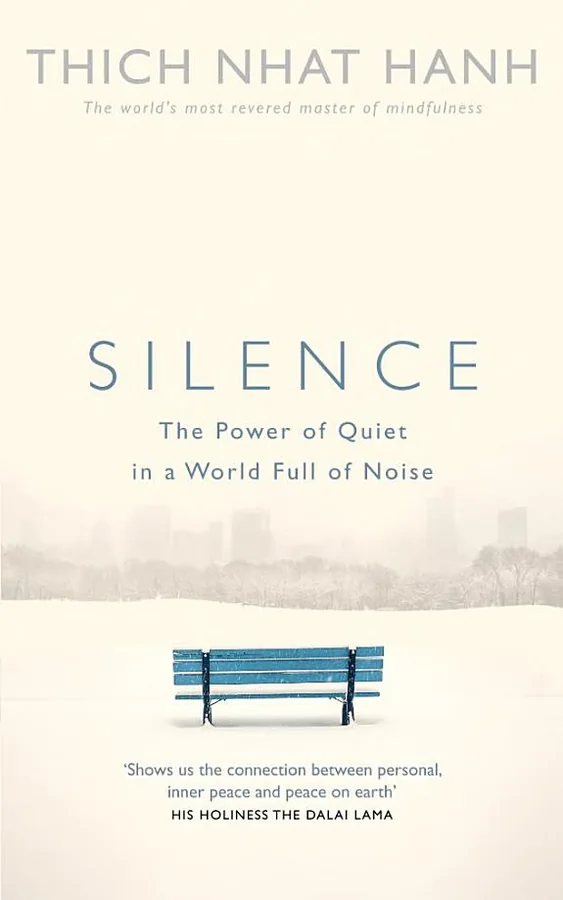
 74
74

Silence
Thich Nhat Hanh’s *Silence* offers a refreshing antidote to the incessant clamor of contemporary existence. The author, a Nobel Peace Prize nominee, steers clear of ostentatious spiritual pronouncements, instead offering gentle guidance rooted in observable experience. He adeptly illustrates how the constant internal dialogue, what he terms the 'noise inside,' prevents us from truly perceiving the world's subtle wonders. A particularly resonant passage describes the simple act of breathing as a portal to present moment awareness, a technique accessible to anyone, anywhere. While the book's accessibility is a strength, some readers might find the repeated emphasis on mindfulness, though central to the thesis, occasionally borders on repetitive. Nevertheless, the cumulative effect is one of profound calm and a renewed appreciation for the quiet spaces within and around us. *Silence* effectively demonstrates that peace is not a destination, but a practice cultivated through mindful attention.
📝 Description
74
Thich Nhat Hanh's 2015 book, Silence, argues that inner quietude is key to understanding life.
Silence, first published in 2015, by Thich Nhat Hanh, suggests that both external noise and internal chatter distract us from recognizing the simple beauty and love around us. The author proposes mindfulness as the main practice for cultivating this inner quiet, which he believes helps us connect more deeply with ourselves and the world. This book is for anyone feeling overwhelmed by mental clutter and the stresses of modern living.
It offers practical ways to calm the mind and find more peace. Readers interested in Buddhist philosophy or mindfulness, regardless of their background, will find value in its teachings. The book emerges from a long history of contemplative writing and the growing interest in mindfulness, especially in the West, since the mid-20th century. Thich Nhat Hanh, a Vietnamese Zen Buddhist monk, was instrumental in sharing these ideas with Western audiences, often presenting them as an alternative to more academic or ritualistic spiritual paths.
This book connects with the long tradition of contemplative literature within Buddhism, particularly Zen. Thich Nhat Hanh, a recognized master, draws on practices aimed at quieting the discursive mind, a central theme in Zen's pursuit of direct experience and insight. His work aligns with the broader interest in meditative practices that emerged in the West from the mid-20th century onward, offering a path to inner peace distinct from more intellectual or dogmatic approaches to spirituality. The emphasis on stillness as a gateway to understanding is a recurring motif in many mystical traditions.
💡 Why Read This Book?
• You will learn to identify and quiet the internal mental chatter that obscures happiness, a core tenet of Thich Nhat Hanh's teachings, directly applicable to daily life. • You will gain practical exercises in mindfulness, as presented in sections like 'The Practice of Looking Deeply,' to anchor yourself in the present moment and reduce mental noise. • You will understand the Buddhist concept of 'sati' (mindfulness) not as an abstract philosophy but as a tangible tool for experiencing the wonder of your immediate surroundings, as articulated throughout the book.
⭐ Reader Reviews
Honest opinions from readers who have explored this book.
❓ Frequently Asked Questions
What is the primary message of Thich Nhat Hanh's book 'Silence'?
The primary message is that inner and outer silence, cultivated through mindfulness, is essential for hearing life's call and finding happiness. It teaches that by stopping internal noise, we can perceive the wonder around us.
How does Thich Nhat Hanh define silence in this book?
Thich Nhat Hanh defines silence not just as the absence of external sound, but more importantly, as the absence of internal mental noise – the constant stream of thoughts, worries, and judgments that occupy the mind.
What is mindfulness according to 'Silence'?
Mindfulness, as explained in 'Silence,' is the practice of paying attention to the present moment without judgment. It is presented as the key method for quieting the mind's incessant chatter and fostering inner peace.
Who is Thich Nhat Hanh and why is he relevant to this book?
Thich Nhat Hanh was a globally respected Vietnamese Zen Buddhist monk, poet, and peace activist. His decades of teaching mindfulness and contemplative practices lend significant authority and gentle wisdom to the concepts presented in 'Silence'.
When was 'Silence' by Thich Nhat Hanh first published?
The book 'Silence' by Thich Nhat Hanh was first published on March 1, 2015.
Does the book offer practical exercises for achieving silence?
Yes, 'Silence' includes practical exercises and simple Buddhist wisdom designed to help readers stop internal noise and cultivate mindfulness, making the path to inner quietude accessible and actionable.
🔮 Key Themes & Symbolism
The Practice of Stopping Noise
The book positions the cessation of internal mental chatter as paramount. It moves beyond mere relaxation techniques to advocate for a fundamental shift in how we relate to our thoughts. By observing thoughts without attachment, akin to watching clouds pass, practitioners can achieve a state of profound stillness. This isn't about suppressing thoughts but about understanding their transient nature, a core concept in Buddhist psychology, thereby reclaiming mental space for clarity and peace.
Mindfulness as an Anchor
Mindfulness (sati) is presented not as an esoteric discipline but as an accessible, everyday practice. The book illustrates how simple acts, like focusing on the breath or the sensation of walking, can serve as anchors to the present moment. This anchors us against the tide of distracting thoughts, allowing us to engage more fully with our immediate reality. It's about cultivating an awareness that is both gentle and persistent, transforming ordinary moments into opportunities for peace.
Perceiving Life's Wonder
A central argument is that our minds, filled with noise, prevent us from appreciating the beauty and love inherent in our surroundings. The book encourages readers to look deeply (vipassana) at the world around them, finding wonder in the mundane. This involves a conscious effort to shift focus from internal anxieties to external phenomena, fostering a sense of gratitude and connection. It suggests that happiness is not found in external acquisition but in the internal capacity to perceive and appreciate.
The Nature of True Happiness
Happiness, as explored in Silence, is not a fleeting emotion contingent on external circumstances but a state of being rooted in inner peace. This peace is achieved through the quieting of the mind and the cultivation of presence. The book contrasts this with the often-futile pursuit of happiness through external means. It posits that by understanding the mind's workings and practicing mindfulness, one can access a deeper, more stable form of contentment that is always available.
💬 Memorable Quotes
Direct passages from the work, attributed to the author.
“Mindfulness is the practice that stops the noise inside.”
— This concise statement captures the book's central thesis. It identifies mindfulness not merely as a relaxation technique but as the active agent capable of quieting the incessant internal dialogue that distracts us from peace and happiness.
“We can spend a lot of time looking for happiness when the world right around us is full of wonder.”
— This highlights the common human tendency to seek happiness externally or in the future, overlooking the present moment's inherent beauty. It sets the stage for the book's argument that inner stillness allows us to perceive this readily available wonder.
“To hear that call [of life and love] and respond to it, we need silence.”
— This emphasizes the necessity of inner quietude as a prerequisite for genuine connection and responsiveness. It suggests that our internal noise acts as a barrier, preventing us from fully experiencing and engaging with life's positive aspects.
💡 Key Ideas
Editorial paraphrase of the work's core concepts — not direct quotes.
Our hearts and minds are so full of noise that we can't always hear the call of life and love.
This interpretive paraphrase points to the obstruction caused by mental clutter. It explains why, despite life's potential joys, we often feel disconnected or unable to experience them fully, attributing this to an overloaded internal state.
With gentle anecdotes, simple Buddhist wisdom and practical exercises, he shows us how to live more deeply.
This paraphrase summarizes the book's pedagogical approach. It indicates that Thich Nhat Hanh uses accessible storytelling, core Buddhist principles, and actionable techniques to guide readers toward a more present and meaningful existence.
🌙 Esoteric Significance
Tradition
While Thich Nhat Hanh's work is firmly rooted in Mahayana Buddhism, specifically Zen, *Silence* touches upon universal contemplative themes that resonate with esoteric traditions. Its emphasis on inner stillness, quieting the 'noise inside,' and achieving direct perception aligns with practices found in Hermeticism's 'Silence' and Gnosticism's pursuit of inner gnosis. The book acts as a bridge, translating profound contemplative states, often described in esoteric texts using complex symbolism, into accessible mindfulness practices relevant to modern seekers.
Symbolism
The primary 'symbol' in *Silence* is the absence of sound itself, representing the unmanifested potential and the cessation of discursive thought. Internal 'noise' symbolizes the ego's constant chatter, attachment, and aversion – the veils obscuring true perception. The 'call of life and love' can be interpreted as the subtle, intuitive wisdom or the divine spark often spoken of in esoteric literature, which is only perceivable when the mind is stilled and receptive.
Modern Relevance
Thich Nhat Hanh's approach in *Silence* significantly influences contemporary mindfulness movements, secularized meditation practices, and even therapeutic modalities like MBSR (Mindfulness-Based Stress Reduction). Thinkers and practitioners in fields ranging from psychology to organizational leadership draw upon his accessible articulation of core contemplative principles. His work provides a foundational text for anyone exploring the intersection of Eastern contemplative traditions and Western psychological or philosophical inquiry into consciousness and well-being.
👥 Who Should Read This Book
• Individuals overwhelmed by mental clutter and seeking practical, non-dogmatic methods to find inner peace. • Students of Buddhist philosophy and mindfulness who wish to deepen their understanding of meditation as a tool for quieting the mind, referencing Thich Nhat Hanh's accessible approach. • Seekers of personal well-being and happiness who are exploring alternative paths beyond material acquisition, looking for guidance grounded in contemplative wisdom from 2015.
📜 Historical Context
Published in 2015, *Silence* arrived during a period of heightened global interest in mindfulness and contemplative practices, a trend significantly amplified in Western cultures from the late 20th century onwards. Thich Nhat Hanh, a globally recognized Zen master, had been instrumental in introducing these concepts, particularly through his engaged Buddhism, since the 1960s. His work often presented an alternative to the more ascetic or ritualistic forms of spirituality, emphasizing practical application in daily life. This contrasted with the intellectual focus of some academic Buddhist studies or the more mystical traditions like Theosophy that also explored inner states. While not subject to widespread controversy, Hanh's teachings were part of a broader movement seeking accessible spiritual paths, drawing millions worldwide. His nomination for the Nobel Peace Prize in 1967 further cemented his status as a significant contemporary voice in peace and spiritual discourse.
📔 Journal Prompts
The nature of internal noise and its impact on perceiving wonder.
Cultivating stillness: Observing thoughts without judgment.
The present moment as the locus of life and love.
Mindfulness practice as a tool for accessing inner silence.
Recognizing happiness not as an acquisition, but as a state of being.
🗂️ Glossary
Mindfulness (Sati)
The practice of paying attention to the present moment, non-judgmentally. In *Silence*, it is presented as the key to stopping internal mental noise and fostering inner peace.
Noise Inside
Refers to the constant stream of thoughts, worries, judgments, and mental chatter that occupies the mind, obscuring clarity and preventing one from experiencing the present moment fully.
Silence
Not merely the absence of external sound, but the state of inner quietude achieved by ceasing the 'noise inside.' It is presented as essential for perceiving the world's wonder and finding happiness.
Wonder
The profound sense of awe and appreciation for the world, which the book argues is often missed due to mental distraction. Cultivating silence allows one to perceive this readily available wonder.
Call of Life and Love
Represents the deeper truths, beauty, and connections available in existence, which are drowned out by internal mental noise. Hearing this call requires inner silence and mindful attention.
Practical Exercises
Actionable techniques and simple practices suggested within the book to help readers cultivate mindfulness and achieve inner silence, making the concepts tangible and applicable.
Buddhist Wisdom
The core philosophical and psychological principles derived from Buddhism, used by Thich Nhat Hanh to explain the nature of the mind, suffering, and the path to peace.
This book appears in 1 collection
🔮 Readers Also Liked
Browse all →








From the “Mindfulness” Collection
View all →








More Free Sacred Texts & Gnosticism Books
View all →