Mindfulness
 73
73

Mindfulness
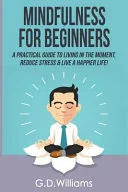
G. D. Williams’s *Mindfulness* offers a refreshingly direct approach to a concept often shrouded in New Age jargon. The book’s strength lies in its pragmatic breakdown of mindfulness into actionable steps, moving beyond abstract ideals to concrete techniques. I found the section on 'observing thoughts as clouds' particularly effective, providing a tangible metaphor for detachment. However, the text occasionally verges on oversimplification, potentially downplaying the deeper philosophical underpinnings that inform these practices in their original contexts. While it successfully introduces the mechanics of mindfulness, a more robust engagement with its historical lineage, perhaps referencing the Pali Canon or early Buddhist monks, could have added significant depth. Nevertheless, for those seeking a clear, no-nonsense introduction to present-moment awareness, Williams delivers a useful primer.
📝 Description
73
G. D. Williams's 2023 work clarifies mindfulness as an accessible state of present-moment awareness.
This book distinguishes mindfulness from rigid meditation, presenting it as a skill for mental clarity achievable through practical exercises. It is written for individuals seeking to manage stress, improve focus, and find more peace in everyday life. Beginners who find complex spiritual frameworks intimidating will find this guide helpful, as will those struggling with anxiety or constant mental distraction. The author aims to demystify the concept, making it practical for a secular audience.
The core of the practice involves 'non-judgmental awareness,' where one observes thoughts and feelings without immediate evaluation. Another central idea is 'present-moment focus,' which guides readers to intentionally direct their attention to the here and now, away from past rumination or future worries. 'Mindful breathing' is introduced as a primary technique to anchor this attention.
While published recently, this book draws from ancient Buddhist contemplative traditions. It represents a modern interpretation of these practices, adapted for a secular Western audience. The author filters older concepts, making them accessible without relying on esoteric pronouncements or complex philosophical frameworks. This approach aligns with the late 20th century's popularization of secular mindfulness, seen in figures like Jon Kabat-Zinn, by emphasizing practical application over strict adherence to religious doctrine.
💡 Why Read This Book?
• Learn to anchor your attention to the present moment using the 'mindful breathing' technique, a core practice first articulated in ancient Buddhist traditions, to reduce feelings of being overwhelmed. • Understand the concept of 'non-judgmental awareness' to observe your thoughts and emotions without immediate self-criticism, a skill refined through centuries of contemplative practice. • Gain practical strategies for stress reduction by applying the book's guidance on 'present-moment focus,' directly countering the mental habit of dwelling on past events or future anxieties.
⭐ Reader Reviews
Honest opinions from readers who have explored this book.
❓ Frequently Asked Questions
What is the primary benefit of practicing mindfulness according to G. D. Williams?
The primary benefit, as detailed in the book, is achieving greater mental clarity and reducing stress by cultivating present-moment awareness. This practice helps individuals live more fully in the 'here and now'.
Is this book suitable for someone with no prior experience with meditation?
Yes, the book is explicitly designed for beginners. It breaks down mindfulness into practical, easy-to-follow steps, making it accessible even if you have never meditated before.
How does this book relate to traditional Buddhist meditation?
The book draws heavily on ancient Buddhist traditions concerning present-moment awareness and non-judgmental observation. It adapts these concepts into a secular, practical guide suitable for modern life.
What are some key techniques mentioned in the book?
Key techniques include mindful breathing as an anchor for attention, and the practice of observing thoughts and feelings without immediate judgment, treating them as transient phenomena.
Can mindfulness, as described in this book, help with anxiety?
Yes, the book suggests that by focusing on the present and observing thoughts non-judgmentally, individuals can reduce the tendency to ruminate on worries, thereby alleviating anxiety.
When was G. D. Williams's Mindfulness first published?
G. D. Williams's book 'Mindfulness' was first published on January 11, 2017, making it a relatively recent contribution to the popular understanding of the practice.
🔮 Key Themes & Symbolism
Present Moment Awareness
The core of this work is the cultivation of awareness focused solely on the 'here and now.' It emphasizes that the past is gone and the future is yet to come, leaving only the present moment as the locus of true experience. The book provides exercises, such as mindful breathing, to train the mind to remain anchored in the present, countering habitual distractions and anxieties about what has been or what might be. This concept is central to achieving a calmer, more focused state of being.
Non-Judgmental Observation
This theme involves observing thoughts, feelings, and sensations without labeling them as 'good' or 'bad.' The book encourages readers to witness mental events as transient phenomena, much like clouds passing in the sky. By detaching from immediate evaluation, practitioners can reduce emotional reactivity and gain a clearer perspective on their internal landscape. This practice is crucial for fostering self-compassion and understanding the impermanent nature of mental states.
Stress Reduction Techniques
Mindfulness is presented as a powerful tool for mitigating everyday stress. The book outlines practical methods derived from ancient contemplative traditions, adapted for contemporary life. Techniques like focused breathing and body scans are detailed to help individuals interrupt cycles of worry and tension. The underlying principle is that by consciously engaging with the present, one can disengage from stressful thought patterns and cultivate a more resilient mental state.
Practical Application
Unlike purely theoretical texts, this book prioritizes actionable advice. It aims to make mindfulness accessible and applicable to daily life, regardless of one's background or beliefs. The emphasis is on simple, repeatable exercises that can be integrated into routines, such as during a commute or while performing chores. The goal is to clarify mindfulness, presenting it not as an exclusive spiritual discipline but as a universally beneficial skill for mental well-being.
💬 Memorable Quotes
Direct passages from the work, attributed to the author.
“The present moment is the only reality we truly possess.”
— This statement underscores the book's central tenet: anchoring attention in the 'here and now.' It suggests that dwelling on the past or future is a form of disengagement from actual experience, highlighting the immediacy and primacy of the present.
“Observe your thoughts like clouds drifting across the sky.”
— This metaphor illustrates the concept of non-judgmental observation. It encourages readers to see thoughts as temporary, external phenomena that do not require attachment or resistance, fostering a sense of detachment and mental spaciousness.
“Mindful breathing is a simple anchor for a wandering mind.”
— This highlights the utility of breath as a primary tool in mindfulness practice. It positions the conscious act of breathing as a readily available method to gently redirect focus when the mind inevitably drifts.
“Reduce stress by living in the moment, not in your worries.”
— This is a direct articulation of the practical benefit of mindfulness. It contrasts the state of anxiety, often rooted in future concerns, with the peace found by engaging with the present reality.
“Awareness itself is the key, not the content of your thoughts.”
— This emphasizes the importance of the state of being aware over the specific nature of what one is thinking about. It suggests that the practice is about cultivating the faculty of attention, rather than controlling the thoughts themselves.
🌙 Esoteric Significance
Tradition
While not overtly steeped in a specific Western esoteric lineage like Hermeticism or Kabbalah, the work draws heavily upon the core principles of Buddhist meditation, particularly Vipassanā (insight meditation). It functions as a secularized transmission of ancient contemplative techniques, focusing on the experiential aspect of present-moment awareness and non-judgmental observation, which are foundational to many Eastern spiritual paths.
Symbolism
The primary symbolic motif is the 'breath,' serving as a constant, tangible anchor to the present moment and the physical body. Another recurring symbolic concept is the 'wandering mind' often depicted metaphorically as a restless monkey or a boat tossed on waves, which the practice of mindfulness aims to calm and stabilize, bringing it to a state of stillness or gentle flow.
Modern Relevance
This book's approach remains highly relevant today, influencing modern therapeutic modalities like Mindfulness-Based Cognitive Therapy (MBCT) and Dialectical Behavior Therapy (DBT). It appeals to contemporary thinkers and practitioners focused on mental wellness, neuroscience-informed meditation, and the integration of mindfulness into secular education and corporate wellness programs.
👥 Who Should Read This Book
• Beginners seeking practical stress-management tools: Individuals new to mindfulness will gain concrete techniques to calm a racing mind and reduce anxiety in daily life. • Those interested in secular spirituality: Readers looking for contemplative practices without specific religious dogma will appreciate the book's accessible, non-sectarian approach. • Individuals experiencing mental distraction: Anyone struggling with focus, procrastination, or feeling overwhelmed by thoughts will find strategies to cultivate present-moment awareness.
📜 Historical Context
Published in 2017, G. D. Williams's *Mindfulness* arrived during a period of intense popularization and secularization of contemplative practices originating in Buddhism. While figures like Jon Kabat-Zinn had been instrumental in bringing mindfulness-based stress reduction (MBSR) to mainstream Western psychology and medicine since the late 1970s, the 2010s saw an explosion of books, apps, and workshops aimed at a broad audience. This work fits within that trend, offering a distilled, accessible guide. It emerged in contrast to more complex philosophical or religious explorations of consciousness prevalent in earlier esoteric literature. The book's practical, beginner-friendly approach positioned it as a counterpoint to more academic or deeply traditional texts that might require significant prior knowledge of Buddhist philosophy or Vipassanā meditation.
📔 Journal Prompts
Reflect on the concept of 'non-judgmental awareness' and how it differs from your usual thought patterns.
Consider the practice of 'mindful breathing' as described; how does focusing on your breath affect your immediate state?
Analyze a recent stressful situation through the lens of 'present-moment focus'; where was your attention directed?
Identify one habitual thought pattern you observed using the book's techniques.
How can the principle of 'observing thoughts as clouds' be applied to a recurring worry?
🗂️ Glossary
Mindfulness
A mental state achieved by focusing one's awareness on the present moment, while calmly acknowledging and accepting one's feelings and thoughts. It is the core concept explored in the book.
Present Moment Focus
The practice of intentionally directing attention to what is happening right now, rather than dwelling on the past or worrying about the future. A key technique for reducing stress.
Non-Judgmental Awareness
The ability to observe thoughts, feelings, and sensations without labeling them as good or bad, right or wrong. This fosters detachment and reduces emotional reactivity.
Mindful Breathing
A foundational mindfulness exercise where attention is consciously directed to the sensation of the breath entering and leaving the body, serving as an anchor for the mind.
Wandering Mind
A common state where attention drifts away from the intended focus, often towards past memories, future worries, or random thoughts. The book offers techniques to manage this.
Stress Reduction
The process of identifying and managing stressors to prevent negative impacts on one's life. Mindfulness is presented as a key strategy for achieving this.
Secular Mindfulness
The practice of mindfulness stripped of its traditional religious or spiritual context, focusing solely on its psychological and physiological benefits for well-being.
This book appears in 1 collection
🔮 Readers Also Liked
Browse all →








From the “Mindfulness” Collection
View all →







More Free Occult Philosophy Books
View all →