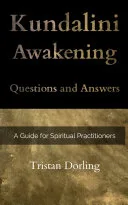
Kundalini Awakening - Questions and Answers
 75
75

Kundalini Awakening - Questions and Answers
Tristan Dorling's 'Kundalini Awakening - Questions and Answers' offers a welcome antidote to the often-dogmatic or overly-mystical presentations of this subject. By structuring the content as a direct dialogue, Dorling confronts the raw, sometimes unsettling, experiences that accompany kundalini's activation. His personal journey, beginning in 1991 after a period of silent meditation in a cave monastery in Northern Thailand, lends an air of authenticity to the answers provided. The strength of this book lies in its unvarnished exploration of the physical and mental changes, moving past abstract theory to address the nitty-gritty of energetic shifts. A limitation, however, is the inherent subjectivity of such a personal phenomenon; while the Q&A format is practical, the reader is still left to map their unique experience onto Dorling's framework. The discussion around the 'gradual transformations' is particularly valuable, offering a grounded perspective on long-term integration. This work serves as a practical, if sometimes stark, guide for those navigating the often-bewildering terrain of kundalini awakening.
📝 Description
75
Dorling's Kundalini Awakening - Questions and Answers addresses the practical realities of kundalini from 1991 onwards.
This book tackles kundalini awakening through a direct question and answer format, moving past theory to the lived experiences of this spiritual energy. It describes the initial surge of awakening and the often unsettling physical and mental changes that follow as the energy integrates over time. Individuals who are experiencing or looking into spontaneous kundalini phenomena will find this text useful. It aims to provide clarity on the many reported symptoms, from subtle energetic feelings to significant shifts in consciousness. Those engaged in advanced yogic practices or interested in the energetic body will also find value here.
The work explains 'kundalini' as a fundamental, dormant energy, commonly imagined coiled at the base of the spine. The 'awakening' is presented as an activation of this energy, whether spontaneous or guided, that leads to a 'transformation' of the individual's physical, mental, and spiritual makeup. The book further details the 'gradual transformations' that happen as this energy moves upward and becomes part of the system.
Dorling's work, beginning with his own awakening in 1991, fits within the Western engagement with Eastern yogic traditions that grew in the late 20th century. This period saw more books on meditation and energy work become available. However, direct, experience based Q&A formats that addressed the physical aspects of kundalini were less common, unlike earlier abstract discussions by figures like Sir John Woodroffe in the early 1900s.
💡 Why Read This Book?
• Gain direct answers to the practical questions surrounding kundalini awakening, moving beyond theoretical explanations to understand the tangible physical and mental shifts described by Tristan Dorling following his 1991 experience. • Understand the concept of 'gradual transformations' as a long-term process of integration, as detailed in the book's Q&A format, offering a realistic perspective on the energetic changes. • Learn about the initial 'awakening experience' and its immediate aftermath, informed by Dorling's 33 years of personal practice and observation, providing specific context for early-stage phenomena.
⭐ Reader Reviews
Honest opinions from readers who have explored this book.
❓ Frequently Asked Questions
What specific practices led to Tristan Dorling's initial kundalini awakening in 1991?
Tristan Dorling's initial kundalini awakening in 1991 was preceded by a period of silent meditation undertaken in a cave monastery located in Northern Thailand.
How long has the author been working with kundalini phenomena?
The author, Tristan Dorling, has experienced changes related to kundalini awakening for over 33 years, beginning from his initial experience in 1991.
Does the book discuss the physical sensations associated with kundalini awakening?
Yes, the book is structured as a series of questions and answers that directly address the physical and mental transformations occurring due to the kundalini process.
What is the primary aim of the 'Questions and Answers' format in this book?
The Q&A format aims to provide clear, direct responses to common inquiries and experiences related to kundalini awakening, addressing the gradual transformations that follow the initial event.
Can this book help someone who has already experienced kundalini awakening?
Absolutely. The discussions on gradual transformations and the various changes in body and mind offer further insight and validation for those already on the path of integration.
Where was Tristan Dorling when he first experienced kundalini awakening?
The initial experience of kundalini awakening for Tristan Dorling occurred in 1991 while he was practicing silent meditation in a cave monastery in Northern Thailand.
🔮 Key Themes & Symbolism
The Awakening Event
This theme centers on the initial, often sudden, activation of kundalini energy. The book addresses the subjective experience of this event, including the immediate sensory, emotional, and mental shifts reported by practitioners. It explores how such an awakening can occur, drawing from Dorling's own 1991 experience after silent meditation in a Thai monastery, and provides a framework for understanding the precipitating factors and initial impact of this potent energetic release.
Gradual Transformations
Beyond the initial surge, this theme focuses on the sustained and evolving nature of kundalini's influence. The Q&A format explores the long-term physiological and psychological changes that unfold over months and years as the energy integrates. It addresses the concept of 'transformation' not as a singular event, but as an ongoing process, offering practical insights into the subtle and overt alterations in perception, physical well-being, and consciousness that characterize this developmental arc.
Practical Q&A Approach
The core methodology of the book is its direct question-and-answer structure. This approach aims to explain the complex and often misunderstood subject of kundalini by providing straightforward responses to frequently asked questions. It prioritizes clarity and experiential relevance, moving away from abstract philosophical discussions to offer concrete guidance for individuals working through the practical realities of kundalini awakening and its subsequent integration.
Body and Mind Integration
This theme examines the profound interconnectedness of physical and mental states during kundalini's activation. The book explores how the energy influences both the somatic experience – the body's sensations and functions – and the psychological landscape – thoughts, emotions, and consciousness. It highlights the holistic nature of the transformation process, emphasizing that the integration of kundalini affects the entirety of an individual's being.
💬 Memorable Quotes
Direct passages from the work, attributed to the author.
“The initial awakening can be disorienting, but it is the subsequent transformations that truly redefine one's existence.”
— This statement emphasizes that while the first experience of kundalini activation is significant, the true depth of its impact lies in the sustained, long-term changes it brings about in an individual's life.
“Silent meditation in a cave monastery preceded my own awakening in 1991.”
— This personal anecdote anchors the author's experience, providing a specific context and practice—silent meditation in a secluded environment—linked to the catalyst for his kundalini awakening.
“Over 33 years, I've witnessed profound changes in both my body and mind due to this process.”
— This highlights the long duration and pervasive nature of the kundalini process, indicating that its effects are not fleeting but lead to deep-seated, enduring shifts over decades.
“This book addresses the gradual transformations, not just the singular event.”
— This clarifies the book's focus, differentiating it from literature that might only cover the initial awakening, by stressing the importance of understanding the ongoing developmental stages.
“The Q&A format allows for direct engagement with the practicalities of kundalini.”
— This points to the pedagogical method chosen by the author, emphasizing its utility in providing clear, actionable information on a topic often obscured by jargon or abstract theory.
🌙 Esoteric Significance
Tradition
This work engages with the broad spectrum of yogic and Tantric traditions, particularly those that describe the activation of kundalini shakti. While not strictly adhering to a single lineage, it aligns with the Hermetic principle of 'As Above, So Below,' suggesting that the energetic transformations described have macrocosmic parallels. It departs from purely ascetic or renouncer traditions by focusing on the integration of this energy within the context of contemporary life and its palpable physical manifestations, rather than solely on liberation from the material world.
Symbolism
The coiled serpent ('kundalini') at the base of the spine is the central symbol, representing dormant potential energy. Its ascent through the chakras, often visualized as lotuses or energy centers, symbolizes the progressive purification and spiritualization of consciousness. The 'awakening' itself acts as a powerful motif for radical inner transformation, signifying the activation of latent spiritual capacities and the beginning of a profound metamorphosis.
Modern Relevance
Dorling's direct Q&A approach speaks to contemporary practitioners seeking grounded information on subtle energy phenomena. It speaks to modern spiritual seekers who may not be affiliated with traditional guru-disciple relationships but are encountering intense energetic experiences through meditation, breathwork, or other somatic practices. Thinkers and practitioners in fields like somatic experiencing, transpersonal psychology, and integral spirituality may find value in its experiential focus.
👥 Who Should Read This Book
• Individuals experiencing spontaneous or practice-induced kundalini phenomena: Those feeling unusual energy shifts, heat, or pressure, and seeking clarification on these experiences and their implications. • Students of esoteric anatomy and energy systems: Readers interested in understanding the subtle body, chakras, and the mechanics of spiritual energy beyond theoretical models. • Comparative religion and spirituality researchers: Scholars and practitioners looking to understand the lived experience of kundalini awakening as described in modern contexts, complementing historical texts.
📜 Historical Context
The latter half of the 20th century saw a significant cross-pollination between Eastern spiritual practices and Western esoteric thought. Following World War II, and accelerating through the 1960s and 70s, interest in yoga, meditation, and Eastern philosophies surged in the West. This period, however, often saw these practices presented through the lens of Western psychology or New Age spirituality, sometimes divorcing them from their original contexts or the intense physiological experiences they could engender. Tristan Dorling's personal awakening in 1991 and subsequent work fall into this era of increased accessibility. While figures like Swami Vivekananda had introduced yoga to the West decades earlier, and scholars like Sir John Woodroffe (writing as Arthur Avalon) had produced foundational texts like 'The Serpent Power' in the early 1900s, Dorling's Q&A format addresses a more immediate, experiential need. This book emerges in a landscape where direct, unvarnished accounts of profound energetic phenomena like kundalini, often previously relegated to obscure tantric texts or whispered traditions, were becoming more openly discussed, albeit with a persistent need for practical clarification.
📔 Journal Prompts
The initial awakening experience: detailing the first signs and sensations.
Reflecting on the gradual transformations described in the Q&A sessions.
The role of silent meditation in kundalini phenomena.
Mapping personal physical changes against the book's descriptions.
The concept of 'body and mind' integration post-awakening.
🗂️ Glossary
Kundalini
A primordial, dormant spiritual energy, often depicted as a coiled serpent, believed to reside at the base of the spine in yogic and Tantric traditions. Its awakening is associated with profound spiritual and physical transformation.
Awakening
The event or process by which the dormant kundalini energy becomes active and begins to rise through the subtle energy channels of the body.
Chakras
Energy centers within the subtle body, typically along the spine, through which kundalini is said to ascend. Each chakra is associated with different psychological and physiological functions.
Gradual Transformations
The ongoing, long-term changes in an individual's physical, mental, emotional, and spiritual state that occur as kundalini energy integrates and moves through the system.
Silent Meditation
A contemplative practice involving sustained periods of quiet introspection and awareness, often without external focus or mantra, which can be a catalyst for deep inner experiences.
Cave Monastery
A monastic dwelling situated within or constructed from natural caves, often associated with ascetic practices and deep spiritual retreats, such as the one where the author experienced his awakening.
Energetic Body
The subtle, non-physical aspect of a person, comprising energy channels (nadis), energy centers (chakras), and vital life force (prana), which is believed to be influenced by and interact with the physical body.