Secret Groups in Ancient Judaism
 77
77

Secret Groups in Ancient Judaism
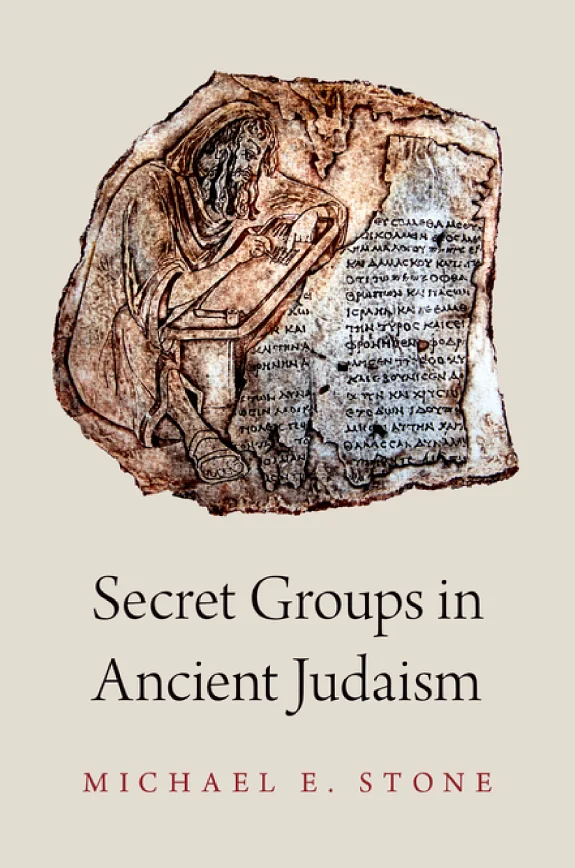
Michael E. Stone’s "Secret Groups in Ancient Judaism" offers a rigorous sociological lens on a topic often confined to theological speculation. Stone meticulously unpacks the social mechanisms behind ancient Jewish esoteric traditions, moving past abstract notions of mysticism to examine concrete organizational structures. He compellingly argues that secrecy was a functional aspect of group identity, particularly evident in his analysis of initiation and graded revelation. A notable strength is the exploration of "esoteric as a social category," which reframes our understanding of these groups. However, the work's academic density might present a challenge for readers unfamiliar with the intricacies of Second Temple Judaism. The detailed examination of the social setting of esoteric tradition, while crucial, occasionally becomes highly specialized. Stone’s scholarly approach provides a vital, if sometimes demanding, contribution to the field.
📝 Description
77
Michael E. Stone's 2018 book reveals the social structures of esoteric groups within ancient Judaism.
This study examines the historical presence and social organization of esoteric and mystery traditions in ancient Jewish communities. It moves beyond purely theological explanations to analyze the function of secrecy, initiation, and graded revelation as social mechanisms. The book investigates how these hidden traditions maintained their distinct identities and practices within the larger Jewish society. Stone argues that secrecy was not just a matter of doctrine but a core element of social organization for specific groups.
The volume is intended for students of ancient religion, comparative mysticism, and Jewish history. Scholars of Second Temple Judaism, early Christian origins, and the development of esoteric thought will find it particularly useful. It also suits individuals interested in the social history of religion and how specialized knowledge systems are preserved and transmitted. A basic understanding of ancient Near Eastern history and religious thought is recommended.
Published in 2018, this work engages with scholarship on Second Temple Judaism (c. 516 BCE – 70 CE), a fertile period for religious innovation. It addresses the intellectual climate that also saw the emergence of early Gnostic texts and nascent Christian movements. The book offers a specific view on Jewish mystical and secretive currents, analyzing social dynamics among various schools of thought like the Pharisees, Sadducees, and Essenes.
💡 Why Read This Book?
• Understand the social function of secrecy in ancient Judaism, learning how initiation and graded revelation served to bind specific communities together, a concept explored in chapters concerning the social organization of secrecy. • Gain insight into "esoteric as a social category," recognizing it not just as a type of knowledge but as a marker of group identity and practice within the context of Second Temple Judaism. • Appreciate the historical setting of these traditions by examining how groups like those discussed by Stone functioned within the broader Jewish landscape of the period, as detailed in the analysis of their social setting.
⭐ Reader Reviews
Honest opinions from readers who have explored this book.
❓ Frequently Asked Questions
What period does 'Secret Groups in Ancient Judaism' primarily focus on?
The book primarily focuses on the Second Temple period of Judaism, roughly from 516 BCE to 70 CE, a time of significant religious and social development within Jewish communities.
Does the book discuss specific named secret societies?
While it analyzes the *mechanisms* of secret groups, the work explores various traditions and factions that exhibited secretive or esoteric practices rather than detailing solely named societies, referencing groups within the broader social setting of esoteric tradition.
What is meant by 'esoteric as a social category' in the book?
Stone uses this term to explain that 'esoteric' functions not just to describe hidden knowledge, but to define a social group whose identity and practices are shaped by possessing and transmitting such exclusive information.
Is this book about Kabbalah?
The book deals with earlier esoteric traditions within Judaism, predating the formal development of Kabbalah as it is commonly known. It explores the roots and precursors of such mystical and secretive practices.
Who is Michael E. Stone, the author?
Michael E. Stone was a prominent scholar specializing in ancient Jewish literature, Gnosticism, and the Dead Sea Scrolls, known for his extensive research into Jewish mysticism and related fields.
What kind of evidence does the book use?
The book draws on a range of historical and textual evidence related to ancient Judaism, analyzing social structures and practices inferred from available sources concerning secret groups and their traditions.
🔮 Key Themes & Symbolism
Secrecy as Social Structure
Stone posits that secrecy in ancient Judaism was not merely about guarding sacred texts or divine names, but a fundamental element in the social organization of specific groups. This involved the deliberate structuring of knowledge access through initiation and gradual revelation, creating distinct boundaries between insiders and outsiders. The work examines how this controlled dissemination of information fostered group cohesion and identity, differentiating these esoteric circles within the broader Jewish society of the Second Temple period.
Esoteric as a Social Category
The book reframes 'esoteric' from a purely doctrinal descriptor to a marker of social identity. It investigates how groups defined themselves and were perceived by others based on their exclusive knowledge and practices. This perspective allows for an analysis of the social dynamics, group formation, and maintenance of boundaries that characterized these traditions, moving beyond a simple classification of beliefs to understanding the lived experience of belonging to such circles.
Initiation and Graded Revelation
A central theme is the role of initiation ceremonies and the progressive unveiling of knowledge as key mechanisms for perpetuating esoteric traditions. Stone analyzes how these processes served to induct new members, reinforce group loyalty, and ensure the proper transmission of complex teachings. The structured progression through different levels of understanding was integral to the social and intellectual life of these secret groups.
The Social Setting of Tradition
This theme emphasizes understanding esoteric traditions within their specific historical and social environments. Stone explores the broader Jewish context of the Second Temple era, considering how these secretive movements interacted with, distinguished themselves from, and possibly influenced mainstream Jewish society. The analysis considers the societal conditions that facilitated the development and survival of such hidden currents of thought and practice.
💬 Memorable Quotes
Direct passages from the work, attributed to the author.
“Esoteric as a social category”
— This phrase highlights Stone's approach, viewing esoteric traditions not just as bodies of hidden knowledge but as social formations defined by their exclusive access to and transmission of that knowledge.
“The social organization of secrecy”
— This concept underscores the book's focus on the practical, structural ways in which secrecy was implemented within ancient Jewish groups to maintain identity and cohesion.
“Initiation and graded revelation”
— These terms describe the key processes by which members were integrated into esoteric groups and how knowledge was systematically revealed to them over time.
“The social setting of esoteric tradition”
— This emphasizes the importance of historical and societal context in understanding the emergence, function, and survival of secretive religious movements in ancient Judaism.
“Other secret Jewish groups and traditions”
— This indicates the book's broad scope, examining a range of practices and communities that exhibited secretive or esoteric characteristics beyond a single, well-defined movement.
🌙 Esoteric Significance
Tradition
This work engages with the nascent stages of what would later develop into more formalized esoteric traditions within Judaism, including precursors to Kabbalah. It examines the social structures that supported the preservation and transmission of mystical and hidden knowledge during the Second Temple period, fitting within the broader lineage of Jewish mystical inquiry that seeks deeper, often concealed, levels of divine understanding.
Symbolism
While the book focuses more on social structures than specific symbols, the concept of 'graded revelation' implies symbolic or allegorical layers within teachings. The very act of secrecy and initiation can be seen as symbolic, representing a transition from the profane to the sacred, a common motif in many esoteric traditions signifying a controlled ascent towards divine wisdom or hidden truths.
Modern Relevance
Contemporary scholars and practitioners interested in the historical roots of Western esotericism, particularly Jewish mysticism, find Stone's work invaluable. Thinkers exploring the sociology of religious movements, the historical development of secrecy in spiritual traditions, and the interplay between knowledge, power, and group identity can draw direct parallels and insights from his analysis of ancient Jewish groups.
👥 Who Should Read This Book
• Researchers of Second Temple Judaism and early Christian origins seeking to understand the social dynamics and organizational structures behind esoteric practices. • Students of comparative religion and mysticism interested in the historical development of secret traditions and their social functions across different cultures. • Scholars of the sociology of knowledge and religion who wish to analyze how specialized or hidden information is maintained, transmitted, and used to define group identity.
📜 Historical Context
Michael E. Stone's "Secret Groups in Ancient Judaism" emerged in 2018, a period characterized by robust scholarly engagement with the social history of ancient religions. The work is deeply rooted in the study of Second Temple Judaism (c. 516 BCE – 70 CE), an era marked by significant religious ferment and the diversification of Jewish thought and practice. This historical milieu included the rise of various sects and movements, such as the Pharisees, Sadducees, and Essenes, offering fertile ground for the development of both public and hidden traditions. Stone’s research contributes to a scholarly conversation that increasingly views esoteric phenomena not merely as theological curiosities but as social realities. He engages with the intellectual currents that influenced Jewish thought, including Hellenistic philosophy and early mystical stirrings, while maintaining a distinct focus on Jewish internal developments. The book's emphasis on social organization and group dynamics places it in dialogue with scholars who analyze the sociology of religion in antiquity, building on foundational work by figures like Gershom Scholem, who pioneered the academic study of Jewish mysticism.
📔 Journal Prompts
The social organization of secrecy within ancient Jewish groups.
How does the concept of 'esoteric as a social category' alter perceptions of ancient religious movements?
The role of initiation and graded revelation in maintaining group boundaries.
Reflecting on the social setting of esoteric tradition in antiquity.
Investigating the function of secrecy in preserving unique Jewish traditions.
🗂️ Glossary
Esoteric
Pertaining to or accessible only by a select group of people, often characterized by hidden knowledge, mystical insights, or specialized doctrines.
Secrecy
The practice of keeping information, rituals, or beliefs hidden from those outside a specific group, often employed to protect sacred knowledge or maintain group exclusivity.
Initiation
A formal process or ceremony by which an individual is admitted into a group or society, typically involving instruction, symbolic acts, and the revelation of certain knowledge.
Graded Revelation
The systematic and progressive disclosure of knowledge or teachings to members of a group, often structured in stages or levels of increasing complexity or significance.
Second Temple Period
The era in Jewish history from the rebuilding of the Second Temple in Jerusalem (c. 516 BCE) to its destruction by the Romans in 70 CE, a time of significant religious and political development.
Social Category
A classification of people based on shared social characteristics, roles, or experiences, used here to understand how 'esoteric' defined group membership and identity.
Social Organization
The structured arrangement of individuals within a group or society, including patterns of interaction, hierarchy, and the mechanisms used to maintain cohesion and order.
This book appears in 1 collection
🔮 Readers Also Liked
Browse all →








From the “Western Esotericism” Collection
View all →








More Free Sacred Texts & Gnosticism Books
View all →