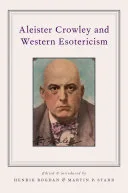
Aleister Crowley and Western Esotericism
 71
71

Aleister Crowley and Western Esotericism
Bogdan and Starr's edited collection offers a much-needed scholarly dissection of Aleister Crowley, moving past the lurid headlines to engage with his actual philosophical and magical output. The strength lies in its breadth, covering everything from his early occult affiliations to his development of Thelema. A notable limitation is the inherent challenge of reconciling Crowley's often contradictory pronouncements; the book, by necessity, presents multiple scholarly interpretations rather than a single definitive one. The examination of his influence on subsequent esoteric movements, particularly how his ideas were adopted and adapted, is particularly illuminating. Ultimately, this is a vital resource for anyone serious about understanding the trajectory of modern Western esotericism.
📝 Description
71
Published in 2012, this collection critically examines Aleister Crowley's extensive contributions to occult philosophy.
Aleister Crowley and Western Esotericism, edited by Henrik Bogdan and Martin P. Starr, offers a scholarly assessment of the magician's life and influence. The essays move past sensationalism to examine Crowley's significant role in modern Western esotericism. This volume is valuable for academics in religious studies, history, and occult scholarship, as well as for serious students of esoteric traditions. It helps understand the intellectual foundations of magical orders and philosophical movements from the late 19th and early 20th centuries.
The book places Crowley within the academic study of Western esotericism, which gained prominence in the late 20th century. It discusses the intellectual climate of Victorian and Edwardian England, a time of spiritualism, theosophy, and groups like the Hermetic Order of the Golden Dawn. The work engages with previous scholarship on the occult revival.
This book situates Aleister Crowley within the academic field of Western esotericism. It examines his engagement with traditions such as Thelema, ceremonial magic, Gnosticism, and Kabbalah. The essays analyze his development of magical systems and his prolific literary output. The work also addresses his public persona and the complexities of interpreting his legacy, contributing to scholarly discourse on occultism's modern trajectory.
💡 Why Read This Book?
• Understand the intellectual origins of Thelema by examining Crowley's engagement with the Hermetic Order of the Golden Dawn and his philosophical evolution. • Gain insight into the academic study of Western esotericism, recognizing how scholarly frameworks emerged to analyze figures like Crowley post-1947. • Explore the practical implications of Crowley's magical theories and their reception by later occultists and philosophers.
⭐ Reader Reviews
Honest opinions from readers who have explored this book.
❓ Frequently Asked Questions
What is the primary academic focus of 'Aleister Crowley and Western Esotericism'?
The book's primary academic focus is a comprehensive scholarly analysis of Aleister Crowley's life, magical practices, philosophical contributions, and his significant influence on the development of Western esotericism in the 20th century.
When was Aleister Crowley active in occult circles?
Aleister Crowley was active in occult circles from the late 19th century, notably joining the Hermetic Order of the Golden Dawn in 1898, through the first half of the 20th century until his death in 1947.
Does this book discuss Crowley's system of Thelema?
Yes, the book extensively discusses Aleister Crowley's system of Thelema, its origins in his 'Book of the Law' (received in 1904), and its impact on subsequent magical and esoteric thought.
Who are the main academic contributors to this volume?
The main academic contributors are the editors, Henrik Bogdan and Martin P. Starr, alongside a range of international scholars specializing in occultism and Western esotericism.
Is 'Aleister Crowley and Western Esotericism' suitable for beginners?
While offering foundational information, the book is written for a scholarly audience. Beginners interested in Crowley might benefit from introductory biographies before engaging with this in-depth academic analysis.
What does the book say about Crowley's reception by contemporaries?
The work explores how Crowley's radical ideas and public persona were received by his contemporaries, often leading to controversy and varying degrees of engagement or condemnation from other occultists and intellectual circles.
🔮 Key Themes & Symbolism
Crowley's Thelemic Philosophy
The collection critically examines the development and core tenets of Thelema, Crowley's religious and philosophical system. It traces its origins to the reception of 'The Book of the Law' in 1904 and analyzes its theological, ethical, and magical dimensions. Scholars discuss how Thelema challenged existing religious paradigms and offered a new framework for individual spiritual liberation through the pursuit of one's True Will.
Ceremonial Magic and Ritual Practice
A significant portion of the book is dedicated to Crowley's extensive work in ceremonial magic, particularly his initiations and teachings within organizations like the Hermetic Order of the Golden Dawn and the Ordo Templi Orientis. Essays detail specific rituals, magical techniques, and the symbolic language employed, illustrating how Crowley adapted and expanded upon existing magical traditions.
Crowley's Literary and Artistic Output
Beyond his magical practices, the book recognizes Crowley as a prolific writer, poet, and artist. It analyzes the esoteric content embedded within his literary works, including his poetry, novels, and extensive magical diaries. The essays explore how his artistic expression served as a vehicle for transmitting his philosophical and magical ideas to a wider audience.
Influence on Modern Esotericism
The volume investigates Crowley's enduring legacy and his wide impact on subsequent generations of occultists, magicians, and esoteric thinkers. It examines how his ideas, symbols, and organizational structures were adopted, adapted, or reacted against by various movements and individuals, shaping the field of contemporary Western esotericism.
💬 Memorable Quotes
Direct passages from the work, attributed to the author.
“The 2012 publication date marks a significant moment in the academic study of Western esotericism.”
— This highlights the book's emergence within a growing academic interest in occultism, placing it within a scholarly context that seeks to analyze these traditions rigorously.
“Crowley's engagement with the Hermetic Order of the Golden Dawn in 1898 was a formative period.”
— This points to a crucial early phase in Crowley's occult career, emphasizing the foundational role of established magical orders in shaping his later, more individualistic magical philosophy.
“The reception of 'The Book of the Law' in 1904 is central to understanding Thelema.”
— This emphasizes the important event of receiving the foundational text of Crowley's system, framing it as the origin point for his unique religious and magical worldview.
“Scholarly analysis moves beyond the sensationalist image of Crowley.”
— This indicates the book's critical approach, aiming to dissect the complex philosophical and practical aspects of Crowley's work rather than focusing solely on his notorious public persona.
“Crowley's prolific writing career disseminated esoteric ideas widely.”
— This acknowledges the significant role of Crowley's extensive published works in spreading his magical and philosophical concepts, making them accessible (though often challenging) to a broad audience.
🌙 Esoteric Significance
Tradition
This work sits within the broad tradition of Western Esotericism, specifically engaging with ceremonial magic, Hermeticism, and Gnosticism, as reinterpreted and synthesized by Aleister Crowley. It examines how Crowley sought to reform and revitalize these ancient streams, creating a distinct magical and philosophical system, Thelema, which became a significant branch within modern occultism, departing from earlier theosophical or spiritualist movements.
Symbolism
Key symbols explored include the Ouroboros, representing cyclicality and the unity of creation, and the pentagram, a fundamental symbol in ceremonial magic signifying the microcosm and elemental forces. Thelema itself is replete with symbolic meaning, centered on the concept of the 'True Will,' a divine spark within each individual meant to be realized and enacted.
Modern Relevance
Crowley's influence persists today through various modern magical orders, esoteric practitioners, and even in certain subcultures and artistic expressions. Thinkers and groups within the Thelemic revival, as well as those exploring Neopaganism and Chaos Magic, continue to engage with Crowley's foundational texts and magical theories, demonstrating his ongoing impact on contemporary spiritual and occult landscapes.
👥 Who Should Read This Book
• Scholars of religious studies and history of magic seeking a critical overview of an important figure in 20th-century esotericism. • Practitioners of ceremonial magic and Thelema interested in understanding the academic analysis of their traditions and Crowley's intellectual development. • Students of comparative religion and philosophy curious about the impact of occult thought on broader Western intellectual history.
📜 Historical Context
Aleister Crowley and Western Esotericism was published in 2012, a period when the academic study of esotericism had matured considerably, moving beyond mere historical cataloging to nuanced theoretical analysis. The book emerged in dialogue with scholars who had been mapping the terrain of Western occultism since the late 20th century, such as Wouter J. Hanegraaff and Antoine Faivre. It addresses the intellectual climate of the late 19th and early 20th centuries, a time of intense spiritual exploration and the formation of numerous occult societies, including the Hermetic Order of the Golden Dawn, which Crowley joined in 1898. The work implicitly engages with the reception of Crowley's ideas, which were often met with both fervent admiration and fierce condemnation, influencing movements from the O.T.O. to later New Age philosophies. Its publication provided a scholarly counterpoint to the persistent sensationalism surrounding Crowley, offering a critical examination of his philosophical and practical contributions.
📔 Journal Prompts
The reception of 'The Book of the Law' in 1904: initial interpretations versus later scholarly analysis.
Crowley's early affiliation with the Hermetic Order of the Golden Dawn and its lasting influence.
The concept of 'True Will' as presented by Crowley and its relation to individual agency.
Analyzing the symbolic language within Crowley's magical writings.
The academic framing of Western Esotericism and its application to figures like Crowley.
🗂️ Glossary
Thelema
A religious and philosophical system developed by Aleister Crowley, based on 'The Book of the Law,' received in 1904. Its central tenet is 'Do what thou wilt shall be the whole of the Law.'
Ceremonial Magic
A formalized system of magical practice involving specific rituals, invocations, and symbolic tools, often drawing from Hermetic, Kabbalistic, and Gnostic traditions.
Hermetic Order of the Golden Dawn
A late 19th-century magical order that significantly influenced modern Western esotericism, teaching a system of magic based on Qabalah, Tarot, astrology, and divination.
True Will
In Thelemic philosophy, the unique purpose or destiny of an individual, which they are meant to discover and fulfill throughout their life.
Ordo Templi Orientis (O.T.O.)
An international fraternal order founded in the early 20th century, espousing Thelemic principles and practicing a system of esoteric rites.
Western Esotericism
A broad term encompassing various intellectual, spiritual, and practical traditions that developed in Europe and the Americas, often characterized by their esoteric, initiatory, and hidden nature.
Qabalah
A complex system of Jewish mysticism that explores the nature of God and creation through esoteric interpretations of the Hebrew scriptures, often visualized through the Tree of Life.