Qigong
 73
73

Qigong
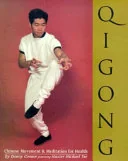
Danny Connor and Michael Tse's *Qigong* offers a lucid entry point into a practice often shrouded in mystique. The strength of this volume lies in its direct, accessible approach, particularly through the 120 illustrations by Master Tse, which demystify the postures and movements. These visuals are invaluable for grasping the physical execution of techniques that aim to harness internal energy. However, the book, first published in 1992, occasionally feels dated in its presentation, lacking the deeper philosophical or theoretical explorations found in more contemporary texts. While it effectively introduces the mechanics of Qigong for self-cultivation and well-being, readers seeking extensive discourse on its historical evolution or comparative spiritual context might find it wanting. Nevertheless, for its clarity and practical guidance on activating qi, it remains a solid foundational resource. It serves as a competent introduction to the mechanics of cultivating personal energy.
📝 Description
73
Danny Connor and Michael Tse's 2003 Qigong manual introduces ancient Chinese methods for cultivating internal vitality.
Qigong, meaning 'breathing exercise' or 'energy skill,' presents ancient Chinese practices to build internal vitality. The book details fundamental techniques for harmonizing the body's energy, known as qi. Through deliberate breathing and simple movements, practitioners learn to access and guide this life force. The goal is to improve physical health, mental focus, and emotional stability. Connor and Tse emphasize practical use, making these complex ideas understandable for those new to the subject.
This guide is suitable for anyone interested in self-healing and personal growth via historical Eastern practices. It will appeal to individuals drawn to alternative health, mind-body connections, and the awareness of subtle energies. Whether you are just beginning to explore Chinese energetic arts or have prior experience with qi cultivation, the detailed illustrations offer a clear approach. The book draws from a long history of Qigong, presenting methods refined over many generations.
Rooted in millennia of Chinese history, Qigong evolved from Daoist and Buddhist traditions and traditional Chinese medicine. Its systematic study gained traction in the West during the late 20th century. This book draws from that lineage, focusing on the concept of qi, the vital life force believed to flow through bodily pathways. It explains how specific breathing patterns and postures work to clear blockages, strengthen qi flow, and achieve a balanced energetic state, fostering overall well-being.
💡 Why Read This Book?
• Learn specific breathing techniques to activate qi, as demonstrated by Master Michael Tse's 120 illustrations, allowing for direct application of energy cultivation for personal well-being. • Understand the foundational concept of qi, the vital energy central to Chinese energetic arts, and how its flow can be influenced through deliberate practice starting from 1992. • Gain practical skills for self-healing and personal empowerment by engaging with the easy-to-use techniques presented, fostering a deeper connection to your own bodily energies.
⭐ Reader Reviews
Honest opinions from readers who have explored this book.
❓ Frequently Asked Questions
What is the primary benefit of practicing Qigong as presented in this book?
The primary benefit is learning to activate qi (energy) through breathing techniques and specific movements to increase a sense of well-being, promote self-healing, and develop personal empowerment, as detailed in the book's illustrations.
Who are the authors and what is their background in Qigong?
The book is authored by Danny Connor and Master Michael Tse. Master Tse is a respected figure in Qigong, contributing 120 detailed illustrations showcasing the techniques.
How does Qigong relate to traditional Chinese medicine?
Qigong is deeply rooted in traditional Chinese medicine principles, focusing on balancing and strengthening the body's vital energy (qi) to maintain health and prevent illness, similar to acupuncture and herbal medicine.
Is this book suitable for complete beginners to Qigong?
Yes, the book is designed for beginners, featuring easy-to-use techniques and 120 illustrations by Master Michael Tse to guide practitioners through the exercises.
What does the term 'Qigong' mean?
Qigong translates from Chinese as 'breathing exercise' or 'energy skill,' referring to practices that cultivate and balance the body's vital life force, qi.
When was this book first published?
This book was first published on January 1, 1992, making it one of the earlier comprehensive introductions to Qigong available in English.
🔮 Key Themes & Symbolism
Qi Cultivation
The central theme is the cultivation of qi, the vital life force. The book explains how specific breathing exercises, or 'energy skills,' can be employed to harmonize and strengthen this internal energy. Through detailed illustrations of Master Michael Tse performing various postures and movements, readers are shown practical methods to encourage the smooth flow of qi throughout the body. This process is presented not just as a physical discipline but as a means to enhance overall vitality and well-being, addressing blockages that may lead to disharmony.
Self-Healing and Empowerment
A significant aspect explored is Qigong's capacity for self-healing and personal empowerment. The text posits that by consciously directing one's internal energy, individuals can foster resilience and address physical or mental imbalances. The emphasis on accessible techniques, first published in 1992, aims to equip readers with tools they can readily integrate into their daily lives. This focus on self-efficacy suggests that mastering these 'breathing exercises' can lead to a greater sense of control over one's health and life circumstances.
Mind-Body Integration
The work underscores the profound connection between the mind and body within the Qigong framework. It illustrates how focused intention, conscious breathing, and deliberate physical actions coalesce to create a unified practice. The 120 illustrations serve as visual cues for this integration, showing how the mind's focus guides the body's movement and the breath's rhythm. This holistic approach aims to achieve a state of balance where mental clarity supports physical health and vice versa.
Ancient Practice, Modern Application
This book bridges ancient Chinese traditions with contemporary needs by presenting Qigong as a relevant practice for modern life. While rooted in historical methods, the techniques are framed for practical application by individuals seeking tangible benefits like increased well-being and self-empowerment. The 1992 publication date marks a period of growing interest in such practices in the West, and the book serves as an accessible conduit to these time-tested 'energy skills'.
💬 Memorable Quotes
Direct passages from the work, attributed to the author.
“Qigong translates as 'breathing exercise,' or 'energy skill.'”
— This concise definition immediately grounds the reader, clarifying the fundamental nature of the practice as a deliberate method for managing both breath and vital energy.
“You can learn to use these breathing techniques to activate qi (energy) to increase a sense of well-being.”
— This highlights the direct, practical outcome of practicing Qigong: actively influencing one's internal state for tangible improvements in health and vitality.
“With 120 illustrations of Master Michael Tse, showing these easy-to-use techniques.”
— This emphasizes the book's visual pedagogical approach, ensuring that the complex movements and postures of Qigong are presented clearly and accessibly for learners.
“The practice aims to heal yourself and develop a sense of personal empowerment.”
— This points to the dual benefit of Qigong: fostering internal healing processes and cultivating a stronger sense of agency and self-reliance in practitioners.
“Qigong has a long history in China.”
— This statement situates the practice within its cultural and historical context, acknowledging its deep roots and established lineage within Chinese civilization.
🌙 Esoteric Significance
Tradition
While not explicitly aligned with a single Western esoteric lineage like Hermeticism or Kabbalah, Qigong shares fundamental principles with many Eastern traditions that have influenced esoteric thought globally. Its focus on cultivating and manipulating subtle energy (qi) echoes concepts found in various yogic traditions and energy-healing modalities. The practice is deeply embedded in Daoist cosmology, which emphasizes living in harmony with the natural flow of the universe (the Dao). This work translates these ancient Daoist principles into practical exercises, making them accessible outside of monastic or highly specialized lineages.
Symbolism
The practice itself is rich in symbolic meaning. The concept of qi represents the fundamental life force animating all things, akin to prana in Indian traditions. The meridians or energy pathways through which qi flows are symbolic maps of the body's energetic landscape. Specific postures often mimic natural forms (animals, plants) or cosmological principles, representing balance (yin/yang) and harmony. The breath, central to Qigong, symbolizes the connection between the internal and external worlds, the exchange of vital essence.
Modern Relevance
Contemporary thinkers and practitioners in fields such as integrative medicine, somatic psychology, and contemplative arts draw heavily on Qigong principles. Schools of energy healing, mindfulness-based stress reduction programs, and even some forms of therapeutic movement therapy incorporate elements of Qigong. The work's accessible presentation from 1992 continues to be relevant for modern audiences seeking non-pharmacological approaches to health, stress management, and personal growth, bridging ancient wisdom with contemporary wellness paradigms.
👥 Who Should Read This Book
• Individuals new to Eastern energetic practices seeking clear, illustrated guidance on cultivating vital energy. • Health-conscious readers interested in self-healing techniques and developing personal empowerment through accessible mind-body exercises. • Students of comparative spirituality and traditional Chinese medicine looking for foundational knowledge on Qigong as a health and cultivation system.
📜 Historical Context
Published in 1992, *Qigong* by Danny Connor and Michael Tse emerged during a period of burgeoning Western interest in Eastern philosophies and practices. The late 20th century saw a growing awareness of mind-body connections, partly fueled by comparative studies in medicine and psychology. Qigong, alongside practices like Tai Chi and acupuncture, began to gain traction as alternative health modalities. While Daoism and Buddhism had been studied for centuries, the accessible, practical instruction offered in this book provided a direct pathway for individuals seeking personal development outside traditional academic or spiritual institutions. The work arrived at a time when practices focused on cultivating 'qi' were gaining broader recognition, moving beyond niche circles. Its publication predates the widespread internet availability of such information, making printed guides like this crucial for dissemination. It engaged with a growing audience curious about traditional Chinese approaches to health, offering a counterpoint to more Western biomedical perspectives.
📔 Journal Prompts
Qigong's translation as 'energy skill' suggests deliberate control; what does this imply for your personal vitality?
Reflect on the concept of qi as presented by Master Michael Tse's illustrations.
How might activating qi through breathing techniques enhance your daily sense of well-being?
Consider the potential for self-healing that Qigong offers, as outlined in the text.
Explore the idea of personal empowerment derived from mastering these 'breathing exercises'.
🗂️ Glossary
Qigong
A traditional Chinese practice that combines physical postures, breathing techniques, and focused intention to cultivate and balance the body's vital energy, qi.
Qi
Often translated as vital energy, life force, or breath. It is considered the fundamental energy that animates all living things and flows throughout the body.
Breathing Exercise
One of the primary translations of Qigong, highlighting the crucial role of controlled and mindful respiration in the practice.
Energy Skill
An alternative translation for Qigong, emphasizing the development of proficiency and mastery in manipulating one's internal vital energy.
Self-Healing
The capacity of the body and mind, facilitated by practices like Qigong, to restore balance and promote recovery from illness or stress.
Personal Empowerment
A sense of agency and control over one's life and well-being, which can be fostered through the practice of Qigong.
Illustrations
The 120 visual guides provided by Master Michael Tse, essential for demonstrating the correct execution of Qigong postures and movements.
This book appears in 1 collection
🔮 Readers Also Liked
Browse all →









From the “Qi Gong” Collection
View all →




More Free Occult Philosophy Books
View all →